Different Types of Aquascapes: A Guide to Aquascaping Styles
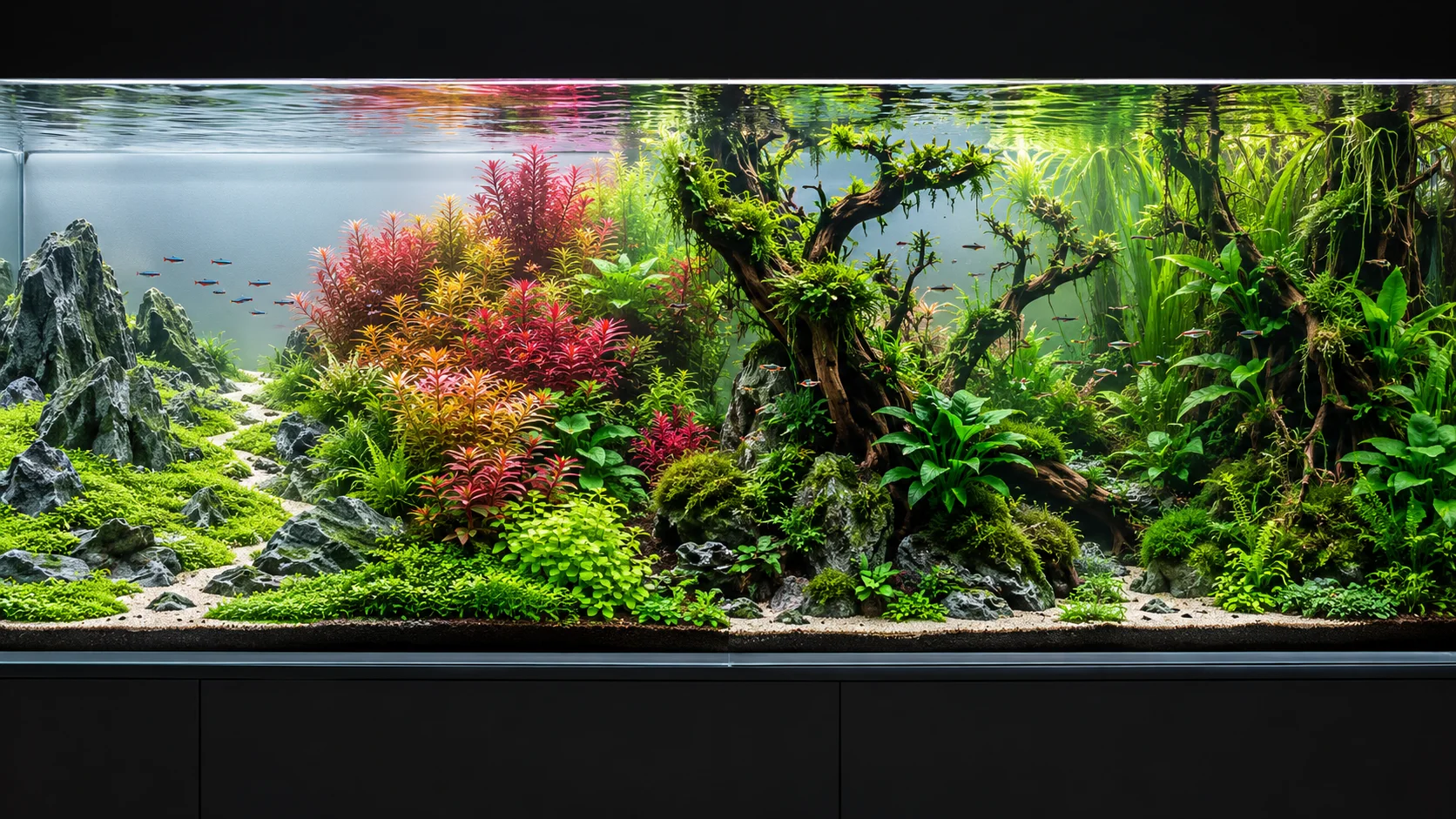
From minimalist Iwagumi layouts to densely planted Dutch and Jungle aquariums, aquascaping comes in many different styles. This guide explores the main types of aquascapes, how they differ and which approach might suit your aquarium.
Aquascaping is much more than simply adding plants, rocks and pieces of wood to an aquarium. Over the years, a number of recognisable aquascaping styles have developed, each with its own approach to planting, hardscape and overall composition.
Some aquascapes are carefully controlled and highly structured, while others deliberately recreate the untamed appearance of nature. There are styles dominated almost entirely by aquatic plants and others where a few carefully positioned rocks become the main feature.
Understanding the different types of aquascape is useful when planning a new aquarium because it gives you a direction before you start buying plants and hardscape. You certainly don't have to follow the rules of a particular style perfectly, but having an overall concept usually produces a much more convincing aquarium.
In practice, many home aquariums combine elements from several different styles. That is perfectly acceptable. Aquascaping should ultimately produce an aquarium that you enjoy maintaining and looking at.
Nature Aquariums
The Nature Aquarium is probably one of the most influential modern aquascaping styles.
Popularised by Japanese aquarist Takashi Amano, the idea is not necessarily to recreate an underwater habitat. Instead, the aquarium takes inspiration from landscapes seen above water.
Mountains, forests, valleys, cliffs and woodland scenes can all influence the layout.
Natural materials such as stone and driftwood form the structure of the aquascape, with plants used to soften the hardscape and create the impression of a miniature landscape.
Foreground carpeting plants may represent grassland, while taller stem plants can suggest distant forests. Mosses growing over wood can make branches resemble old trees.
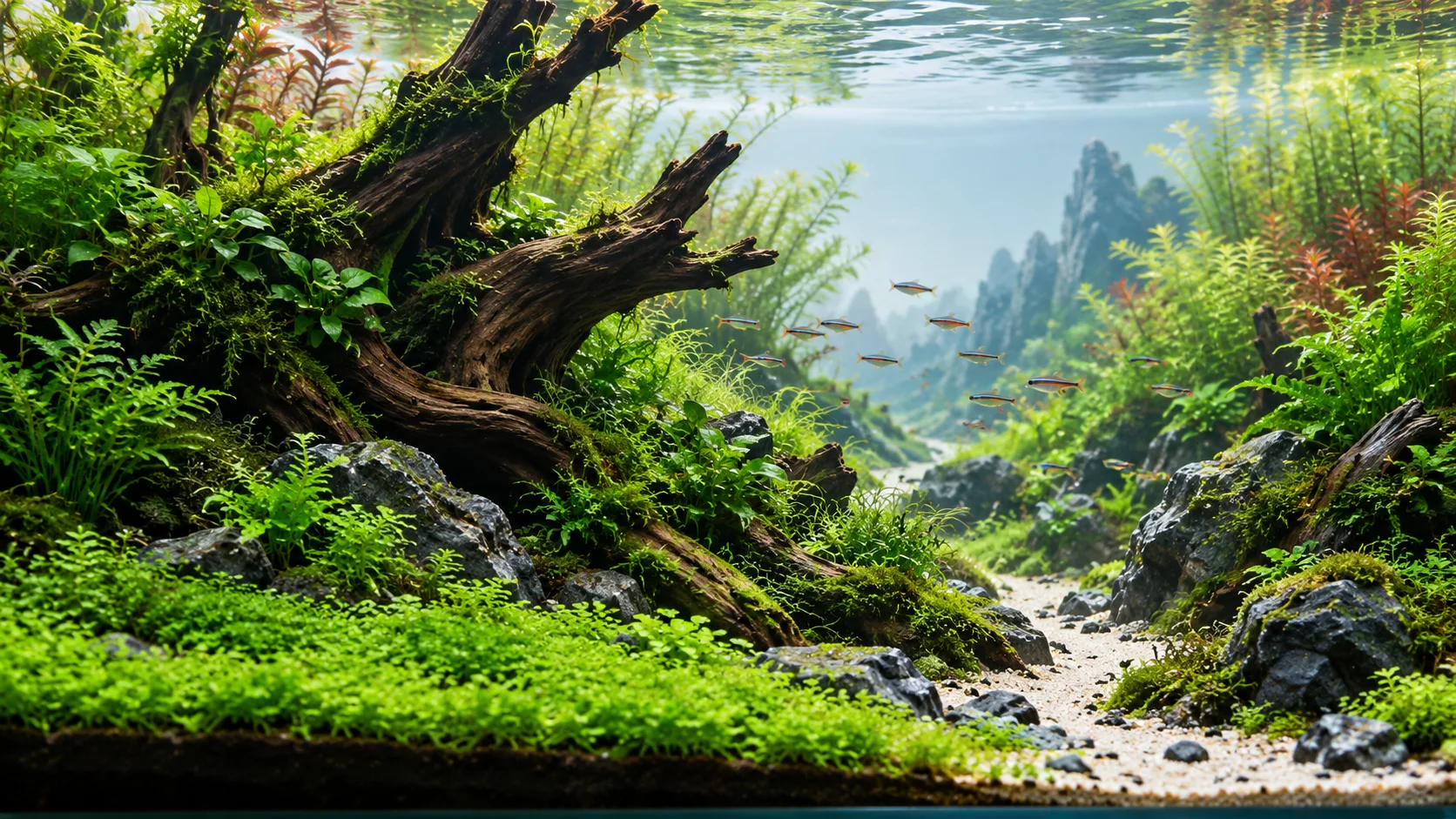
One of the defining features of a Nature Aquarium is balance. Although the aquarium may appear natural, the position of practically every rock, piece of wood and plant has usually been carefully considered.
Nature-style aquariums can range from relatively simple displays to extremely complicated planted aquascapes requiring strong lighting, CO₂ injection and regular pruning.
We have a full article on Nature Aquarium Style Aquascapes which may be of interest.
Iwagumi Aquascapes
Iwagumi is one of the most recognisable minimalist aquascaping styles.
The word Iwagumi relates to the arrangement of rocks, and stone is very much the focus of these aquariums.
Traditional Iwagumi layouts frequently use an odd number of rocks, with one dominant stone forming the main focal point. Smaller stones support the composition and help create a natural sense of scale.
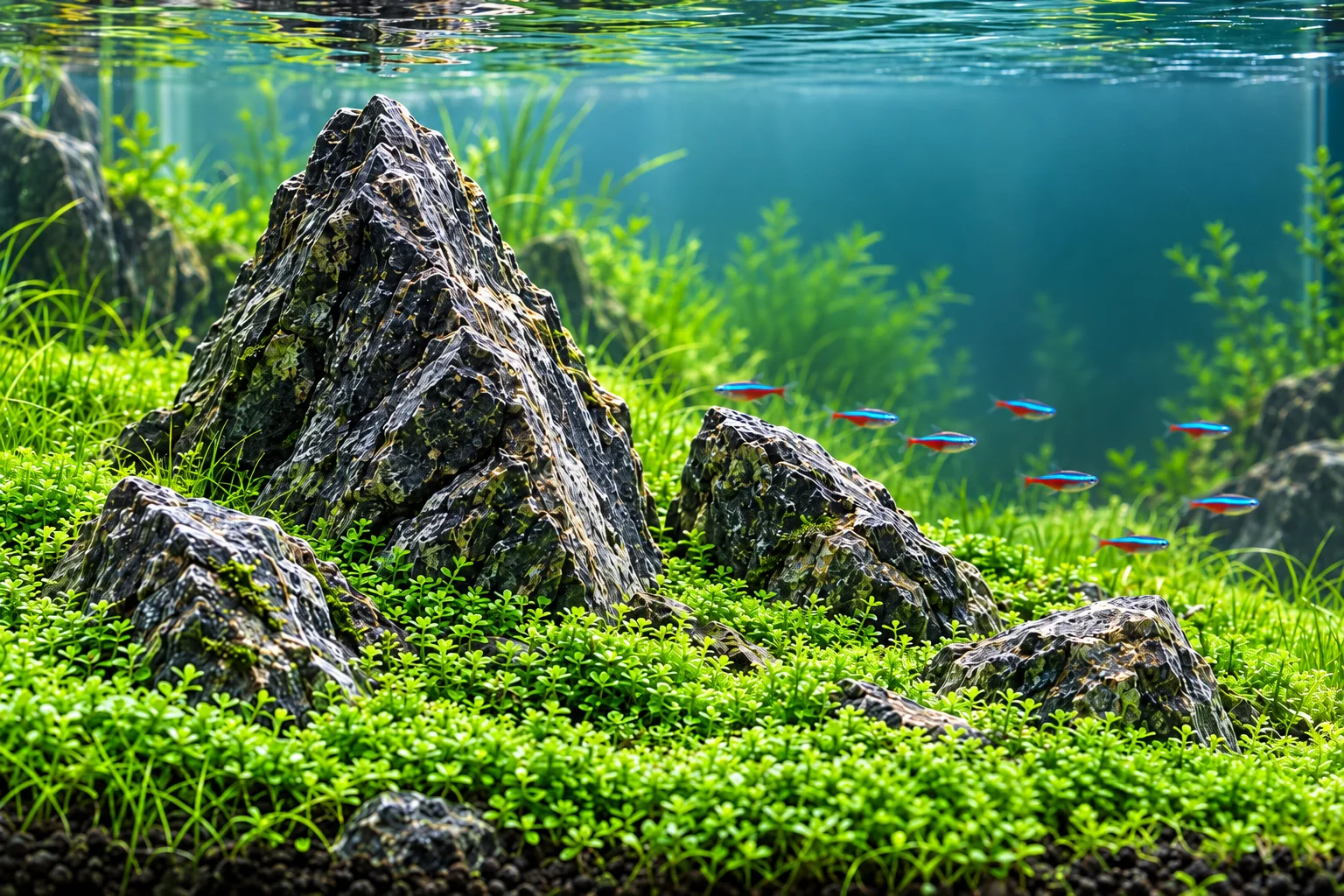
Plants are usually deliberately restrained.
Rather than filling the aquarium with dozens of different species, an Iwagumi aquascape might use just one or two carpeting plants across much of the substrate.
This simplicity is also what makes Iwagumi surprisingly difficult to get right.
When there are only a handful of rocks and plants in the aquarium, their positioning becomes extremely important. There is very little available to hide an awkward stone or an unbalanced composition.
A mature Iwagumi aquarium can be extremely impressive, particularly when a large shoal of small fish is allowed to move across the open aquascape.
We have a full article on Iwagumi Aquascapes which may be of interest.
Dutch Style Aquascapes
Dutch aquascaping takes an almost completely different approach.
Rather than making rocks or wood the centre of attention, Dutch aquariums are dominated by plants.
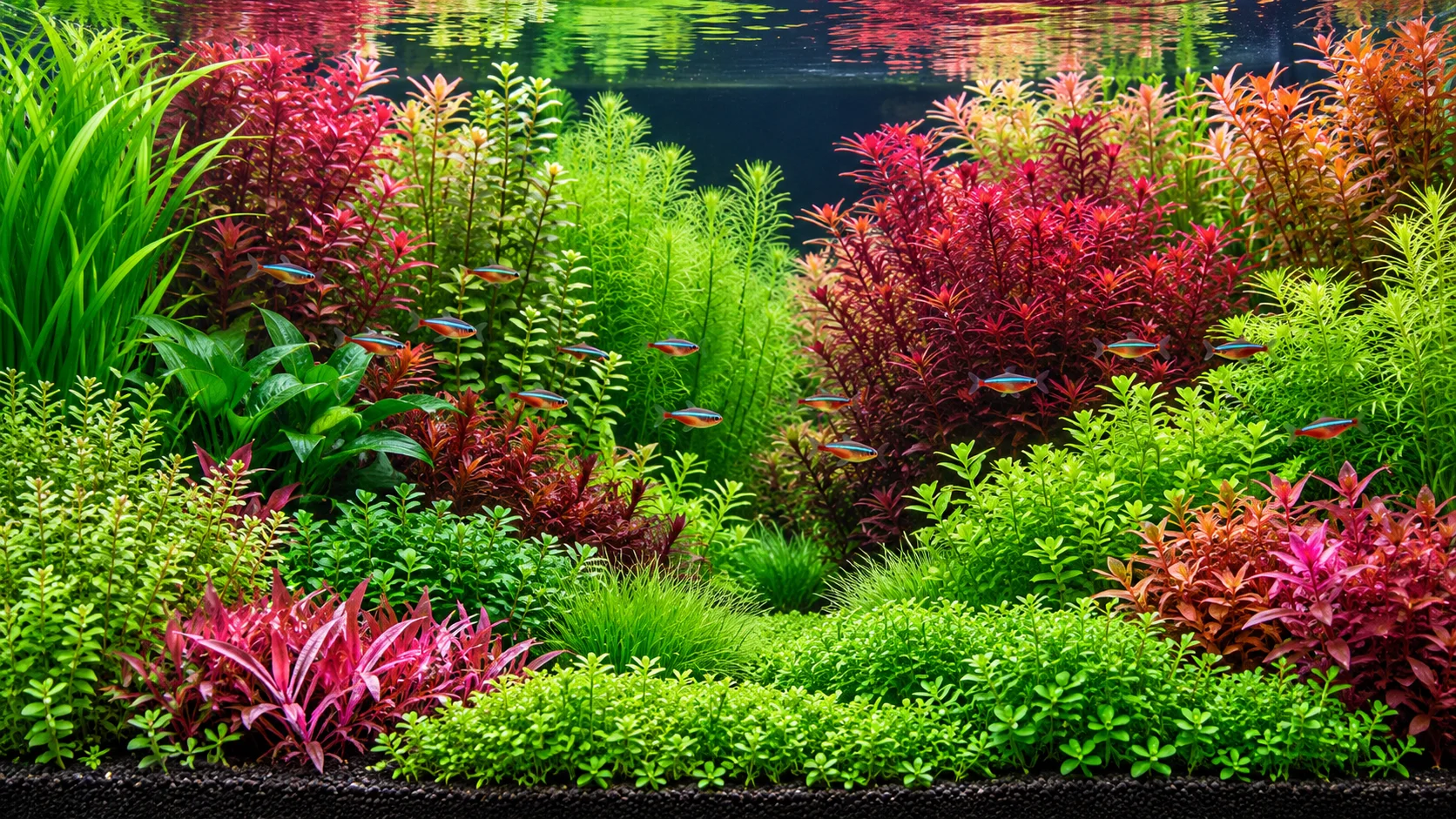
The style developed in the Netherlands and places considerable emphasis on the arrangement of different aquatic plant species. Plants are grouped into carefully defined areas, with differences in leaf shape, height, colour and texture used to create contrast.
Bright red stem plants might sit beside fine green foliage, while broad-leaved plants provide another completely different texture.
Good Dutch aquascapes also use changes in height to create depth.
Plants are often arranged into terraces or streets that draw the eye towards the back of the aquarium. Hardscape may still be present, but it usually plays a much smaller role than it would in a Nature Aquarium.
Dutch aquascaping suits people who particularly enjoy growing aquarium plants. However, maintaining the carefully organised appearance requires regular trimming and replanting.
Without maintenance, fast-growing stem plants can quickly overwhelm neighbouring groups and the distinctive structure of the aquascape begins to disappear.
We have a full article on the Dutch Style Aquascape which you may find interesting.
Jungle Aquascapes
At the other end of the scale is the Jungle style.
The objective here is not perfect rows of plants or precisely positioned stones. Jungle aquascapes aim for a much more mature, overgrown appearance.
Large plants, tangled roots and dense areas of vegetation are all part of the effect.
Species such as Cryptocoryne, Vallisneria, ferns, Anubias and larger stem plants work particularly well. Floating plants can also be used to provide shaded areas beneath the surface.
A good Jungle aquarium should look established rather than neglected.
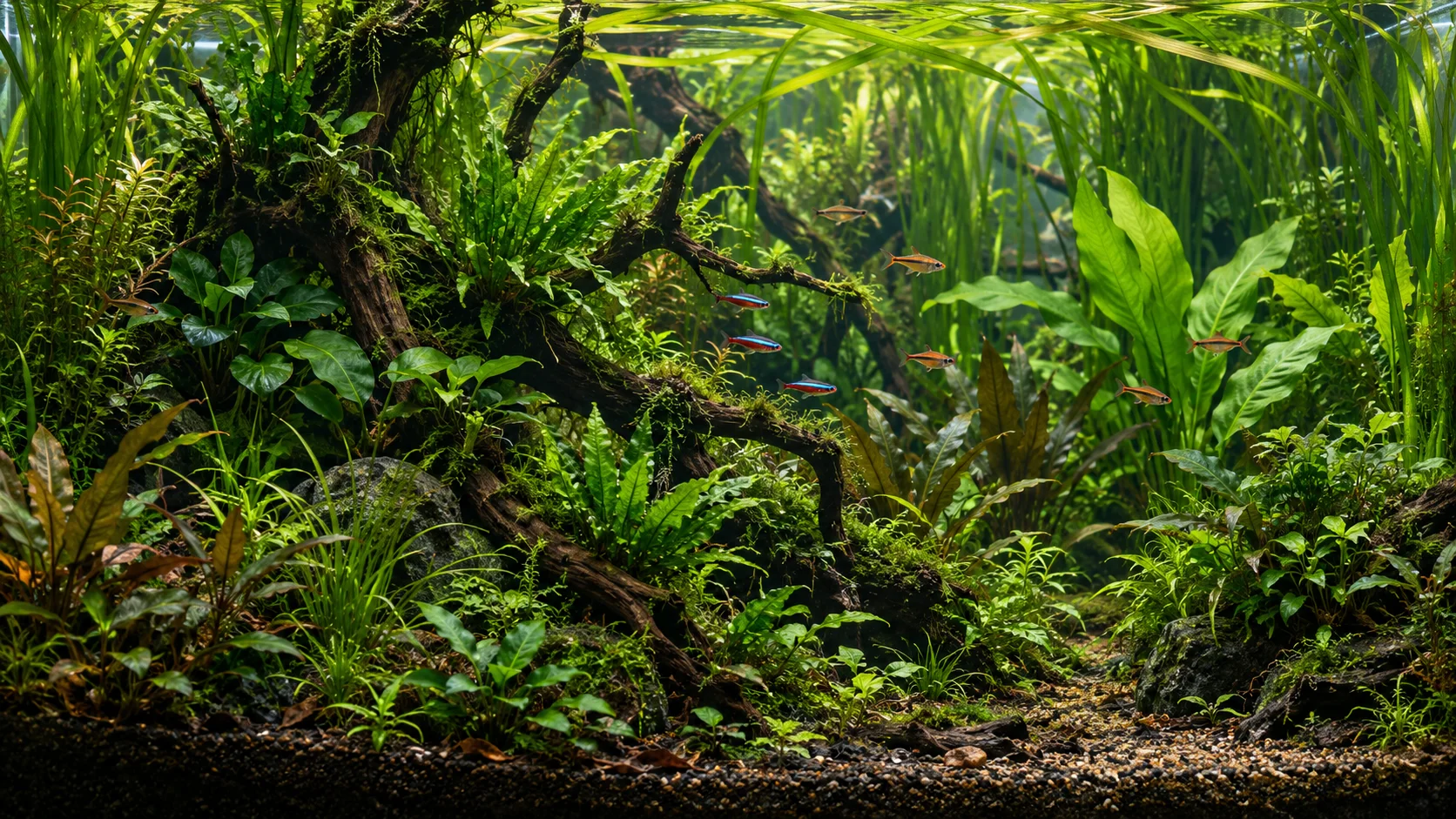
There is still considerable planning involved, particularly when deciding where larger plants should be positioned. However, plants are generally allowed more freedom to spread and overlap than they would be in a Dutch aquarium.
This style can be particularly attractive for fish that naturally prefer heavily planted environments.
It is also a good choice for anyone who enjoys lush planted aquariums without wanting every stem to remain perfectly positioned.
We have a full article on Juggle Style Aquascapes which you may find interesting.
Biotope Aquariums
Biotope aquariums take their inspiration from a particular natural environment.
Instead of designing an imaginary landscape, the aquarist attempts to recreate the conditions found in a specific river, stream, lake or geographical region.
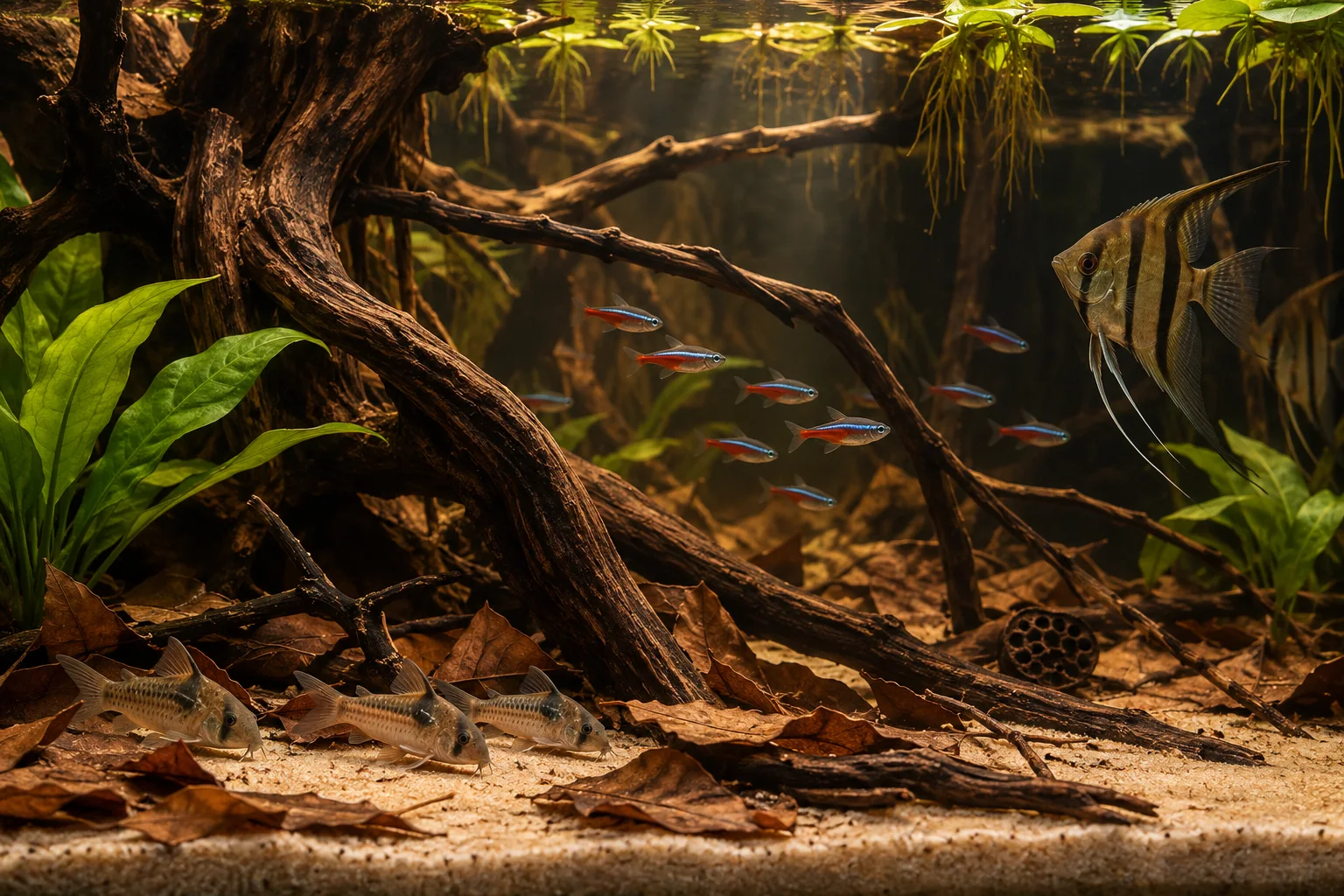
For example, an Amazonian biotope might include sand, submerged branches, leaf litter and fish originating from the same part of South America.
We have an article on Amazon Biotope aquariums which you may find of interest.
An Asian stream aquarium could contain completely different fish, plants and hardscape.
How strict the definition becomes depends on the aquarist. Some biotope enthusiasts carefully research individual locations and only use species that genuinely occur together in the wild.
Others create a broader geographical interpretation.
Biotopes are particularly interesting because they encourage aquarists to learn about the natural habitats of their fish rather than simply considering how the aquarium looks.
They can also be very different from the highly planted aquascapes commonly seen online. Some authentic habitats contain surprisingly few aquatic plants.
Diorama Aquascapes
Diorama aquascaping pushes the idea of creating an underwater landscape even further.
These aquariums deliberately create the illusion of a much larger scene.
Rocks, wood, substrate and plants are manipulated to produce exaggerated perspective. Large features are positioned towards the front while smaller rocks and plants towards the back create the impression that the landscape continues far beyond the aquarium.
Paths running through the substrate are another common technique.
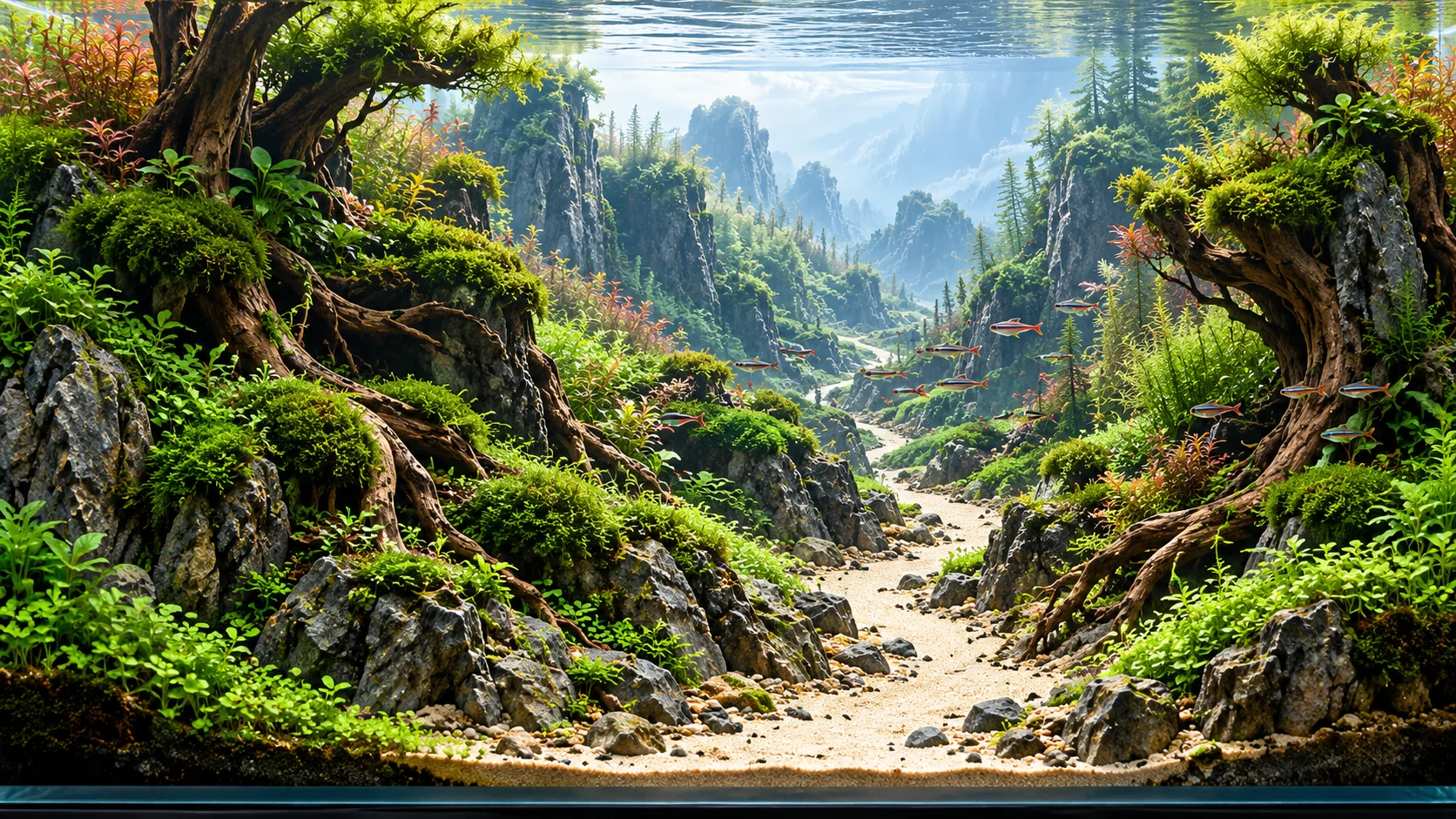
By gradually narrowing the path towards the rear of the aquarium, the aquascaper creates the illusion of distance.
Diorama aquascapes can resemble mountain ranges, woodland paths, valleys or dramatic rocky landscapes.
They are among the most visually impressive competition-style aquascapes, although maintaining the illusion can require frequent trimming and careful plant selection.
We have a full article on Diorama Style Aquascapes which you may find interesting.
Ryoboku Aquascapes
Ryoboku aquascaping uses driftwood as the primary structural feature.
Branches and larger pieces of wood create the skeleton of the aquascape, often producing the appearance of submerged roots, fallen trees or woodland scenes.
Plants such as Java fern, Bucephalandra, Anubias and mosses can be attached directly to the wood, gradually making the hardscape appear older and more natural.
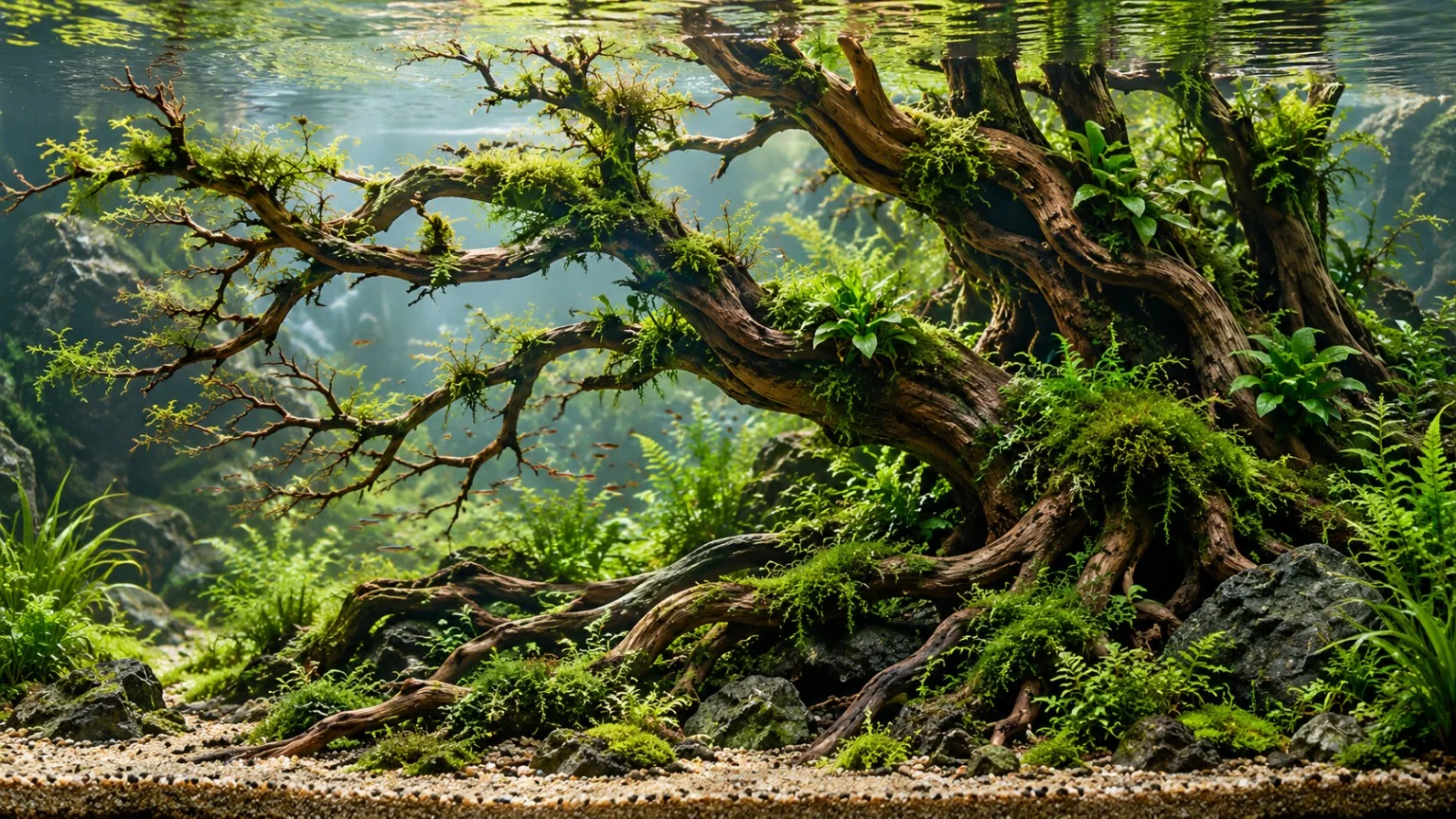
Smaller plants around the base help integrate the wood into the substrate.
Ryoboku layouts can be extremely dramatic when large branching pieces of wood extend through the aquarium.
They are also particularly suitable for aquarists who prefer epiphytic plants rather than large areas of fast-growing stems.
We have a full article on Ryoboku Style Aquascapes.
Island and Peninsula Aquascapes
Not every aquarium needs to follow a traditional named style.
Two extremely useful layout approaches are island and peninsula compositions.
An island aquascape concentrates most of the rocks, wood and plants into one main area, leaving open space around it.
This can create a very strong focal point while also providing fish with plenty of swimming room.
A peninsula layout works slightly differently. The hardscape begins strongly from one end of the aquarium before gradually becoming lower and more open towards the opposite side.
Both layouts can incorporate elements of Nature, Jungle or other aquascaping styles.
They are particularly useful in practical home aquariums because they produce an attractive composition without necessarily requiring every part of the substrate to be heavily planted.
Which Aquascaping Style Should You Choose?
There isn't one aquascaping style that is better than all the others.
The best choice depends on the aquarium you want to maintain.
If growing a wide variety of plants is the main attraction, Dutch aquascaping provides almost unlimited possibilities.
If you prefer something simpler and more architectural, Iwagumi may appeal more.
Nature and Ryoboku aquascapes are excellent choices if you enjoy working with rocks and wood, while Jungle aquariums suit people who prefer a dense and mature planted appearance.
Biotope aquariums offer something different again by focusing more heavily on the natural environment of the fish.
Maintenance should also influence your decision.
Some beautifully photographed aquascapes require substantial amounts of trimming, CO₂ injection, fertilisation and lighting to remain in that condition. A simpler layout containing slower-growing plants may be far more enjoyable if you don't want to spend several hours maintaining the aquarium every week.
You Don't Have to Follow the Rules
Aquascaping styles are best thought of as inspiration rather than rigid instructions.
There is nothing wrong with combining a Nature Aquarium-style piece of driftwood with planting inspired by a Jungle aquarium, for example.
Many of the most attractive everyday aquariums don't fit perfectly into any single category.
What matters is that the aquarium has some visual structure, provides a suitable environment for its inhabitants and can realistically be maintained over the long term.
Before starting a new aquascape, spend some time deciding what you want the finished aquarium to feel like. Look at the available space, consider the plants you enjoy growing and think about how much maintenance you are prepared to carry out.
Once you have decided on a general style, choosing the hardscape and plants becomes considerably easier.
And as the aquarium develops, don't be afraid to let it evolve. Some of the best aquascapes change considerably as plants mature and the aquarist learns what works within that particular aquarium.
Products We've Mentioned & Recommend
Below you'll find a selection of products we've mentioned in this article, along with a few others we think you might find useful. We've included Amazon links to make them easy to find.
A quick word about affiliate links...
Some of these links are affiliate links, which means we may earn a small commission from qualifying purchases, at no extra cost to you.
Unfortunately, the commission doesn't quite stretch to cocktails on a yacht or a garage full of sports cars. In reality, it helps cover the running costs of this website and, with a bit of luck, might eventually buy me a new pair of waders that don't leak!
We only recommend products we genuinely believe are worth considering, and your support helps us keep sharing free advice from our years of working with aquariums and ponds.
Thanks for supporting Aquatic Specialist!
As an Amazon Associate I earn from qualifying purchases.
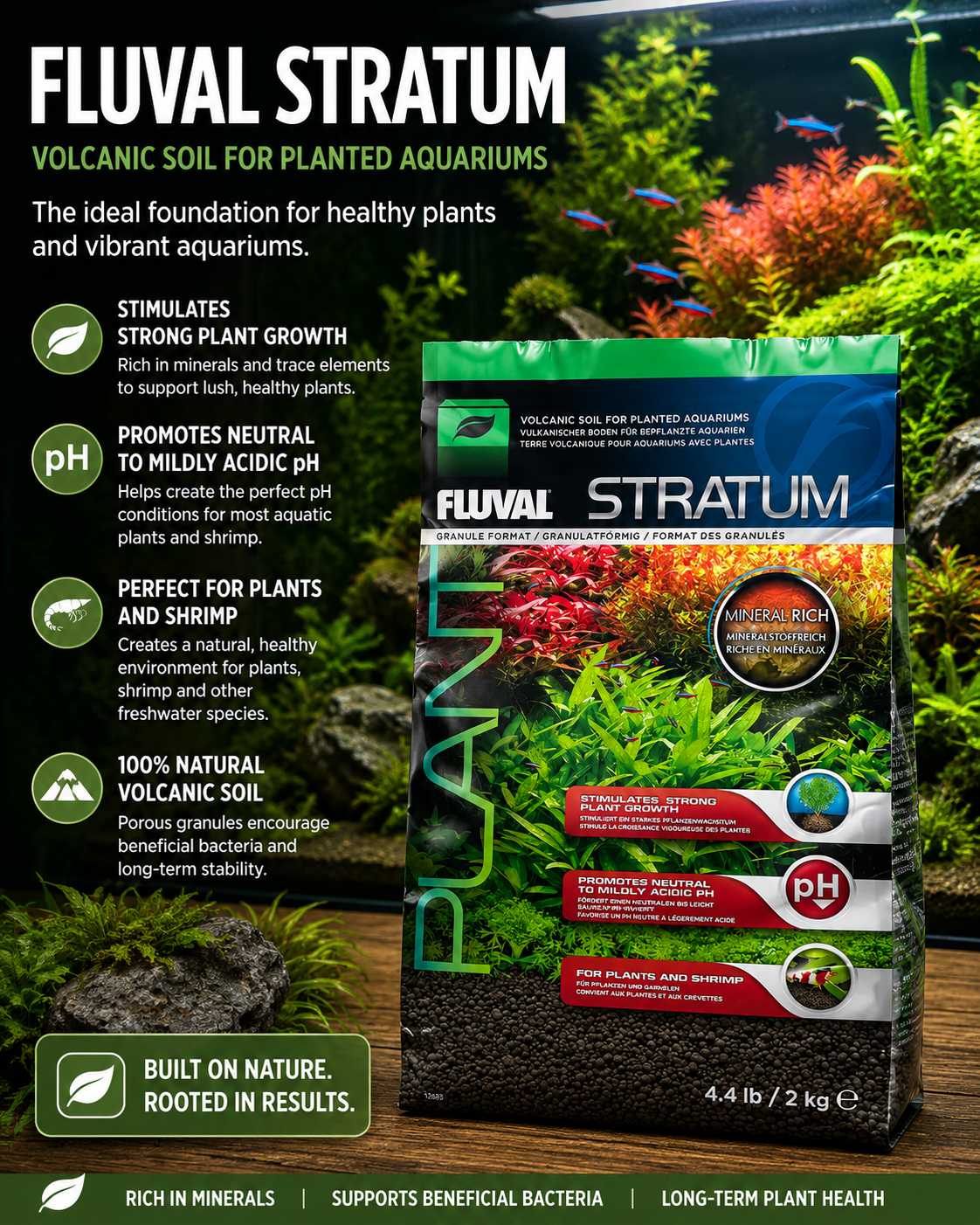
Fluval
Fluval Stratum Aquasoil 8kg
Best for: Planted aquariums, aquascapes and freshwater shrimp tanks
As an Amazon Associate, we earn from qualifying purchases.
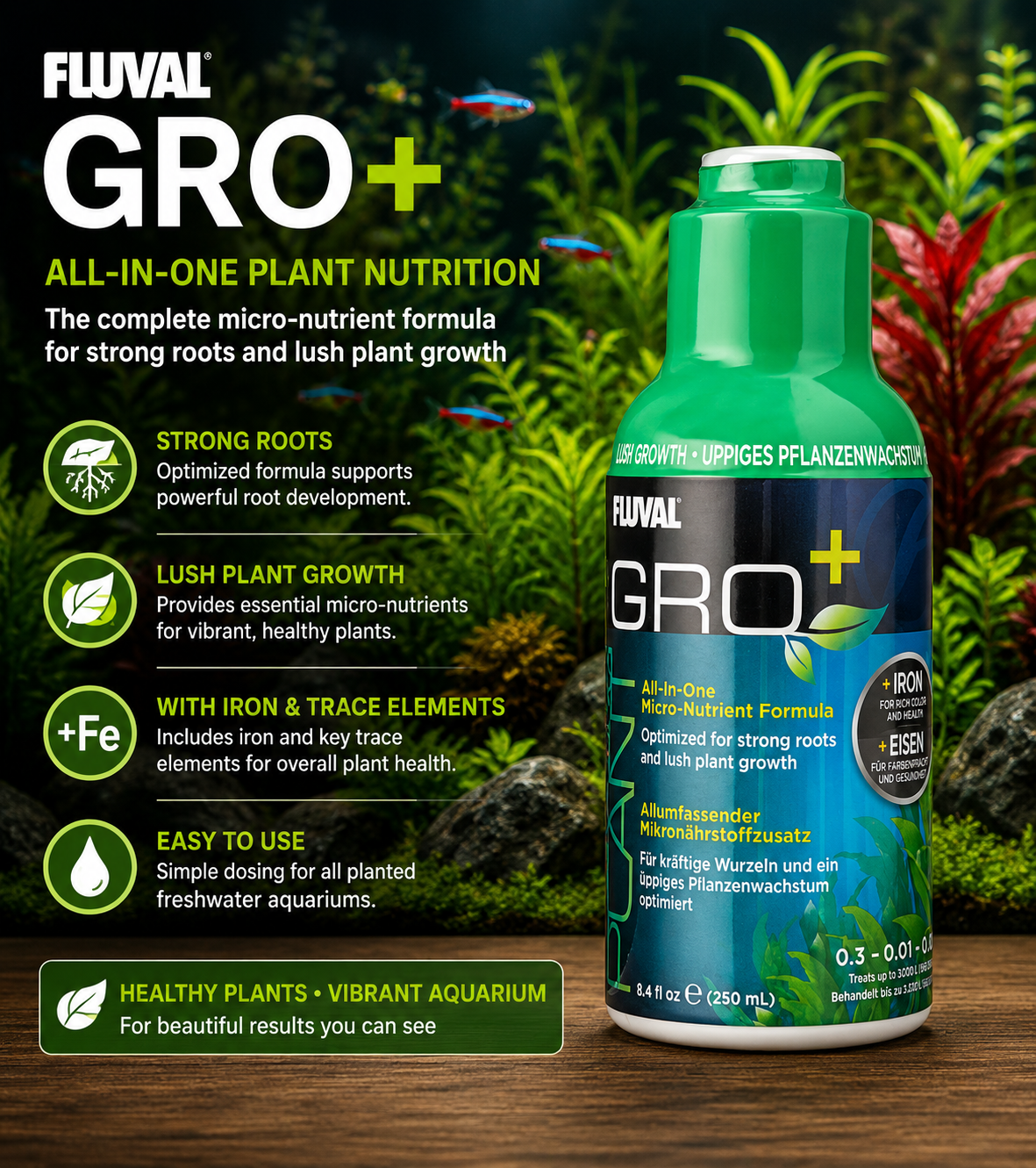
Fluval
Fluval Gro Plus Aquarium Plant Fertiliser
Best for: Low-tech and everyday planted freshwater aquariums
As an Amazon Associate, we earn from qualifying purchases.
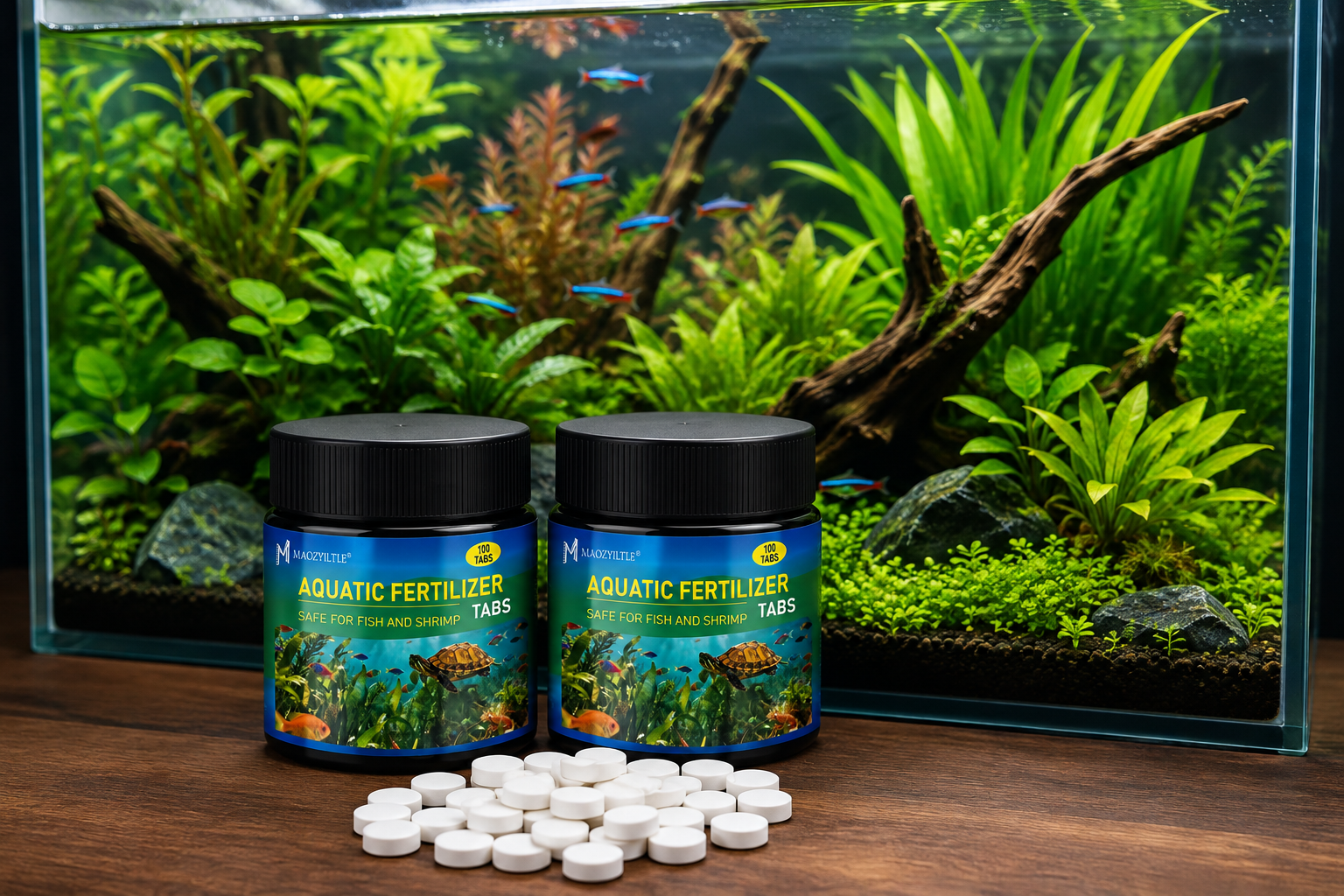
Newpie
Root Tabs for Live Aquarium Plants, Freshwater Plant Fertilizer - 100 x 2
Best for: Cryptocoryne, Amazon swords, Vallisneria and other heavy root-feeding aquarium plants
As an Amazon Associate, we earn from qualifying purchases.
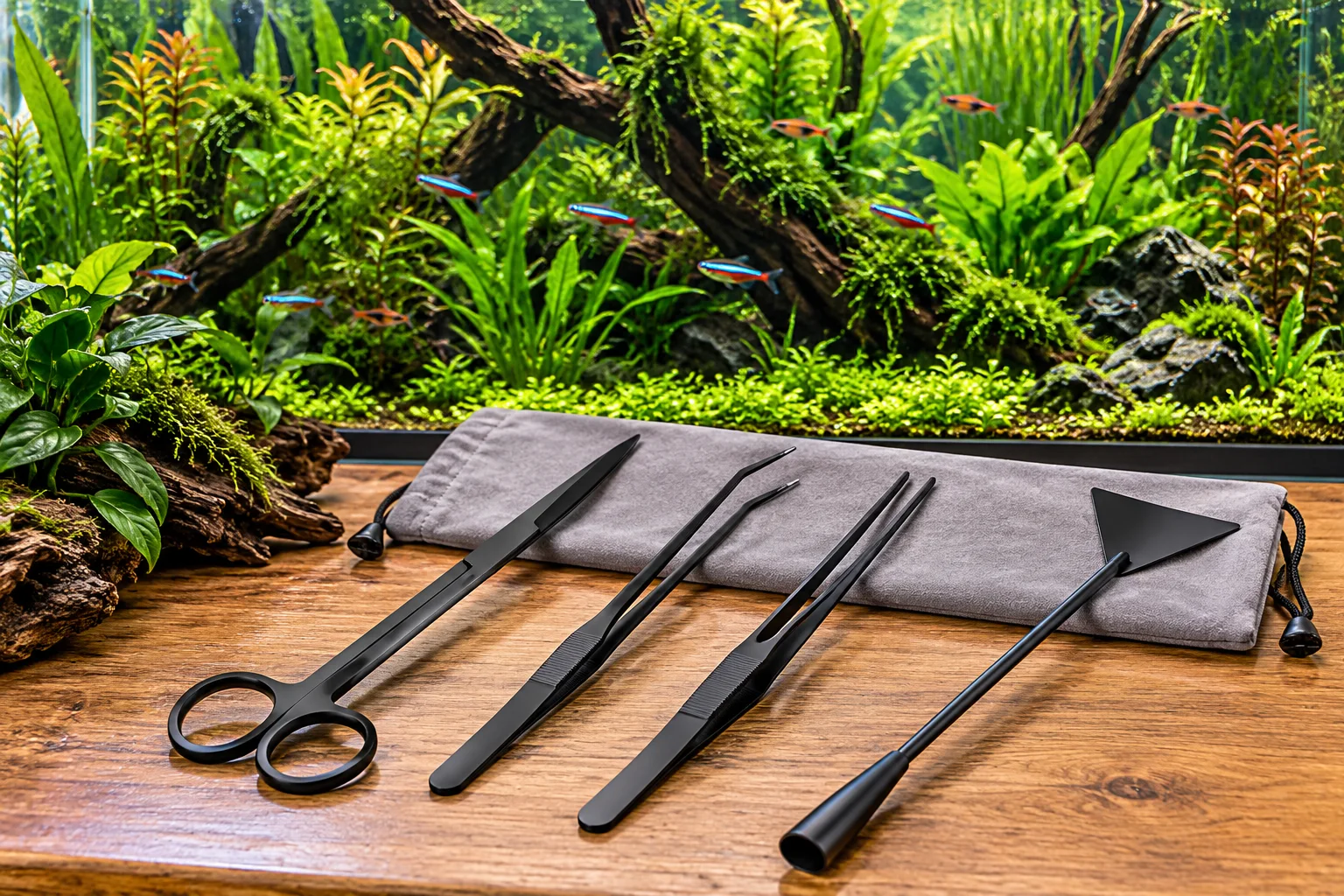
Coolrunner
Coolrunner 4 in 1 Aquarium Aquascape Tools Kit, Stainless Steel
Best for: Planting, trimming and maintaining freshwater planted aquariums
As an Amazon Associate, we earn from qualifying purchases.