Dutch Style Aquascaping: How to Create a Classic Planted Aquarium
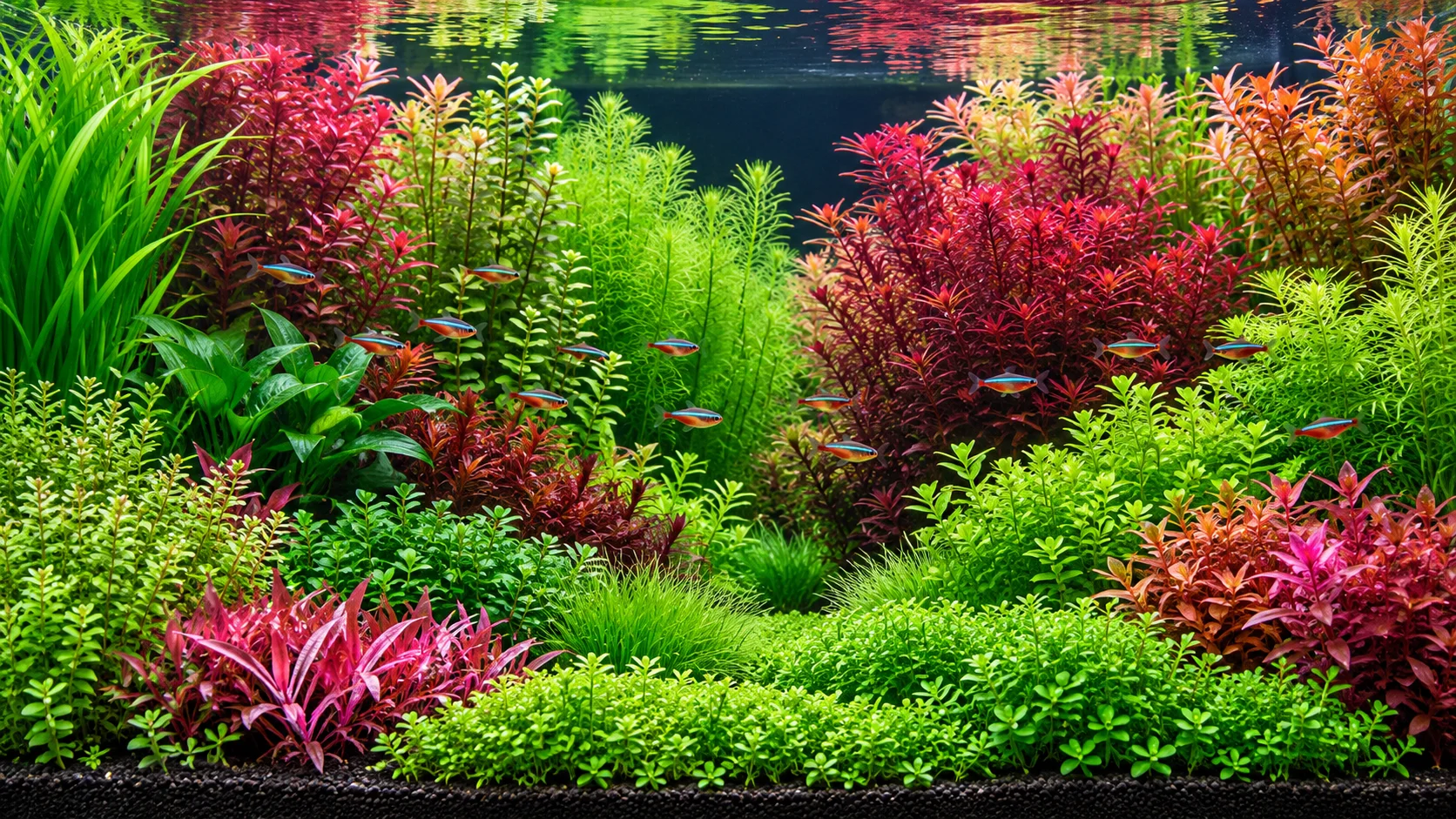
Dutch-style aquascaping uses aquatic plants as the main structure of the aquarium. Discover how plant grouping, colour contrast, height and regular trimming can create a striking, highly organised planted display.
Dutch-style aquascaping is one of the oldest and most distinctive approaches to creating a planted aquarium. Rather than using dramatic pieces of wood, carefully positioned rocks or open areas of substrate, the plants themselves become the structure of the aquascape.
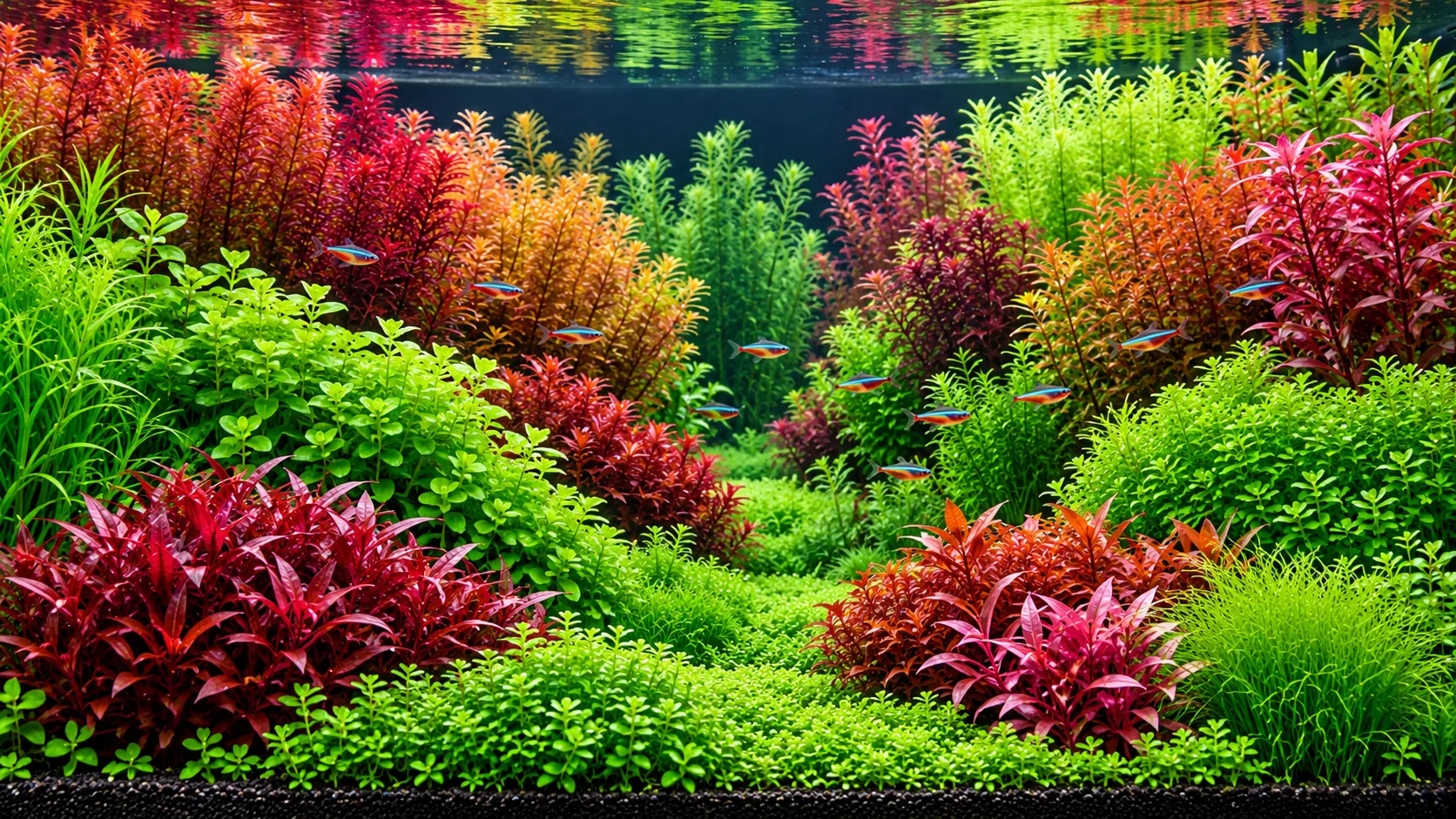
A well-designed Dutch aquarium can look almost like a formal garden underwater. Different species are arranged into clearly defined groups, with contrasting colours, leaf shapes and heights used to create depth and visual interest. Red plants may sit alongside bright green stems, broad leaves contrast with fine foliage, and carefully maintained rows lead the eye towards the rear of the aquarium.
It is an impressive style, but it is also one that rewards planning and regular maintenance. The real challenge isn't simply growing lots of plants. It is keeping each group healthy, dense and clearly separated from those around it.
Where did Dutch-style aquascaping come from?
Dutch aquascaping developed in the Netherlands during the early decades of the modern aquarium hobby. The Nederlandse Bond Aqua Terra, or NBAT, was founded in 1930, and the organisation played an important role in developing and documenting the Dutch approach to planted aquariums. Formal guidelines were introduced during the 1950s and helped establish many of the principles still associated with the style today.
This makes Dutch aquascaping considerably older than many of the styles that later became popular internationally.
Unlike Nature Aquarium layouts, which often attempt to recreate the appearance of landscapes using stone, wood and plants, the traditional Dutch aquarium puts almost all of the visual emphasis on plant growth.
Rocks and wood may be absent completely, or used so subtly that they disappear beneath the planting.
Plants create the structure
One of the biggest mistakes when attempting a Dutch-style aquarium is assuming that filling the tank with as many colourful plants as possible will automatically produce the correct appearance.
In reality, restraint is important. Each species should normally occupy its own recognisable area. Rather than individual stems being scattered throughout the aquarium, plants are grown together to form dense groups or bushes.
The plants surrounding each group are deliberately chosen to provide contrast. A fine-leaved Rotala, for example, can look particularly effective alongside a broader-leaved species. A dark green Cryptocoryne can provide contrast beside a brighter green stem plant, while carefully positioned red plants can create strong focal areas.
Colour is certainly important, but leaf shape, texture and height are just as significant.
Putting several similar green stem plants beside one another can cause the groups to visually merge together. Strong Dutch layouts remain easy to read even when the aquarium is densely planted because the individual sections remain distinct. The Aquatic Gardeners Association identifies contrast between neighbouring plant groups as one of the fundamental principles of the style.
Creating the famous Dutch plant streets
One of the most recognisable features of Dutch aquascaping is the plant "street". Despite the name, this doesn't necessarily mean creating a perfectly straight row of plants.
A plant street usually starts relatively prominently towards the front or middle of the aquarium before narrowing or rising towards the back. This uses perspective to make the aquarium appear deeper than it actually is.
Plants such as Lobelia cardinalis, Staurogyne repens and some smaller Cryptocoryne species can work particularly well for creating this effect.
The height of individual plants can gradually increase as the group moves backwards. Viewed from the front, the eye naturally follows the planting into the aquarium.
Good plant streets are subtle. If they are too straight or uniform they can look artificial, while poorly maintained streets quickly disappear as neighbouring plants grow into them.
Choosing plants for a Dutch aquascape
Stem plants are particularly useful because they can be shaped through repeated trimming.
Rotala, Ludwigia, Limnophila and Hygrophila species can all be used, but a Dutch aquarium shouldn't consist entirely of stem plants. Cryptocoryne, Anubias, Echinodorus, grasses and other contrasting plants can help break up the layout.
Red plants are especially valuable, although they need to be used carefully.
Ludwigia species, Alternanthera reineckii and some Rotala varieties can produce impressive red, orange or pink growth under suitable conditions. These colours naturally attract attention, which means positioning several strong red groups next to one another can actually weaken the composition rather than improve it.
A smaller number of carefully positioned colourful plants usually has more impact.
Traditional Dutch guidelines also discourage using too many species. One commonly referenced rule is approximately one species for every 10cm of aquarium length. The purpose isn't to prevent variety, but to ensure that each species has enough room to form a substantial group rather than creating a collection of tiny patches.
For an aquarium being created for enjoyment rather than competition, there is no reason to follow every traditional rule exactly. The principles behind them, however, remain extremely useful.
Lighting, CO₂ and fertilisation
Although it is possible to borrow ideas from Dutch aquascaping in a lower-tech planted aquarium, a heavily planted traditional Dutch layout normally benefits from good lighting, consistent CO₂ injection and regular fertilisation.
There is simply a lot of plant material competing for resources. Strong lighting also makes it easier to achieve compact growth and develop the colouration associated with many red stem plants. Increasing lighting without supplying the plants with adequate carbon and nutrients, however, can create problems with algae.
Consistency is more important than simply using the strongest equipment available.
CO₂ should remain stable throughout the lighting period, circulation needs to distribute nutrients and carbon around the entire aquarium, and fertilisation should provide the plants with sufficient macro and micronutrients.
Dense planting can make water circulation more difficult as the aquarium matures, so this needs to be considered when positioning filter outlets and choosing circulation equipment.
Trimming is part of the design
A Dutch aquascape is never really finished. Plants grow, groups expand and the balance of the aquarium continually changes. Regular pruning therefore becomes part of maintaining the design rather than simply a way of stopping plants from reaching the surface.
Stem plants are often trimmed and replanted to encourage dense bushes. Individual groups may be shaped into gentle curves, slopes or terraces.
Timing becomes particularly important. If one group is freshly trimmed while everything around it is fully grown, the aquascape can temporarily look unbalanced. Experienced Dutch aquascapers often learn how quickly individual species recover after pruning and stagger their maintenance accordingly.
This is one reason Dutch aquascaping can become surprisingly demanding. The plants must not only survive; they need to look good at roughly the same time.
Using height to create depth
A simple arrangement of short plants at the front and tall plants at the back will create some depth, but a good Dutch layout is usually more complicated than that.
Plant heights rise and fall across the aquarium. A tall group might sit towards one side while a much shorter group beside it reveals planting further towards the rear. Elsewhere, a plant street can gradually climb towards the back of the tank.
Traditional layouts may also use tall plants towards the front corners. Sometimes referred to as curtain plants, these partially frame the aquarium and can help increase the impression of depth. Vallisneria and suitable Cryptocoryne species are sometimes used in this way.
The result should feel layered rather than simply divided into foreground, middle and background.
What about the fish?
Plants may be the main attraction, but fish remain an important part of a Dutch aquarium.
Relatively peaceful schooling fish tend to work particularly well because they provide movement without visually overpowering the planting. Tetras, rasboras and some smaller rainbowfish are obvious possibilities depending on the size and water conditions of the aquarium.
A reasonably sized shoal generally looks more effective than several small groups of unrelated species.
Bottom-dwelling fish can also be included, although species that constantly uproot plants or disturb the substrate aren't ideal for such a carefully maintained layout.
Fish colours can even be considered as part of the overall design. A shoal of bright fish swimming in front of darker green planting can provide another layer of contrast.
As always, however, stocking decisions should be based first on the aquarium's size, water conditions and the requirements of the fish rather than appearance alone.
Is a Dutch aquascape suitable for beginners?
There is nothing stopping a beginner from creating a Dutch-inspired planted aquarium, but maintaining a traditional example to a very high standard takes experience.
The difficulty isn't necessarily getting the aquarium started. Modern LED lighting, planted substrates, fertilisers and CO₂ systems make growing aquatic plants considerably more accessible than it once was.
The challenge comes several months later when everything is growing.
Fast-growing stem plants may need regular trimming. Slower species have to be prevented from becoming shaded, plant groups need reshaping and nutrients must remain consistent despite the large amount of vegetation.
For someone who enjoys growing aquatic plants, this maintenance can actually be one of the most enjoyable parts of the aquarium.
A different approach to aquascaping
Dutch aquascaping demonstrates that an impressive aquarium doesn't need a spectacular piece of driftwood or carefully positioned rock formation.
The plants can provide everything. Colour, texture, depth and structure are produced almost entirely through the selection, positioning and maintenance of different aquatic species.
It is a more formal and controlled approach than many modern aquascaping styles, and it certainly requires regular attention. But when it is done well, very few planted aquariums can match the colour and detail of a mature Dutch-style display.
Even if you don't want to follow traditional Dutch rules precisely, the principles are worth learning. Better plant grouping, stronger contrast, controlled use of colour and careful trimming can improve almost any planted aquarium.
If you want to know more about other aquascaping styles we have an article called Different Types of Aquascapes - a Guide to Aquascaping Styles which you may find useful.
Products We've Mentioned & Recommend
Below you'll find a selection of products we've mentioned in this article, along with a few others we think you might find useful. We've included Amazon links to make them easy to find.
A quick word about affiliate links...
Some of these links are affiliate links, which means we may earn a small commission from qualifying purchases, at no extra cost to you.
Unfortunately, the commission doesn't quite stretch to cocktails on a yacht or a garage full of sports cars. In reality, it helps cover the running costs of this website and, with a bit of luck, might eventually buy me a new pair of waders that don't leak!
We only recommend products we genuinely believe are worth considering, and your support helps us keep sharing free advice from our years of working with aquariums and ponds.
Thanks for supporting Aquatic Specialist!
As an Amazon Associate I earn from qualifying purchases.
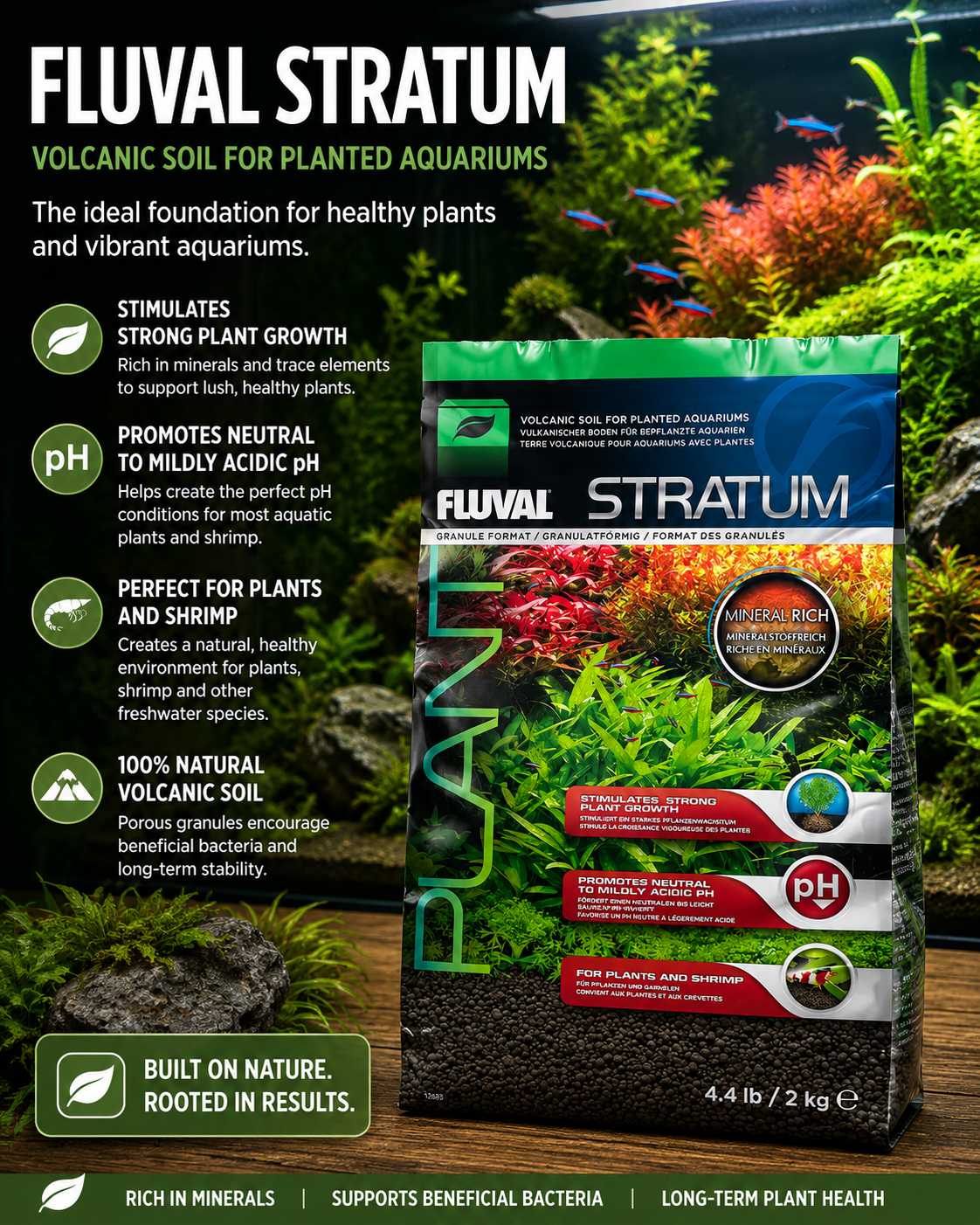
Fluval
Fluval Stratum Aquasoil 8kg
Best for: Planted aquariums, aquascapes and freshwater shrimp tanks
As an Amazon Associate, we earn from qualifying purchases.
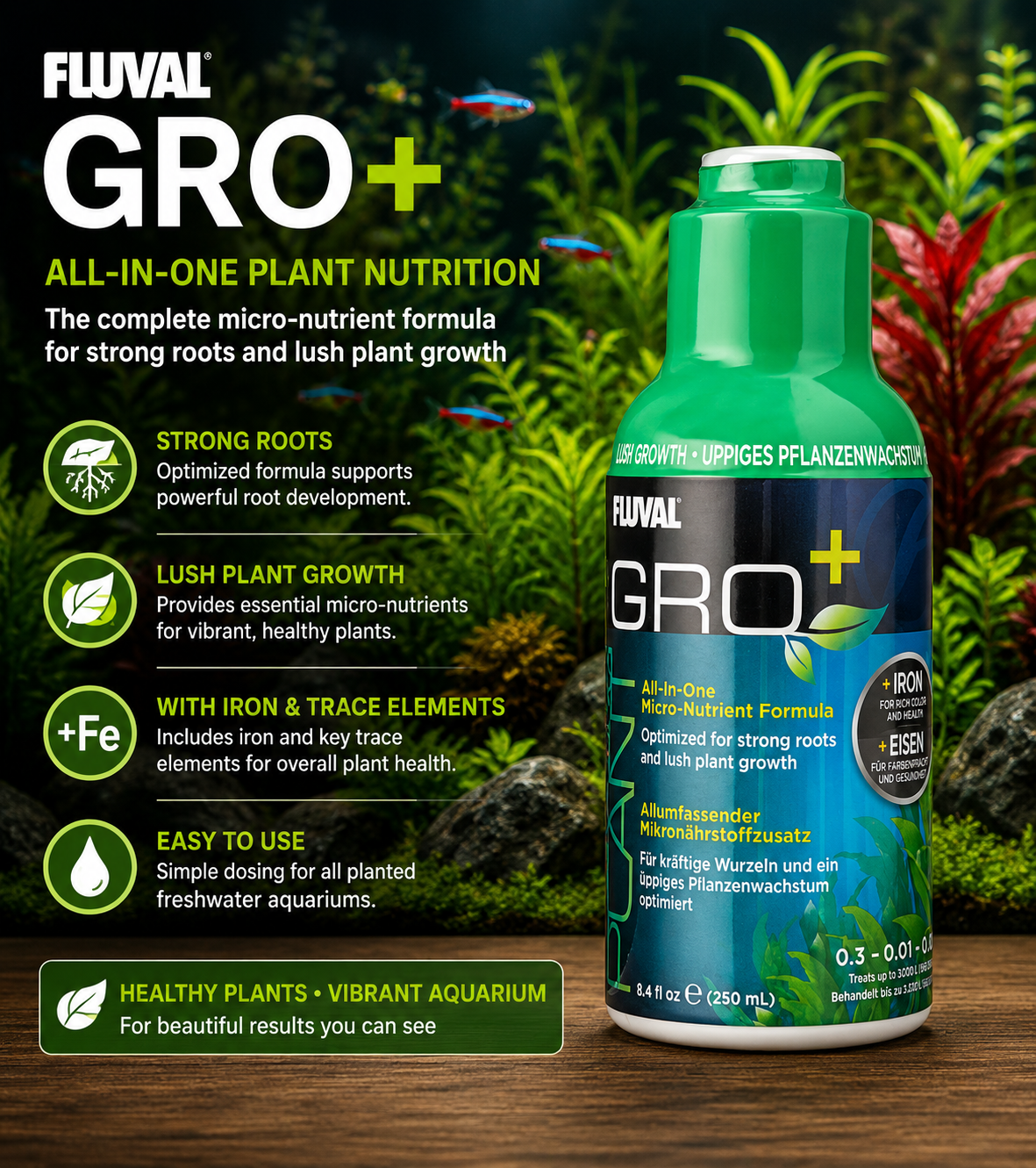
Fluval
Fluval Gro Plus Aquarium Plant Fertiliser
Best for: Low-tech and everyday planted freshwater aquariums
As an Amazon Associate, we earn from qualifying purchases.
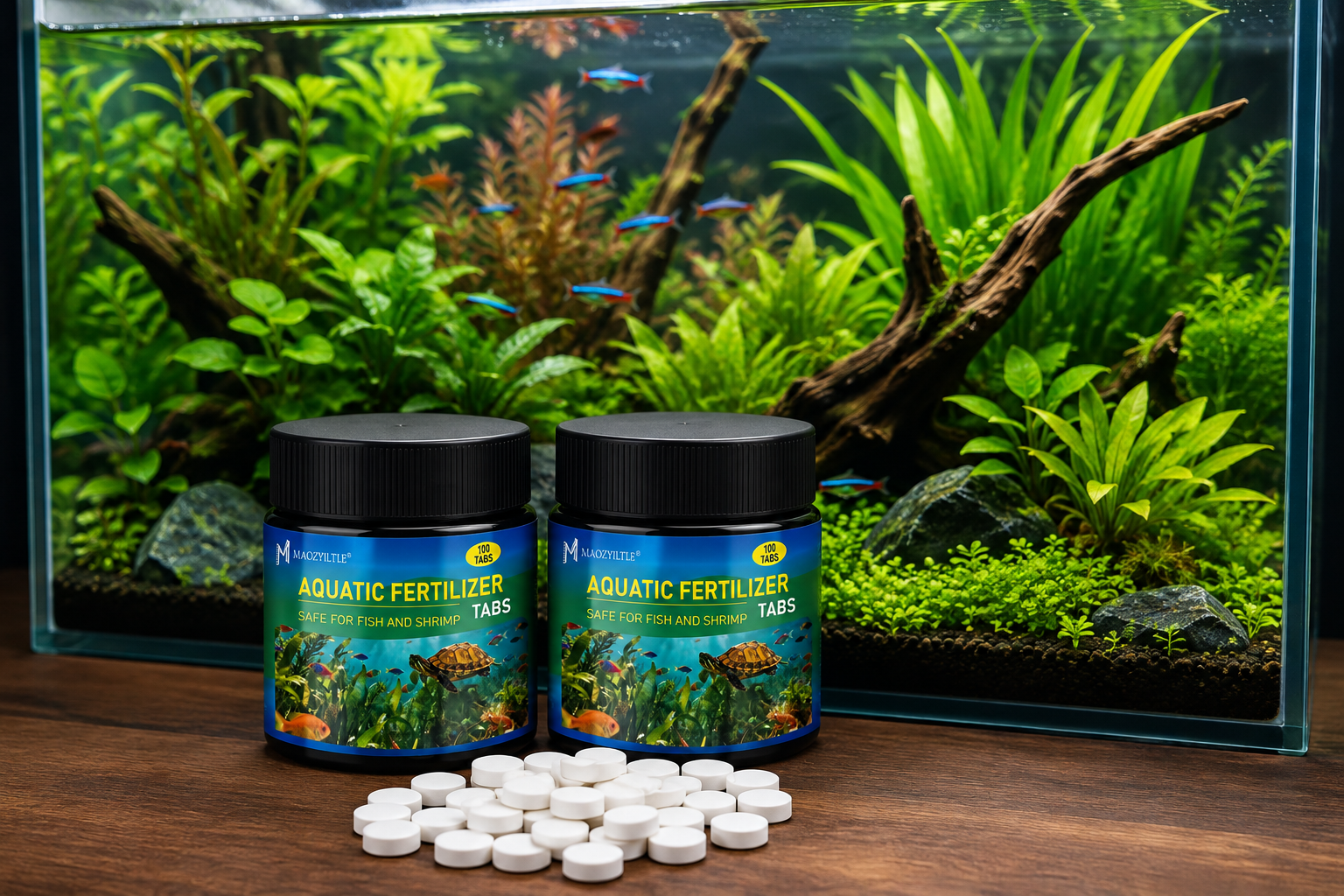
Newpie
Root Tabs for Live Aquarium Plants, Freshwater Plant Fertilizer - 100 x 2
Best for: Cryptocoryne, Amazon swords, Vallisneria and other heavy root-feeding aquarium plants
As an Amazon Associate, we earn from qualifying purchases.