Ryoboku Aquascaping: Creating a Natural Driftwood Aquascape
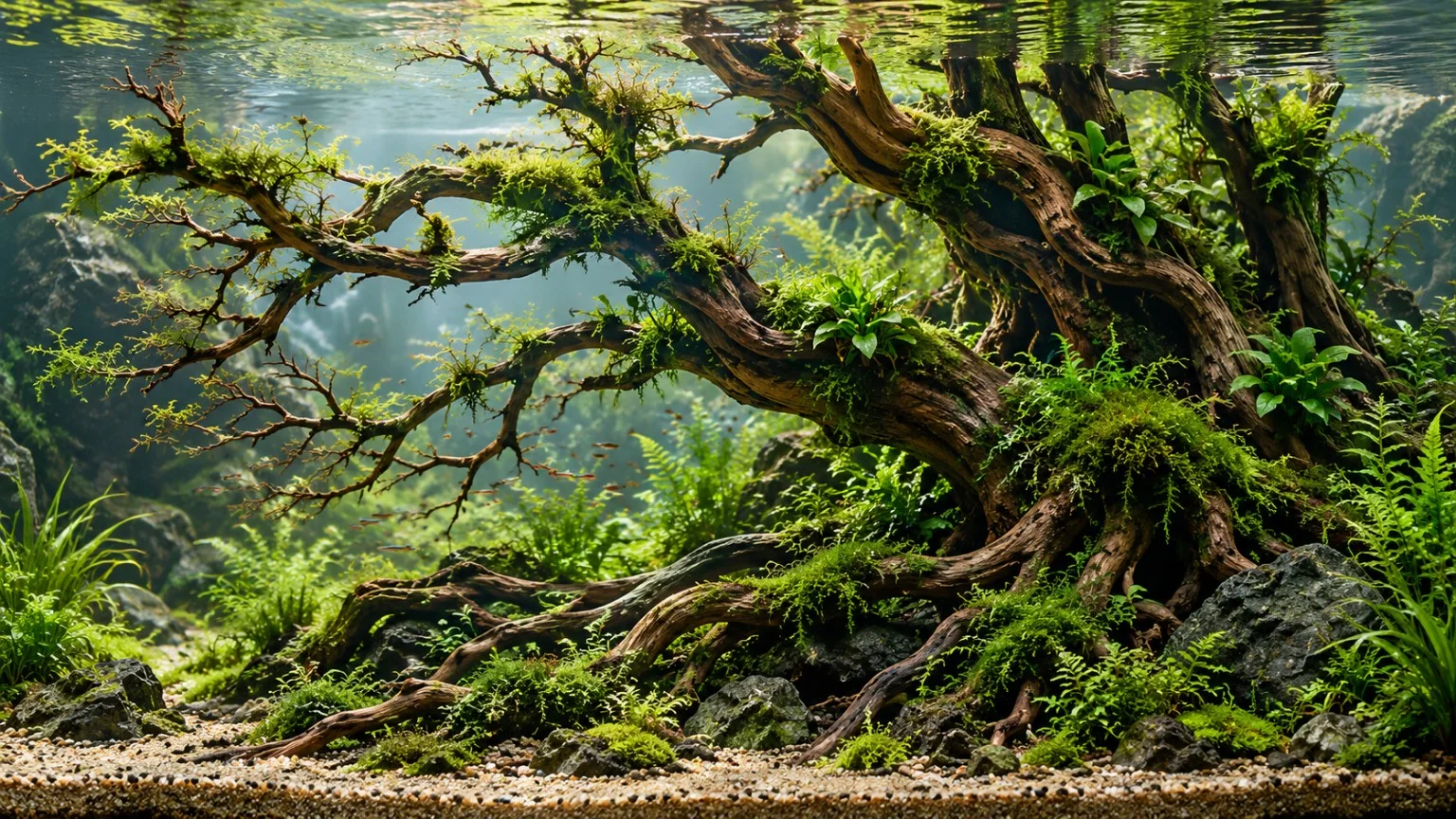
Ryoboku aquascaping uses driftwood as the main structural feature of the aquarium. Learn how wood, epiphytes, mosses and careful planting can be combined to create a natural, mature-looking underwater landscape.
Ryoboku is an aquascaping style in which wood takes centre stage. Rather than relying on dramatic rock formations or large groups of colourful plants, the structure of the aquarium is created primarily from driftwood, roots and branches arranged to resemble something that might naturally occur along a riverbank, beneath a fallen tree or among the exposed roots of a forest stream.
The name Ryoboku comes from the Japanese word for driftwood, and this gives a fairly good indication of what makes the style distinctive. Wood isn't simply added as decoration. It forms the skeleton of the entire aquascape.
A successful Ryoboku aquarium should ideally feel as though the wood has been underwater for years. Plants grow around it, moss creeps along the branches and roots disappear naturally into the substrate. When it is done well, it can create one of the most atmospheric styles of planted aquarium.
What defines a Ryoboku aquascape?
The most important characteristic of Ryoboku is the dominance of wood within the hardscape.
Large pieces may create the main structure while smaller branches continue the direction and flow of the composition. Rocks can certainly be included, particularly around the base of the wood, but they normally support the layout rather than becoming the main feature.
This makes Ryoboku quite different from Iwagumi.
An Iwagumi aquascape relies heavily on the position, proportion and relationship between rocks. Ryoboku is generally much more organic. Branches can twist in different directions, roots can overlap one another and areas of shadow can form underneath larger pieces.
The objective isn't necessarily to make everything neat.
Natural wood formations are rarely symmetrical, and some of the best Ryoboku layouts contain a certain amount of controlled disorder. The skill lies in arranging that disorder so the aquarium still has visual direction and balance.
Finding the right wood
Choosing the wood is arguably the most important part of creating a Ryoboku aquarium.
Spider wood, Redmoor root, Manzanita and more traditional aquarium driftwoods can all work well. Branching pieces are particularly useful because several individual sections can be combined to create the appearance of one much larger root system or fallen tree.
It usually helps to choose pieces with a similar texture and colour.
Mixing several noticeably different types of wood can make the composition look assembled rather than natural. Using one main type creates continuity across the aquascape, even when numerous individual pieces are involved.
Before adding substrate or plants, spend some time experimenting with the hardscape.
Turn the wood around. Tilt it. Place pieces partly on top of one another and look at the aquarium from several angles.
A surprisingly uninteresting piece of wood can become extremely useful when rotated into the right position.
The direction of the branches is particularly important. If most of them naturally point towards the same area, they guide the eye through the aquarium and create a sense of movement.
Creating depth with driftwood
Ryoboku is very good at creating the illusion of depth.
One way of achieving this is to use larger, thicker pieces towards the front of the aquarium and progressively smaller branches further towards the rear.
This exaggerates perspective.
Substrate can also be built higher towards the back, allowing some of the rear pieces of wood to sit considerably higher than those in the foreground.
Try to avoid placing every piece on exactly the same horizontal plane.
Some branches can extend forward towards the viewing glass while others disappear towards the back of the aquarium. This creates layers rather than what can otherwise become a flat wall of driftwood.
Open space is equally important.
There is often a temptation to keep adding wood simply because Ryoboku is a wood-based style. However, the gaps between branches are part of the design. They provide areas of light and shadow and allow the viewer to see through the structure.
An open area of sand or low planting can also provide an effective contrast against a heavily wooded section.
Planting a Ryoboku aquarium
Plants help transform an arrangement of driftwood into something that looks established and natural.
Epiphytes are particularly useful because they can grow directly on the hardscape.
Anubias, Bucephalandra, Java fern and Bolbitis can all work extremely well. Their rhizomes can be attached to the wood using aquarium-safe adhesive, thread or fine fishing line until the roots begin to establish themselves.
Mosses are another obvious choice.
Rather than covering every branch, it is usually more convincing to concentrate moss in selected areas where you might expect vegetation to accumulate naturally. Forks between branches, shaded sections and the upper surfaces of larger pieces are particularly effective positions.
Over time the moss can soften the edges of the hardscape and give the wood the appearance of having been underwater for considerably longer than it actually has.
Rooted plants can then be used around the base.
Cryptocoryne species work particularly well in more natural-looking layouts, while smaller plants such as Staurogyne repens can help blend the transition between the hardscape and substrate.
More demanding aquascapes might use carpeting plants and fine-leaved stems, but Ryoboku doesn't necessarily need to be a high-tech planted aquarium.
A relatively simple combination of wood, Cryptocoryne, Anubias, Java fern and moss can create a very convincing layout.
Light, shadow and atmosphere
One of the advantages of working with branching wood is the amount of natural shadow it produces.
This can make Ryoboku aquariums particularly atmospheric.
Instead of trying to illuminate every part of the aquarium equally, darker spaces underneath roots and branches can add considerable depth. Bright planting in the foreground or background then appears even more vivid by comparison.
This is something worth considering when positioning the wood.
A large horizontal branch close to the substrate might create a dark cave-like area beneath it, while finer branches higher in the aquarium can frame brighter open water behind them.
The result can resemble the edge of a submerged forest or the tangled root system of a tree growing alongside a tropical stream.
Choosing fish for a Ryoboku aquascape
Fish should complement the scale of the aquascape rather than overwhelm it.
A reasonably large group of small schooling fish often works particularly well. Tetras, rasboras and other small community species can provide movement through the open spaces between branches without distracting from the hardscape.
A single larger group will usually look more natural than several small groups of unrelated species.
Fish colour can also be used carefully.
Bright fish provide a strong contrast against dark wood, while more understated species can strengthen the natural appearance of the aquarium.
Bottom-dwelling fish may also work well provided there is enough accessible substrate and the layout suits their behaviour.
As with any aquascape, the requirements of the fish should come before the appearance of the design. Dense areas of wood must not reduce swimming space excessively or create areas where fish can become trapped.
Preparing driftwood for the aquarium
Some pieces of aquarium wood will initially float, so they may need soaking or securing before the aquarium is filled.
Wood can also release tannins, particularly when new. These may give the water a yellow or tea-coloured appearance. Tannins are not necessarily a problem, but they can be reduced through soaking and water changes if clear water is preferred.
New driftwood also commonly develops a pale or translucent biofilm during the first few weeks.
It can look alarming if you haven't encountered it before, but it is usually temporary. It can be removed manually during maintenance and will normally reduce as the aquarium matures.
The more important consideration is making sure the wood is suitable for aquarium use rather than simply collecting attractive branches from outside and placing them straight into the tank.
Maintaining the finished aquascape
Ryoboku layouts can look wonderfully mature once mosses and epiphytes become established, but they still require maintenance.
Moss in particular can eventually obscure the shape of the driftwood.
Regular trimming keeps individual branches visible and prevents the aquarium gradually turning into a solid mass of vegetation.
Java fern, Anubias and similar plants may also need thinning as mature specimens begin producing large numbers of new leaves and plantlets.
Debris is another consideration.
Complex arrangements of roots and branches create plenty of places where uneaten food, dead plant material and other organic waste can collect. Good circulation and regular maintenance around the hardscape are therefore important.
The wood should remain visible.
It is the main structural feature of the aquarium, so allowing plants to completely hide it eventually removes much of what makes a Ryoboku aquascape distinctive.
Is Ryoboku suitable for beginners?
Ryoboku can actually be a good style for someone creating their first serious aquascape.
Unlike some highly structured styles, there isn't one rigid formula that has to be followed. Natural pieces of wood already contain interesting shapes, curves and textures, which means much of the visual complexity is provided by the hardscape itself.
It is also possible to create a Ryoboku aquarium using relatively undemanding plants.
The challenge comes from composition.
Simply filling an aquarium with attractive pieces of driftwood doesn't automatically produce a convincing aquascape. The pieces need to relate to one another and appear to form part of the same natural structure.
It is worth spending considerably more time arranging the dry hardscape than you initially think necessary. Photograph different versions before deciding which one works best.
Once the aquarium has been planted and filled, making major changes becomes considerably more difficult.
A style that becomes better with age
Perhaps the most appealing feature of a Ryoboku aquarium is the way it matures.
When first constructed, the relationship between the individual pieces of wood can still be obvious. After several months, plant roots begin gripping the hardscape, moss spreads into small cracks and the planting around the base starts to soften the transitions.
Eventually the individual components begin to look like one structure.
That is when Ryoboku tends to be at its best.
Rather than creating a perfectly manicured underwater garden, the style can produce something that feels older, slightly wilder and more believable — as though a small section of a riverbank or submerged forest has simply been captured inside the aquarium.
For aquarists who enjoy the natural shapes of driftwood and want a planted aquarium with plenty of texture, depth and character, Ryoboku remains one of the most versatile aquascaping styles to explore.
If you want to know more about other aquascaping styles we have an article called Different Types of Aquascapes - a Guide to Aquascaping Styles which you may find useful.
Products We've Mentioned & Recommend
Below you'll find a selection of products we've mentioned in this article, along with a few others we think you might find useful. We've included Amazon links to make them easy to find.
A quick word about affiliate links...
Some of these links are affiliate links, which means we may earn a small commission from qualifying purchases, at no extra cost to you.
Unfortunately, the commission doesn't quite stretch to cocktails on a yacht or a garage full of sports cars. In reality, it helps cover the running costs of this website and, with a bit of luck, might eventually buy me a new pair of waders that don't leak!
We only recommend products we genuinely believe are worth considering, and your support helps us keep sharing free advice from our years of working with aquariums and ponds.
Thanks for supporting Aquatic Specialist!
As an Amazon Associate I earn from qualifying purchases.
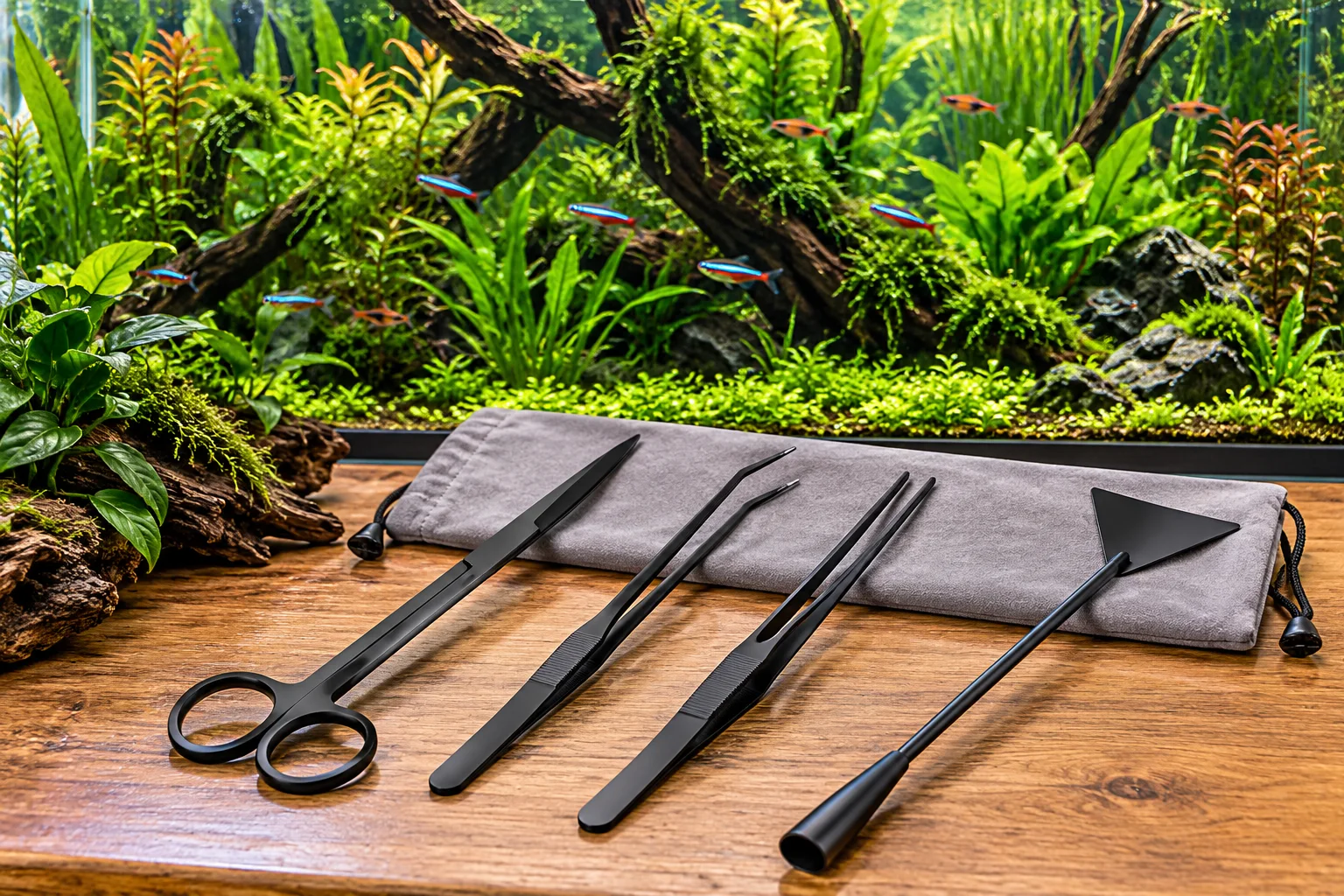
Coolrunner
Coolrunner 4 in 1 Aquarium Aquascape Tools Kit, Stainless Steel
Best for: Planting, trimming and maintaining freshwater planted aquariums
As an Amazon Associate, we earn from qualifying purchases.
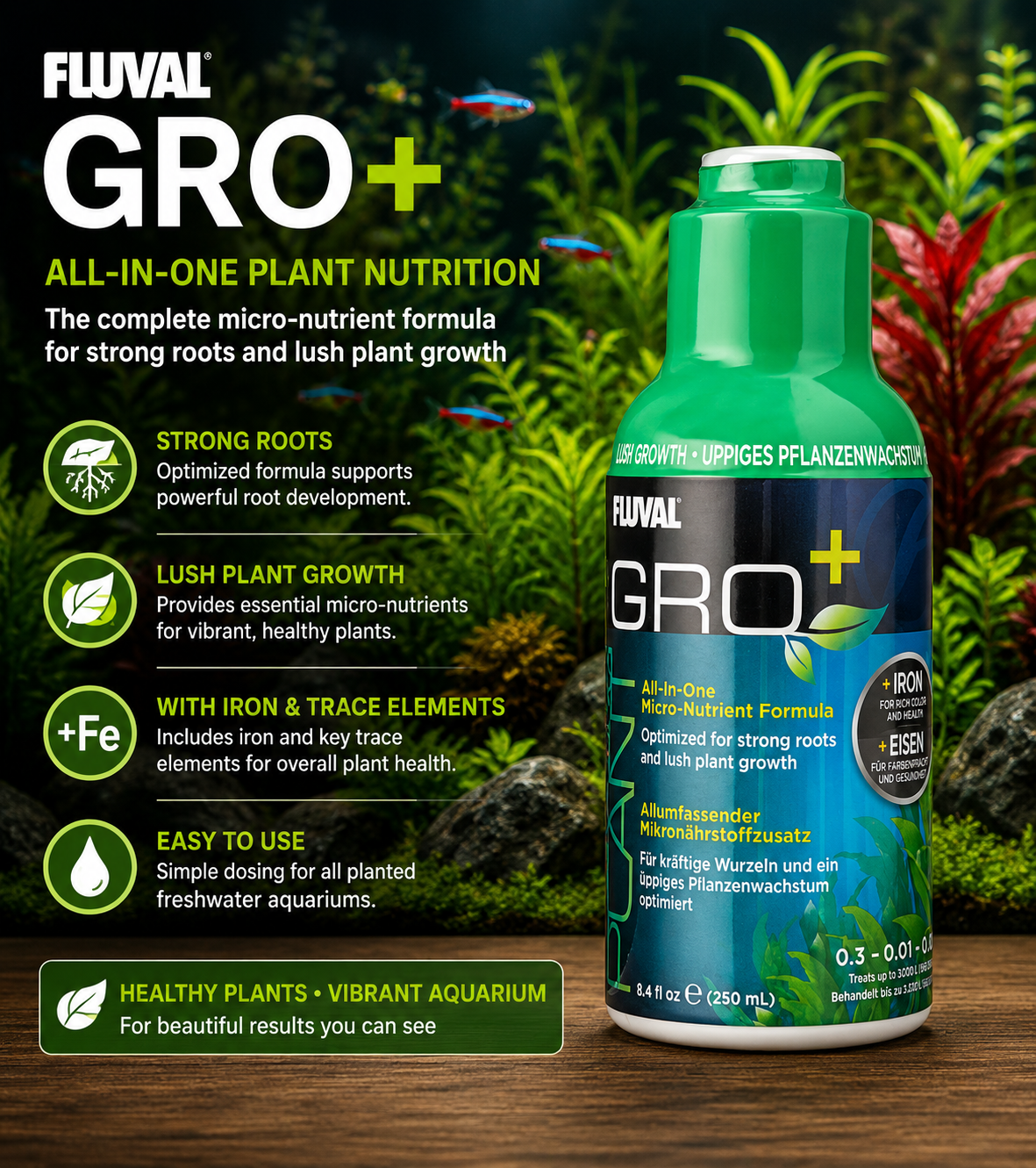
Fluval
Fluval Gro Plus Aquarium Plant Fertiliser
Best for: Low-tech and everyday planted freshwater aquariums
As an Amazon Associate, we earn from qualifying purchases.
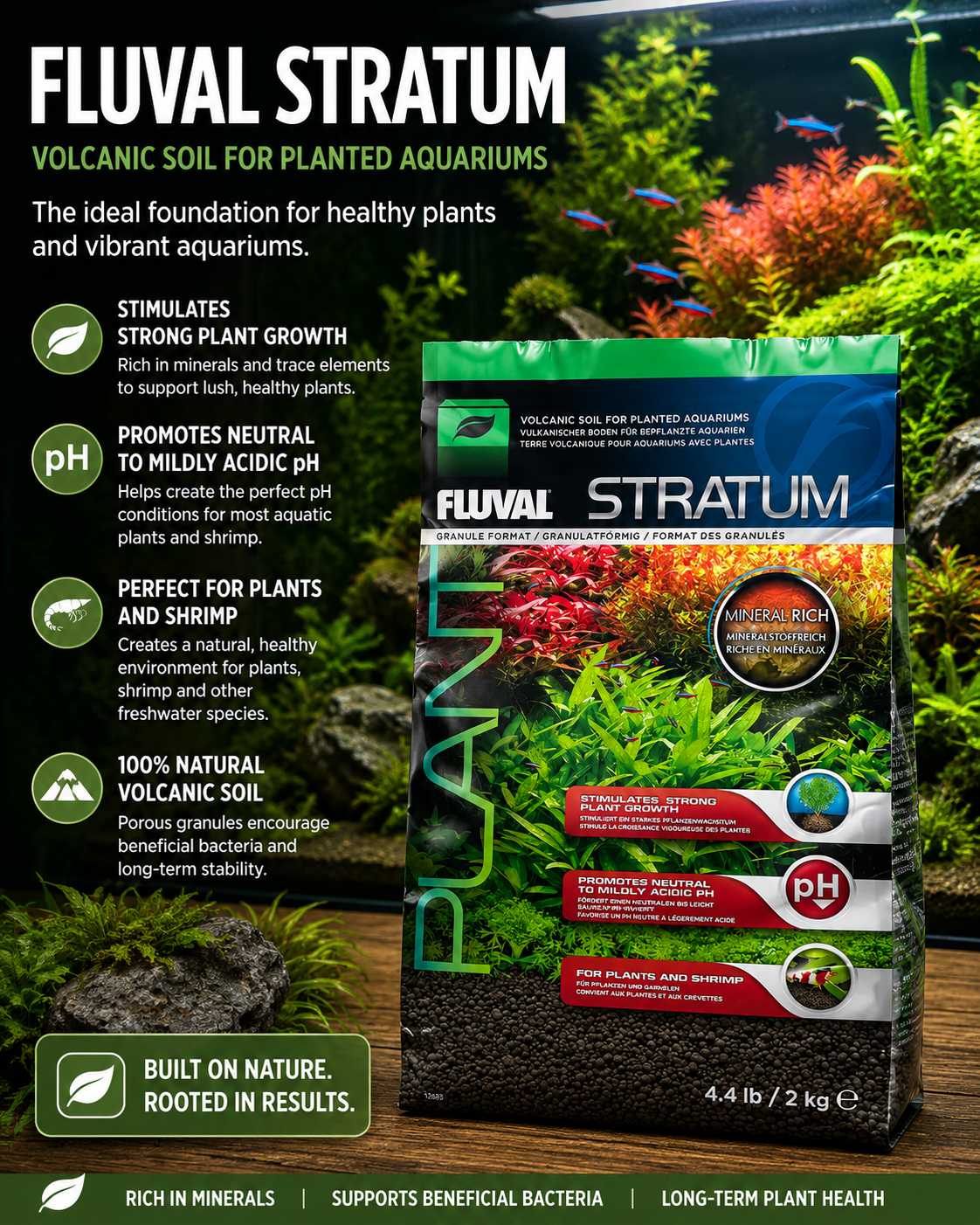
Fluval
Fluval Stratum Aquasoil 8kg
Best for: Planted aquariums, aquascapes and freshwater shrimp tanks
As an Amazon Associate, we earn from qualifying purchases.
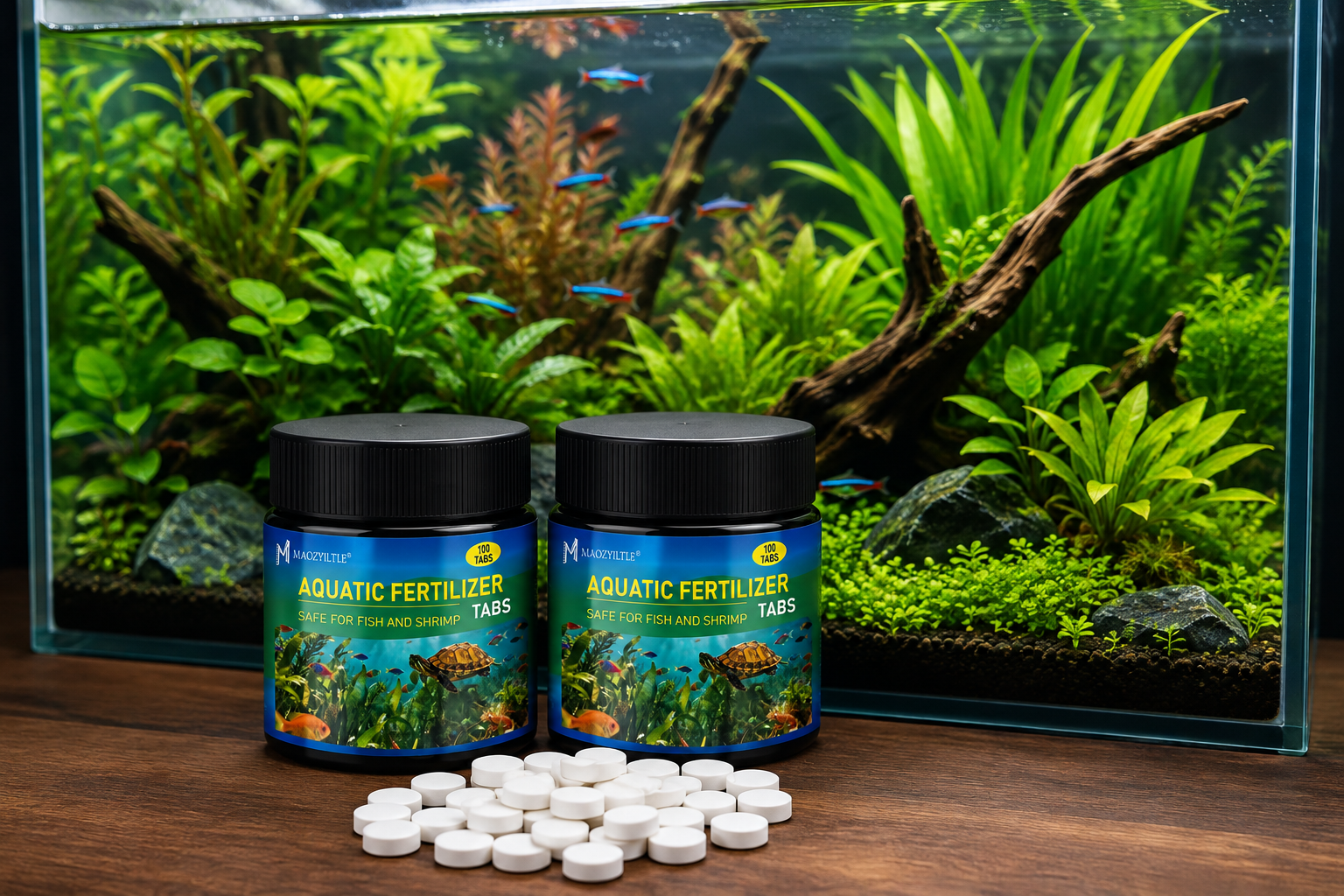
Newpie
Root Tabs for Live Aquarium Plants, Freshwater Plant Fertilizer - 100 x 2
Best for: Cryptocoryne, Amazon swords, Vallisneria and other heavy root-feeding aquarium plants
As an Amazon Associate, we earn from qualifying purchases.