Diorama Aquascapes
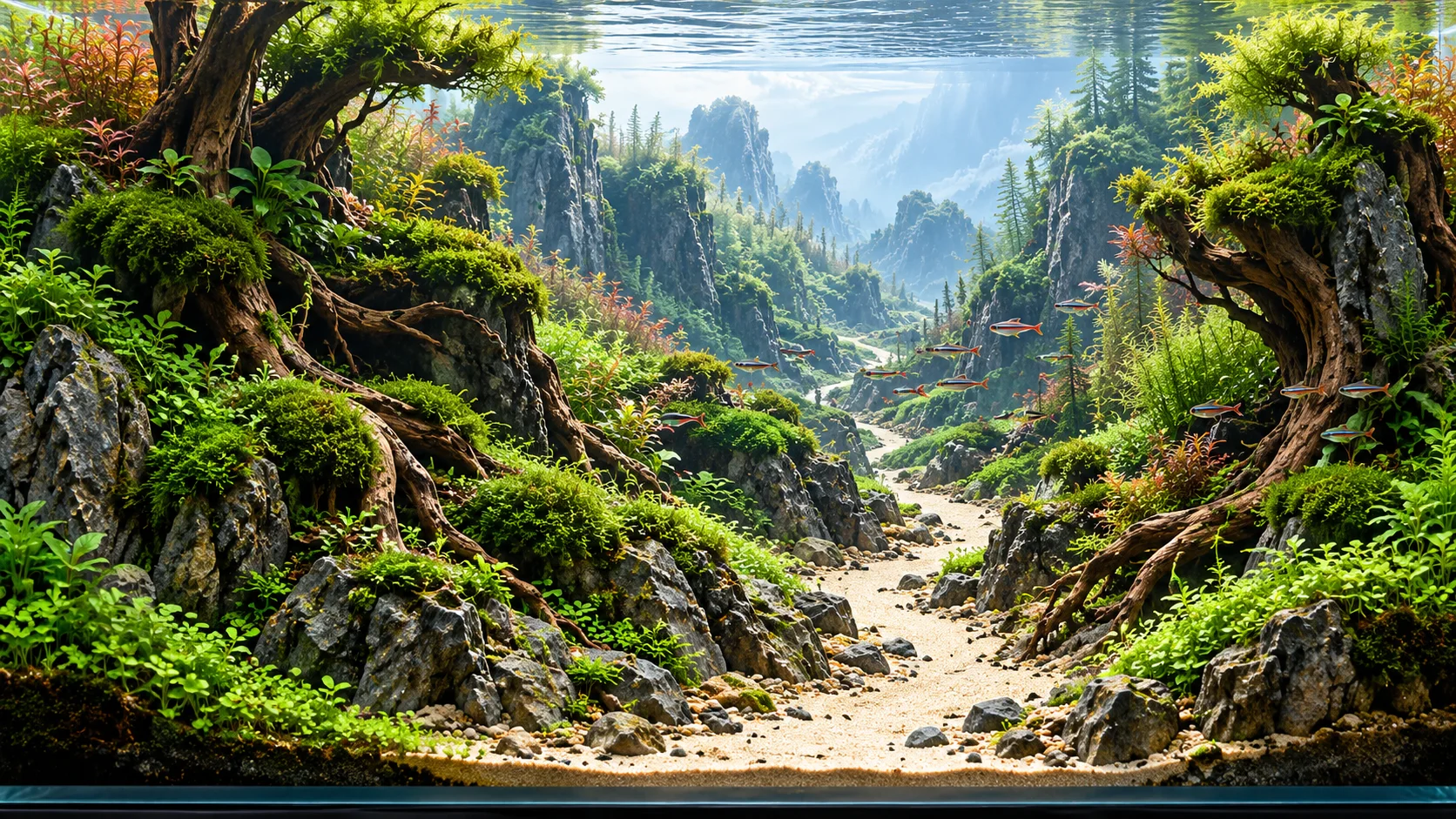
Diorama aquascaping transforms an aquarium into a miniature landscape, using carefully arranged rocks, plants, slopes and perspective to create the illusion of mountains, valleys, forests and pathways stretching into the distance.
Diorama aquascaping is one of the most visually dramatic styles of planted aquarium. Rather than simply arranging plants, rocks and wood into an attractive underwater scene, the aim is to create the illusion of a much larger natural landscape in miniature.
A successful diorama aquascape can resemble a mountain valley, forest path, cliff face, canyon or rolling hillside. The aquarium becomes less like a conventional fish tank and more like a carefully composed landscape viewed through glass.
This style has become increasingly popular in competitive aquascaping because it allows the aquascaper to use perspective, scale and depth in a very deliberate way. However, diorama layouts do not have to be competition-level displays. The same ideas can be used in home aquariums to create a strong sense of depth and a much more immersive appearance.
What is a diorama aquascape?
A diorama aquascape is designed to recreate a terrestrial-style landscape underwater.
Instead of concentrating purely on the natural arrangement of hardscape and plants, the aquascaper often uses visual techniques borrowed from landscape photography, model making and garden design. The goal is to make the aquarium appear deeper and more expansive than it really is.
Paths that narrow into the distance, rocks that become progressively smaller towards the back and carefully controlled plant height can all help create this illusion.
The effect can be surprisingly convincing. A relatively shallow aquarium may appear to contain a long valley disappearing into the distance, while a group of strategically arranged rocks can look like a huge mountain range when viewed from the correct angle.
Diorama layouts are therefore less about copying an exact underwater habitat and more about creating a believable miniature landscape.
How diorama aquascaping differs from other styles
Diorama aquascaping shares some ideas with Nature Aquarium layouts, particularly the use of natural materials and dense planting. However, the composition is usually more deliberately designed around perspective.
A Nature Aquarium might aim to suggest a natural riverbank, woodland or aquatic environment while still retaining an organic appearance. A diorama aquascape often takes the illusion further by deliberately manipulating scale.
Iwagumi layouts can also use perspective, particularly through carefully arranged stones and carpeting plants, but they normally remain much simpler. Diorama aquascapes tend to contain more layers, more detailed hardscape and a wider variety of textures.
Jungle aquascapes sit at the opposite end of the spectrum in some respects. A Jungle layout often allows plants to grow naturally and densely, whereas a diorama aquascape usually requires much more control to maintain its intended shape.
The result is a style that can look extremely natural at first glance while actually being one of the most carefully constructed forms of aquascaping.
Creating depth and perspective
Perspective is at the heart of a successful diorama aquascape.
One of the most effective techniques is to create a pathway, stream or open area that becomes narrower towards the rear of the aquarium. This naturally leads the eye into the scene and creates the impression that the landscape continues beyond the physical depth of the tank.
Substrate can also be built up towards the back. A steep rise in substrate height makes the rear of the aquarium appear further away while allowing smaller plants and rocks to sit higher in the composition.
Hardscape size is equally important.
Larger stones and pieces of wood are usually placed towards the foreground, while progressively smaller pieces are used further back. Because our eyes associate smaller objects with greater distance, this simple technique can significantly increase the apparent depth of the layout.
The same principle applies to plants.
Larger-leaved species generally work better towards the foreground or sides, while small-leaved plants can be used towards the rear to create the illusion of distance.
Choosing the hardscape
Rock is often the dominant hardscape material in diorama aquascaping.
Seiryu-style stone, dragon stone and similar highly textured rocks can work particularly well because their surfaces resemble cliffs, mountains and exposed rock formations when viewed at a smaller scale.
The key is to select rocks that look as though they belong together. Differences in colour, texture and structure can quickly break the illusion.
Where possible, choose stones from the same type of rock and arrange them so that the direction of their layers or fractures follows a similar pattern.
Wood can also play an important role.
Thin branching wood can represent fallen trees, exposed roots or miniature woodland. Larger pieces may be partially buried within the substrate to create the impression of tree roots emerging from a hillside.
However, hardscape should support the landscape rather than overwhelm it. One of the easiest mistakes to make is adding too many dramatic individual features, which can leave the aquarium looking more like a collection of ornaments than a coherent scene.
Substrate and elevation
A completely flat substrate rarely works well in a diorama layout.
Creating elevation helps build both depth and structure. The substrate may rise steeply towards the back corners, form terraces around rocks or slope down towards a central path.
Because these slopes can be much steeper than those used in a conventional planted aquarium, they often require support.
Aquascapers may use rocks, filter media bags or other inert materials beneath the visible substrate to create height without filling the entire aquarium with expensive soil.
Hardscape can then be positioned around these raised areas to hold everything in place.
Care should be taken during construction because steep substrate slopes can gradually flatten over time, particularly if fish disturb them.
Small retaining stones hidden within the layout can help prevent movement.
Plant choice
Plants in a diorama aquascape are chosen as much for their scale as their colour or growth habit.
Carpeting plants are particularly important.
Species such as Monte Carlo, dwarf hairgrass and Glossostigma can create the appearance of grassland, meadows or low vegetation. When allowed to spread between rocks, they soften the hardscape and help make the scene appear established.
Mosses are extremely useful around stone and wood. They can create the illusion of mature woodland, vegetation clinging to cliffs or old tree roots covered in growth.
Small-leaved stem plants can be used in the background to resemble distant bushes or trees.
The important point is to think about each plant in relation to the scale of the landscape.
A large Amazon sword, for example, may look completely out of place in a scene designed to resemble a distant mountain valley because its leaves immediately reveal the true scale of the aquarium.
Small-leaved species generally make it easier to maintain the illusion.
Colour and contrast
Colour should usually be used carefully.
Large areas of bright red plants can dominate the scene and reduce the sense of scale, although small patches of colour can work extremely well as focal points.
Different shades of green can be more effective.
Dark green moss and shadowed planting around the foreground can contrast with brighter green plants towards the centre or rear, creating additional depth.
The same principle is often seen in landscape photography, where atmospheric perspective makes distant areas appear lighter and less visually dominant.
Aquascapers can imitate this effect using plant colour, lighting and open space.
Choosing fish for a diorama aquascape
Fish should complement the scale of the aquascape rather than overpower it.
Small schooling species are usually ideal because they help reinforce the impression that the landscape is much larger than it really is.
Small rasboras, tetras and similar community fish can work particularly well.
A large fish swimming across a carefully constructed miniature valley can quickly break the illusion, while a shoal of small fish moving through the landscape often enhances it.
Shrimp can also work well in heavily planted diorama aquariums, although they may be difficult to see within particularly detailed layouts.
The aquarium should still be stocked according to normal fishkeeping requirements. Visual design should never take priority over appropriate space, water quality and compatibility.
Lighting and CO₂
Many diorama aquascapes are relatively demanding planted systems.
Dense carpeting plants, compact growth and carefully shaped stems usually benefit from strong lighting and stable CO₂ injection.
CO₂ is not essential for every diorama aquarium, but it greatly expands the range of plants that can be used and makes it easier to maintain dense, compact growth.
Without CO₂, a simpler low-tech interpretation is still possible.
Mosses, Cryptocoryne, smaller Anubias varieties and slower-growing foreground plants can all be incorporated into diorama-style layouts, although the final appearance will usually be less manicured.
Good lighting remains important because shadows are part of the composition. Directional lighting can highlight ridges and valleys within the hardscape, making the aquarium appear even more three-dimensional.
Maintenance
Diorama aquascapes can require more maintenance than simpler styles.
Once the plants begin to grow strongly, they may gradually hide the careful perspective that was built into the original layout.
Carpets require trimming, stems may need to be replanted and moss must often be kept under control.
Plants growing in the rear of the aquarium are particularly important. If they become too tall or bulky, the illusion of distance can disappear.
Regular trimming is therefore not simply about keeping the aquarium tidy. It is part of maintaining the visual scale of the landscape.
Hardscape should also be inspected occasionally. Substrate movement, plant roots and burrowing fish can gradually alter slopes and pathways.
Is diorama aquascaping suitable for beginners?
A simple diorama layout can certainly be attempted by someone relatively new to aquascaping, but highly detailed examples can be technically challenging.
The main difficulty is often planning.
With more naturalistic styles, plants can sometimes be allowed to develop organically. In a diorama aquascape, small changes in rock position, pathway width or plant height can dramatically affect the sense of perspective.
It is usually worth spending plenty of time arranging the hardscape before adding water.
Take photographs from the front of the aquarium during construction. This often makes it easier to see whether the perspective is working.
It can also help to temporarily remove yourself from the aquarium and look again later. Small adjustments that are difficult to notice while working closely on the layout can become obvious when viewed with fresh eyes.
Final thoughts
Diorama aquascaping combines planted aquarium design with the principles of miniature landscape creation.
At its best, the style can make a relatively small aquarium feel remarkably large. Carefully positioned rocks become mountains, carpeting plants resemble rolling grassland and a narrow pathway can appear to stretch far into the distance.
The most successful layouts are not necessarily those containing the most hardscape or the greatest number of plants. They are the ones where every element contributes to the same illusion.
For anyone who enjoys detailed aquascaping, planning compositions and experimenting with perspective, the diorama style offers enormous creative potential.
It takes patience to build and regular maintenance to preserve, but when the proportions, planting and perspective come together, a diorama aquascape can create one of the most impressive visual effects possible in a planted aquarium.
If you want to know more about other aquascaping styles we have an article called Different Types of Aquascapes - a Guide to Aquascaping Styles which you may find useful.
Products We've Mentioned & Recommend
Below you'll find a selection of products we've mentioned in this article, along with a few others we think you might find useful. We've included Amazon links to make them easy to find.
A quick word about affiliate links...
Some of these links are affiliate links, which means we may earn a small commission from qualifying purchases, at no extra cost to you.
Unfortunately, the commission doesn't quite stretch to cocktails on a yacht or a garage full of sports cars. In reality, it helps cover the running costs of this website and, with a bit of luck, might eventually buy me a new pair of waders that don't leak!
We only recommend products we genuinely believe are worth considering, and your support helps us keep sharing free advice from our years of working with aquariums and ponds.
Thanks for supporting Aquatic Specialist!
As an Amazon Associate I earn from qualifying purchases.
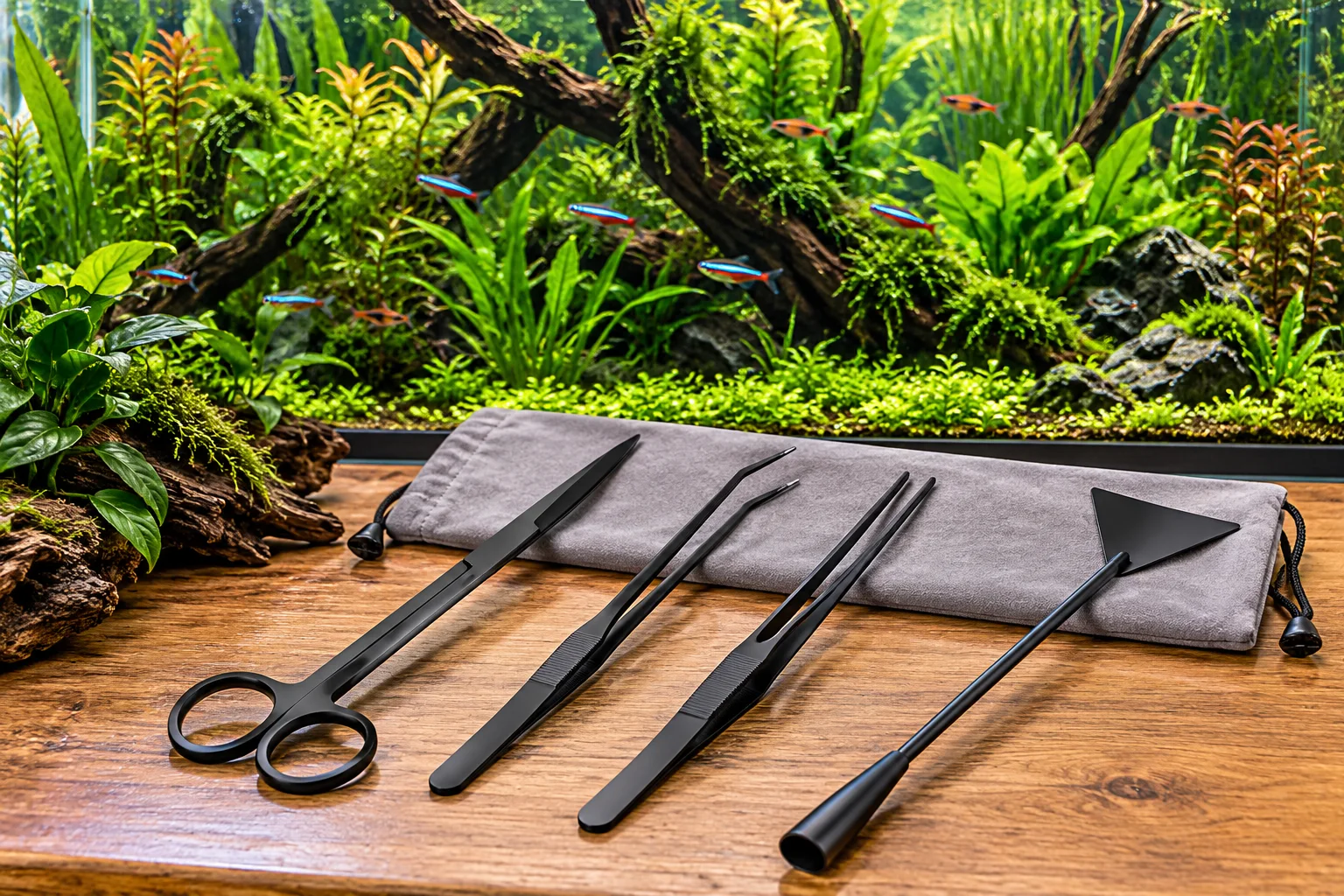
Coolrunner
Coolrunner 4 in 1 Aquarium Aquascape Tools Kit, Stainless Steel
Best for: Planting, trimming and maintaining freshwater planted aquariums
As an Amazon Associate, we earn from qualifying purchases.
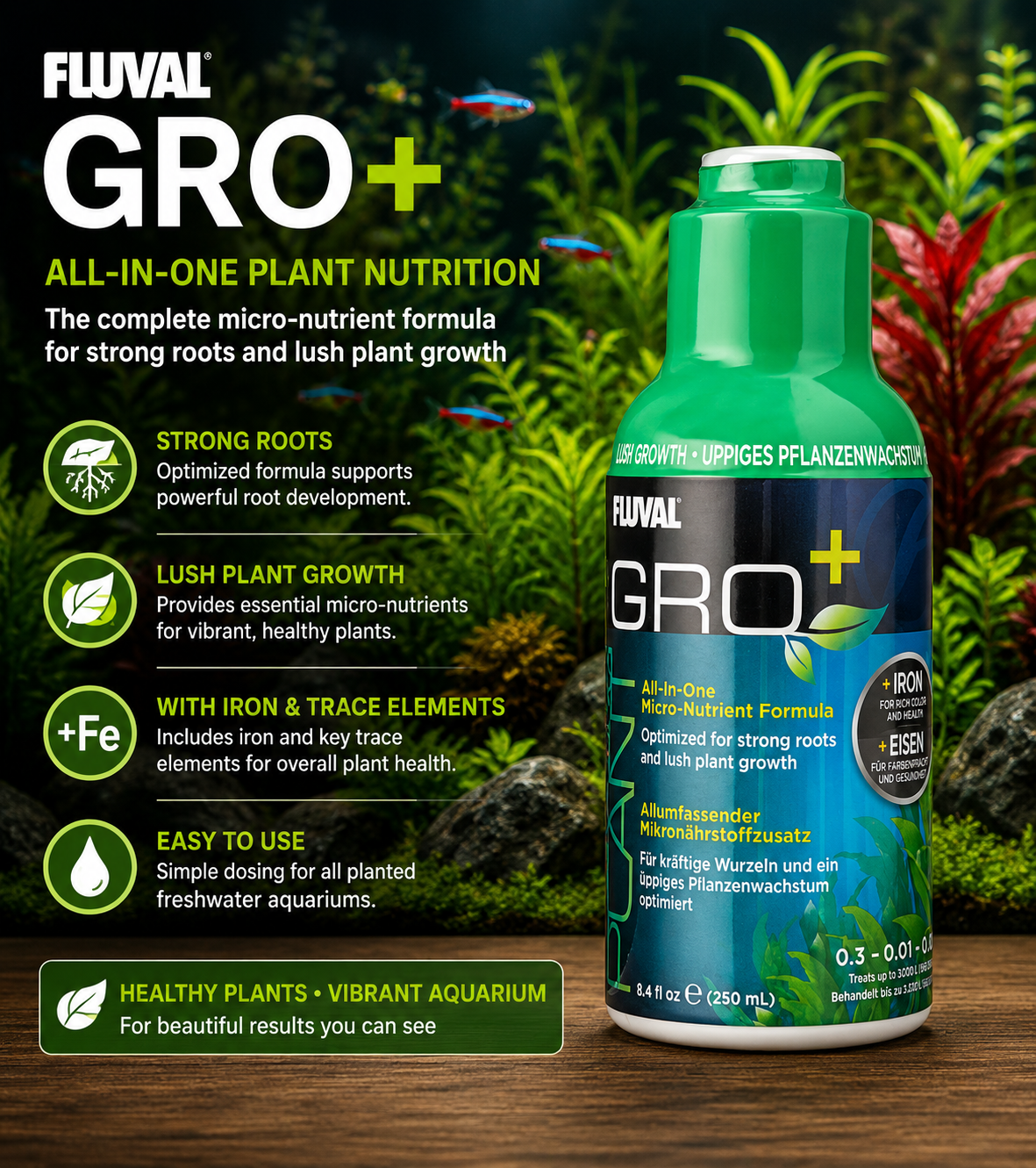
Fluval
Fluval Gro Plus Aquarium Plant Fertiliser
Best for: Low-tech and everyday planted freshwater aquariums
As an Amazon Associate, we earn from qualifying purchases.
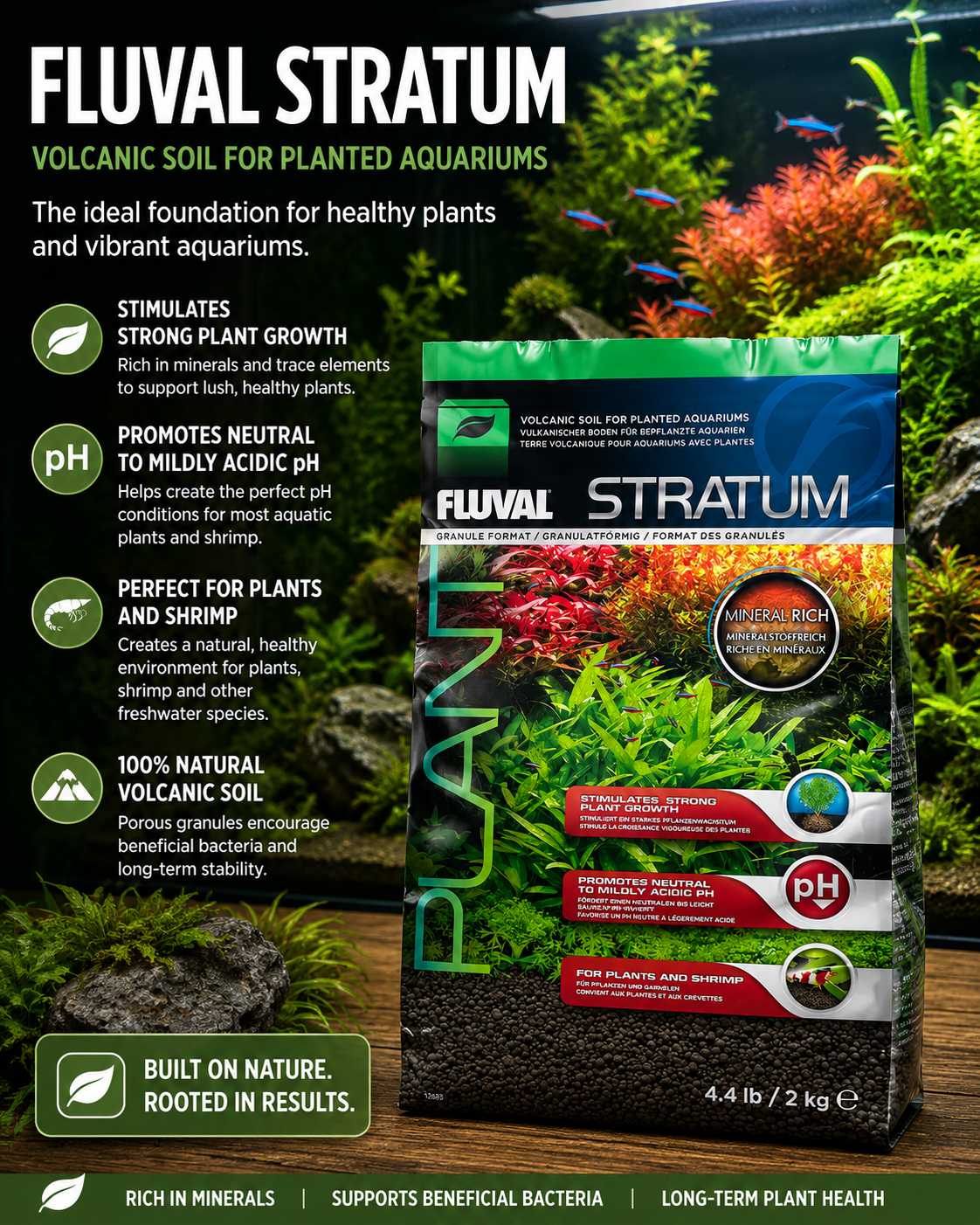
Fluval
Fluval Stratum Aquasoil 8kg
Best for: Planted aquariums, aquascapes and freshwater shrimp tanks
As an Amazon Associate, we earn from qualifying purchases.
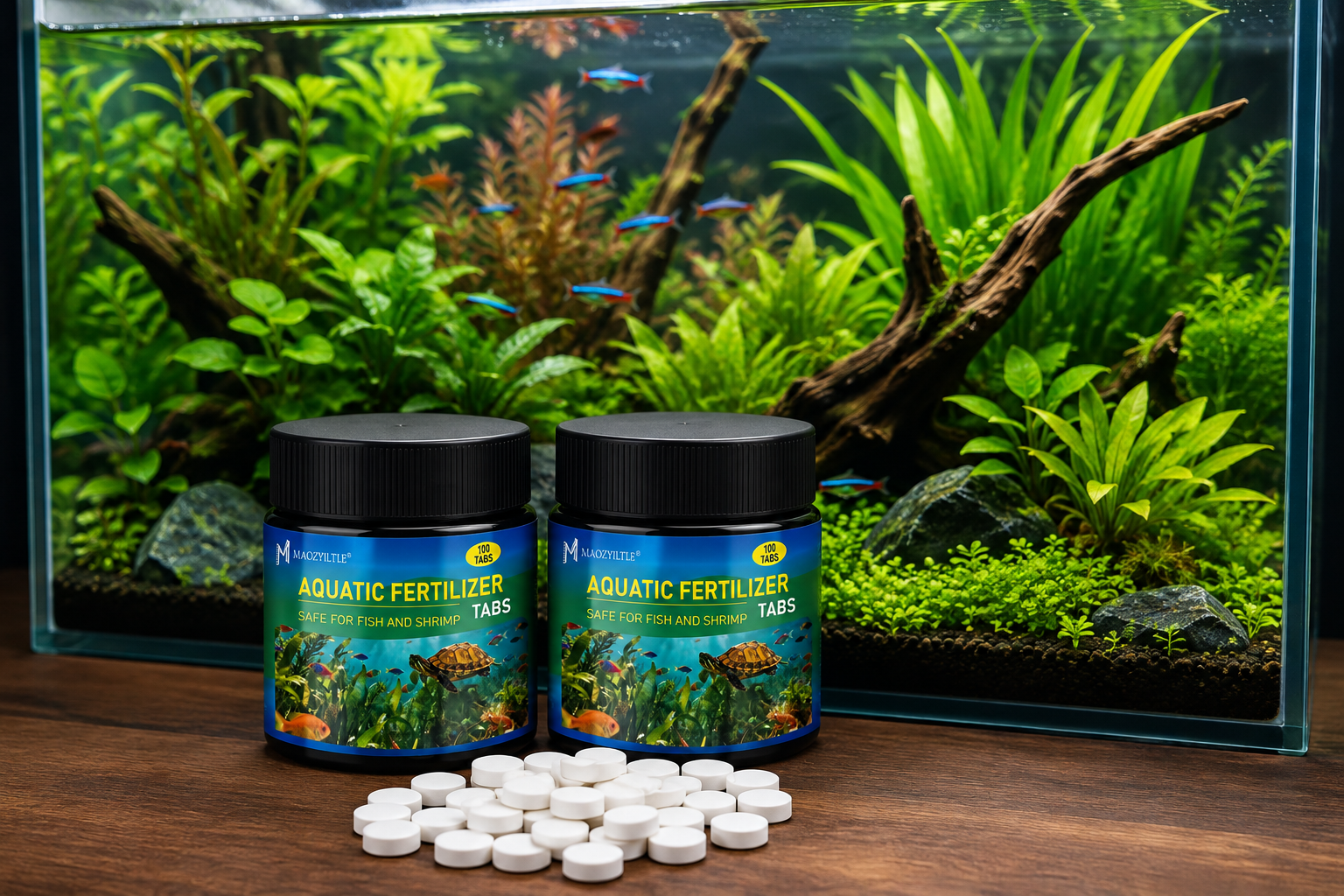
Newpie
Root Tabs for Live Aquarium Plants, Freshwater Plant Fertilizer - 100 x 2
Best for: Cryptocoryne, Amazon swords, Vallisneria and other heavy root-feeding aquarium plants
As an Amazon Associate, we earn from qualifying purchases.