The Best Clean-Up Crew for a Planted Aquarium
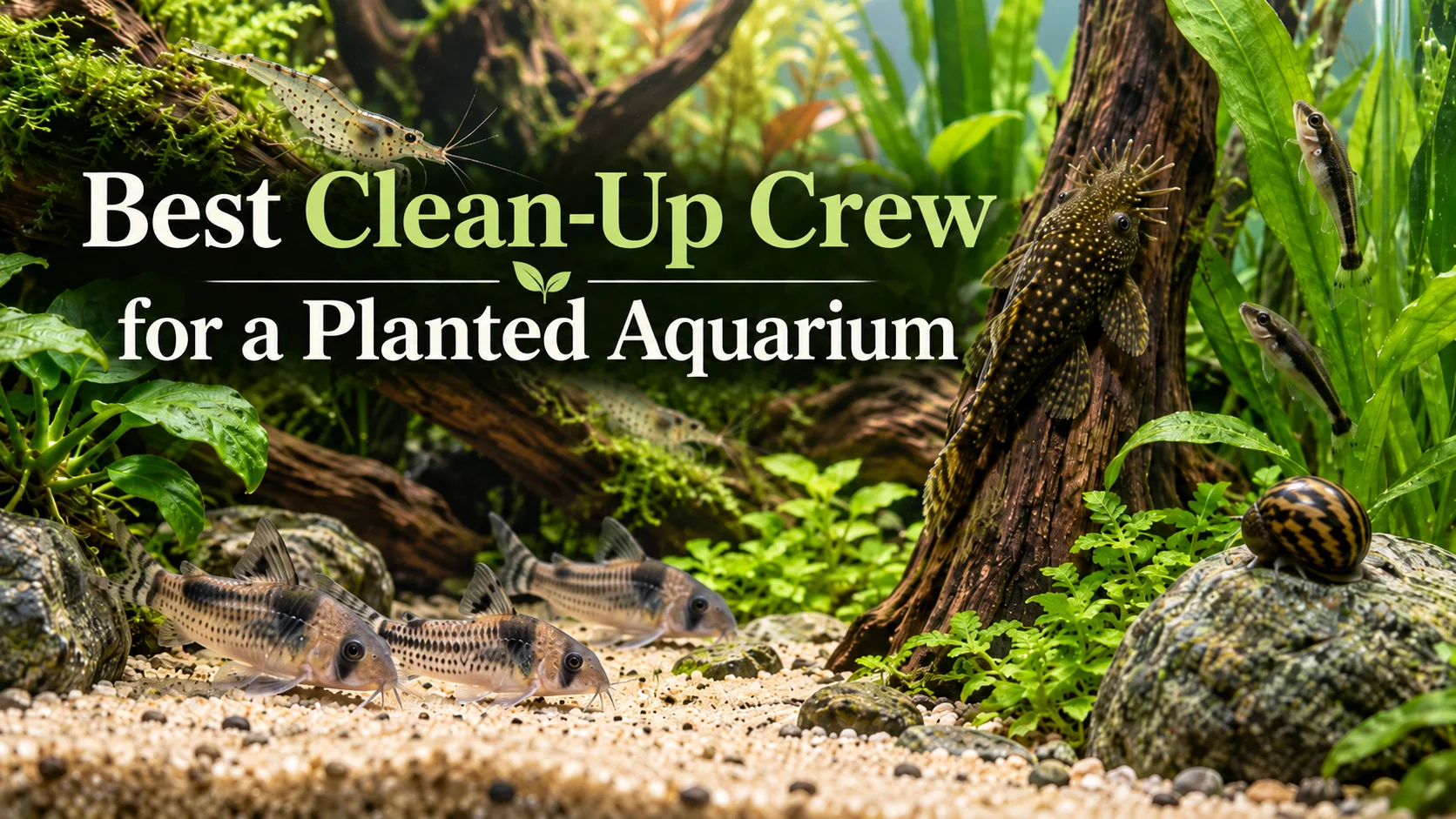
The right clean-up crew can help control algae, clear leftover food and support a healthier planted aquarium. This guide looks at the best fish, shrimp and snails for different cleaning jobs, plus which species are most useful for pest snail control.
A healthy planted aquarium should never rely on livestock to do all of the cleaning, but the right combination of fish, shrimp and snails can make a noticeable difference. Uneaten food can be picked up before it breaks down, soft algae can be grazed from leaves and hardscape, and pest snail numbers can be brought under control.
The important thing is to think of a clean-up crew as support rather than a replacement for good aquarium maintenance. Every animal added to the tank also produces waste, so regular water changes, sensible feeding, filter maintenance and occasional substrate cleaning are still essential.
Different species are also good at different jobs. There is no single fish or invertebrate that will keep every part of a planted aquarium spotless. The best results usually come from choosing a few species that complement one another.
Corydoras for the substrate
Corydoras are one of the most useful additions to a peaceful planted aquarium, particularly where food regularly reaches the bottom.
They spend much of their time searching across the substrate for edible material and will quickly find food that has been missed by other fish. This helps prevent larger pieces of uneaten food from sitting unnoticed and decomposing.
It is important, however, not to think of Corydoras as fish that eat waste or dirt. They do not consume fish waste, nor do they remove the need to clean the substrate. Their constant movement can disturb loose debris and make it easier for the filter to collect, but they still need to be treated as fish in their own right and fed a suitable diet.
Most Corydoras are social and should be kept in groups. Fine sand or another smooth substrate is preferable because they spend so much time feeding close to the bottom.
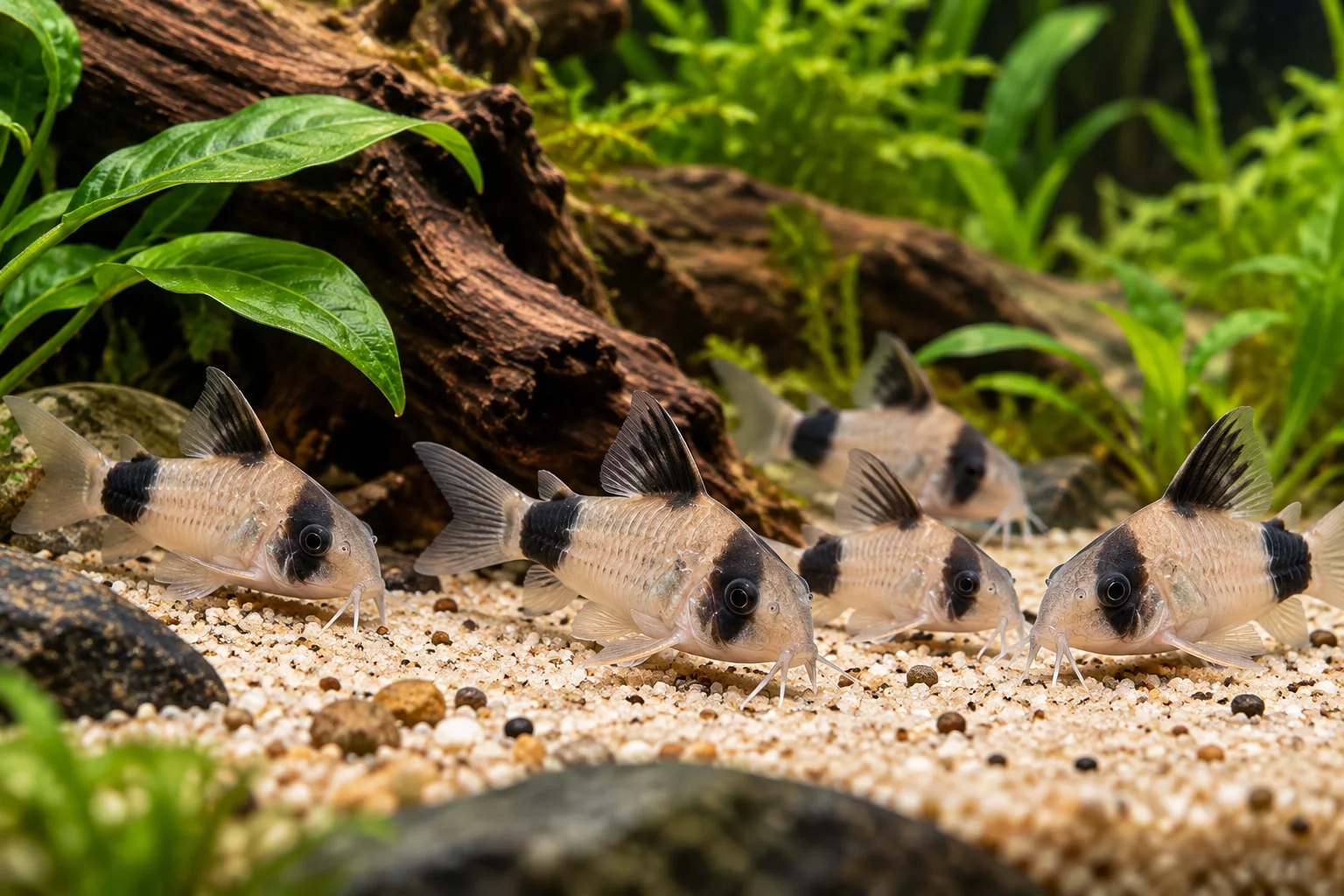
My personal favourite Corydoras is the Panda Cory (pictured above). We have a full article on this brilliant Corydoras here.
Amano shrimp for algae and leftover food
For planted aquariums, Amano shrimp are one of the most useful members of a clean-up crew.
They are constantly searching leaves, wood, rocks and other surfaces for food. They will eat biofilm, soft algae and small pieces of leftover food, and they are particularly good at getting into areas that larger fish cannot reach.
Amano shrimp are considerably larger than many decorative freshwater shrimp and are usually more effective as algae grazers. They can be especially useful in heavily planted aquariums where algae develops between plants or across intricate pieces of hardscape.
They still need proper feeding, though. An aquarium should never be deliberately left dirty in the hope that the shrimp will survive on algae alone.
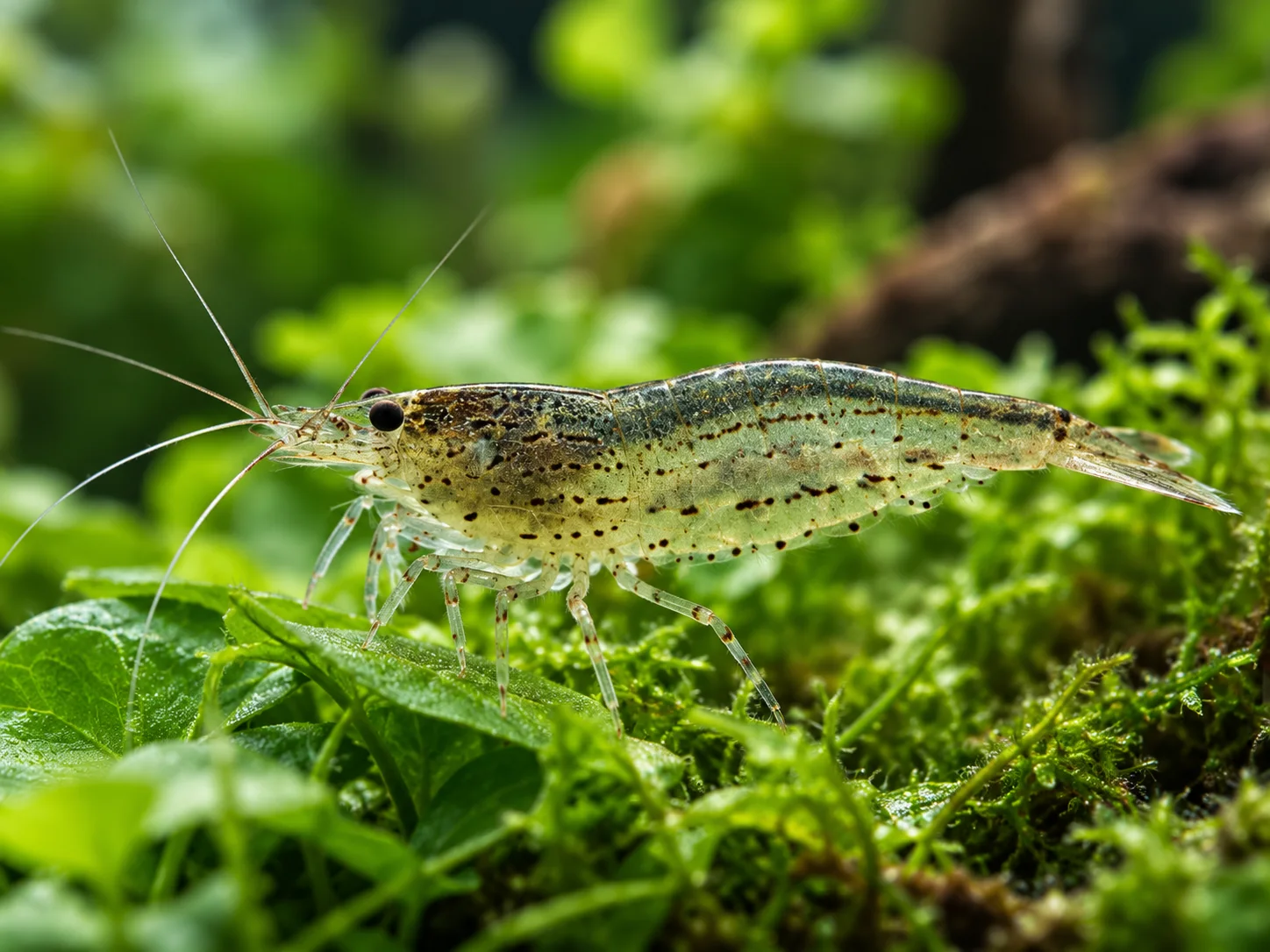
We have a full article on the Amano shrimp which can be found here
Otocinclus for leaves and glass
Otocinclus are another excellent choice for planted aquariums, particularly where soft algae develops on plant leaves.
Their small size allows them to graze delicate leaves without causing damage, and groups of Otocinclus can often be seen moving between the glass, wood, rocks and plants throughout the day.
They are especially useful for softer green algae and biofilm, although they are not a solution for every type of algae.
Otocinclus are best introduced to established aquariums rather than very new setups. Mature tanks generally provide a better supply of natural grazing, and Otocinclus can struggle if placed into an aquarium that is too clean or has very little established biofilm.
They are also social fish and are normally better kept in groups rather than as single individuals.
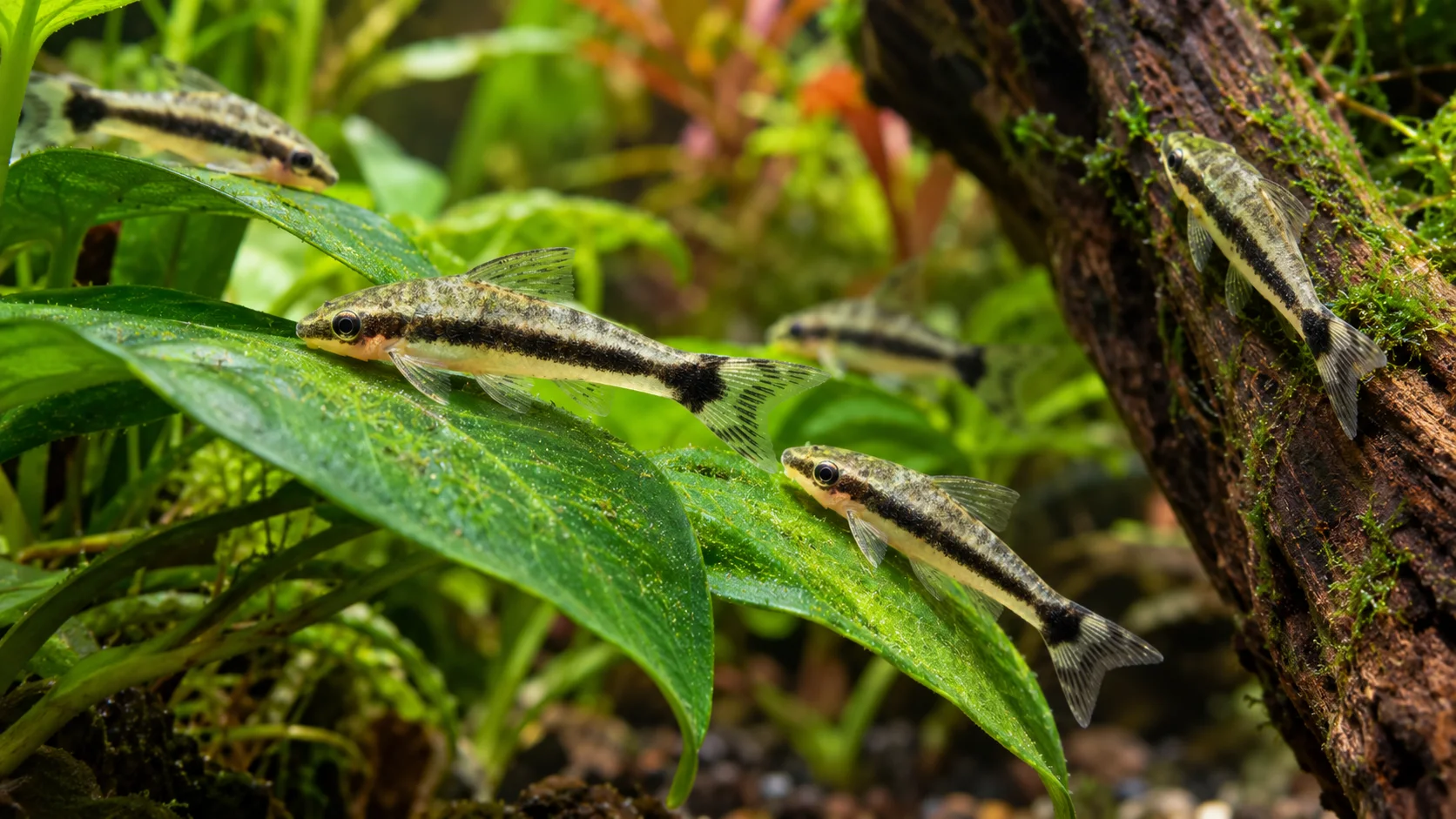
We have a full article on the Otocinclus here
Bristlenose Ancistrus for larger surfaces
Bristlenose Ancistrus can be useful algae grazers in medium and larger planted aquariums.
They spend a lot of time rasping algae and biofilm from glass, wood and rocks, and their behaviour makes them particularly useful on larger pieces of hardscape.
They should not, however, be purchased simply as a way of reducing aquarium maintenance. Bristlenose Ancistrus are substantial fish compared with Otocinclus and produce a surprising amount of waste themselves.
They also need a varied diet. Algae growing naturally in the aquarium is rarely enough to sustain them long term, so vegetable-based foods and other suitable foods should be provided.
In the right aquarium they are extremely useful fish, but they are not appropriate for every small planted tank.
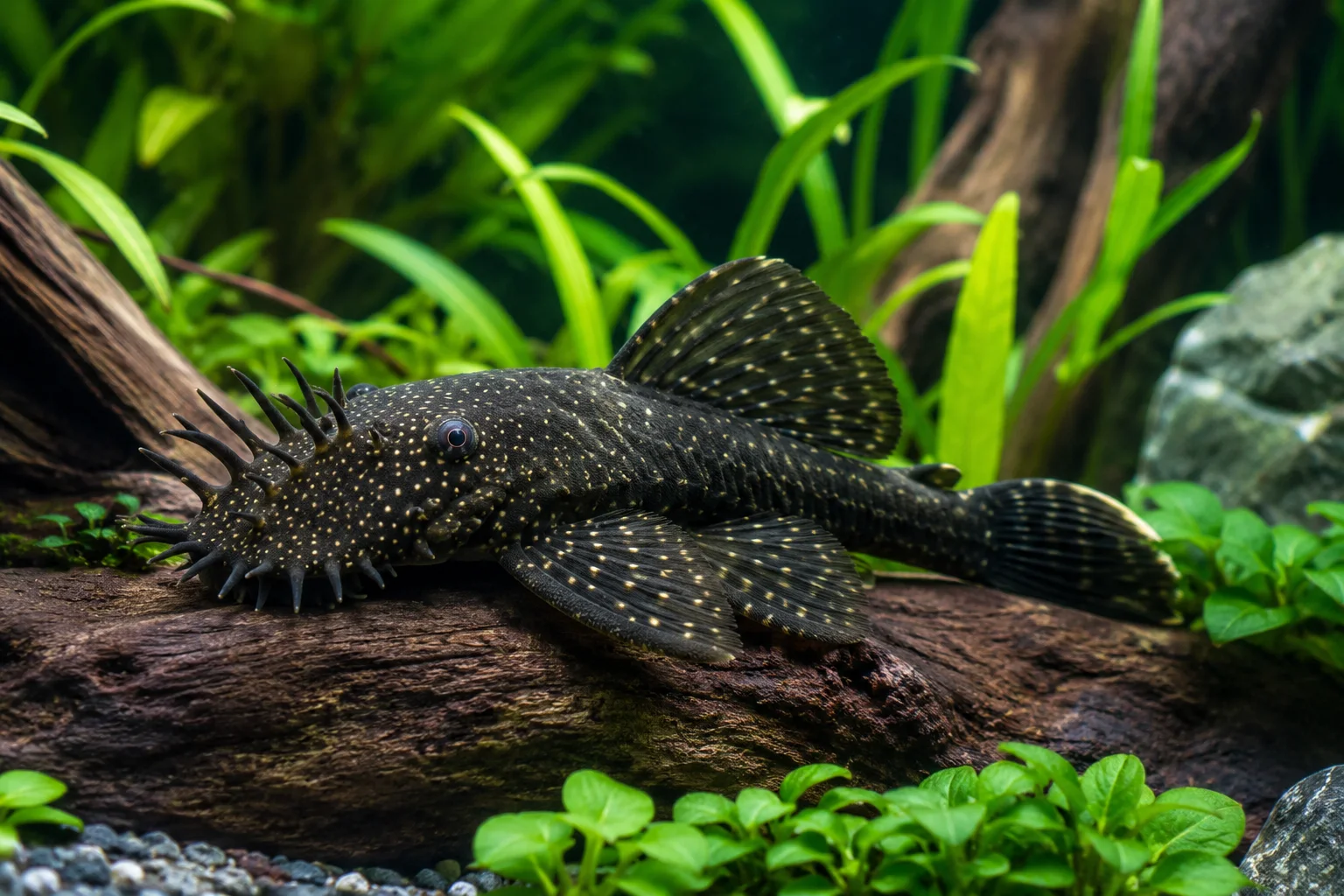
I have bred Bristle Nose Ancistrus myself and they are also one of my most favourite fish. I wrote a book on these fish which is available on Kindle. If you want to know more click here.
Nerite snails for hard surfaces
Nerite snails are another very useful option for planted aquariums.
They are particularly effective at grazing algae from glass, stones, ornaments and wood. They can also clean some algae from plant leaves without damaging healthy plants.
One of their major advantages is that they do not normally establish breeding populations in ordinary freshwater aquariums. Females may lay small white eggs on hard surfaces, but these generally do not develop into young snails in freshwater.
This makes Nerites very different from many of the small pest snails that can multiply rapidly when food is plentiful.
They are not especially effective at cleaning food from the substrate, so they work best alongside other members of a clean-up crew rather than on their own.
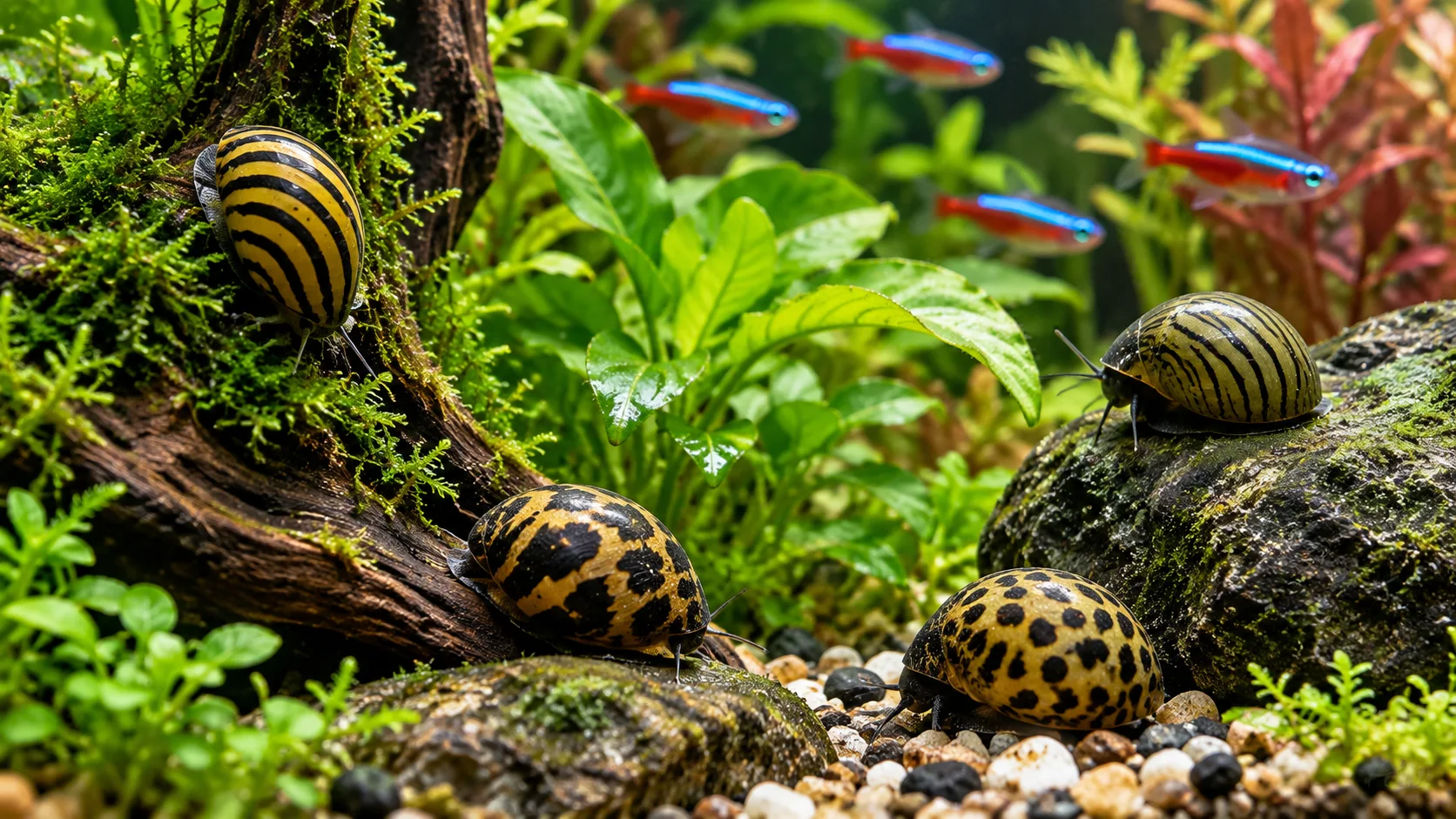
We have a full article on Nerite Snails here.
Siamese algae eaters for stubborn algae
For larger planted aquariums, Siamese algae eaters can also be useful.
They are active fish that browse across plants and hardscape and may eat forms of algae that some smaller grazers ignore. They are often associated with helping control hair algae and black beard algae.
The drawback is their size and activity level. They are not suitable for small aquariums and need considerably more room than Otocinclus or shrimp.
They should therefore be chosen because they suit the aquarium as fish, rather than simply being added because algae has appeared.
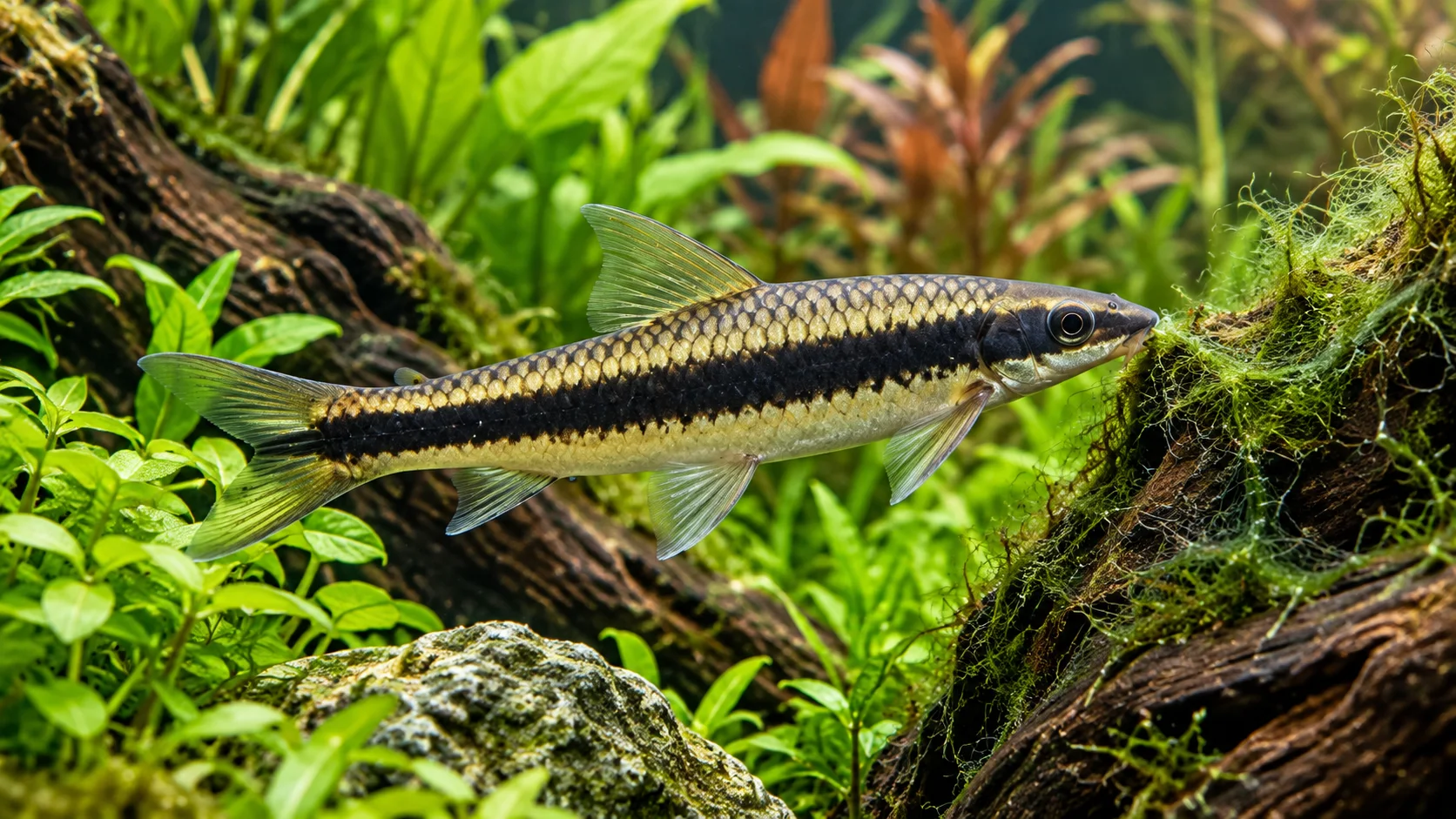
We have an fun article on the Siamese Algae Eater here.
Dealing with pest snails
Pest snails are a slightly different issue.
Small snails such as bladder snails and ramshorn snails often arrive with plants and can multiply quickly when plenty of food is available. In most cases, a rapidly growing snail population is a sign that there is more food available than the aquarium's inhabitants are consuming.
Reducing feeding and manually removing snails can often make a large difference, but sometimes additional control is useful.
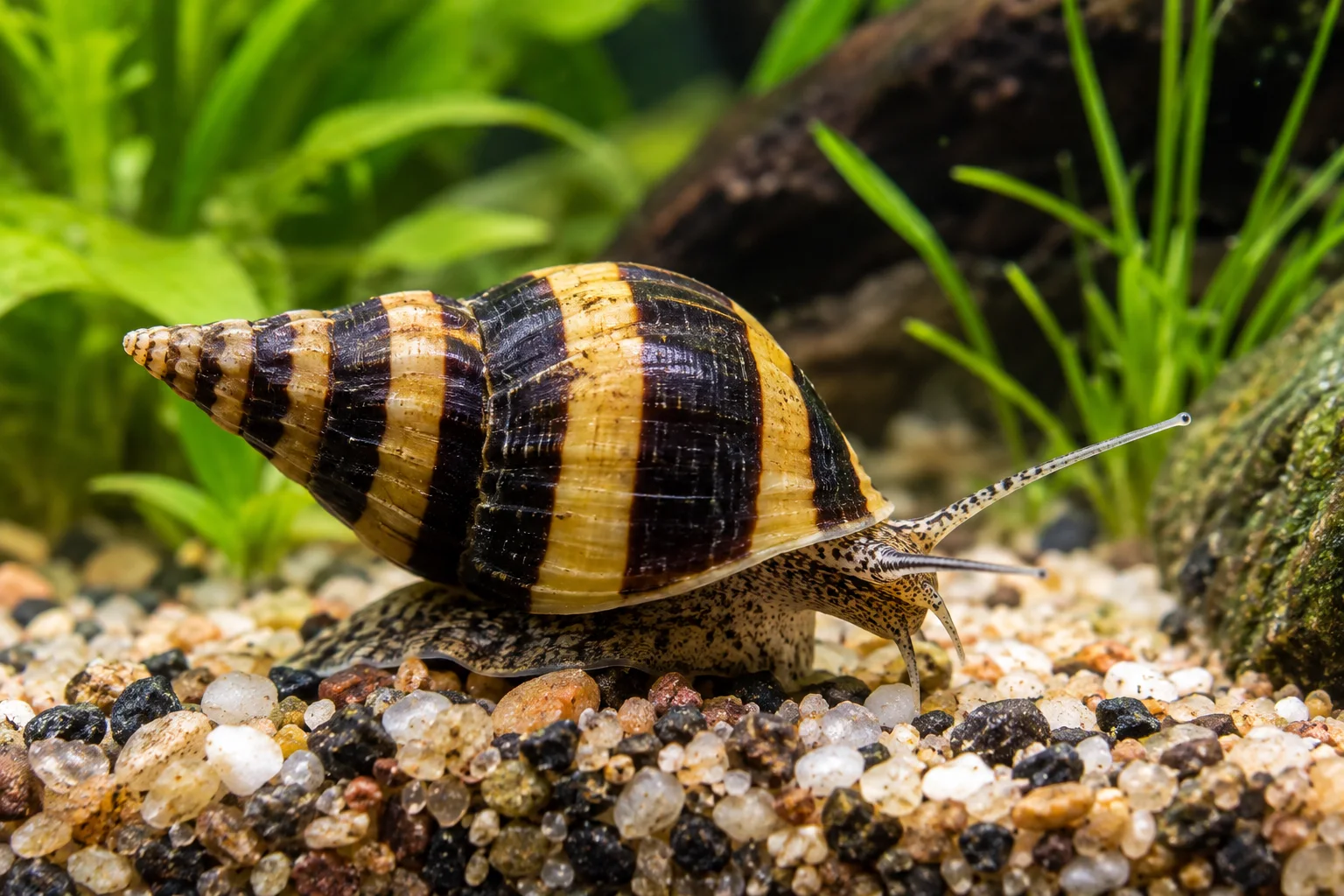
Assassin snails are one of the simplest options. They prey on other snails and can gradually reduce pest snail populations.
Dwarf chain loaches can also eat snails, but they should not be treated as a quick pest-control purchase. They are active, social fish and need to be kept in a suitable group in an aquarium large enough to accommodate them.
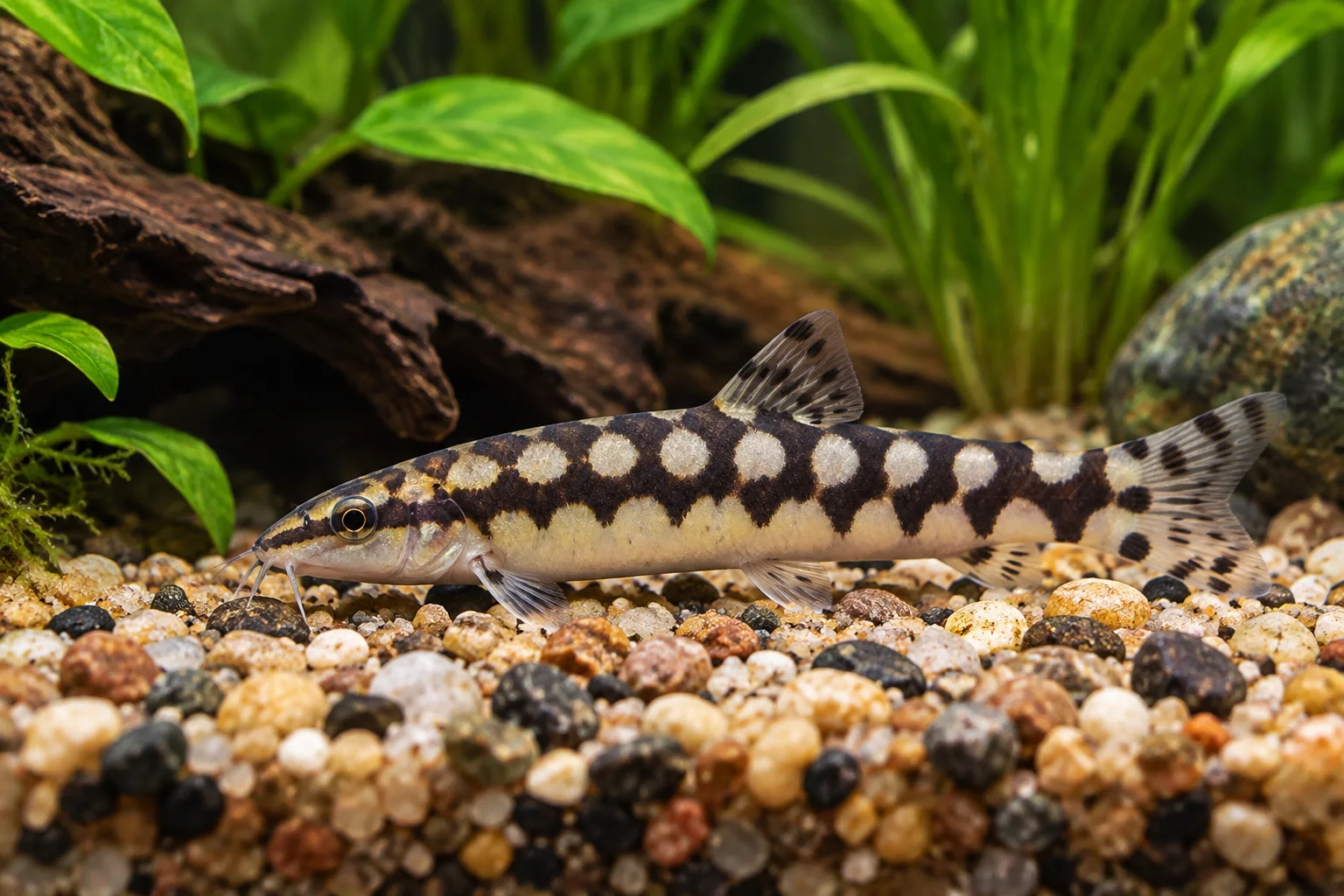
For many planted aquariums, assassin snails are therefore the more practical option if pest snail control is genuinely needed.
The best combination
There is no perfect clean-up crew because every aquarium is different.
In many peaceful planted aquariums, a combination of Corydoras, Amano shrimp, Otocinclus and Nerite snails can cover most of the common jobs. Corydoras search for food across the bottom, Amano shrimp work through plants and hardscape, Otocinclus graze soft algae from leaves and glass, and Nerites concentrate on harder surfaces.
A Bristlenose Ancistrus can be added where the aquarium is large enough, while Siamese algae eaters are better suited to larger setups where more active algae-grazing fish are appropriate.
If pest snails become a genuine problem, assassin snails or dwarf chain loaches can be considered separately.
The important point is that none of these animals replaces proper aquarium care.
A good clean-up crew can make a planted aquarium easier to manage, but healthy plants, controlled feeding, stable water quality and regular maintenance are what keep the aquarium looking its best long term.
Products We've Mentioned & Recommend
Below you'll find a selection of products we've mentioned in this article, along with a few others we think you might find useful. We've included Amazon links to make them easy to find.
A quick word about affiliate links...
Some of these links are affiliate links, which means we may earn a small commission from qualifying purchases, at no extra cost to you.
Unfortunately, the commission doesn't quite stretch to cocktails on a yacht or a garage full of sports cars. In reality, it helps cover the running costs of this website and, with a bit of luck, might eventually buy me a new pair of waders that don't leak!
We only recommend products we genuinely believe are worth considering, and your support helps us keep sharing free advice from our years of working with aquariums and ponds.
Thanks for supporting Aquatic Specialist!
As an Amazon Associate I earn from qualifying purchases.
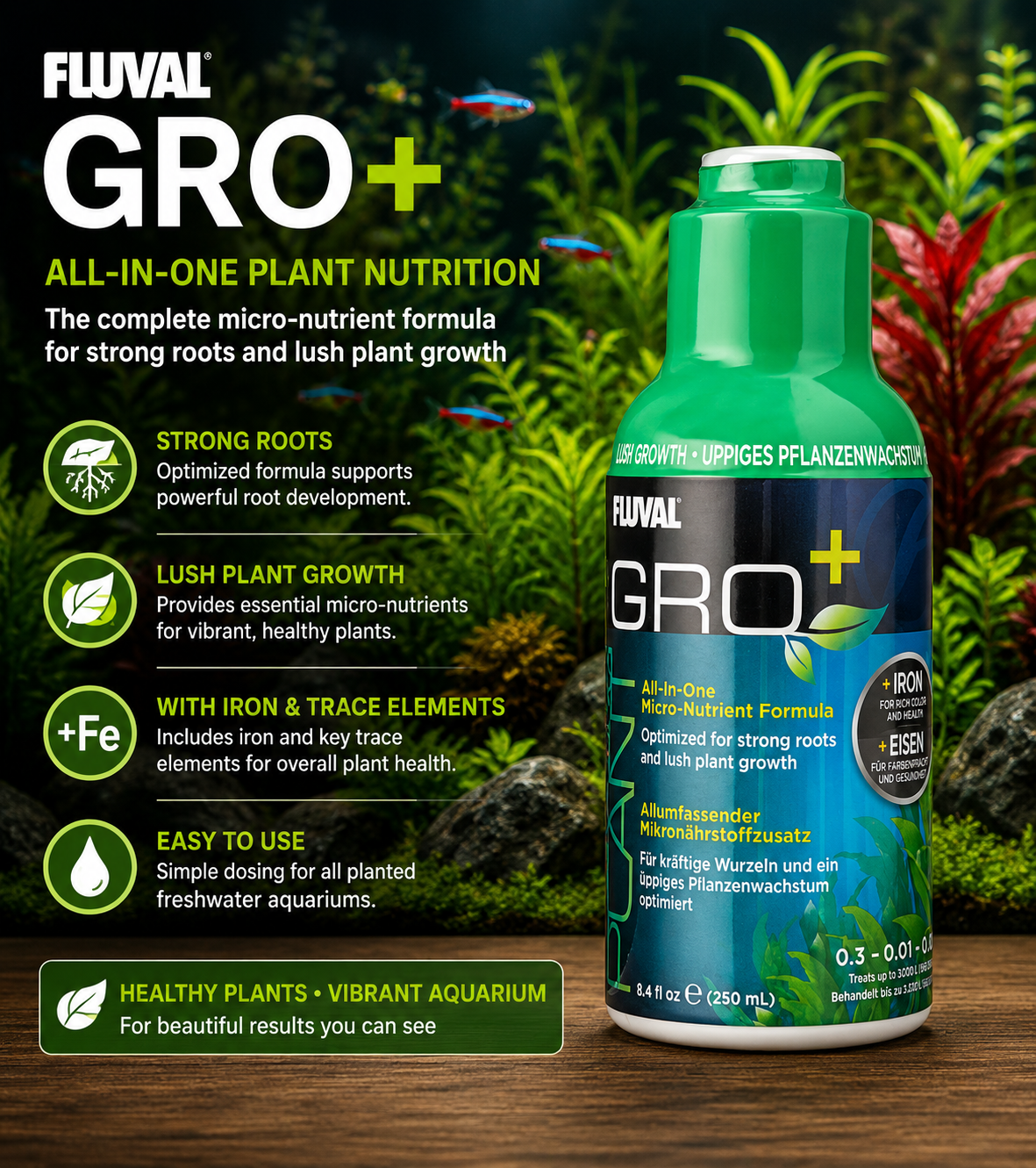
Fluval
Fluval Gro Plus Aquarium Plant Fertiliser
Best for: Low-tech and everyday planted freshwater aquariums
As an Amazon Associate, we earn from qualifying purchases.
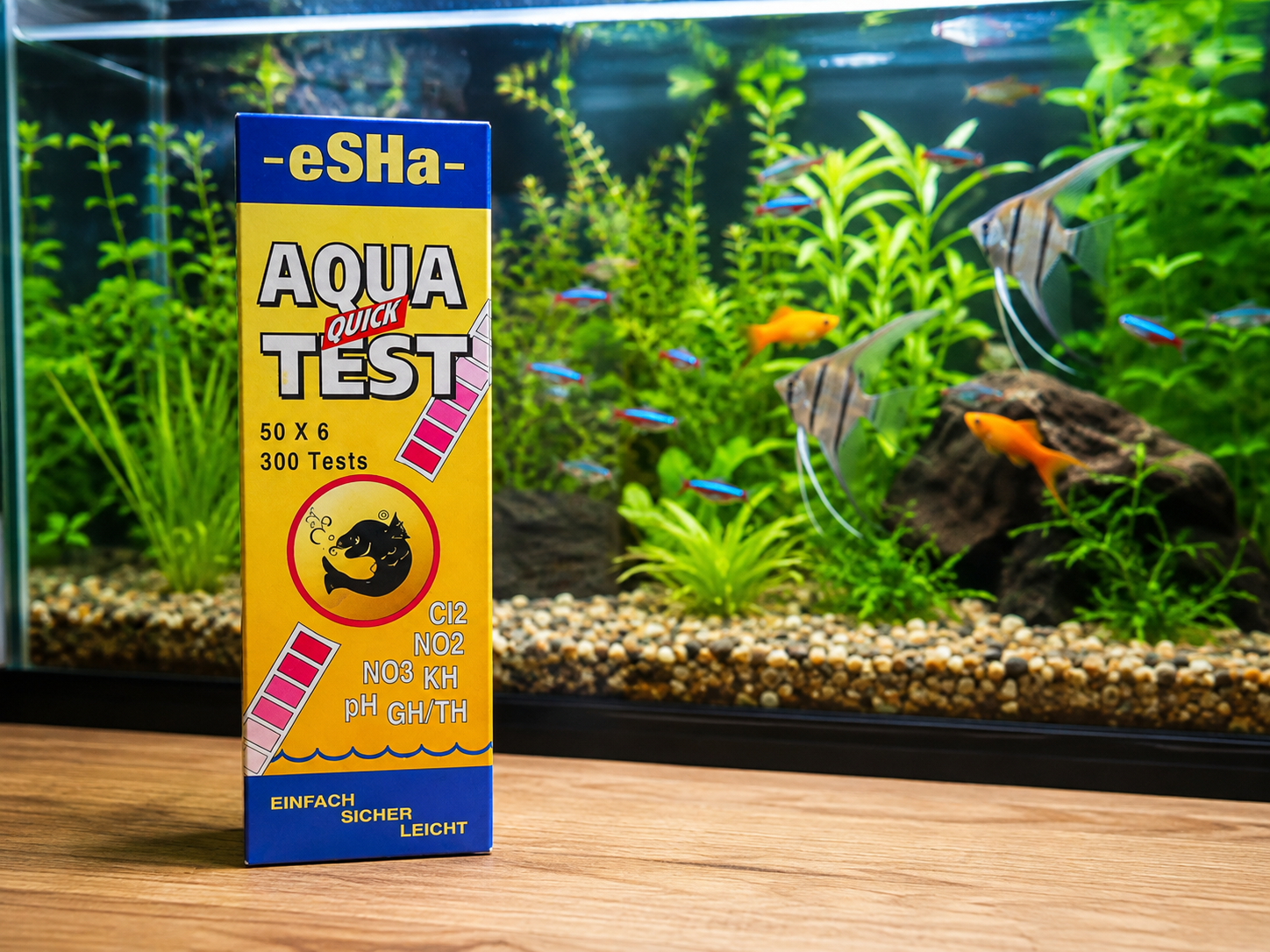
Esha
ESHA Aqua Quicktest
Best for: Fast routine water-quality checks in freshwater aquariums.
As an Amazon Associate, we earn from qualifying purchases.
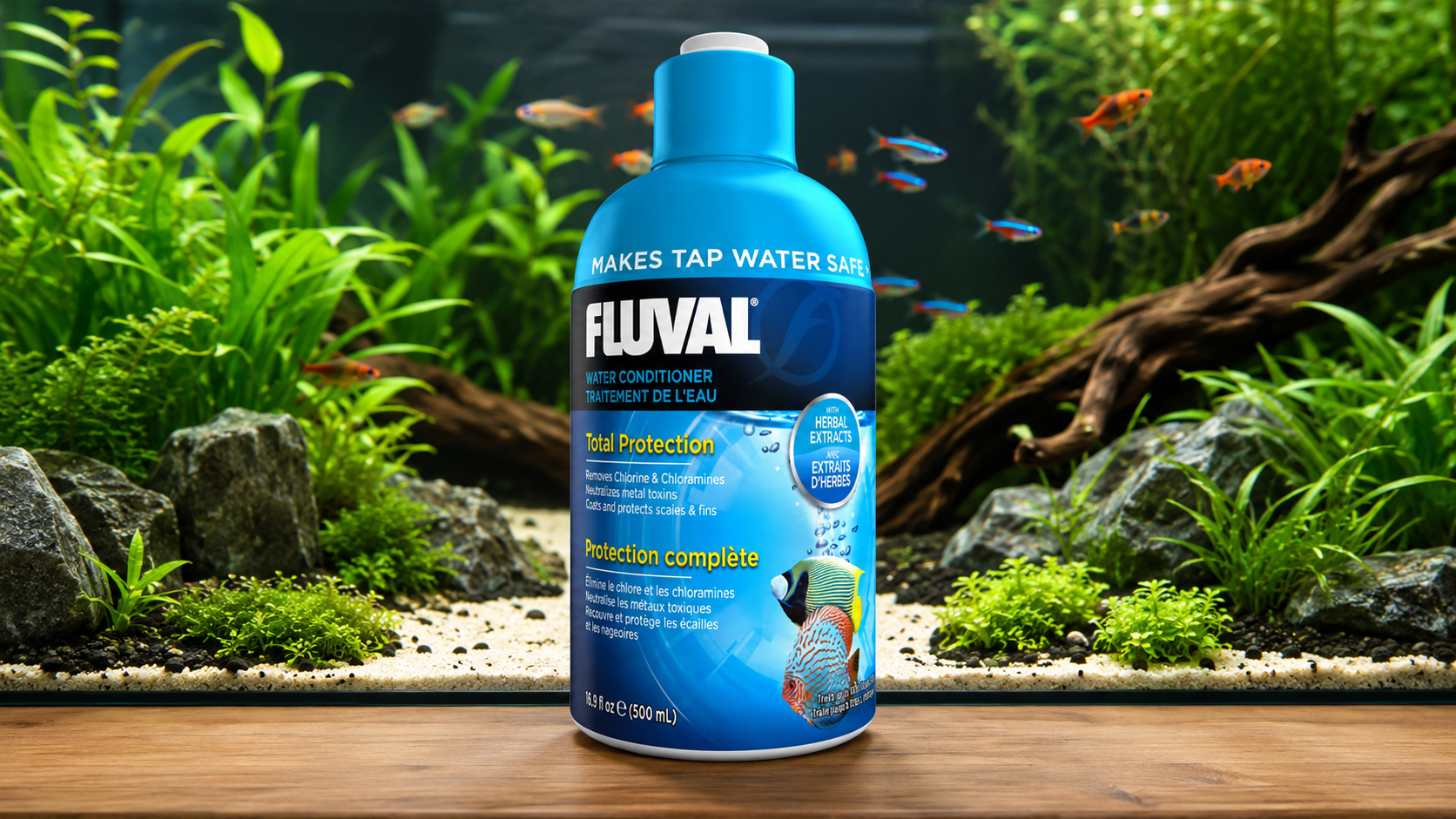
Fluval
Fluval Aqua Plus 500ml aquarium water conditioner
Best for: Routine water changes in freshwater and tropical aquariums
As an Amazon Associate, we earn from qualifying purchases.
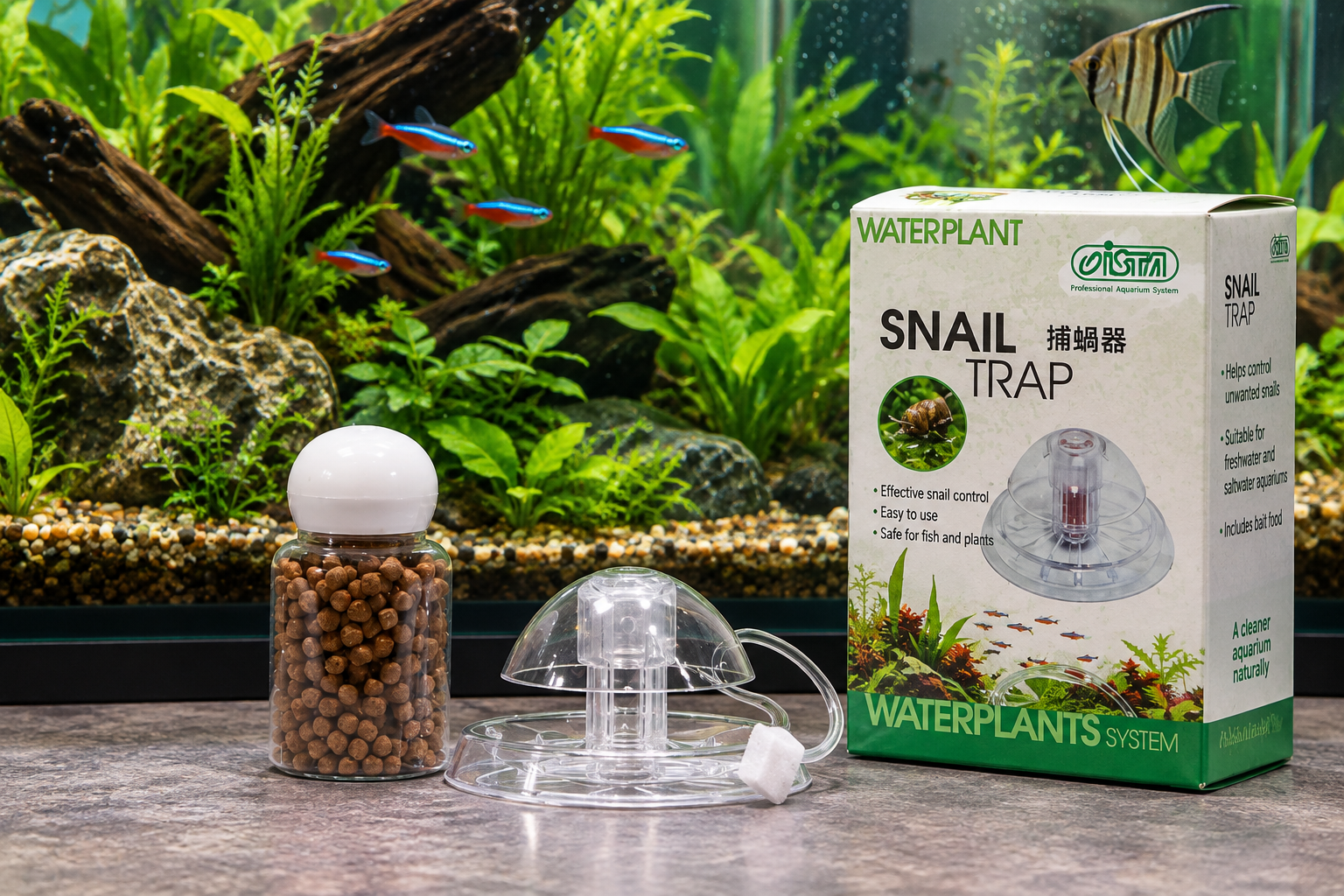
Ista
Aquarium Snail Trap Pest Catcher + Bait
Best for: Aquariums with persistent pest snail populations where chemical treatments are best avoided.
As an Amazon Associate, we earn from qualifying purchases.