Otocinclus Catfish: A Guide to Keeping Otos in Planted Aquariums
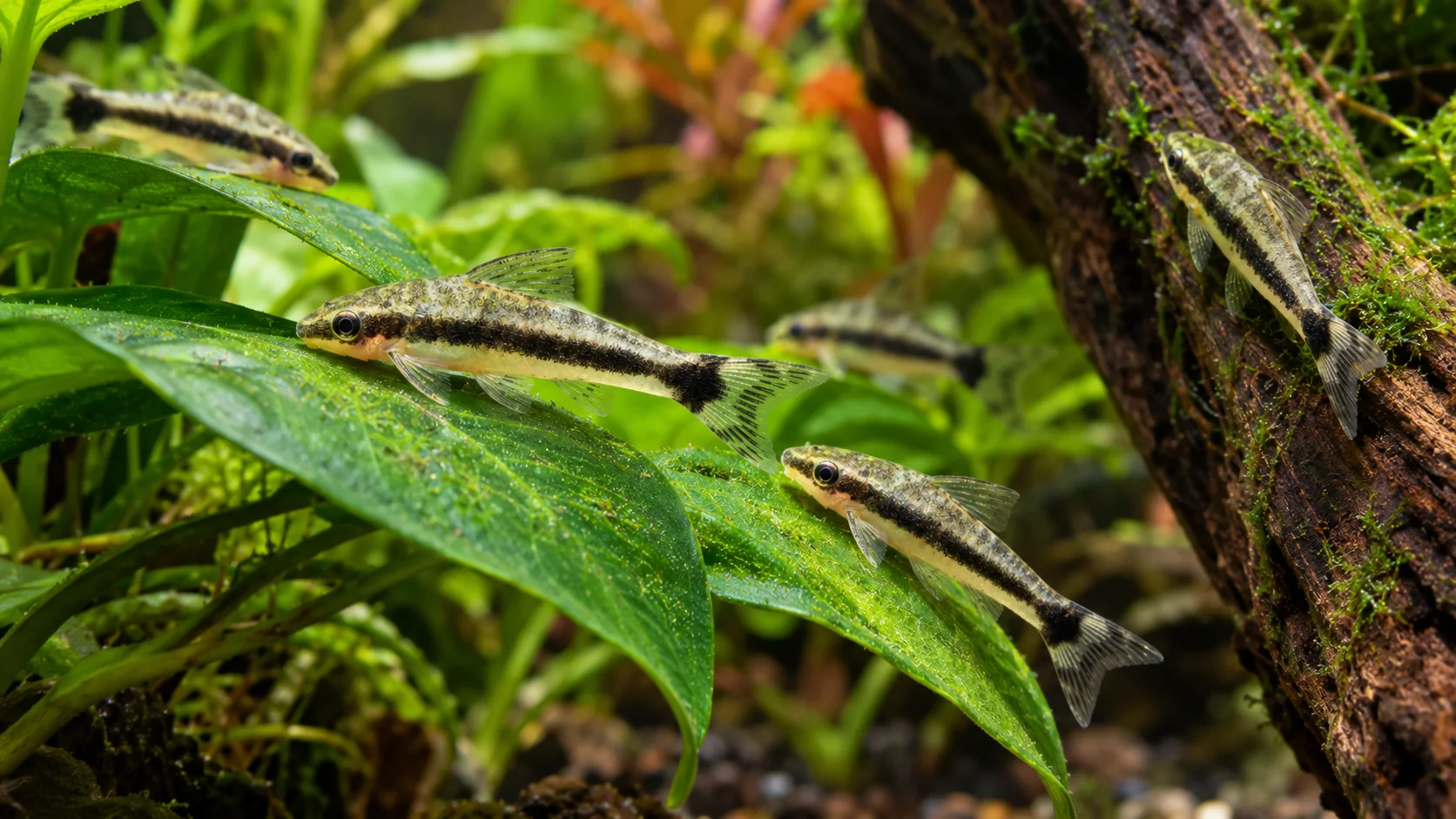
Otocinclus are small, peaceful algae-eating catfish that are particularly well suited to mature planted aquariums. We regularly use them in client aquariums, especially smaller planted setups where their size, gentle nature and ability to graze algae from plant leaves make them a useful addition.
Otocinclus catfish, usually shortened to simply “otos”, are among the smallest algae-eating fish commonly kept in freshwater aquariums. Peaceful, unobtrusive and particularly well suited to planted aquariums, they can be an excellent addition to the right setup.
We regularly use Otocinclus in our clients' aquariums, particularly in smaller planted displays where a larger algae-eating fish such as a Bristlenose Ancistrus would be unsuitable. Their small adult size allows them to move through dense planting and graze algae from leaves without damaging the plants themselves.
However, Otocinclus are sometimes sold as an easy solution to algae problems. In reality, there is a little more to keeping them successfully. They are small fish with relatively specialised feeding requirements, and newly imported specimens can sometimes arrive in poor condition.
In a mature, stable aquarium with plenty of natural grazing opportunities, though, Otocinclus can be excellent little fish.
What are Otocinclus?
Otocinclus is a genus of small South American catfish belonging to the Loricariidae family, which also contains familiar aquarium fish such as plecos and Bristlenose Ancistrus.
Several species appear in the aquarium trade, including Otocinclus macrospilus, Otocinclus vittatus and occasionally the distinctive Zebra Otocinclus, Otocinclus cocama. Fish sold simply as “Otocinclus” are not always accurately identified at species level.
Most of the commonly available species remain very small, generally around 3–5 cm when fully grown. O. macrospilus, one of the species commonly encountered in the trade, reaches around 3.5 cm standard length.
They have a flattened underside and a small sucker-like mouth adapted for grazing surfaces. In the aquarium, you will often see them attached to plant leaves, aquarium glass, rocks and wood.
Why we use Otocinclus in planted aquariums
One of the main reasons we use Otocinclus in client aquariums is their size.
In a large aquarium there are numerous algae-eating fish to choose from, but smaller planted aquariums require more careful stocking. A Bristlenose Ancistrus, for example, becomes considerably larger and produces far more waste.
Otocinclus fill a different role.
They remain small, are extremely peaceful and spend much of their time quietly grazing across the aquarium. They are particularly useful for removing soft algae and diatoms from broad plant leaves and other surfaces. This makes them useful in planted displays where maintaining the appearance of the plants is important.
They are not, however, an answer to every type of algae.
Otocinclus are grazers rather than an aquarium cleaning service. They can help control suitable algae, but they will not solve problems such as severe hair algae or an aquarium where excessive light or nutrients are causing persistent algae growth.
The importance of a mature aquarium
This is probably the most important consideration when keeping Otocinclus.
We wouldn't normally introduce them to a newly established client aquarium.
Although a new aquarium may technically be cycled, it doesn't necessarily contain the established biofilm, microorganisms and natural algae growth that Otocinclus spend much of their time grazing.
A mature planted aquarium provides a far better environment.
Plants, wood, rocks and other surfaces gradually develop a layer of natural biological growth that may barely be noticeable to us but provides valuable grazing for Otocinclus. Established aquariums also tend to have more stable water conditions.
This requirement is well documented. Otocinclus are known to fare poorly when introduced to immature aquariums without sufficient algae and biofilm, while established planted aquariums provide much more suitable conditions.
Keeping Otocinclus in groups
Although you may sometimes see individual Otocinclus for sale, they are naturally social fish and should not ideally be kept alone.
We prefer to use a small group where the aquarium has sufficient space and, importantly, enough grazing area to support them.
Around six fish is a sensible starting point in an appropriately sized aquarium. Otocinclus are naturally gregarious and established care guidance recommends maintaining them in groups of at least six.
You will often see several individuals resting together on leaves, wood or the aquarium glass before dispersing around the aquarium to feed.
The important point is to balance group size against the aquarium's ability to provide food. Adding a large group of Otocinclus to a very small, exceptionally clean aquarium can leave them with surprisingly little to eat.
Feeding Otocinclus
One of the biggest mistakes with Otocinclus is assuming that because they are algae eaters, you never need to feed them.
Natural algae and biofilm should form an important part of their diet, but supplementary feeding is usually necessary.
Good-quality Algae Wafers and other vegetable-based sinking foods can be offered. Blanched courgette and spinach are also commonly accepted.
Keep an eye on the condition of the fish. A healthy Otocinclus should have a reasonably rounded belly. A noticeably hollow or sunken abdomen is something we would be concerned about, particularly with newly purchased fish.
This is also something worth checking before buying them. Otocinclus can be quite delicate when first imported, with starvation during transportation and the supply chain considered an important reason for early losses.
If the fish in a retailer's aquarium look extremely thin, we would generally avoid buying them.
Water conditions
Otocinclus appreciate clean, stable and well-oxygenated water.
Exact requirements vary slightly between species, but commonly available Otocinclus macrospilus can be maintained at approximately:
Temperature: 21–26°C
pH: 5.5–7.5
Hardness: 1–12 dGH
We consider stability more important than attempting to continually adjust the aquarium to achieve an exact pH value.
Regular maintenance, sensible stocking levels and good filtration are far more useful than constantly altering water chemistry.
As with most aquarium fish, ammonia and nitrite should remain at zero.
Tank mates
Otocinclus are about as peaceful as aquarium fish come.
They work particularly well alongside small tetras, rasboras, peaceful rainbowfish, Corydoras and many other small community species. They can also coexist well with freshwater shrimp.
We wouldn't combine them with large, aggressive or particularly boisterous fish. Otocinclus are small and relatively timid, and energetic tank mates can make it difficult for them to compete for supplementary food.
Their peaceful nature is another reason we like using them in planted client aquariums. They simply get on with grazing without causing problems for the other inhabitants.
Otocinclus and aquarium plants
For planted aquariums, Otocinclus have another significant advantage: they are very gentle around plants.
Rather than eating healthy plant tissue, they generally graze the surfaces of leaves looking for algae and biofilm.
Watching a group working across broad leaves such as Anubias can make it look as though they are eating the plant itself. In reality, they are usually removing material growing on its surface.
Dense planting also provides shelter and additional grazing area, which is why planted aquariums are particularly suitable for them.
Are Otocinclus good algae eaters?
Yes, but with realistic expectations.
They are particularly useful for grazing soft algae, diatoms and biological films from plants, glass and hardscape. They are less useful against established filamentous or tougher algae.
No algae-eating fish should be used as a substitute for correcting the underlying cause of excessive algae.
If an aquarium is receiving too much light, accumulating excessive nutrients or being overfed, adding more algae eaters simply treats one of the symptoms.
For us, Otocinclus are better thought of as part of the maintenance team rather than a solution to an algae problem.
Final thoughts
Otocinclus are one of our favourite algae-eating fish for smaller planted aquariums.
We've used them in numerous client aquariums because they remain small, don't disturb plants and fit easily into peaceful community setups. In an established planted aquarium, a small group can spend much of the day quietly grazing across leaves, wood and glass.
Their main weakness is that they aren't particularly well suited to new or sterile aquariums. They need natural grazing opportunities, supplementary feeding and stable water conditions.
Get those fundamentals right and Otocinclus are far more than simply “algae eaters”. They are attractive, interesting little catfish in their own right and one of the most useful additions to a mature planted aquarium.
Products We've Mentioned & Recommend
Below you'll find a selection of products we've mentioned in this article, along with a few others we think you might find useful. We've included Amazon links to make them easy to find.
A quick word about affiliate links...
Some of these links are affiliate links, which means we may earn a small commission from qualifying purchases, at no extra cost to you.
Unfortunately, the commission doesn't quite stretch to cocktails on a yacht or a garage full of sports cars. In reality, it helps cover the running costs of this website and, with a bit of luck, might eventually buy me a new pair of waders that don't leak!
We only recommend products we genuinely believe are worth considering, and your support helps us keep sharing free advice from our years of working with aquariums and ponds.
Thanks for supporting Aquatic Specialist!
As an Amazon Associate I earn from qualifying purchases.
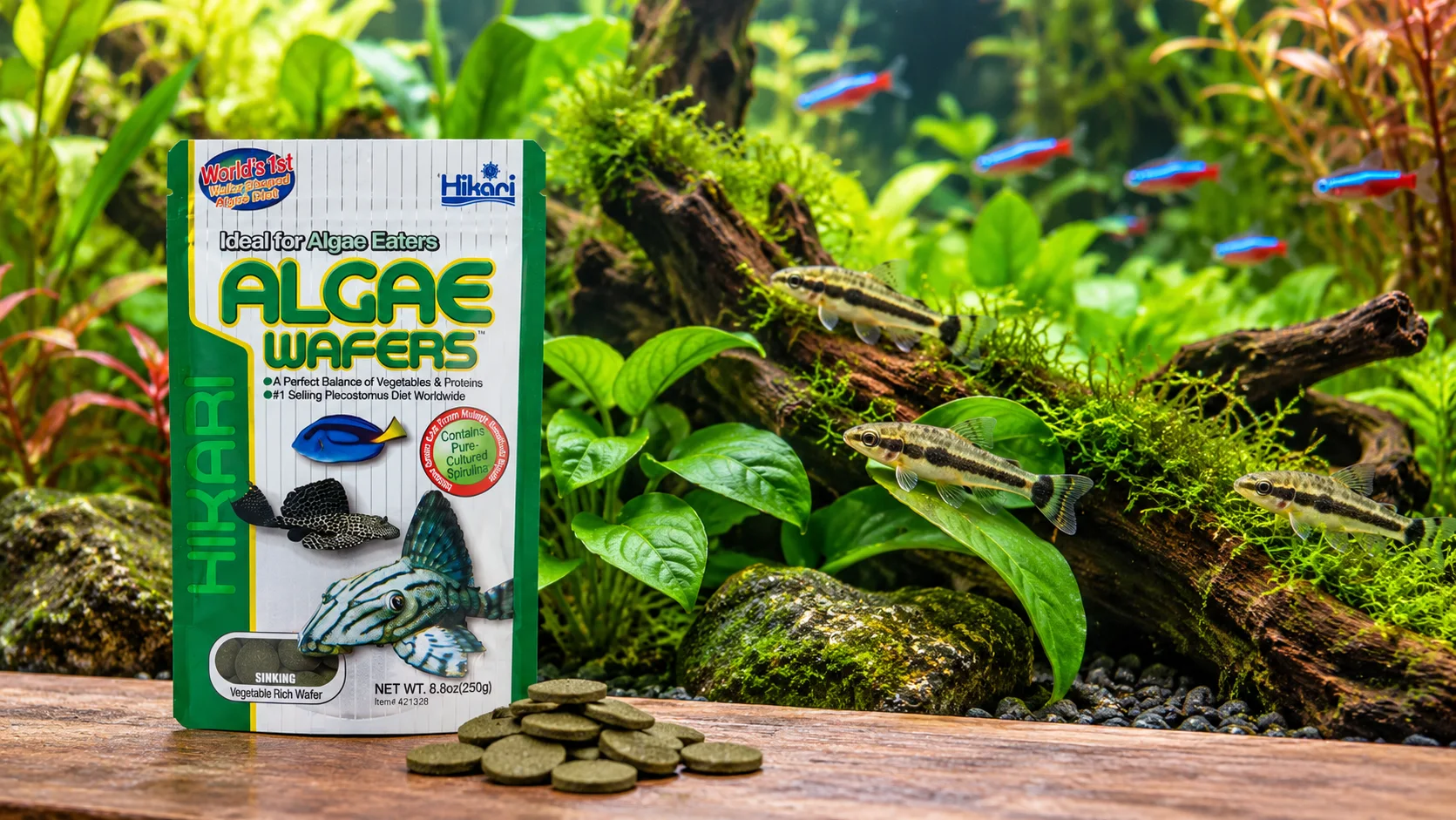
Hikari
Hikari Algae Wafers
Best for: Otocinclus, Bristlenose Ancistrus and other algae-grazing fish
As an Amazon Associate, we earn from qualifying purchases.
Esha
ESHA Aqua Quicktest
Best for: Fast routine water-quality checks in freshwater aquariums.
As an Amazon Associate, we earn from qualifying purchases.
Fluval
Fluval Cycle
Best for: Supporting biological filtration after filter cleaning or disruption
As an Amazon Associate, we earn from qualifying purchases.
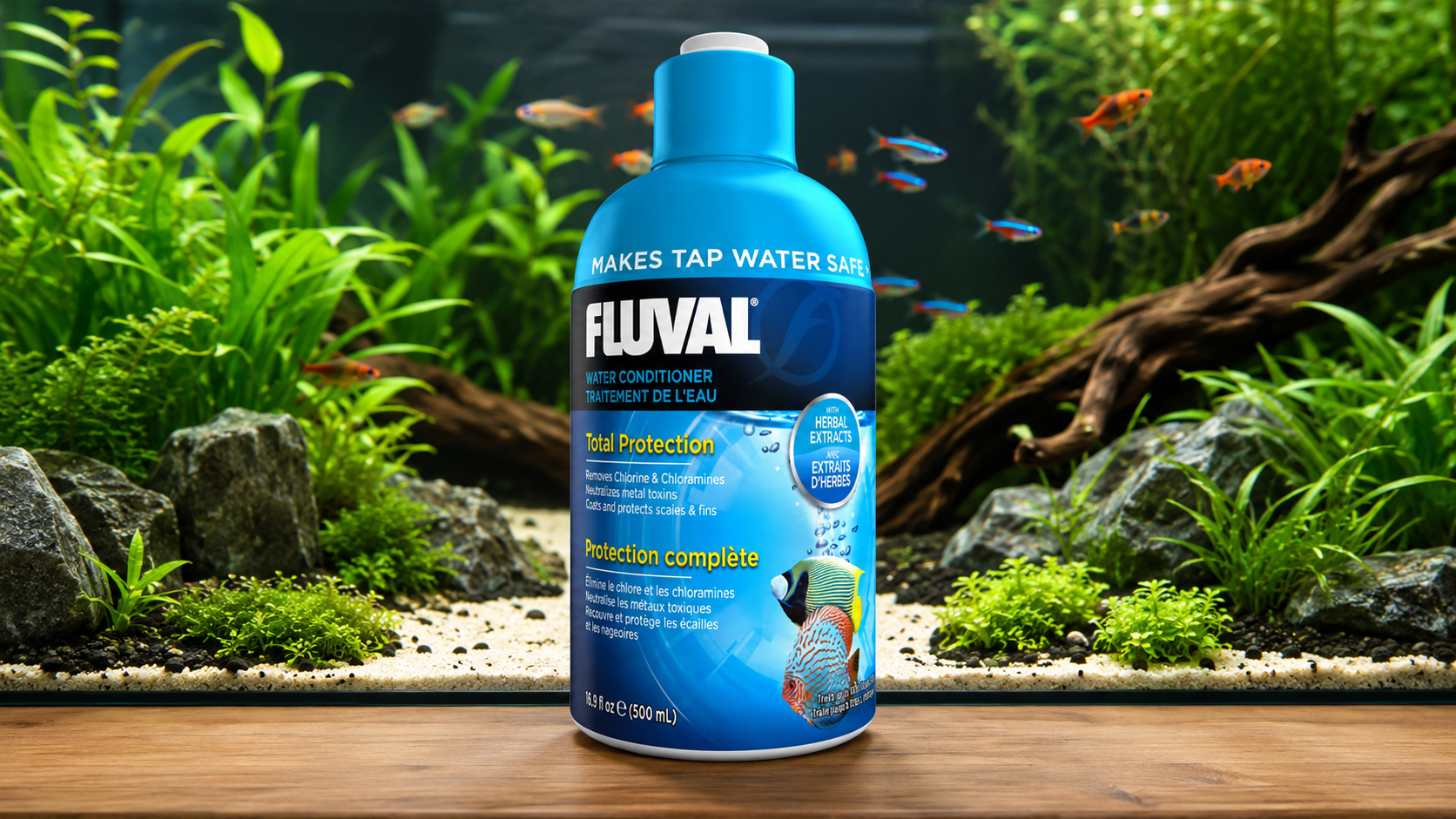
Fluval
Fluval Aqua Plus 500ml aquarium water conditioner
Best for: Routine water changes in freshwater and tropical aquariums
As an Amazon Associate, we earn from qualifying purchases.