The Best Aquarium Fish for Hard Water: 7 Species That Thrive
Working in aquatics since 1997 and founder of Aquatic Specialist in 2003, Richard specialises in reef aquariums and pond maintenance and has lectured at Sparsholt College. Read Richard's profile.
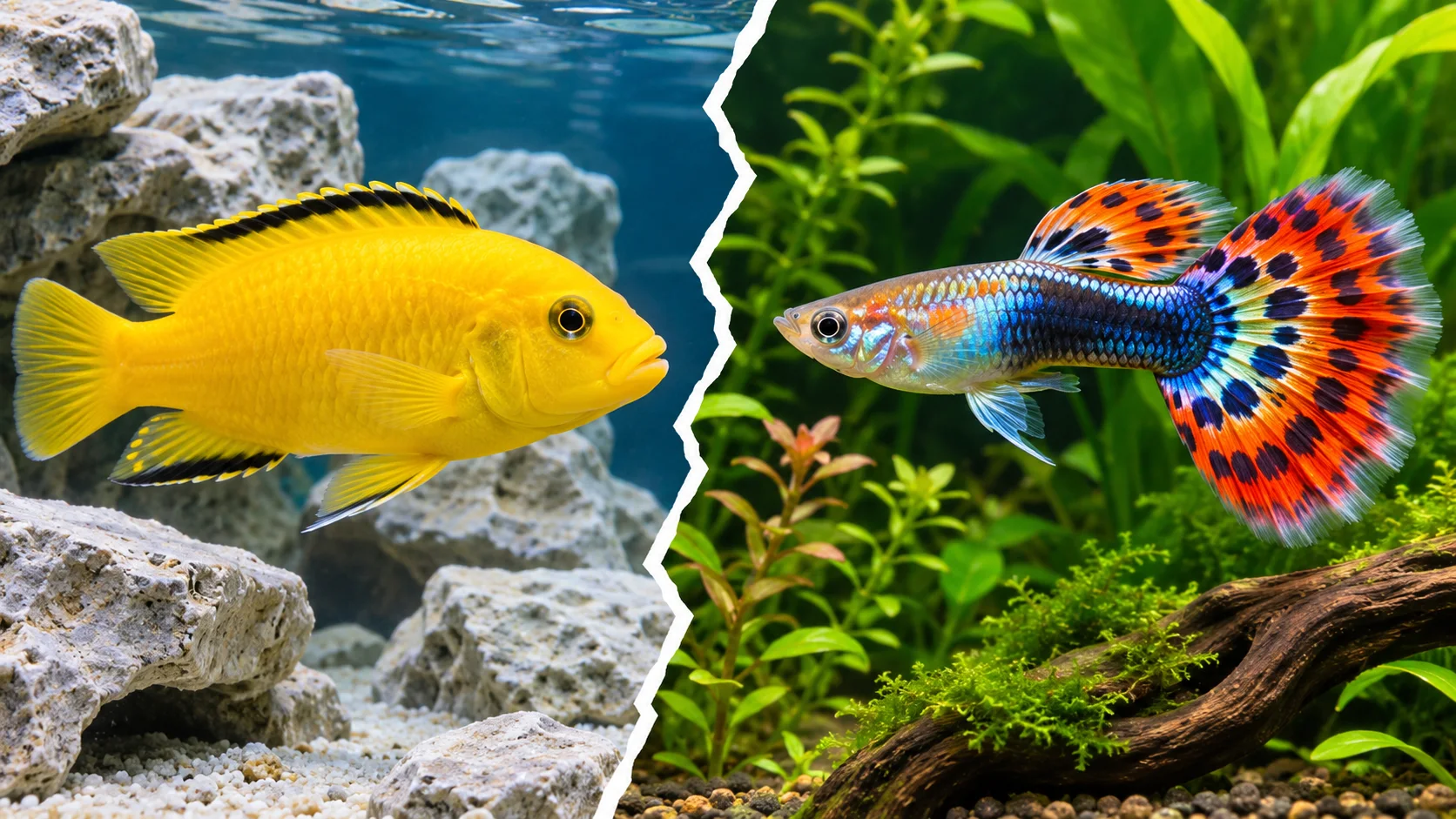
Living in a hard water area doesn't mean you're limited when choosing aquarium fish. From colourful guppies and platies to rainbowfish and African cichlids, there are plenty of species that naturally thrive in mineral-rich, alkaline water. Drawing on our experience maintaining aquariums across Dorset and the south coast of England, we explore seven excellent choices and explain why working with your tap water is often better than trying to change it.
If you live in a hard water area, choosing the right aquarium fish can make a considerable difference to how successful your aquarium becomes. Some fish naturally prefer soft, acidic water, while others are perfectly suited to the harder, more alkaline water that comes straight from our taps.
At Aquatic Specialist, we maintain aquariums across the south coast of England, where much of the tap water is naturally hard. Over the years, we've found that choosing fish to suit the available water often makes far more sense than constantly trying to alter it.
That doesn't mean you can't keep soft water species. We maintain plenty of aquariums where reverse osmosis (RO) water is used to achieve particular conditions. However, for someone setting up a straightforward freshwater aquarium, working with the water you already have is usually the easier and more reliable approach.
Fortunately, there are some beautiful fish that genuinely prefer hard water. Here are seven we would consider.
Understanding Hard Water in an Aquarium
Hard water contains higher concentrations of dissolved minerals, particularly calcium and magnesium. These minerals are measured as general hardness, usually referred to as GH.
In many parts of Dorset and Hampshire, tap water also has relatively high carbonate hardness (KH), which helps resist changes in pH. This often results in naturally alkaline water.
It's worth understanding that hardness and pH aren't the same thing. Water can have a high pH without being particularly hard, which is why we recommend testing GH and KH rather than relying on a pH test alone.
One mistake we regularly advise against is adding pH-lowering chemicals to hard tap water without understanding its chemistry. The KH can resist these adjustments, resulting in fluctuating conditions that may be more stressful for fish than the original water.
Our preference is always to provide suitable, stable water conditions rather than chase an exact number.
Livebearers Are Some of the Best Choices
When we're discussing suitable fish for hard water, livebearers are usually among the first groups that come to mind.
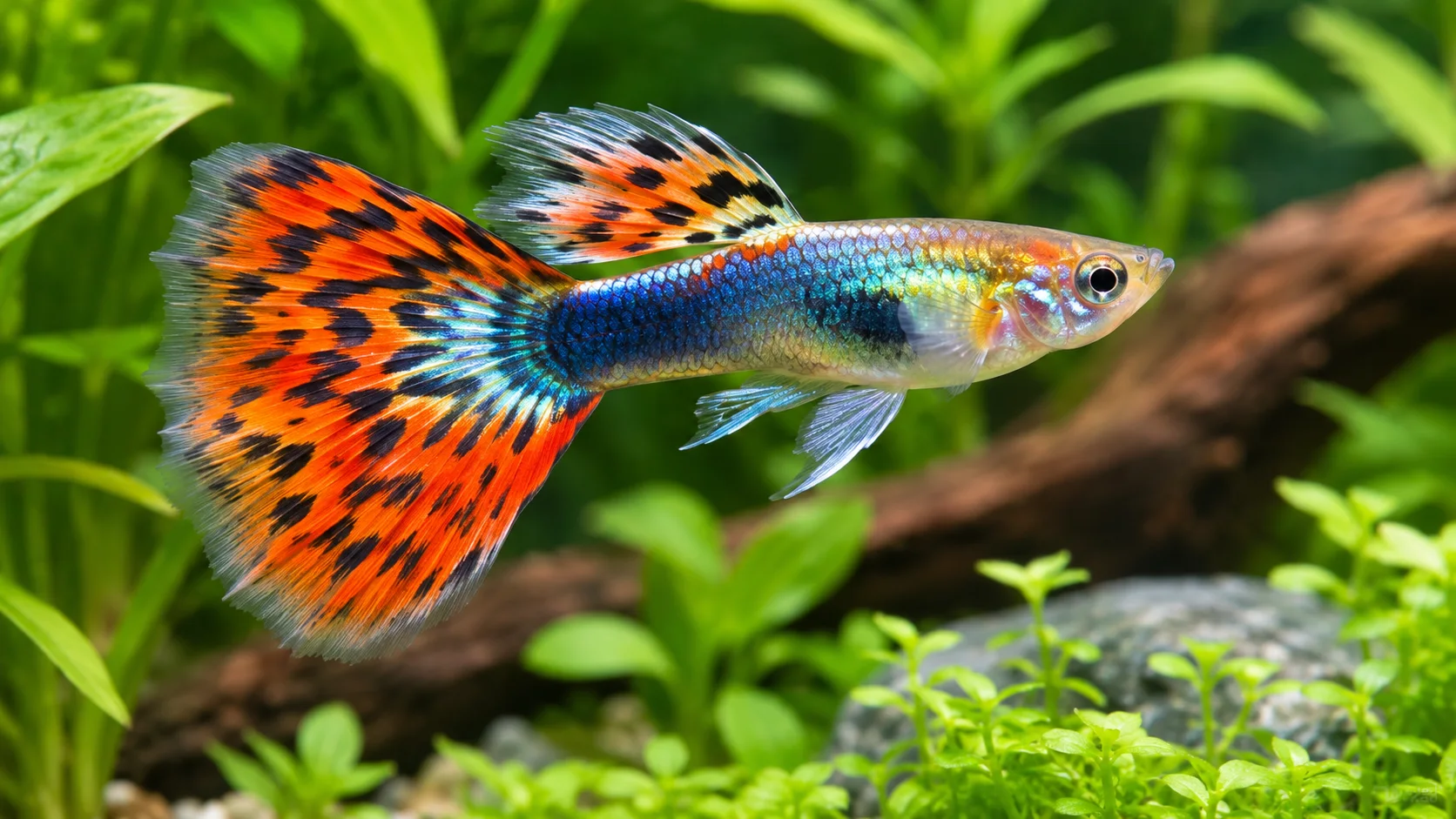
Guppies (Poecilia reticulata) are perhaps the most familiar example. Their colours, small size and constant activity make them popular in community aquariums, and they naturally do well in moderately hard to very hard water.
However, there's something worth mentioning about guppies. Although they're often described as extremely hardy, some heavily bred varieties can be surprisingly delicate. We would generally favour healthy, active fish from a reliable local supply rather than selecting them purely for their unusual colours or elaborate fins.
We can get a really good local strain which we are happy to stock to our clients aquariums. Rather than shop bought varieties. Guppies also breed readily, so a mixed group can quickly turn into a much larger population.
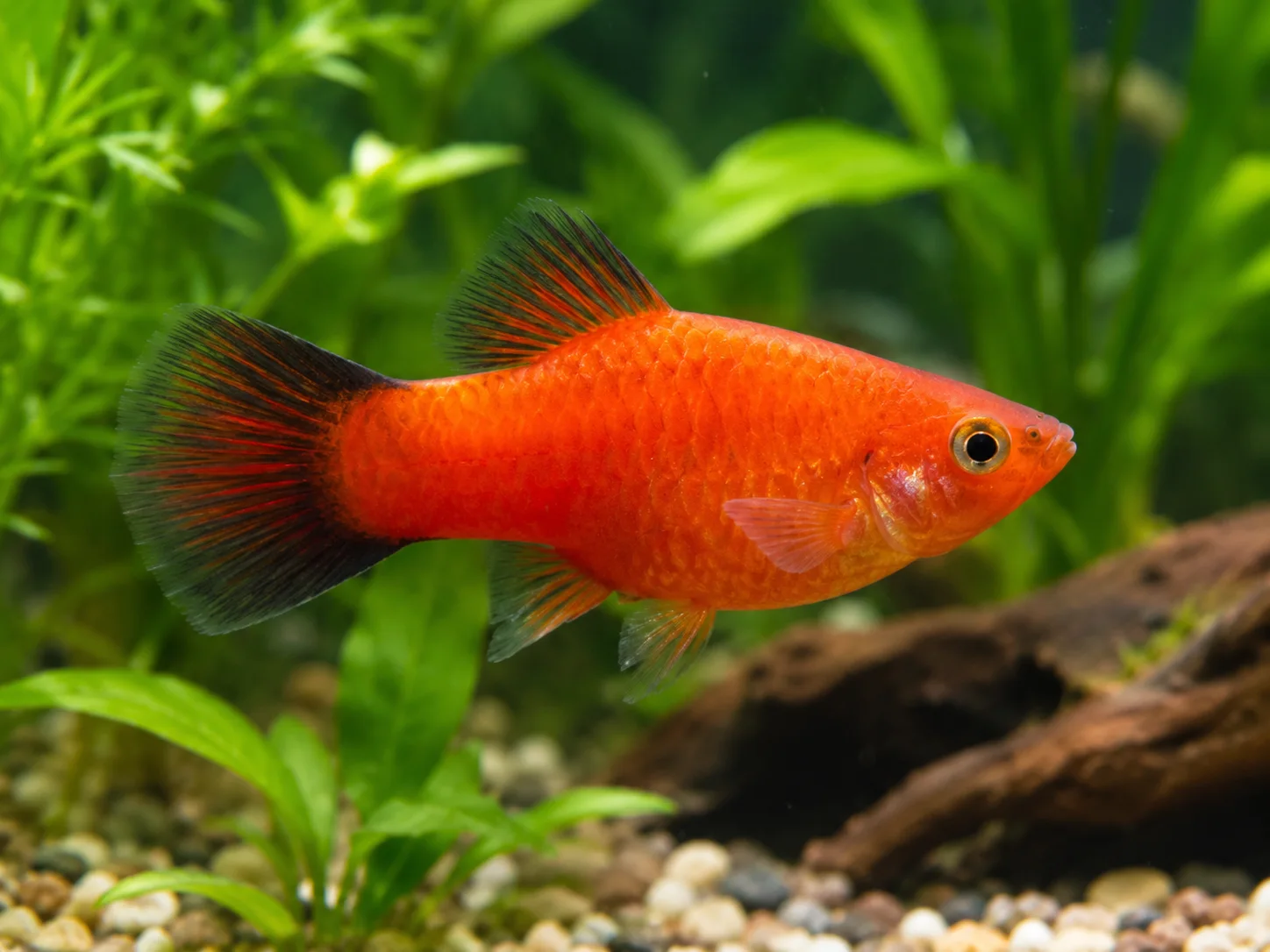
Platies (Xiphophorus maculatus) are another excellent option and probably one of our favourite recommendations for someone wanting a colourful, relatively uncomplicated community aquarium.
They're peaceful, available in numerous colours and usually adapt well to hard, alkaline conditions. A planted aquarium containing a group of platies can look particularly attractive, especially with the brighter red, orange and yellow varieties.
Unlike some more demanding tropical fish, platies don't require particularly warm water, with temperatures around 22–25°C suiting them well.
They also tend to get along with other peaceful fish, although, like guppies, they reproduce regularly if males and females are kept together. Each generation appears to become longer lasting than the previous and by the 3rd generation you will have a strain perfectly suited to your aquarium....... breeding like rabbits!
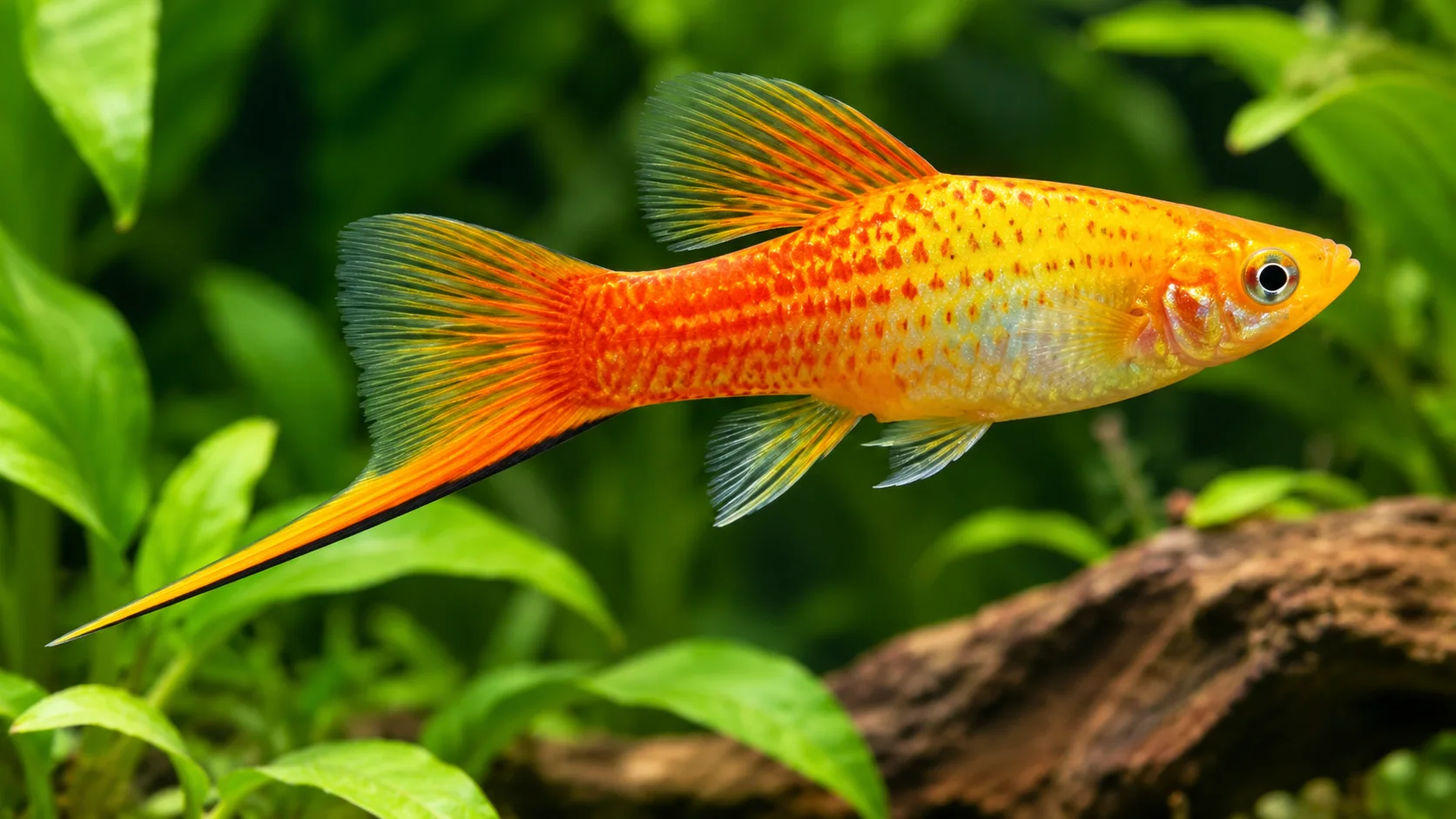
Swordtails (Xiphophorus hellerii) offer something slightly different. They're closely related to platies but grow considerably larger, with the males developing the distinctive extended lower tail fin that gives them their name.
Swordtails are active swimmers, so we wouldn't recommend them for smaller aquariums. Ideally, they should have a tank at least 120 cm long, allowing plenty of space for swimming and for males to establish some distance from one another.
They're very well suited to moderately hard and hard water, but males can occasionally become territorial. Providing plenty of planting and avoiding overcrowding makes a noticeable difference.
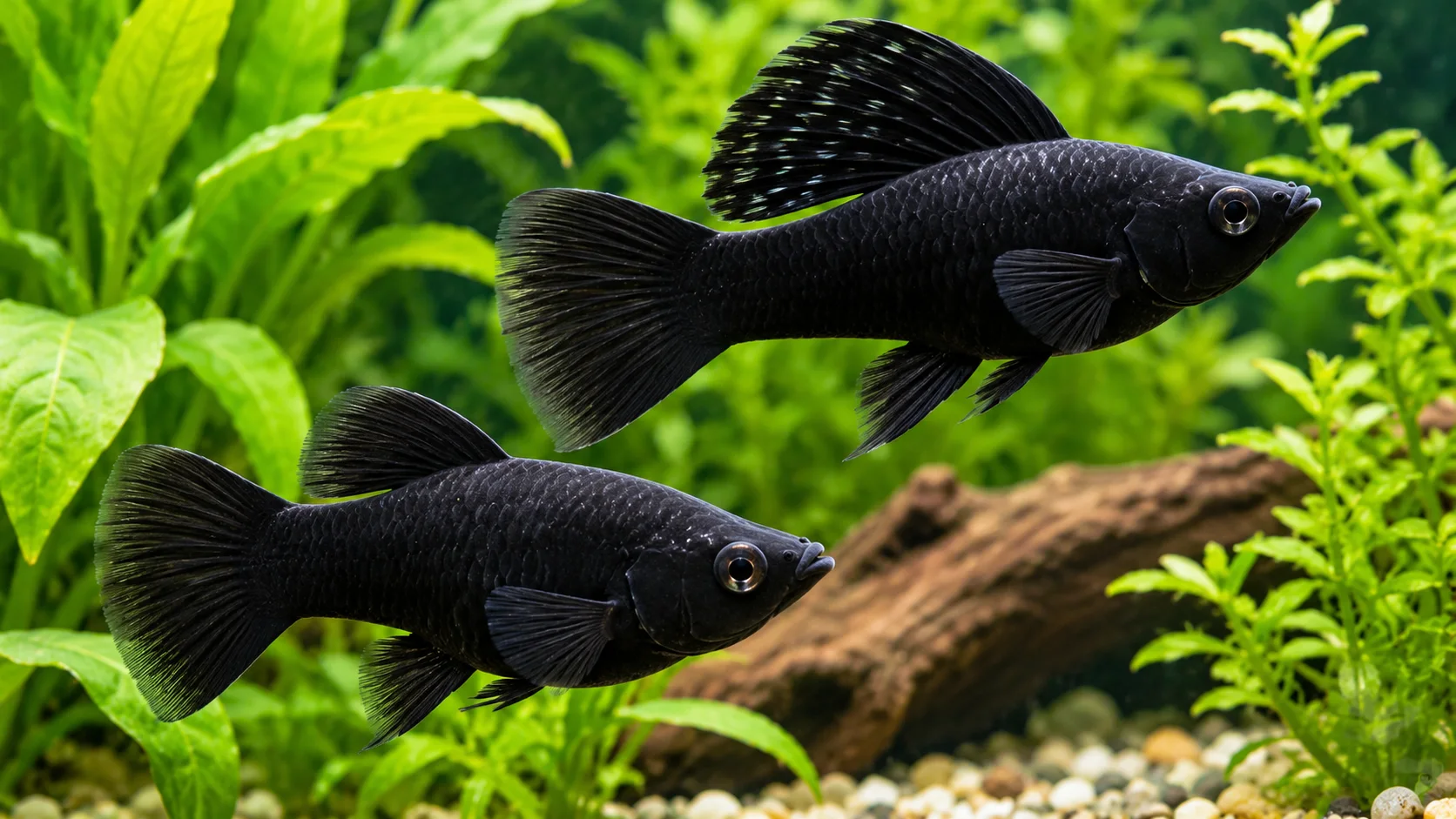
Then we have mollies (Poecilia sphenops), another popular livebearer that genuinely benefits from harder water.
Mollies are often sold alongside guppies and platies, but they're not quite as forgiving of unsuitable water conditions as people sometimes assume.
In soft, acidic water, they can become prone to health problems, including a characteristic rocking or shimmying movement. In appropriately hard, alkaline water, they're generally much more comfortable.
Black mollies are probably the best-known variety, although there are numerous other colours available.
We particularly like mollies in aquariums with natural algae growth, as they're constantly grazing on surfaces. They should still receive a balanced diet containing a good proportion of vegetable matter.
You may have heard that mollies require aquarium salt. While some populations tolerate brackish conditions, salt isn't essential for keeping the usual freshwater varieties in suitably hard, alkaline water.
Boesemani Rainbowfish: A Colourful Alternative
If you want something a little different from livebearers, Boesemani rainbowfish (Melanotaenia boesemani) are certainly worth considering.
These are beautiful fish, particularly when mature males develop their distinctive blue-purple fronts and orange-yellow rear halves.
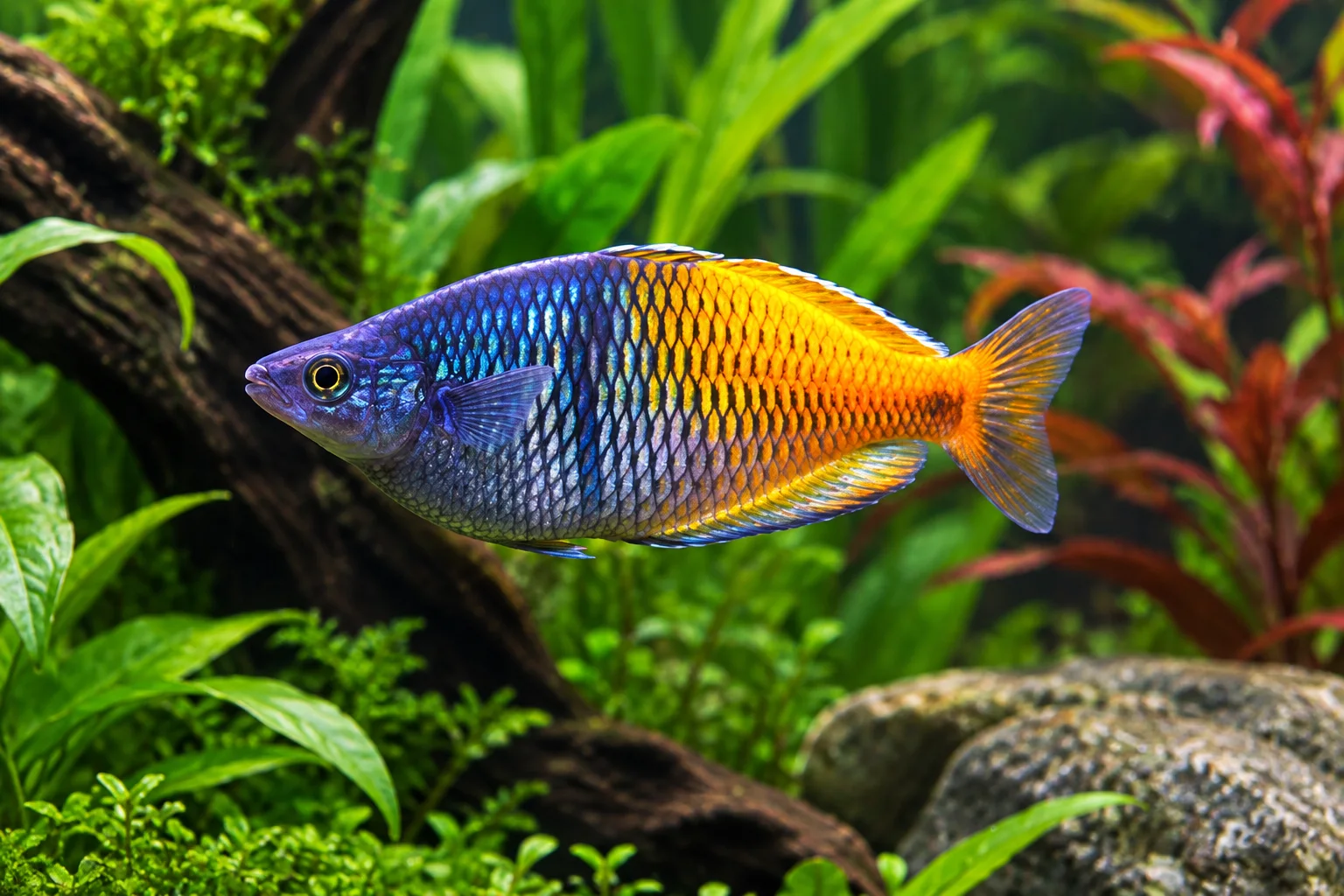
They originate from Indonesian freshwater habitats, including lakes containing naturally hard, alkaline water, making them suitable for many harder-water aquariums.
One thing we would emphasise is that rainbowfish need swimming space. They're active fish that look much better when kept in a proper group rather than just one or two individuals. We'd aim for at least six, preferably more, in an aquarium around 120 cm long or larger.
We've always liked the way rainbowfish behave in a planted aquarium. When given plenty of open swimming space alongside areas of vegetation, they make a particularly attractive display.
Their colours can also improve considerably as they mature, so don't be disappointed if young fish initially look rather plain. I have personally bred these fish, in fact quite a number of them as well as a few other Rainbow fish species. We have a full Bosemani Rainbowfish Care Guide if you wish to learn more about one for my favourite fish.
Shell-Dwelling Cichlids from Lake Tanganyika
For something completely different, Neolamprologus multifasciatus, commonly known as multies, are fascinating little cichlids.
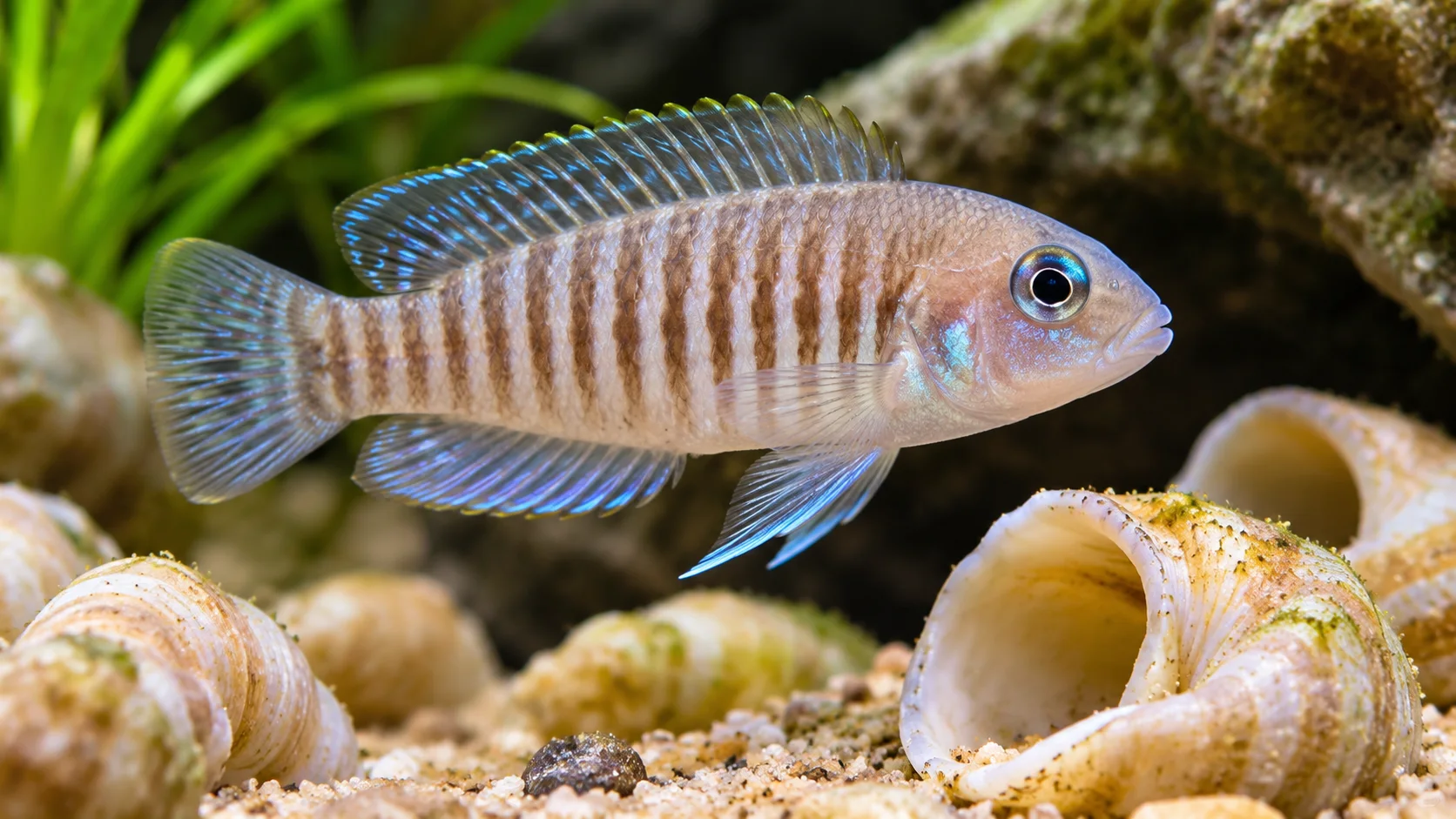
These fish originate from Lake Tanganyika in Africa, where the water is naturally hard and alkaline.
Unlike many cichlids, multies remain very small. The males generally reach around 4–5 cm, with females usually being smaller.
What makes them interesting isn't their colouring but their behaviour.
They live and breed around empty snail shells, digging into the sand and rearranging their surroundings to suit themselves.
A small colony can provide hours of entertainment, particularly once they begin breeding and defending their individual shells.
For this type of aquarium, we'd recommend fine sand, plenty of suitable empty shells and stable, alkaline water.
It's important to remember that these are territorial fish, despite their small size. They're generally better suited to a dedicated shell-dweller aquarium than a typical mixed community setup.
We have a great article on Neolamprologus multifasciatus if you wish to find out more about this interesting little cichlid.
Electric Yellow Lab Cichlids
Our final choice is Labidochromis caeruleus, better known as the electric yellow lab.
These bright yellow cichlids originate from Lake Malawi, another African lake famous for its hard, alkaline water.
They're among the more manageable Malawi cichlids, although that doesn't mean they're suitable for every community aquarium.
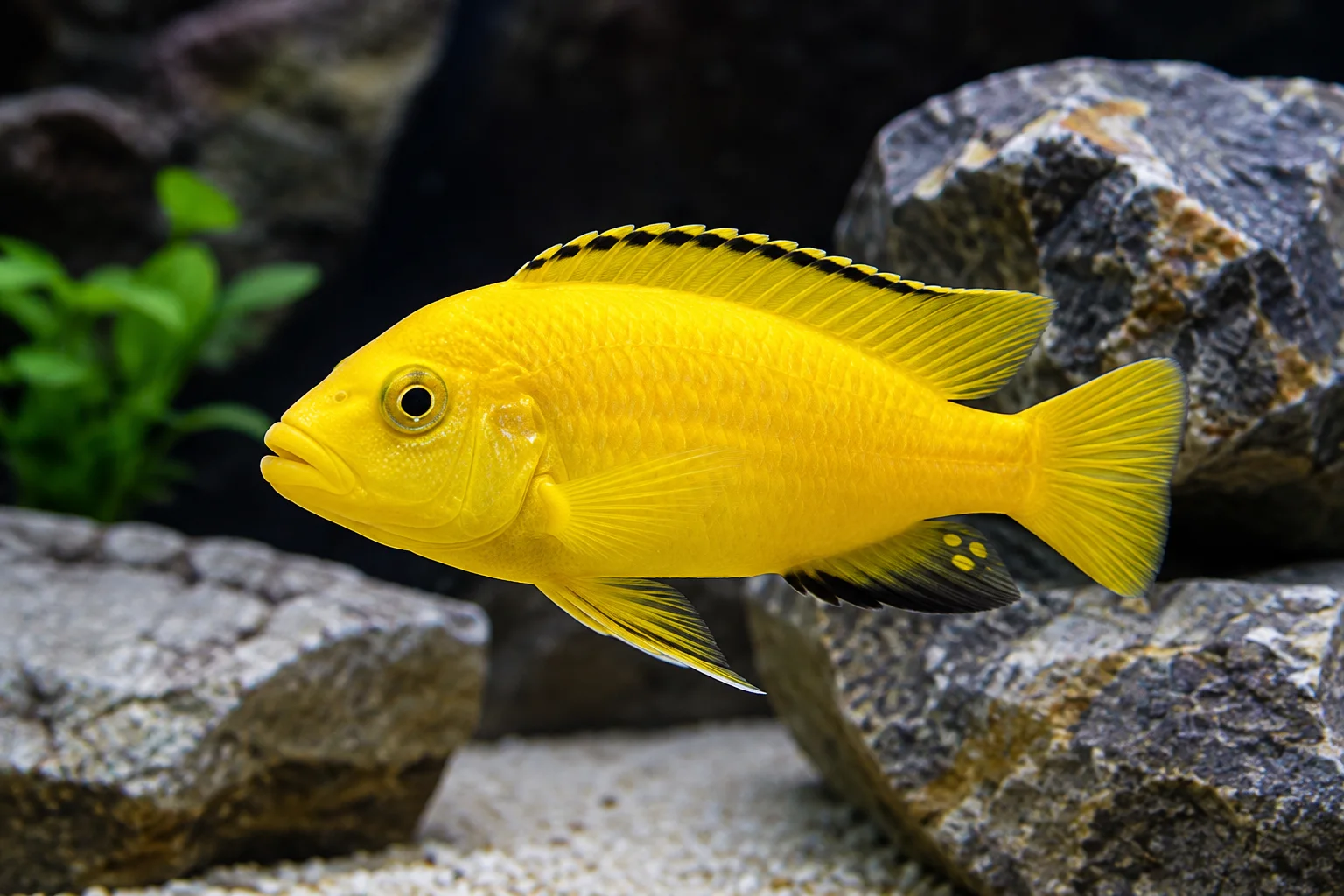
Electric yellow labs are best kept in an appropriately sized Malawi setup, with carefully selected compatible cichlids, plenty of secure rockwork and effective filtration.
They can be territorial, particularly around breeding sites, so stocking and aquarium layout require some thought.
What makes them such a good choice for hard water is that they're naturally adapted to alkaline conditions. Rather than attempting to soften your tap water, you can create an aquarium that makes use of its existing mineral content.
A well-maintained Malawi aquarium can be an impressive display, with bright colours and interesting behaviour that's quite different from a conventional planted community tank.
We maintained an aquarium in a local hospital for almost 20 years and we stocked it with 2 parrot fish and a group of yellow labs. It proved to be a very popular aquarium display right up to time we had to decommission the aquarium due to budget cuts.

Should You Change Your Aquarium Water Hardness?
This is something we're occasionally asked when advising customers about setting up or restocking their aquariums. Our answer depends on the fish they want to keep.
If someone has their heart set on delicate soft-water species, then using RO water and remineralising it appropriately may be the best solution.
However, if they're simply looking for a colourful, healthy aquarium that's enjoyable to maintain, we'd generally recommend choosing fish suited to their tap water.
It's also important to remember that these seven species aren't necessarily suitable tank mates. Guppies and platies can make a lovely community, whereas shell-dwelling cichlids and Malawi cichlids have very different requirements.
Hard water suitability is only one part of choosing compatible fish. Temperature, adult size, behaviour and aquarium dimensions are just as important.
And regardless of the water hardness, good filtration, regular maintenance, sensible feeding and appropriate water changes remain essential.
Our Final Thoughts
After more than 25 years working with aquariums, one thing we've learned is that keeping fish successfully doesn't have to involve constantly adjusting water chemistry.
Here on the south coast of England, we have plenty of naturally hard tap water, and there are some excellent fish that will thrive in it.
For a straightforward community aquarium, we'd probably lean towards platies, guppies or other suitable livebearers. For something larger and more colourful, Boesemani rainbowfish are an excellent option.
And if you're interested in a more specialised aquarium, the African Rift Lake cichlids offer something completely different.
The important thing is to understand your water before choosing your fish.
It's generally much easier to choose fish that suit your water than to spend years trying to make your water suit the fish.
Products We've Mentioned & Recommend
Below you'll find a selection of products we've mentioned in this article, along with a few others we think you might find useful. We've included Amazon links to make them easy to find.
A quick word about affiliate links...
Some of these links are affiliate links, which means we may earn a small commission from qualifying purchases, at no extra cost to you.
Unfortunately, the commission doesn't quite stretch to cocktails on a yacht or a garage full of sports cars. In reality, it helps cover the running costs of this website and, with a bit of luck, might eventually buy me a new pair of waders that don't leak!
We only recommend products we genuinely believe are worth considering, and your support helps us keep sharing free advice from our years of working with aquariums and ponds.
Thanks for supporting Aquatic Specialist!
As an Amazon Associate I earn from qualifying purchases.
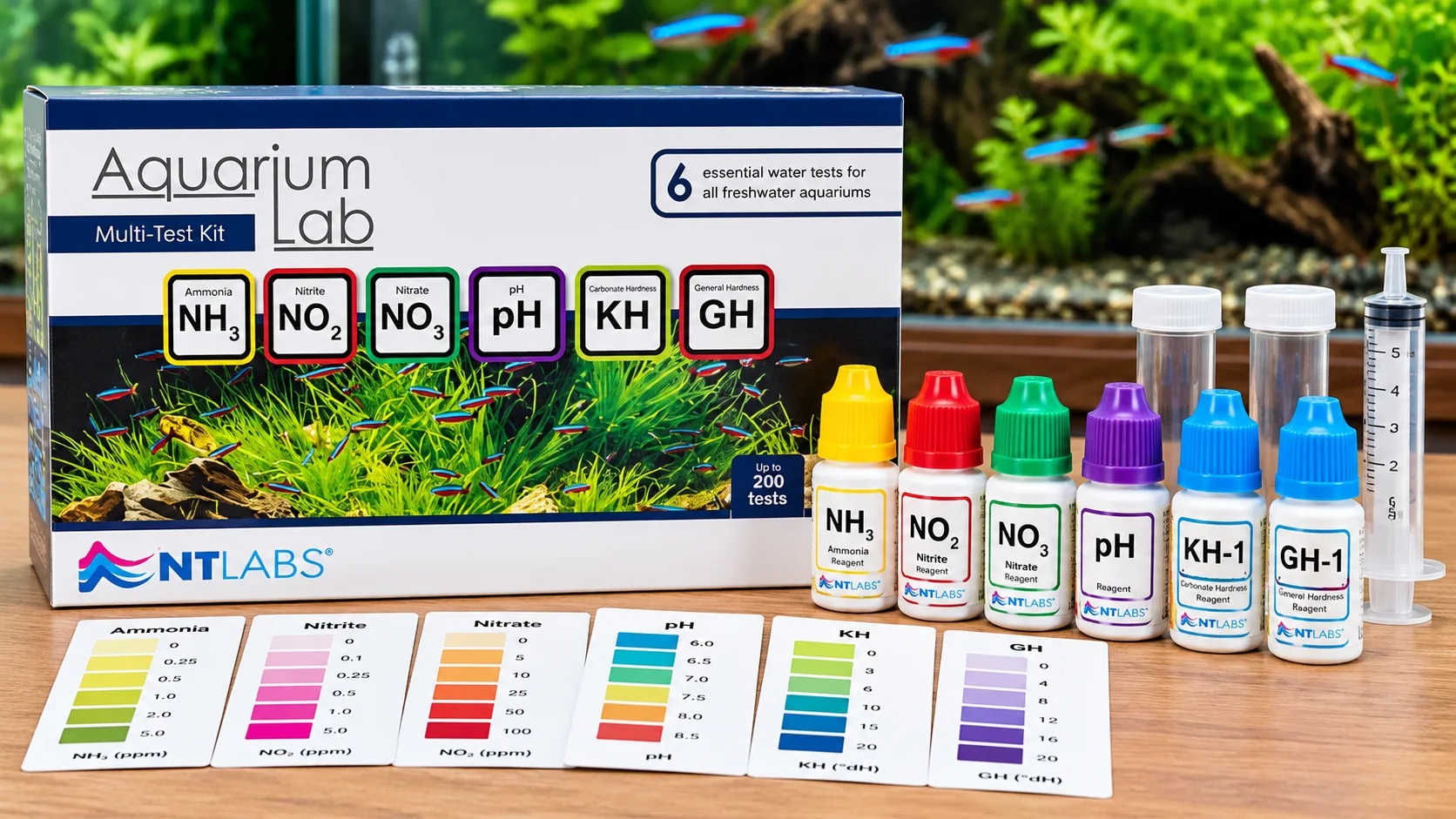
NT Labs
NT Labs Aquarium Lab Multi Test Kit
Best for: Cycling new freshwater aquariums and routine water quality monitoring.
As an Amazon Associate, we earn from qualifying purchases.
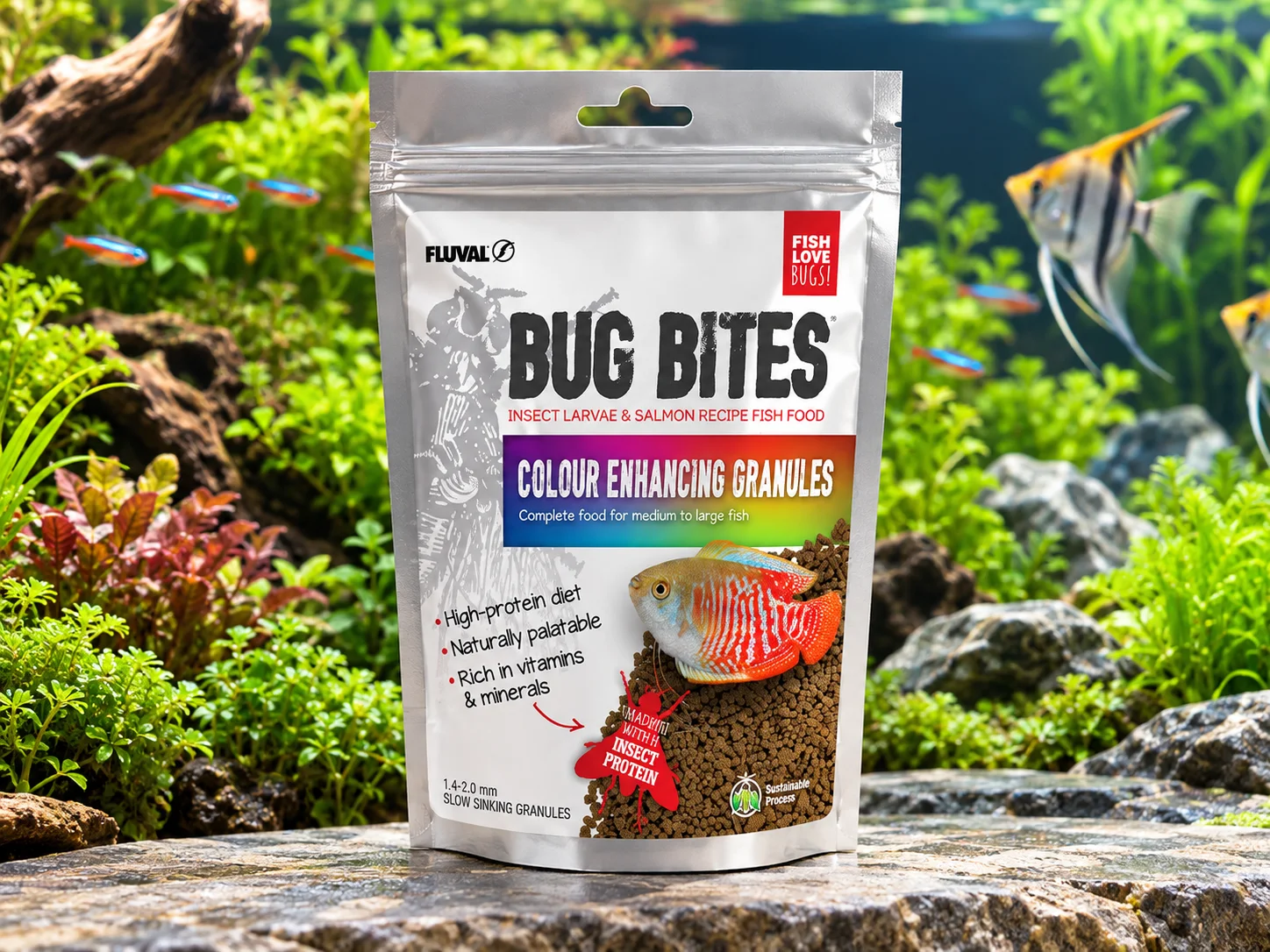
Fluval
Fluval Bug Bites Colour Enhancing Fish Food
Best for: Medium to large tropical fish and colourful community species
As an Amazon Associate, we earn from qualifying purchases.
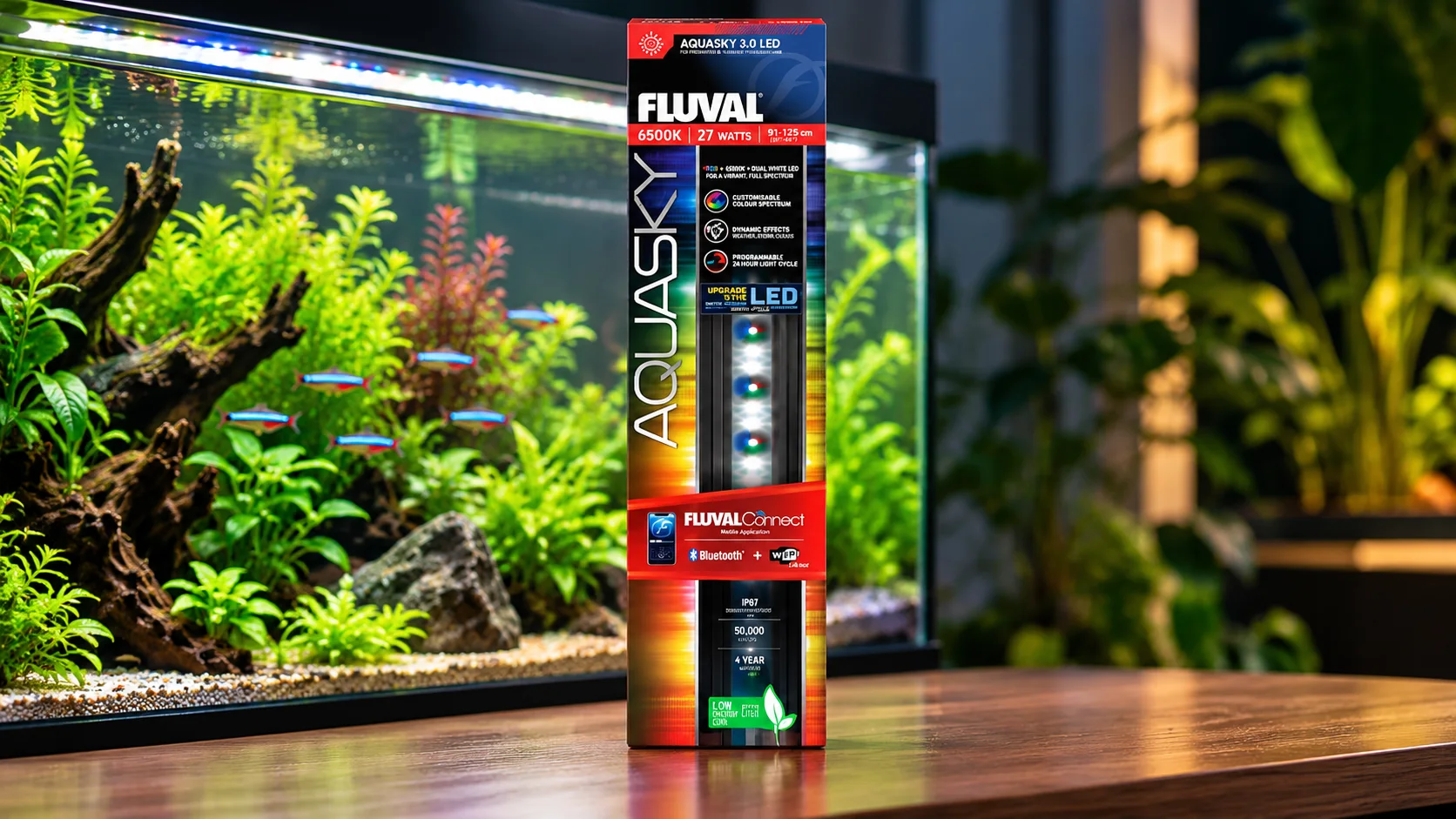
Fluval
Fluval Aquasky 3.0 LED Aquarium Lighting (12W–33W)
Best for: Freshwater community aquariums and low-to-medium-light planted tanks, with models available for different aquarium sizes.
As an Amazon Associate, we earn from qualifying purchases.