Boesemani Rainbowfish Care Guide
Working in aquatics since 1997 and founder of Aquatic Specialist in 2003, Richard specialises in reef aquariums and pond maintenance and has lectured at Sparsholt College. Read Richard's profile.
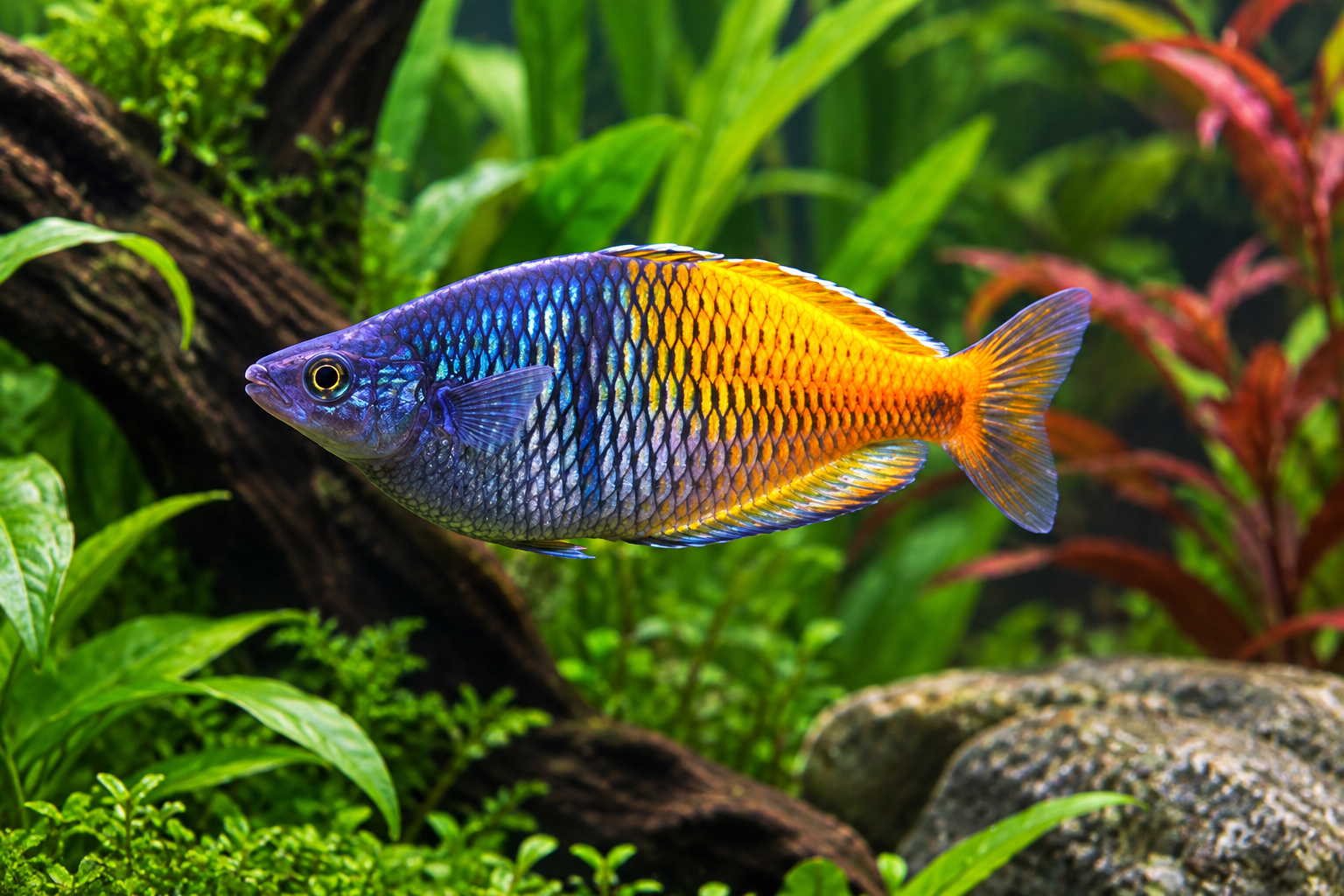
Boesemani Rainbowfish are colourful, active freshwater fish that thrive in groups. Discover their ideal aquarium setup, diet, water conditions, tank mates and breeding requirements.
The Boesemani rainbowfish is one of those freshwater fish that can look fairly ordinary when first seen in a dealer’s aquarium, yet become spectacular once settled into the right conditions. Adult males develop a distinctive two-tone appearance, with a deep blue to blue-purple front half contrasting against a bright yellow-orange rear half. In a well-maintained planted aquarium, a mature group can easily become the main attraction.
Boesemani rainbowfish (Melanotaenia boesemani) originate from the Ayamaru Lakes region of West Papua, Indonesia. Their relatively restricted natural distribution has made wild populations a conservation concern, so aquarium specimens should ideally come from responsible captive-bred stock.
They are active, social fish rather than species that spend much of the day hiding amongst plants. A group will regularly travel backwards and forwards through the aquarium, and males frequently display to females and one another. This behaviour is a large part of their appeal, but it also means that they need considerably more swimming space than their body length alone might suggest.
This is another Rainbow fish that I have kept and bred. They are relatively easy to raise once you crack how to feed the young. My breeding group used to lay eggs every day in a spawning mop.
Aquarium Size
Adult Boesemani rainbowfish usually reach around 10–12 cm, with males generally becoming larger and deeper-bodied than females. Although they are not enormous fish, their constant movement makes aquarium length particularly important.
For a proper group, I would look towards an aquarium of at least around 120 cm in length, with larger aquariums being preferable. A short, tall aquarium may contain a similar volume of water but doesn't provide the same swimming space.
The best layout combines open water with areas of planting around the sides and rear of the aquarium. Tall plants, pieces of wood and rockwork can create an attractive backdrop without filling the entire tank. Leaving a substantial open area through the middle or front gives the rainbowfish somewhere to swim and display naturally.
A secure lid is also important. Rainbowfish are powerful swimmers and can jump, particularly if startled.
Keeping Boesemani Rainbowfish in Groups
Boesemani rainbowfish should not really be kept individually. They are naturally social and are much more impressive when maintained as a group.
Six fish would be a sensible minimum, although a larger group can work extremely well when aquarium size allows. Keeping several males and females also allows you to see much more natural behaviour.
Male Boesemani rainbowfish are generally the most colourful. The picture below shows one of my adult males in full display colours. Mature males become deeper-bodied and develop the intense blue and orange colouration for which the species is famous. Females are usually slimmer and more subdued, although healthy mature females are still attractive fish.
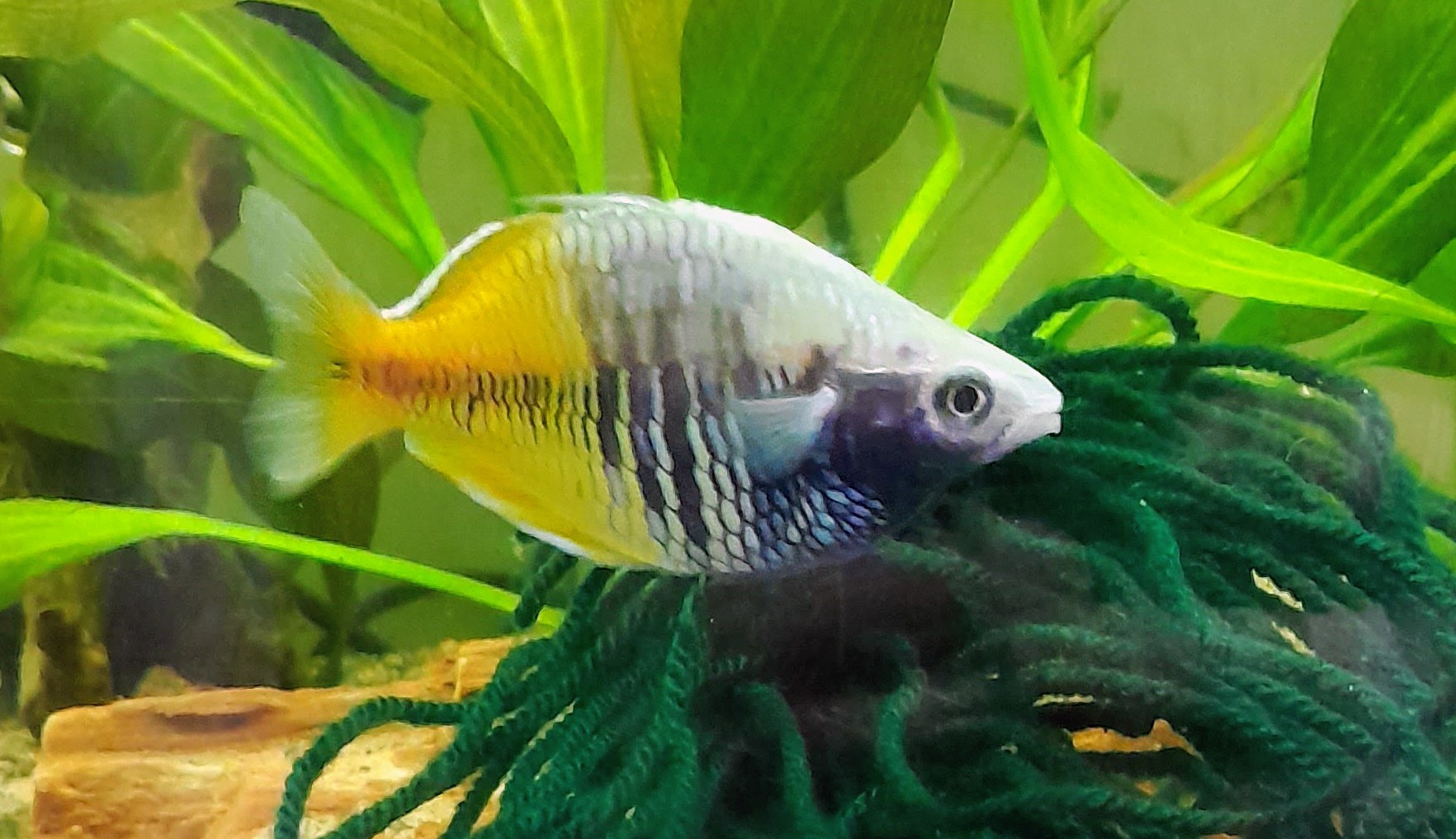
Males may chase and display towards one another, particularly when females are present. This is normally display behaviour rather than serious aggression. Providing enough space and keeping a reasonable-sized group helps prevent one individual from receiving all the attention.
Water Conditions
One advantage of Boesemani rainbowfish is that they don't require extremely unusual water conditions. They generally do well in moderately hard, neutral to slightly alkaline water, although captive-bred fish can adapt to a reasonable range of conditions. The one's I was breeding were not fussy as long as you keep the nitrates low.
A temperature of approximately 24–28°C suits them well, with a pH somewhere around neutral to moderately alkaline being suitable for most captive-bred specimens. Remember to regularly check your water quality. We use ESHA Quicktest for a quick and easy way to test.
Stability and water quality are more important than trying to achieve one exact number. Regular water changes with a good quality water conditioner, good filtration and sensible stocking will usually produce better results than constantly adjusting the water with chemicals.
Rainbowfish appreciate well-oxygenated water and good circulation. Because they are active fish with healthy appetites, a mature biological filter is important.
Nitrate should also be controlled through regular maintenance. Boesemani rainbowfish may tolerate less-than-perfect conditions for a while, but their colour, activity and general condition are noticeably better when water quality is consistently good.
Feeding Boesemani Rainbowfish
Boesemani rainbowfish are straightforward to feed and will accept most good-quality aquarium foods.
A quality flake Food or appropriately sized pellet/granules can form the basis of the diet, but I prefer to provide variety rather than relying entirely on one dried food. Frozen foods such as brine shrimp, daphnia and bloodworm can all be offered, while suitable live foods are also readily accepted.
They will take food from different levels of the aquarium, although they are particularly enthusiastic when feeding from the surface and mid-water.
A varied diet becomes especially noticeable in mature males. Good food combined with clean water and suitable lighting helps bring out the strong contrast between the blue front of the body and orange-yellow rear.
It is also worth remembering that a constantly hungry-looking rainbowfish isn't necessarily a starving rainbowfish. They are enthusiastic feeders and can easily persuade their owner to feed more than necessary.
The Best Aquarium Setup
A planted aquarium makes an excellent home for Boesemani rainbowfish, provided that the planting doesn't occupy all of the available swimming space.
Plants such as Vallisneria Americana can work well towards the rear, while Java Fern and Anubias Nana can be attached to wood or rock. Cryptocoryne Wendtii Brown and other rooted plants can be used to create denser areas lower down.
The exact plants matter less than the overall layout. I would aim for a planted backdrop with open swimming space rather than a heavily packed aquascape.
A darker substrate can make their colours appear particularly striking, and good aquarium lighting helps show the metallic blue scales of mature males.
Natural wood and rock can be included, but there is no need to create complicated caves. Boesemani rainbowfish spend most of their time in open water and are far more interested in swimming space than hiding places.
Suitable Tank Mates
Boesemani rainbowfish are generally peaceful community fish, but their size and activity need to be considered when choosing companions.
They work particularly well with other medium-sized peaceful fish that are confident enough not to be intimidated by a fast-moving group of rainbowfish. Other rainbowfish, peaceful barbs, larger tetras, Corydoras and many peaceful catfish can all potentially make suitable companions where their water requirements overlap.
Very small or extremely timid species aren't always the best choice. The rainbowfish may not deliberately attack them, but their speed and enthusiasm at feeding time can leave quieter fish struggling to compete.
Fin-nipping species should also be chosen carefully. Mature male Boesemani rainbowfish develop attractive fins that can become targets for persistent nippers.
Colour Development
One of the biggest mistakes when buying Boesemani rainbowfish is judging young specimens by the colour they show in the shop.
Juveniles can look surprisingly plain. Even young males may show little resemblance to the spectacular photographs of mature adults.
Their characteristic colour develops with age, maturity and good husbandry. Genetics also play a part, which is another reason to buy from a reputable source where possible.
A healthy adult male can display an intense steel-blue or blue-purple front half, changing dramatically into yellow and orange towards the tail. During courtship and displays, the colours can become even stronger.
Don't expect that transformation immediately. Boesemani rainbowfish are a species that rewards patience.
Breeding Boesemani Rainbowfish
Breeding is possible in the home aquarium and follows the general pattern seen with many rainbowfish.
Rather than guarding a nest, the adults scatter adhesive eggs amongst fine-leaved plants or spawning material. A spawning mop can make collecting the eggs considerably easier if the aim is to raise a reasonable number of fry. I used to leave the mop in the aquarium for 5 to 7 days before moving the mop to a hatching tank. That way I had a decent number of fry to grow on in each batch.
Well-conditioned adults may spawn repeatedly rather than producing all their eggs in a single event. My breeding group used to lay eggs every day with the dominant male being the chief contributor on the male side.
If eggs and fry are left in the main aquarium, many are likely to be eaten. My groups where pretty good at leaving the eggs alone but the fry would disappear almost as quick as they appeared in the main tank. Moving spawning material containing eggs into a separate rearing aquarium gives much better results.
I have bred these myself and their breeding isn't the hard bit it's the feeding of the fry. The fry are super small and require very small foods and regular feedings. 5 or 6 feeds a day.
The newly hatched fry are very small and initially require appropriately tiny foods. Infusoria and then micro worms and fry powder food. As they grow, they can progress onto newly hatched brine shrimp and other larger foods.
Bosemani fry are by far the slowest of fry to grow. They are incredibly slow in fact, there's not a single species of fish they I've bred that have been slower. It took me at least 8 months to get even the fastest growers to a saleable size. Maybe in I didn't have a full time job I may have been able to shave a few weeks off this. This slow growth and high care is one of the reasons rainbow fish demand such a high retail price.
Breeding them successfully requires more effort than simply keeping adults, but it can be a worthwhile project, particularly with a species whose natural populations have faced considerable pressure.
Are Boesemani Rainbowfish Difficult to Keep?
I wouldn't consider Boesemani rainbowfish particularly difficult fish, but I also wouldn't recommend treating them as small community fish simply because juveniles are often sold at a modest size.
Their main requirements are space, companionship and consistently good water quality. Give them a long aquarium, maintain them as a proper group, feed a varied diet and keep up with routine maintenance, and they are generally very manageable.
Their adult size and activity are the factors that catch some owners out. A handful of young rainbowfish can look perfectly comfortable in a smaller aquarium, but that changes considerably as they mature.
Buying them for the aquarium they will eventually need, rather than the aquarium that suits them as juveniles, is the better approach.
Final Thoughts
The Boesemani rainbowfish is one of the most impressive freshwater community fish available to aquarists with enough space.
They combine brilliant adult colour with constant activity and interesting social behaviour. Unlike fish that spend much of their time hidden away, a group of Boesemani rainbowfish is almost always visible and brings movement to the entire aquarium.
The key is not to overcomplicate their care. Give them plenty of swimming room, keep them in a group, provide good filtration and clean water, and feed them a varied diet. Add a planted backdrop and open swimming area, and you have an aquarium that suits both the fish and their appearance.
Perhaps most importantly, don't dismiss young Boesemani rainbowfish because they haven't yet developed the famous blue and orange colouration. Given time and good conditions, those relatively plain juveniles can mature into some of the most striking fish in the freshwater aquarium hobby.
Products We've Mentioned & Recommend
Below you'll find a selection of products we've mentioned in this article, along with a few others we think you might find useful. We've included Amazon links to make them easy to find.
A quick word about affiliate links...
Some of these links are affiliate links, which means we may earn a small commission from qualifying purchases, at no extra cost to you.
Unfortunately, the commission doesn't quite stretch to cocktails on a yacht or a garage full of sports cars. In reality, it helps cover the running costs of this website and, with a bit of luck, might eventually buy me a new pair of waders that don't leak!
We only recommend products we genuinely believe are worth considering, and your support helps us keep sharing free advice from our years of working with aquariums and ponds.
Thanks for supporting Aquatic Specialist!
As an Amazon Associate I earn from qualifying purchases.
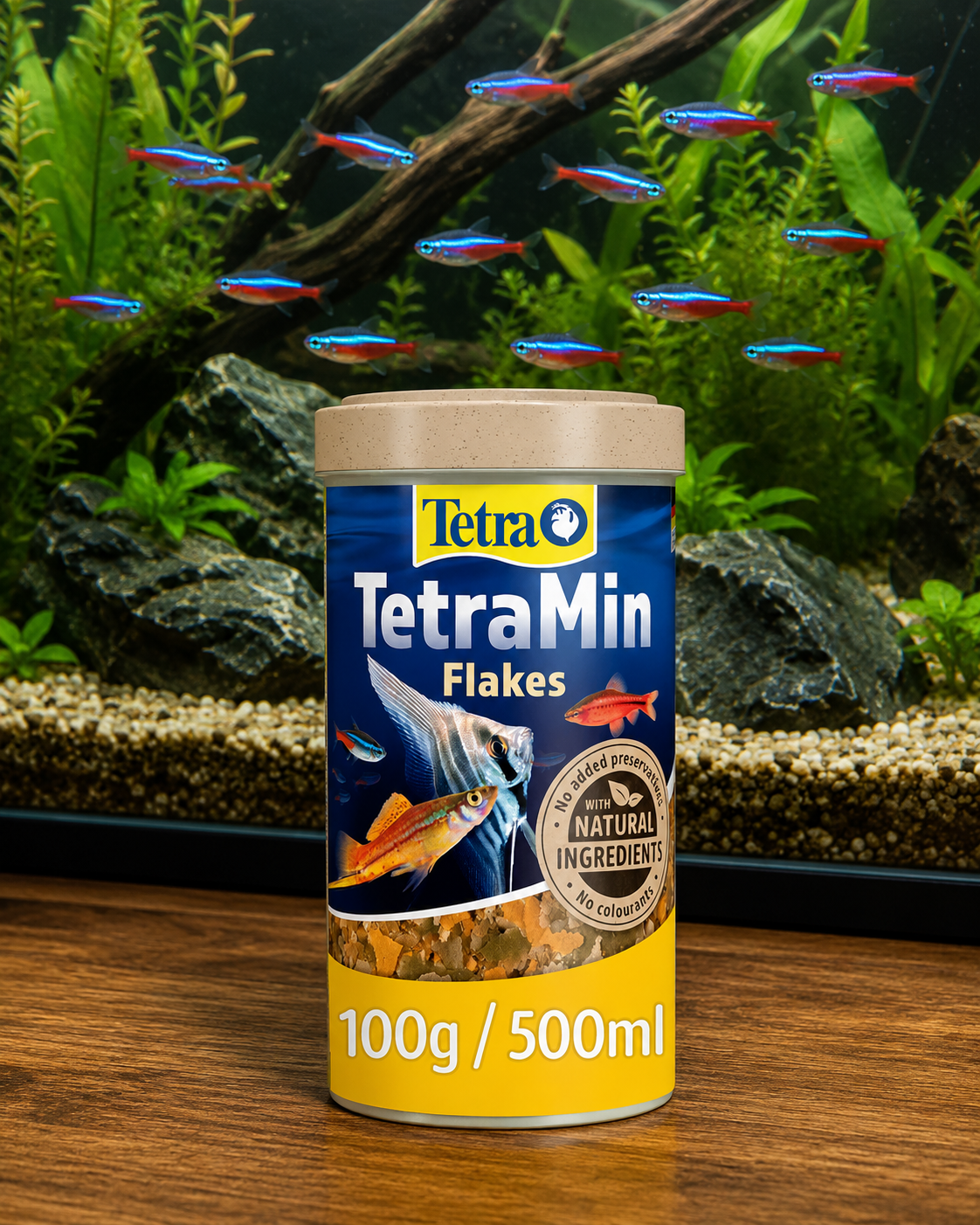
Tetra
Tetra Min Tropical Flake Food 500ml
Best for: Everyday feeding of tropical community fish
As an Amazon Associate, we earn from qualifying purchases.
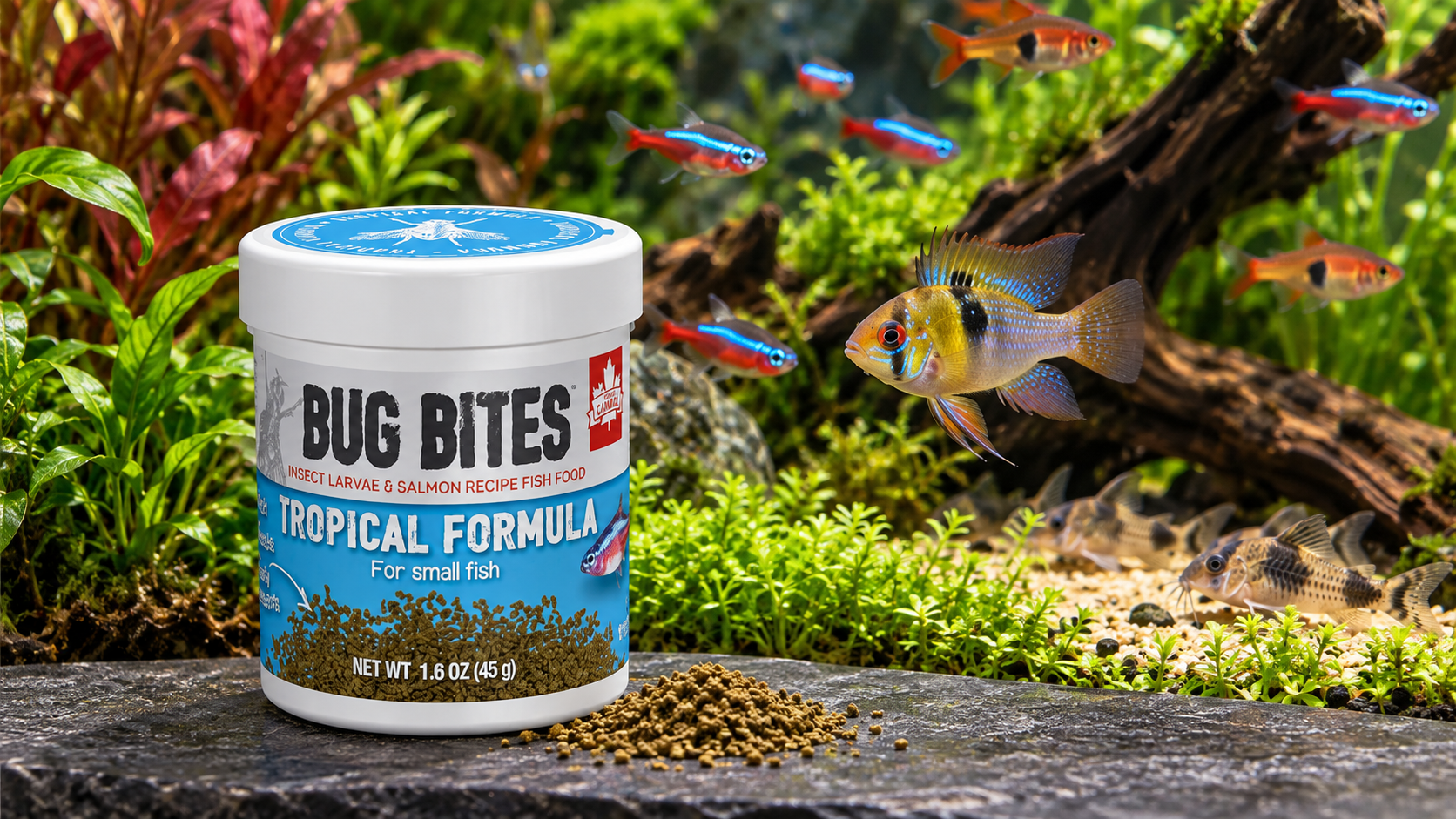
Fluval
Fluval Bug Bites Tropical Formula for small fish
Best for: Small tropical fish and dwarf cichlids
As an Amazon Associate, we earn from qualifying purchases.
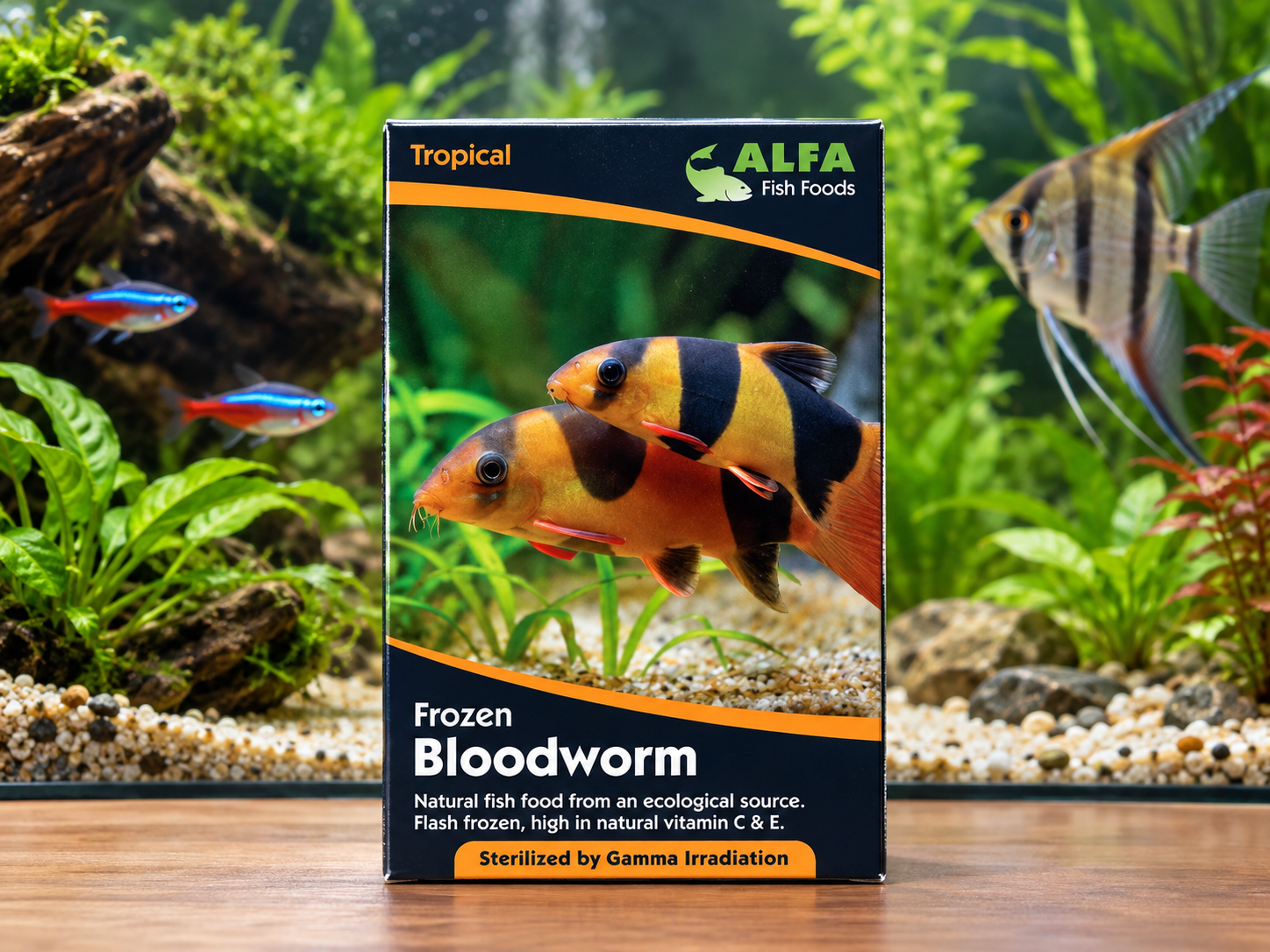
ALFA
Frozen Bloodworm Fish Food 10 Pack
Best for: Adding variety to tropical and coldwater fish diets
As an Amazon Associate, we earn from qualifying purchases.
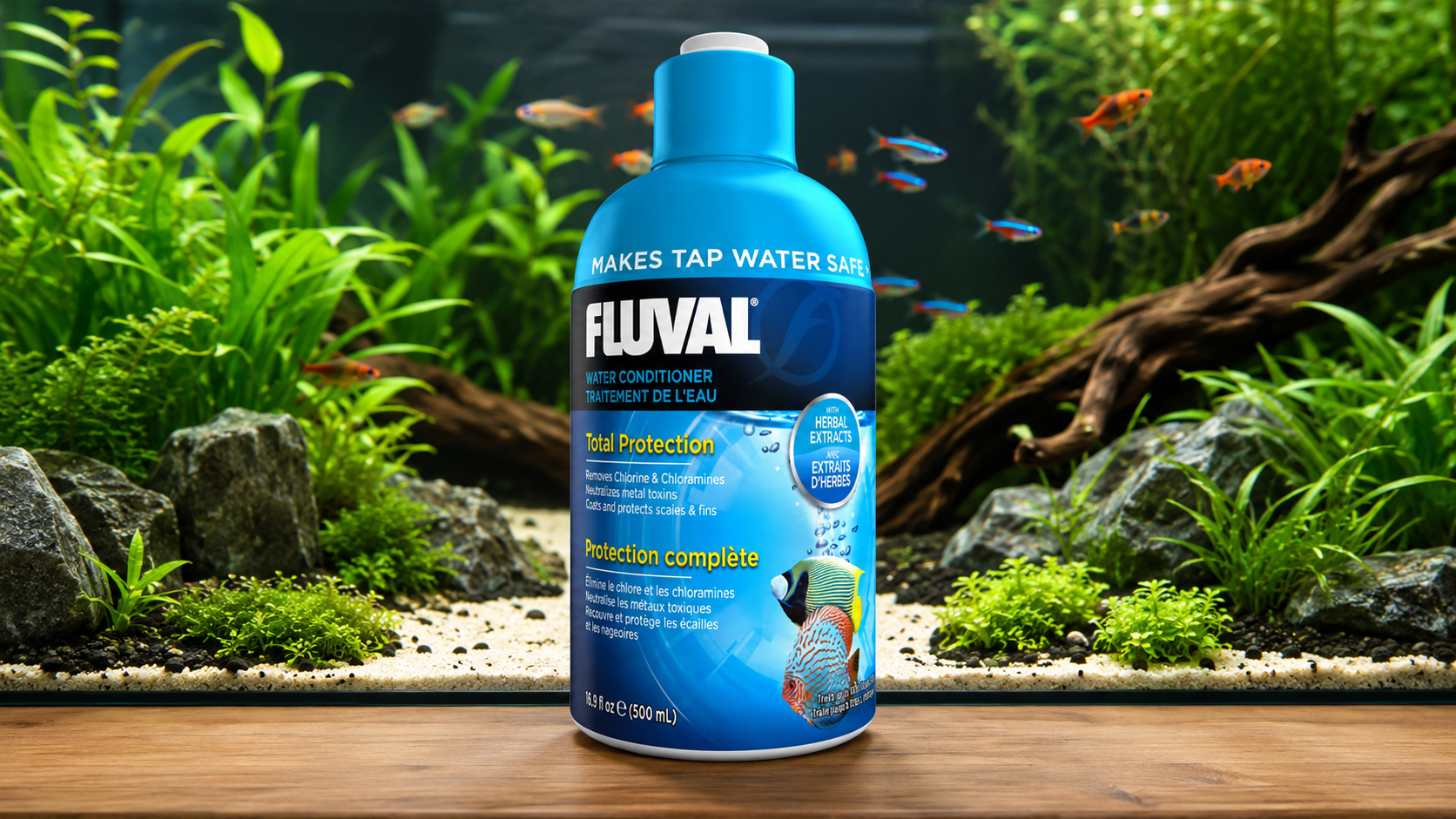
Fluval
Fluval Aqua Plus 500ml aquarium water conditioner
Best for: Routine water changes in freshwater and tropical aquariums
As an Amazon Associate, we earn from qualifying purchases.
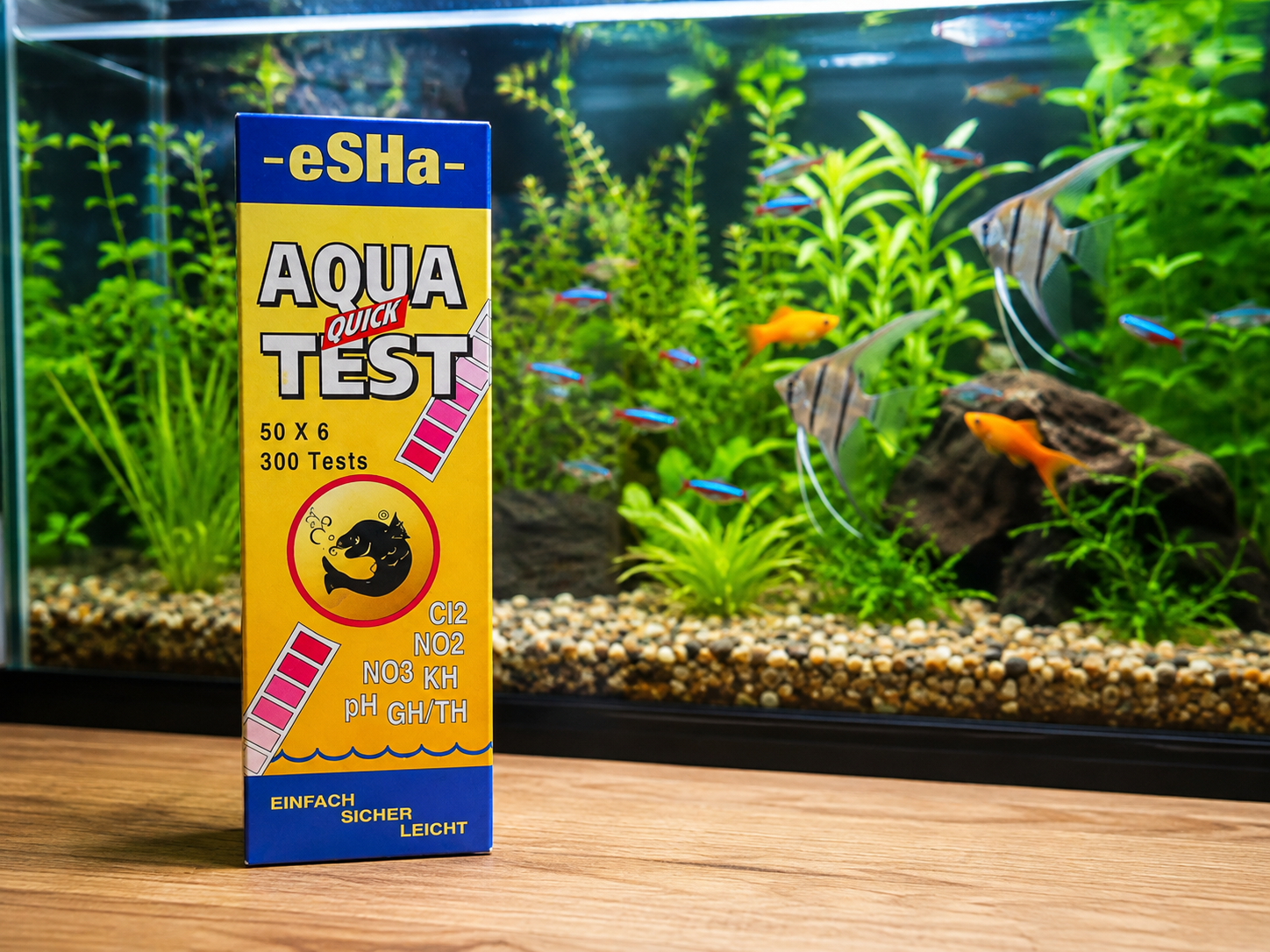
Esha
ESHA Aqua Quicktest
Best for: Fast routine water-quality checks in freshwater aquariums.
As an Amazon Associate, we earn from qualifying purchases.
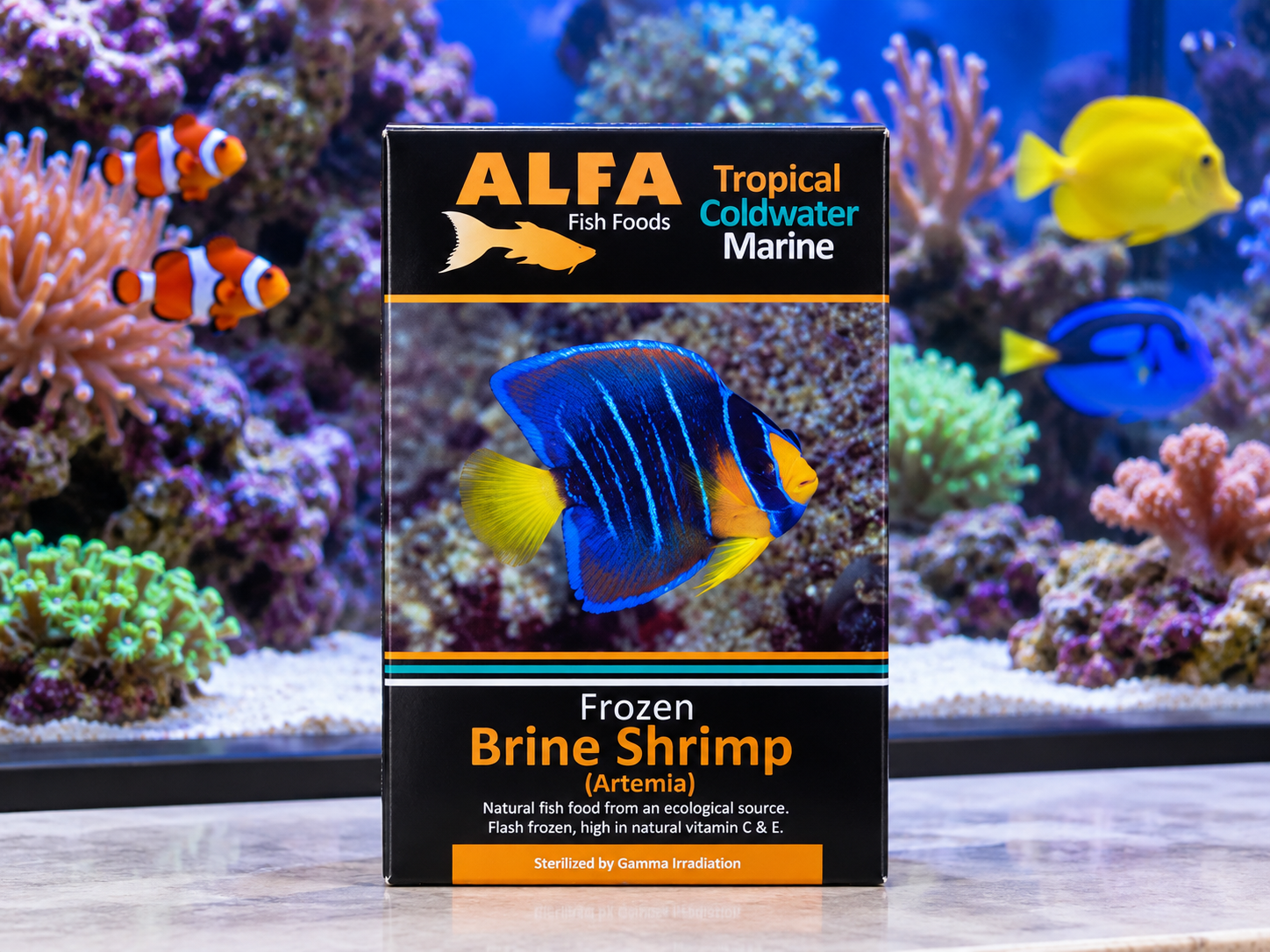
ALFA
Frozen Brine Shrimp/Artemia x5
Best for: Tropical, coldwater and marine fish needing a varied diet
As an Amazon Associate, we earn from qualifying purchases.
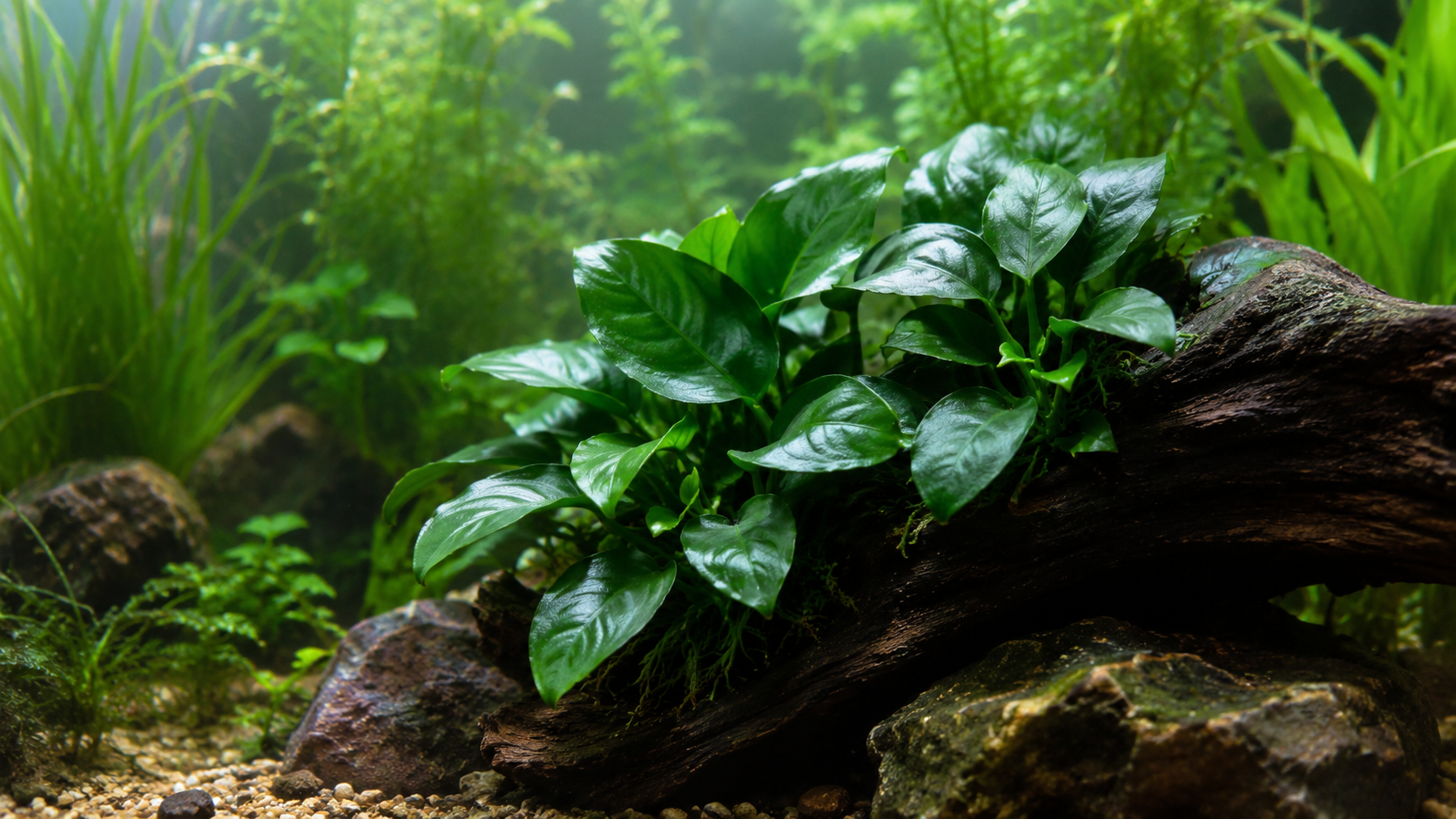
Anubias Nana
Best for: Beginners, low-light aquariums and low-tech planted tanks
As an Amazon Associate, we earn from qualifying purchases.
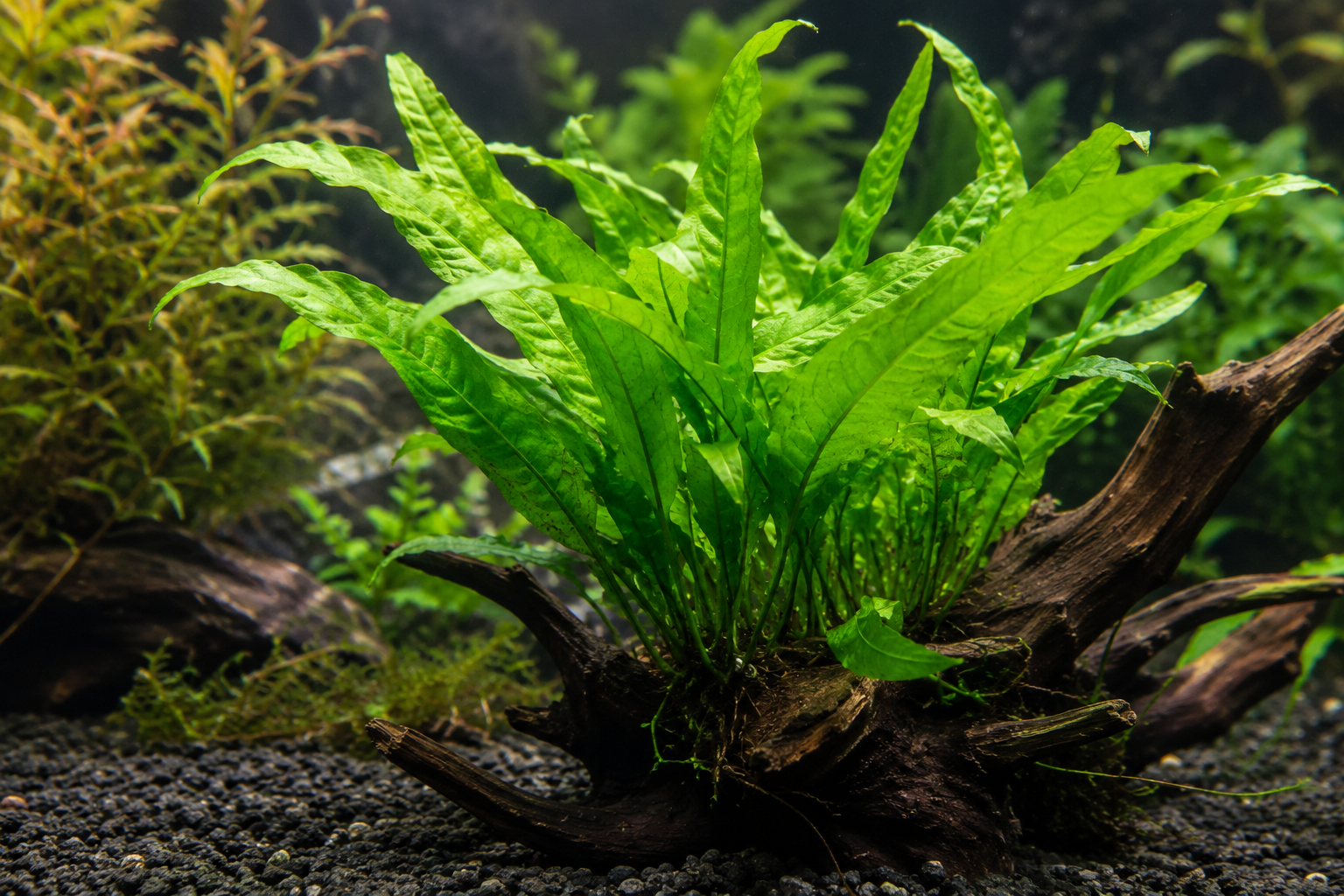
Java Fern
Best for: Beginners, low-tech aquariums and attaching to rocks or driftwood
As an Amazon Associate, we earn from qualifying purchases.
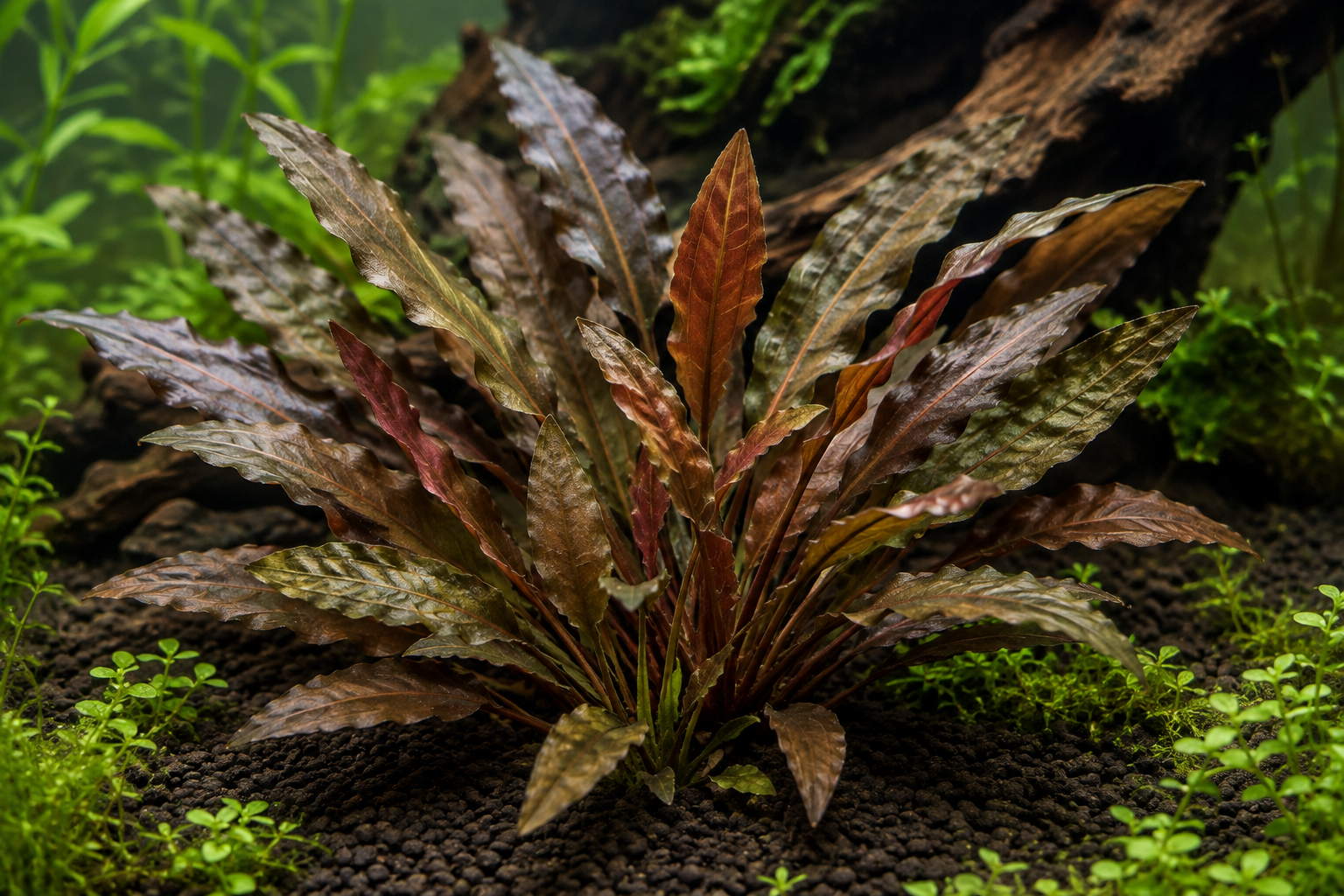
Cryptocoryne Wendtii Brown
Best for: Low-tech aquariums, beginners and midground planting
As an Amazon Associate, we earn from qualifying purchases.
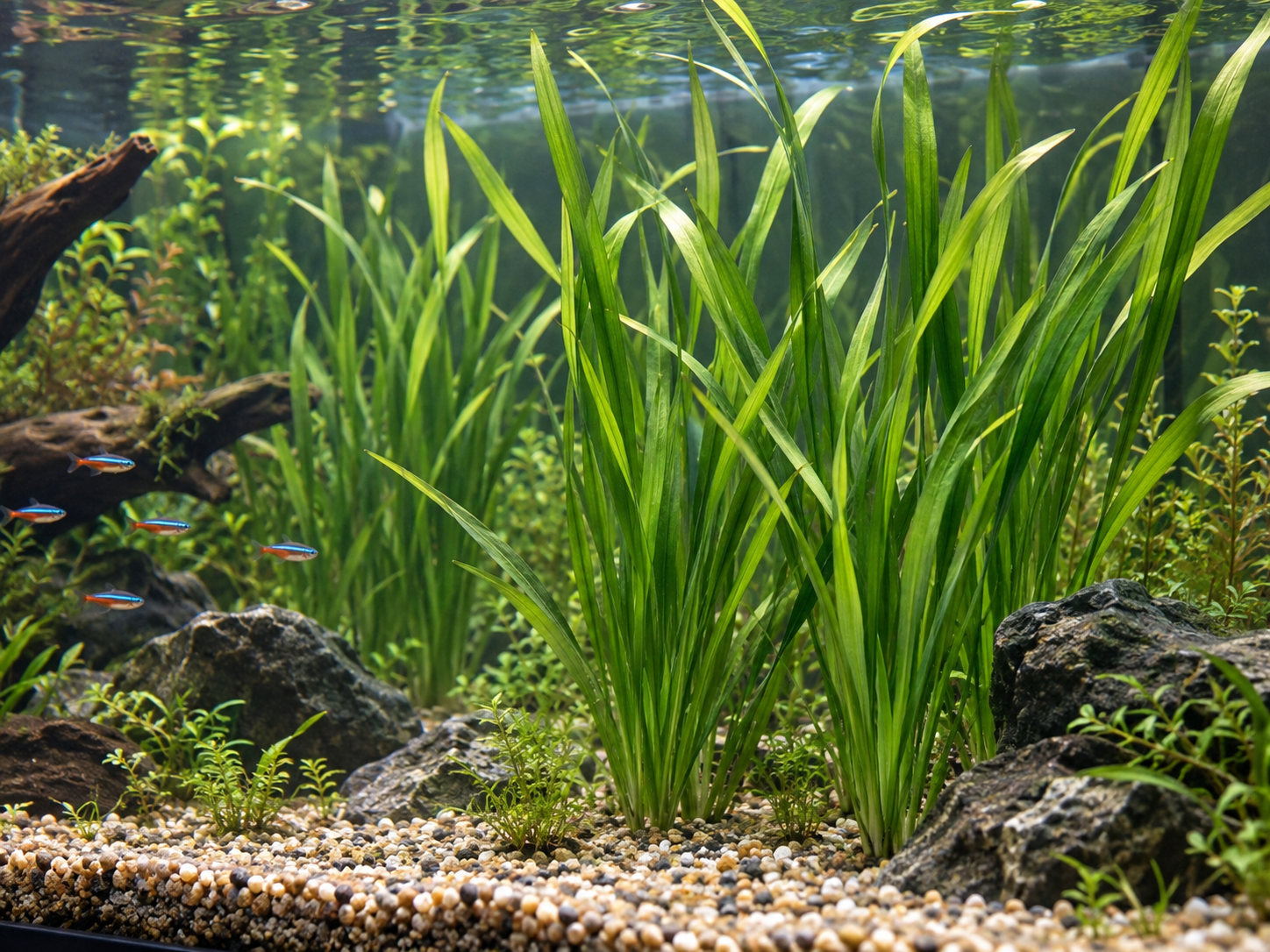
Vallisneria Americana
Best for: Easy background planting in freshwater aquariums
As an Amazon Associate, we earn from qualifying purchases.