Red Hook Silver Dollar – A Beautiful Fish That Needs Plenty of Space
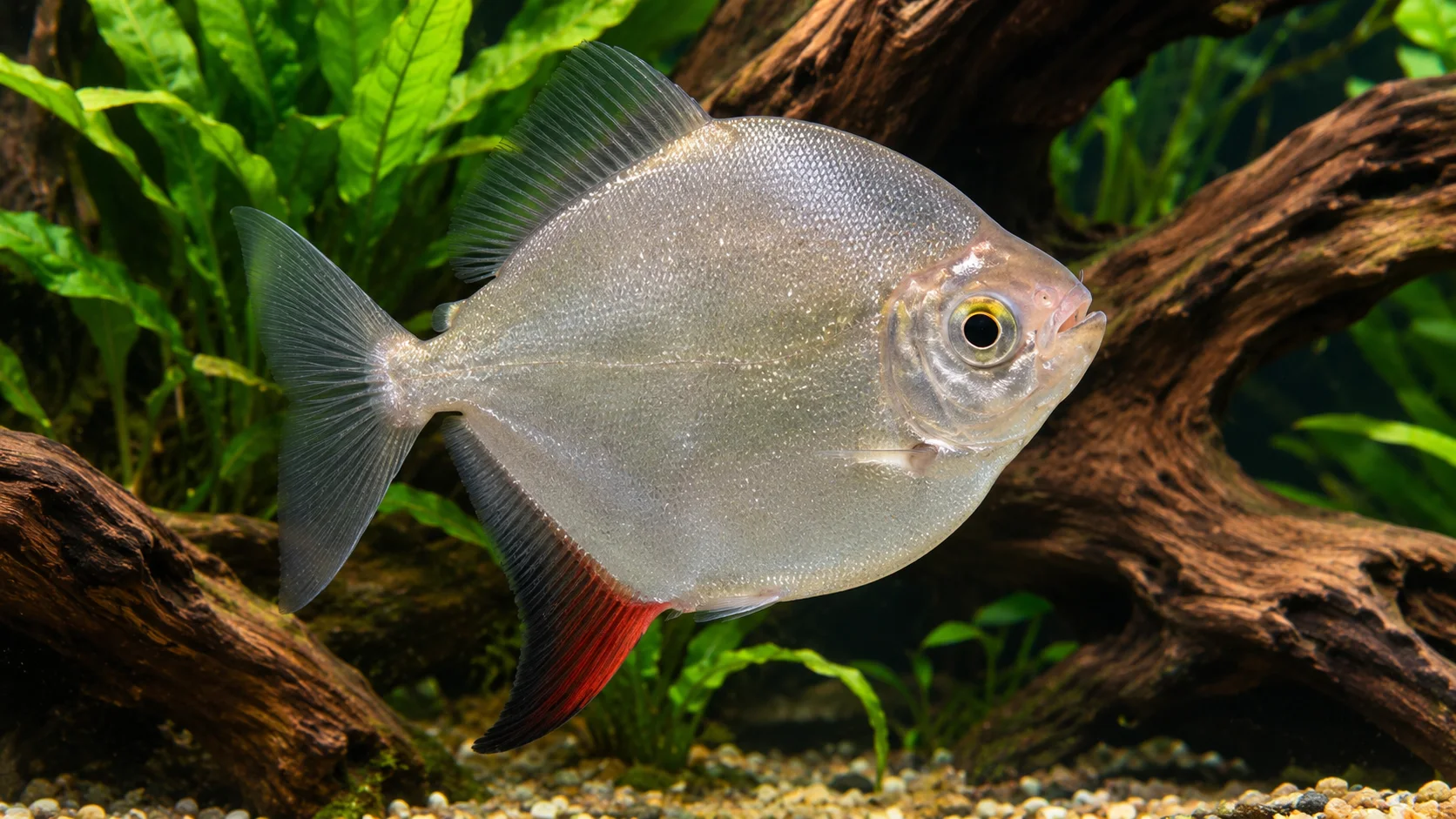
The Red Hook Silver Dollar is a beautiful South American fish with a distinctive red anal fin and impressive adult size. Although we rarely encounter them in our customers' aquariums, we have maintained a display containing a trio of these fascinating fish. We share our experience, including why their nervous nature makes a large aquarium with plenty of cover essential.
The Red Hook Silver Dollar (Myloplus rubripinnis), sometimes sold under its older scientific name Myleus rubripinnis, is one of those fish that really catches your attention when you see a good-sized specimen in an aquarium shop. With its almost circular, silver body and distinctive red anal fin, it's an impressive fish, particularly when kept in a group.
Although closely related to the more familiar Silver Dollars, Red Hooks are considerably larger and have a slightly different appearance. They are also a species that we rarely get the opportunity to use in our customers' aquariums, mainly because of the amount of space they require.
We did, however, have one client who kept a trio of these beautiful fish in a large display aquarium, and they certainly made an impression. They were attractive, active fish that added something quite different to the aquarium, although their behaviour also reminded us why they aren't suitable for everyone.
A Larger Relative of the Common Silver Dollar
Red Hook Silver Dollars originate from South America, where they inhabit large river systems, including parts of the Amazon and Orinoco basins. They belong to the same family as piranhas and pacu, although their diet and general behaviour are quite different from the predatory reputation often associated with that family.
Their body shape is very similar to that of the common Silver Dollar, being deep, laterally compressed and almost circular when viewed from the side. The main difference is their size and the prominent red anal fin, which becomes particularly striking as the fish matures.
Adult Red Hooks can reach around 30–35 cm in length, although some individuals may grow larger. Their deep bodies make them appear considerably bigger than a more streamlined fish of a similar length.
This is something worth remembering when buying young specimens. A small Red Hook in an aquatic shop might look perfectly suited to a medium-sized aquarium, but that situation can change quite dramatically as it grows.
In our experience, this is one of the reasons why larger Silver Dollar species are often overlooked when planning community aquariums. They are beautiful fish, but they need a very different setup from the smaller tetras and barbs that many of our customers prefer.
Our Experience Keeping Red Hook Silver Dollars
As mentioned earlier, we have only occasionally encountered Red Hooks in the aquariums we maintain. One particular client had three of them, and they were certainly among the more unusual fish we have looked after.
What stood out was their impressive appearance and the way they moved around the aquarium. They were constantly aware of their surroundings and could cover quite a distance in a very short time.
Like the more familiar Silver Dollar, Red Hooks can be rather skittish. Sudden movements outside the aquarium, unfamiliar activity or unexpected disturbances can cause them to dart away very quickly.
This is something we would be particularly concerned about in a smaller aquarium.
A fish with such a deep body and powerful swimming ability can easily injure itself if it panics and crashes into the glass, decorations or aquarium equipment. We would imagine that this could become a serious problem in a tank that doesn't provide sufficient room for the fish to escape naturally.
For this reason, we would only recommend Red Hook Silver Dollars for larger aquariums with plenty of swimming space and areas of cover.
Although our client's trio made an attractive display, these are naturally social fish, and we would generally prefer to see them kept in a larger group where the aquarium dimensions allow.
Why Aquarium Size Really Matters
One of the mistakes people can make with larger tropical fish is concentrating entirely on the number of litres an aquarium holds. With Red Hooks, the actual dimensions are just as important.
A tall aquarium might contain a substantial volume of water, but that doesn't necessarily provide enough room for a large, active fish to swim comfortably.
For a group of adult Red Hooks, we would be looking at a genuinely large aquarium, preferably at least 240 cm in length, with plenty of front-to-back swimming space. Depending on the group size and other inhabitants, an aquarium of 1,000 litres or more is a much more realistic long-term proposition than a typical domestic community tank. Even then, the layout needs careful consideration.
These fish should have open areas where they can swim freely, but they also need somewhere to retreat when they feel threatened.
Large pieces of bogwood can work particularly well, especially when arranged around the back and sides of the aquarium. This provides sheltered areas without obstructing the main swimming space.
We would avoid sharp rocks, pointed branches and tightly packed decorations that could cause injuries if the fish suddenly became startled.
It's also worth considering where the aquarium is positioned. A tank situated next to a busy doorway or in an area with constant movement may not be the best environment for nervous fish of this size.
Feeding Red Hook Silver Dollars
Red Hooks are predominantly plant-eating fish, although they will also consume a variety of other foods. In captivity, a good-quality vegetable-based pellet or flake can form part of their regular diet, supplemented with foods such as courgette, peas, spinach and other suitable greens.
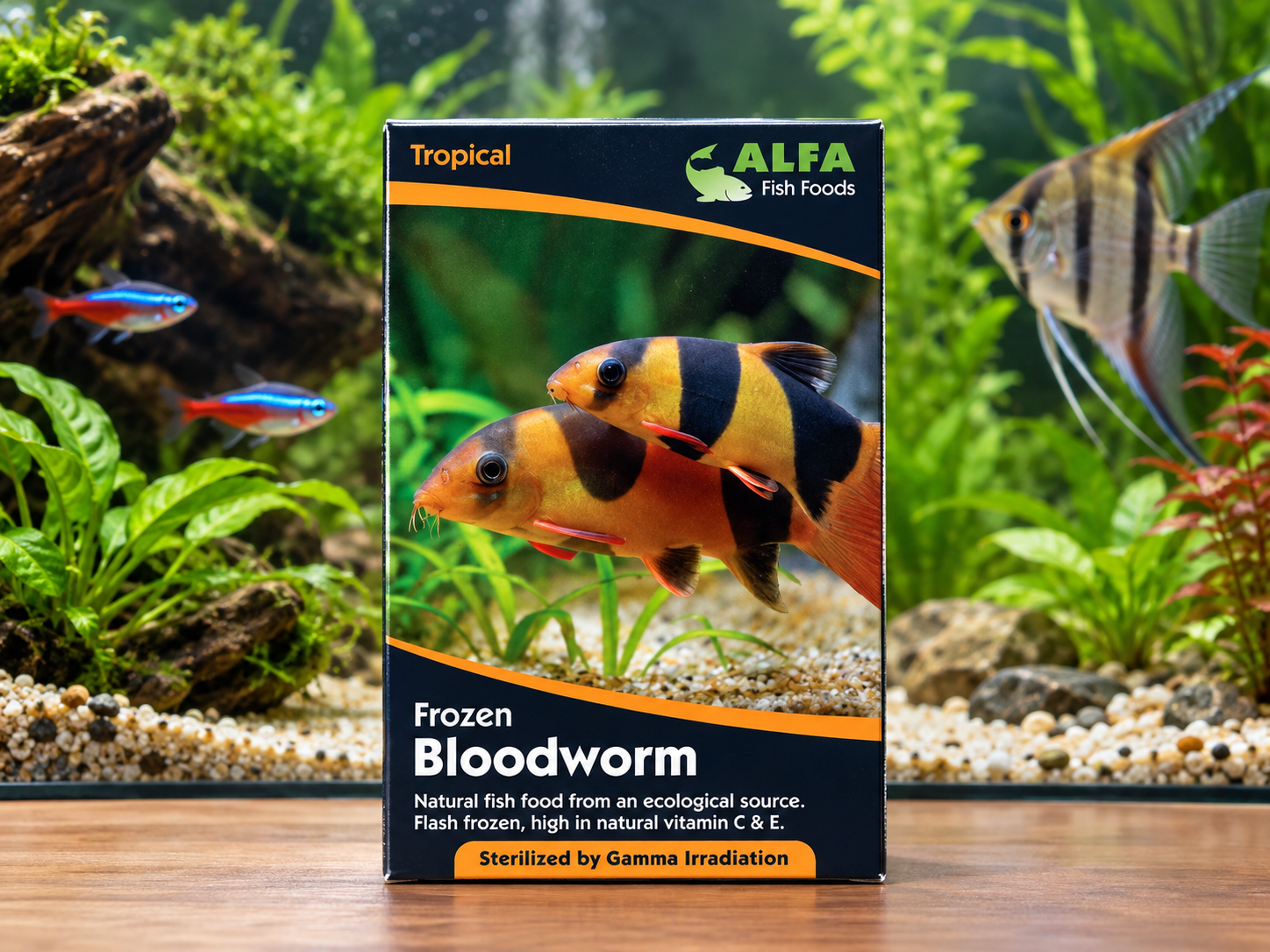
They will also accept some frozen foods like Bloodworms, but we would avoid making protein-rich foods the main part of their diet.
One thing to be aware of is their appetite for aquarium plants. Like ordinary Silver Dollars, Red Hooks are quite capable of making short work of a carefully planted aquarium. Soft-leaved plants are particularly vulnerable, and even some tougher species may be damaged.
This can be disappointing for anyone who has spent considerable time creating an attractive aquascape.
For this reason, we would generally favour an aquarium decorated with bogwood, rocks and perhaps some particularly robust planting, rather than a heavily planted display.
Artificial plants can also be useful where additional cover is needed, provided they are securely positioned and have no sharp edges.
Our customers often like the appearance of natural planted aquariums, but with fish such as Red Hooks, it's important to choose a layout that suits the fish rather than expecting the fish to suit the layout.
Water Quality and General Care
Despite their impressive size, Red Hooks aren't necessarily difficult fish to maintain once they have the right environment. They generally do well in warm tropical water, with temperatures around 24–28°C being suitable.
They originate from river systems where water conditions can vary, but we would aim for stable, clean water with a slightly acidic to neutral pH where practical.
Here on the south coast, we often deal with relatively hard tap water, so water chemistry is something we consider when choosing fish for our customers' aquariums.
Rather than constantly adjusting water parameters, we prefer to establish suitable conditions from the beginning and maintain them consistently.
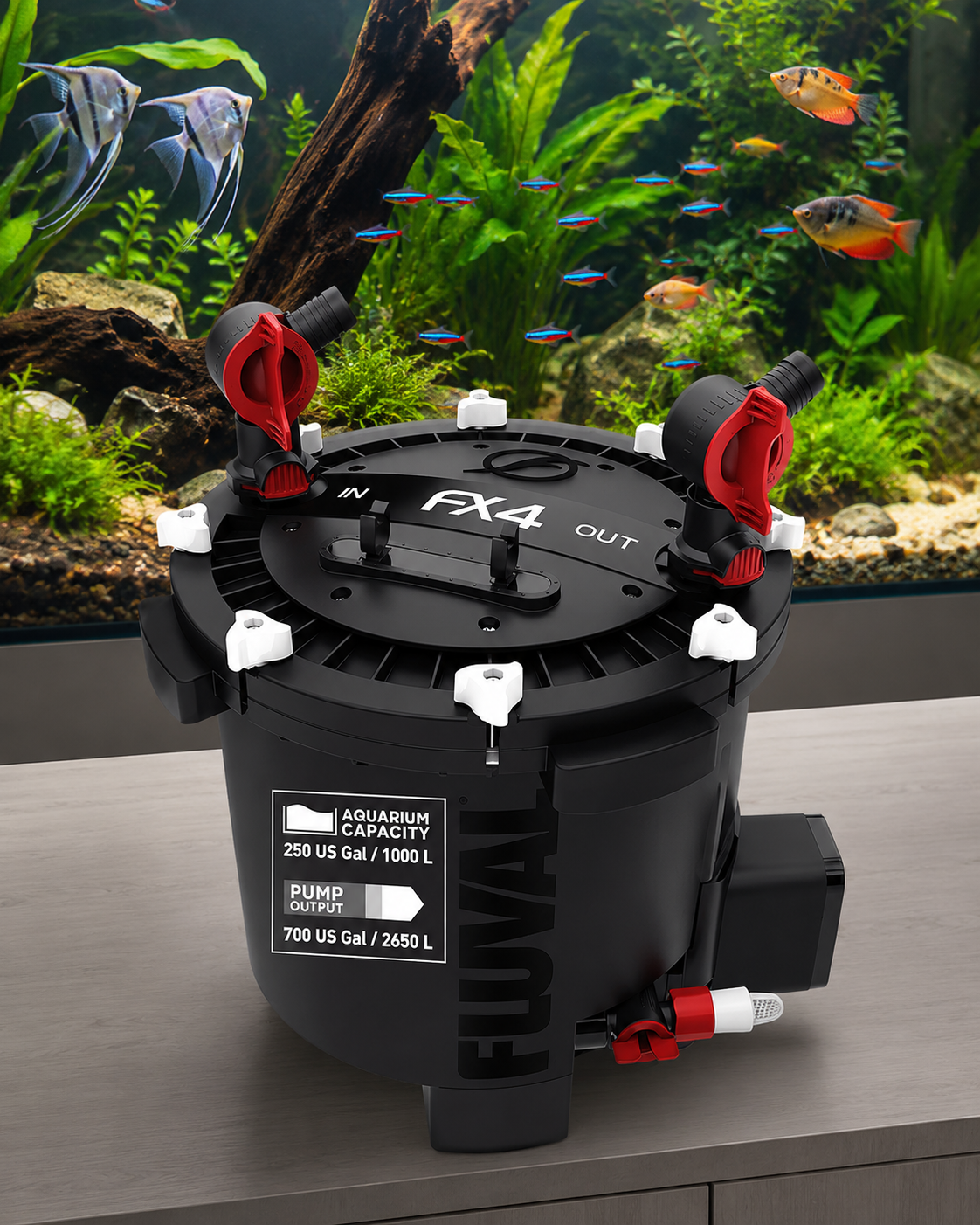
Good filtration is particularly important with larger fish, especially when several are being kept together. Filters must be large for these fish something like the Fluval FX Range range would be minimal requirements or even sump filtration.
Red Hooks are substantial fish that produce a reasonable amount of waste, so the filtration system needs sufficient biological capacity to deal with their feeding and activity.
Regular water changes are equally important.
In our experience, even an expensive filtration system doesn't replace sensible maintenance. Removing accumulated waste, cleaning mechanical filter media and monitoring nitrate levels all help maintain the conditions these fish need.
A secure aquarium cover is another sensible precaution, as powerful, easily startled fish may jump when frightened.
Choosing Suitable Tank Mates
Red Hook Silver Dollars are generally peaceful towards other fish, despite their relationship to piranhas.
However, their size and nervous temperament need to be considered when choosing companions.
We would favour other reasonably large, peaceful South American species that aren't likely to harass them or compete aggressively for food.
Larger peaceful catfish can make suitable companions, provided their adult size and requirements are taken into account.
Very small fish may not be the best choice, particularly when keeping fully grown Red Hooks, and aggressive or particularly boisterous species should also be avoided.
Fin-nipping fish are another concern, especially given the Red Hook's distinctive anal fin.
We would also avoid overcrowding the aquarium. A large tank containing a relatively small number of impressive fish often makes a far better display than one packed with too many different species.
For anyone interested in another substantial South American fish, our article on the Ornate Bichir explores a very different type of large aquarium inhabitant.
Are Red Hook Silver Dollars Worth Keeping?
We certainly think so, but only in the right aquarium.
Red Hooks are beautiful fish, and a group of mature specimens swimming together can create a genuinely impressive display.
Their silver bodies reflect the aquarium lighting particularly well, while the red anal fins provide a welcome splash of colour.
However, they are not fish we would recommend simply because somebody happens to see them in a shop and likes their appearance.
Their eventual size, social requirements and tendency to become startled mean that careful planning is essential.
Having maintained an aquarium containing a trio of these fish, we can certainly appreciate their appeal. They have a presence that many smaller aquarium species simply cannot match.
At the same time, that experience reinforced our view that they belong in large, thoughtfully designed aquariums where they can swim freely and feel secure.
For somebody with the space, suitable filtration and a willingness to provide long-term care, Red Hook Silver Dollars can be a wonderful addition to a large South American display.
For most ordinary community aquariums, however, we would recommend choosing something considerably smaller.
Products We've Mentioned & Recommend
Below you'll find a selection of products we've mentioned in this article, along with a few others we think you might find useful. We've included Amazon links to make them easy to find.
A quick word about affiliate links...
Some of these links are affiliate links, which means we may earn a small commission from qualifying purchases, at no extra cost to you.
Unfortunately, the commission doesn't quite stretch to cocktails on a yacht or a garage full of sports cars. In reality, it helps cover the running costs of this website and, with a bit of luck, might eventually buy me a new pair of waders that don't leak!
We only recommend products we genuinely believe are worth considering, and your support helps us keep sharing free advice from our years of working with aquariums and ponds.
Thanks for supporting Aquatic Specialist!
As an Amazon Associate I earn from qualifying purchases.
Fluval
Fluval Fx 4 Aquarium Canister Filter
Best for: Medium to large, heavily stocked freshwater aquariums
As an Amazon Associate, we earn from qualifying purchases.
ALFA
Frozen Bloodworm Fish Food 10 Pack
Best for: Adding variety to tropical and coldwater fish diets
As an Amazon Associate, we earn from qualifying purchases.
Fluval
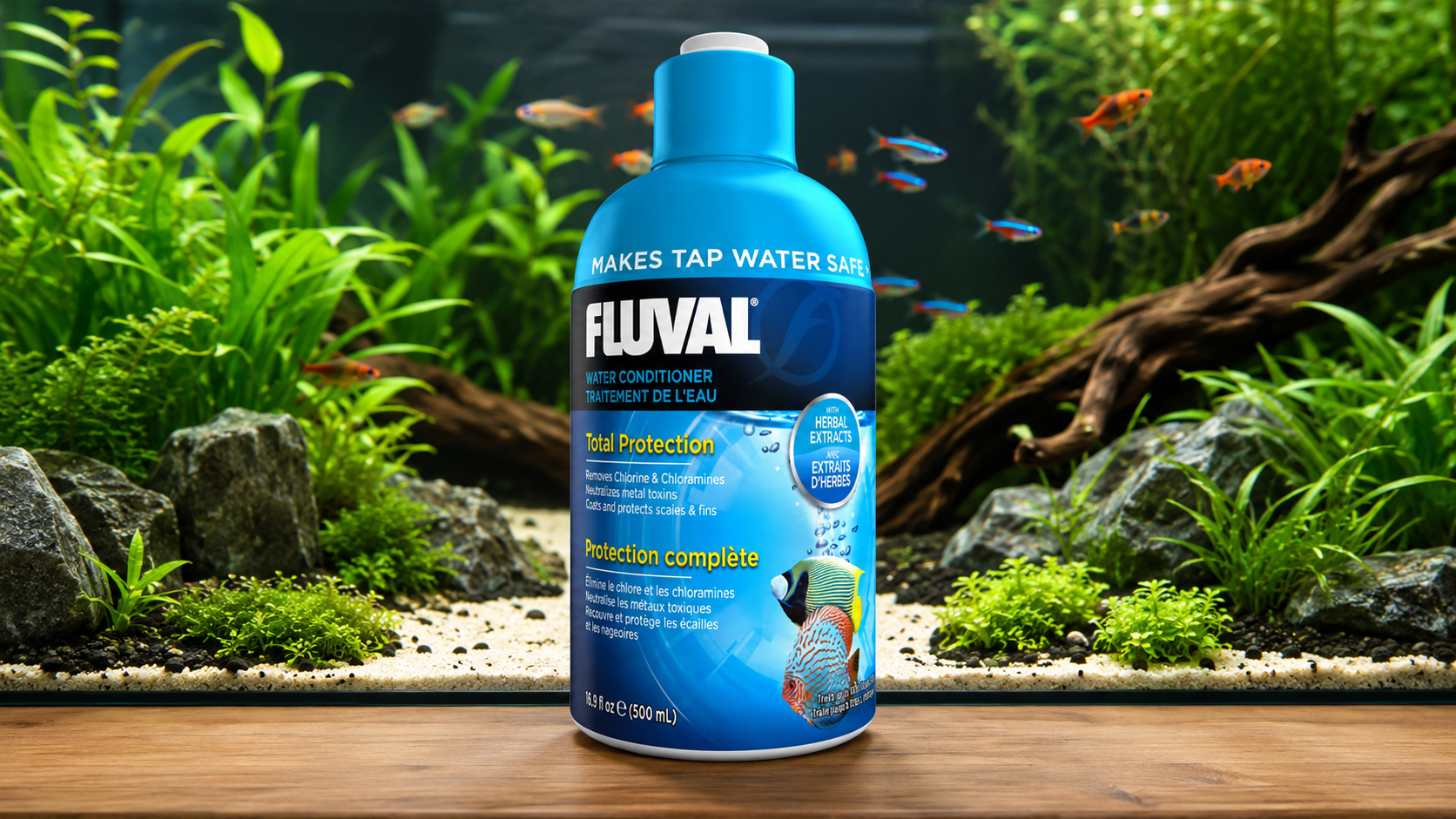
Fluval Aqua Plus 500ml aquarium water conditioner
Best for: Routine water changes in freshwater and tropical aquariums
As an Amazon Associate, we earn from qualifying purchases.