Ornate Bichir (Polypterus ornatipinnis): A Prehistoric Predator That Needs a Very Large Aquarium
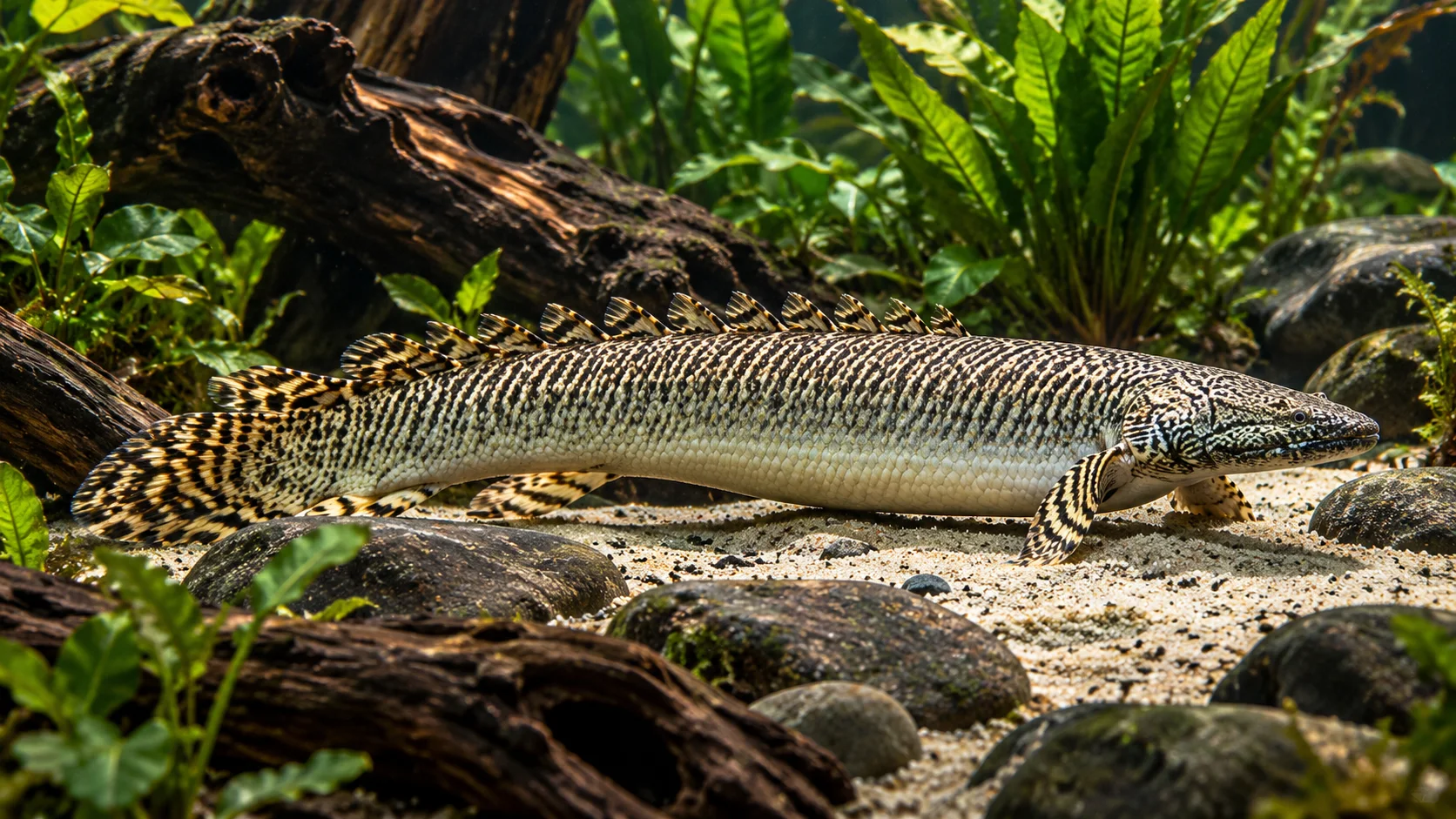
The Ornate Bichir is a fascinating freshwater predator with prehistoric features and striking black and yellow markings. However, with an adult size approaching 60cm, this impressive fish can quickly outgrow an ordinary aquarium. Discover why the Ornate Bichir is considered a tank buster and what it takes to keep one responsibly.
The Ornate Bichir (Polypterus ornatipinnis) is one of the most striking and unusual freshwater fish available in the aquarium hobby. With its prehistoric appearance, distinctive black and yellow markings, and fascinating behaviour, it is easy to understand why these fish attract so much attention.
However, beneath that attractive appearance is a powerful predatory fish capable of reaching around 60cm in length. Although often sold as relatively small juveniles, Ornate Bichirs can eventually become impressive aquarium giants that require considerably more space than most hobbyists can provide.
They are another example of a fish that can become a genuine 'tank buster', not necessarily because they are destructive or particularly aggressive, but simply because of their adult size and specialised requirements.
For experienced aquarists with suitably large aquariums, the Ornate Bichir can be a fascinating species to keep. For the average home aquarium, however, it is a fish best admired rather than purchased.
What Is an Ornate Bichir?
The Ornate Bichir belongs to the Polypteridae family, an ancient group of freshwater fishes found throughout parts of Africa.
Bichirs are frequently described as living fossils because their evolutionary lineage stretches back millions of years. Their unusual body structure, heavy protective scales and distinctive dorsal finlets give them an appearance quite unlike most modern aquarium fish.
The Ornate Bichir is particularly attractive, displaying an intricate pattern of dark markings against a yellowish or olive-coloured background. These markings extend across the body and fins, creating a striking contrast.
Unlike most fish, bichirs have a series of individual dorsal finlets rather than one continuous dorsal fin. They also possess strong, fleshy pectoral fins, which they use to manoeuvre along the bottom of the aquarium.
Perhaps their most remarkable adaptation is their ability to breathe atmospheric air using a specialised lung-like organ.
This allows them to survive in environments where dissolved oxygen levels might be too low for many other fish. However, it also means they must always have access to the water's surface.
Natural Habitat and Distribution
The Ornate Bichir originates from Central and East Africa, particularly the Congo River basin and waters associated with Lake Tanganyika.
In the wild, these fish inhabit slow-moving rivers, swamps, marshes and other freshwater environments where submerged vegetation, fallen branches and natural debris provide shelter.
They spend much of their time near the bottom, hiding amongst roots and other structures during daylight hours.
As darkness approaches, they become more active, using their excellent sense of smell to locate prey.
Their natural diet includes aquatic invertebrates and smaller fish, making them effective opportunistic predators.
Understanding these natural behaviours is important when designing an aquarium suitable for this species.
How Big Does an Ornate Bichir Grow?
This is probably the most important consideration before purchasing an Ornate Bichir.
The species can reach approximately 60cm (24 inches) in length, making it one of the largest members of the upper-jawed bichir group.
Although many aquarium specimens remain somewhat smaller, an adult fish measuring 40–50cm is still a substantial animal.
The problem is that Ornate Bichirs are commonly offered for sale when they are considerably smaller, sometimes measuring little more than 10–15cm.
At this size, they can appear perfectly suitable for a medium-sized aquarium. Unfortunately, that suitability is temporary.
As the fish grows, its length, body mass and need for space increase significantly. What once appeared to be a comfortable aquarium can eventually become restrictive.
This is precisely why Ornate Bichirs belong in the same conversation as other large aquarium species frequently purchased without sufficient consideration of their adult dimensions.
They are not suitable for standard community aquariums, and purchasing a juvenile with the intention of upgrading later can become a costly mistake.
Aquarium Size and Requirements
An adult Ornate Bichir requires a genuinely large aquarium, with floor space being particularly important. For a fully grown individual, an aquarium measuring at least 180cm long and 60cm wide should be considered a starting point rather than a particularly generous enclosure.
An aquarium measuring 180 × 60 × 60cm holds approximately 650 litres before displacement from decorations and equipment. Larger aquariums, especially those offering greater length and width, are preferable.
Because Ornate Bichirs spend much of their time near the bottom, a broad footprint is more useful than excessive height.
The aquarium should provide open areas for movement alongside substantial pieces of driftwood, smooth rocks and secure hiding places. A soft sandy substrate is ideal, allowing the fish to explore naturally without damaging its underside.
Aquarium plants can also be included, although robust varieties attached to wood or rock may be more practical than delicate plants rooted in the substrate. One particularly important consideration is the aquarium cover.
Ornate Bichirs are excellent escape artists.
They can push through surprisingly small gaps and may attempt to leave the aquarium, especially around poorly secured lids, pipes or cables.
A strong, tightly fitting cover is essential, while sufficient space above the water surface must remain for the fish to breathe air.
Water Conditions and Filtration
Despite their unusual appearance, Ornate Bichirs are generally considered relatively hardy fish when their environmental requirements are met. They tolerate a reasonable range of water conditions, although stability remains important.
Recommended conditions include:
- Temperature: 25–28°C
- pH: 6.0–8.0
- Water hardness: Approximately 5–25 dGH
Good filtration is especially important because large predatory fish can produce considerable amounts of waste.
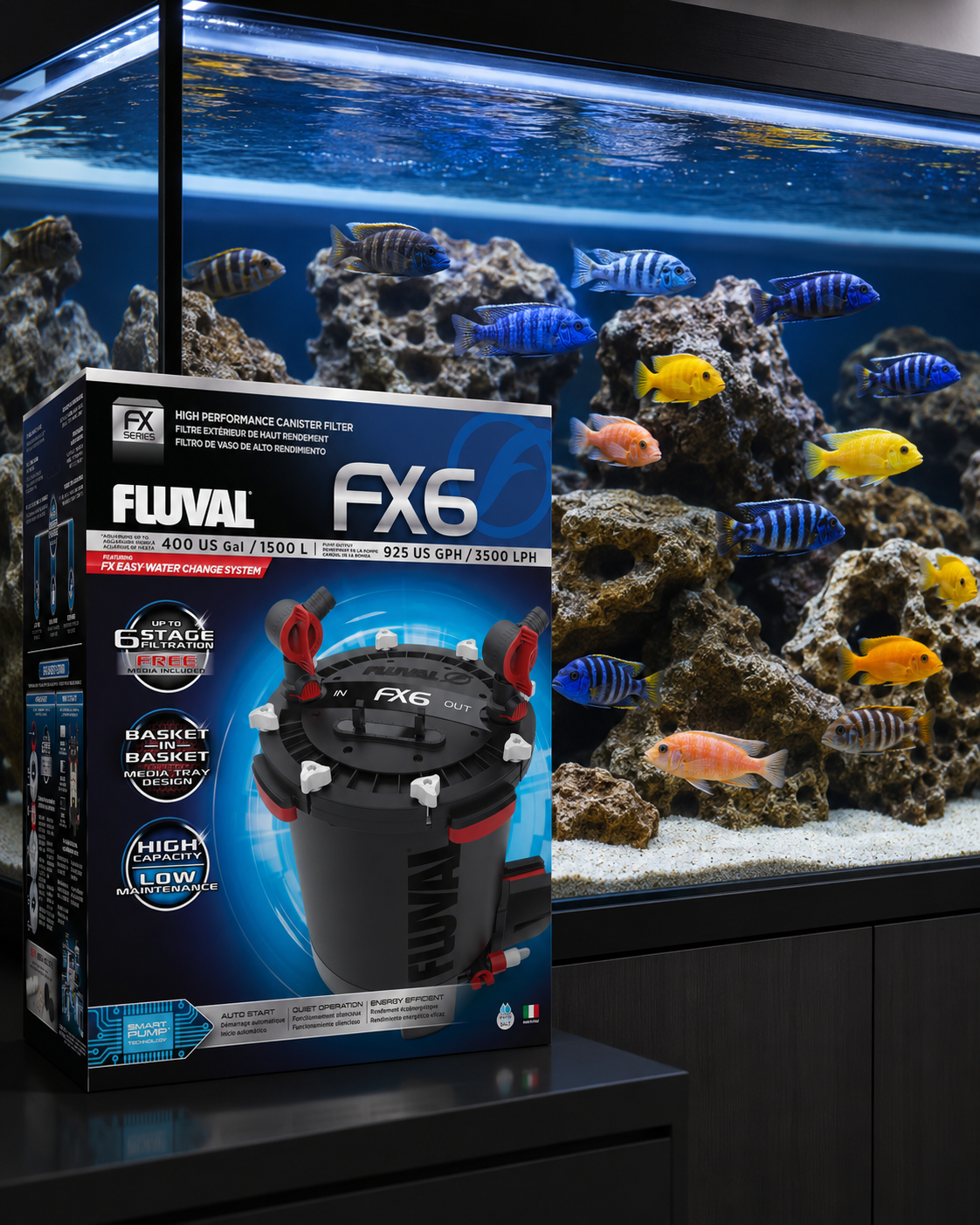
A substantial external filtration system, or an appropriately designed sump, can help maintain water quality. We like the Fluval FX range, the Fluval Fx 6 handles aquariums upto 1500L and they are easy to maintain.
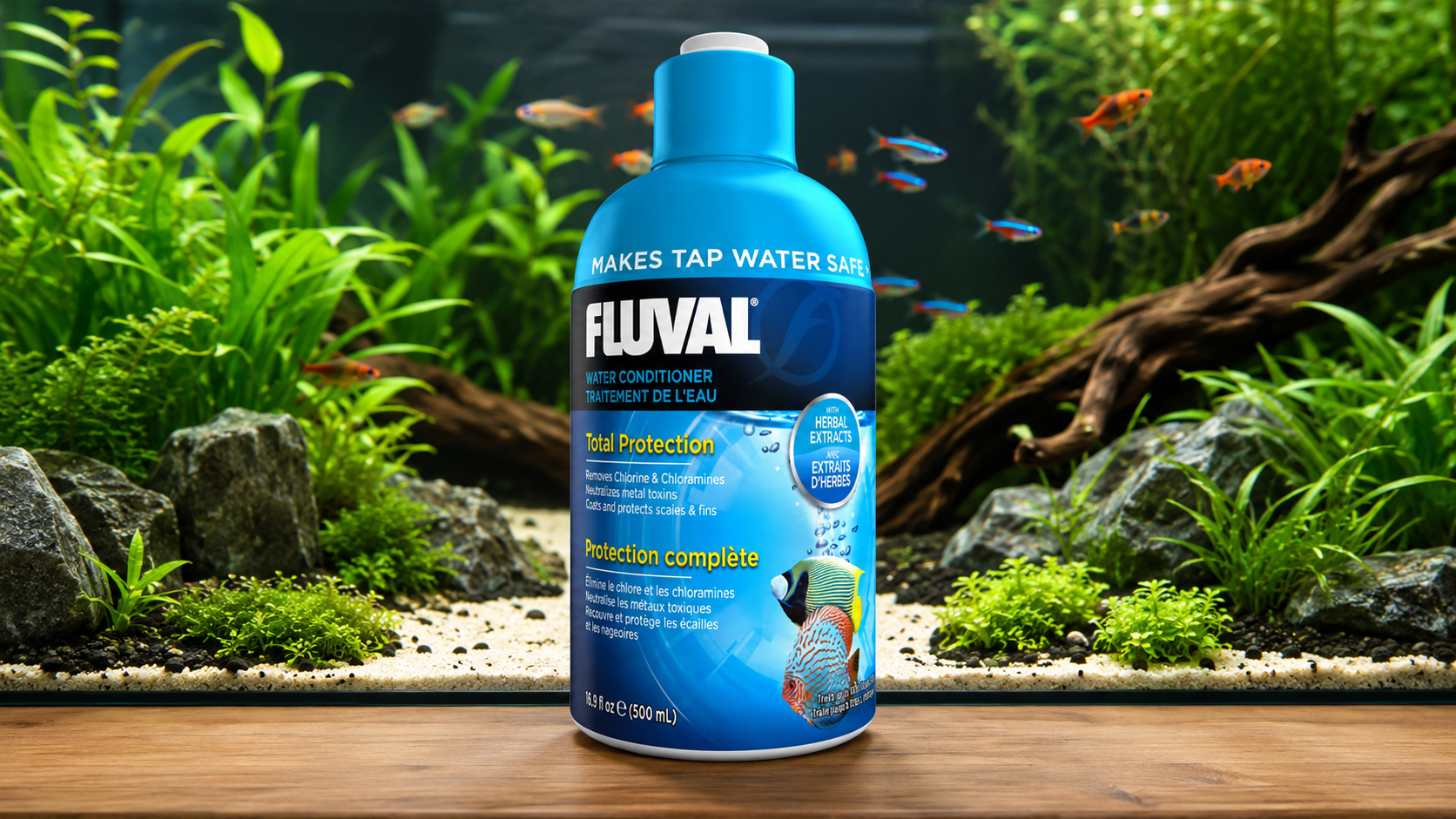
Regular partial water changes are essential, remember to use water conditioner if you are using tap water. Also uneaten food should be removed promptly.
Although Ornate Bichirs can breathe atmospheric air, this should never be mistaken for an ability to tolerate poor aquarium maintenance. They still require clean, well-maintained water just like other aquarium fish.
Feeding an Ornate Bichir
Ornate Bichirs are carnivorous predators. In their natural environment, they feed primarily on aquatic animals, including worms, insect larvae and fish.
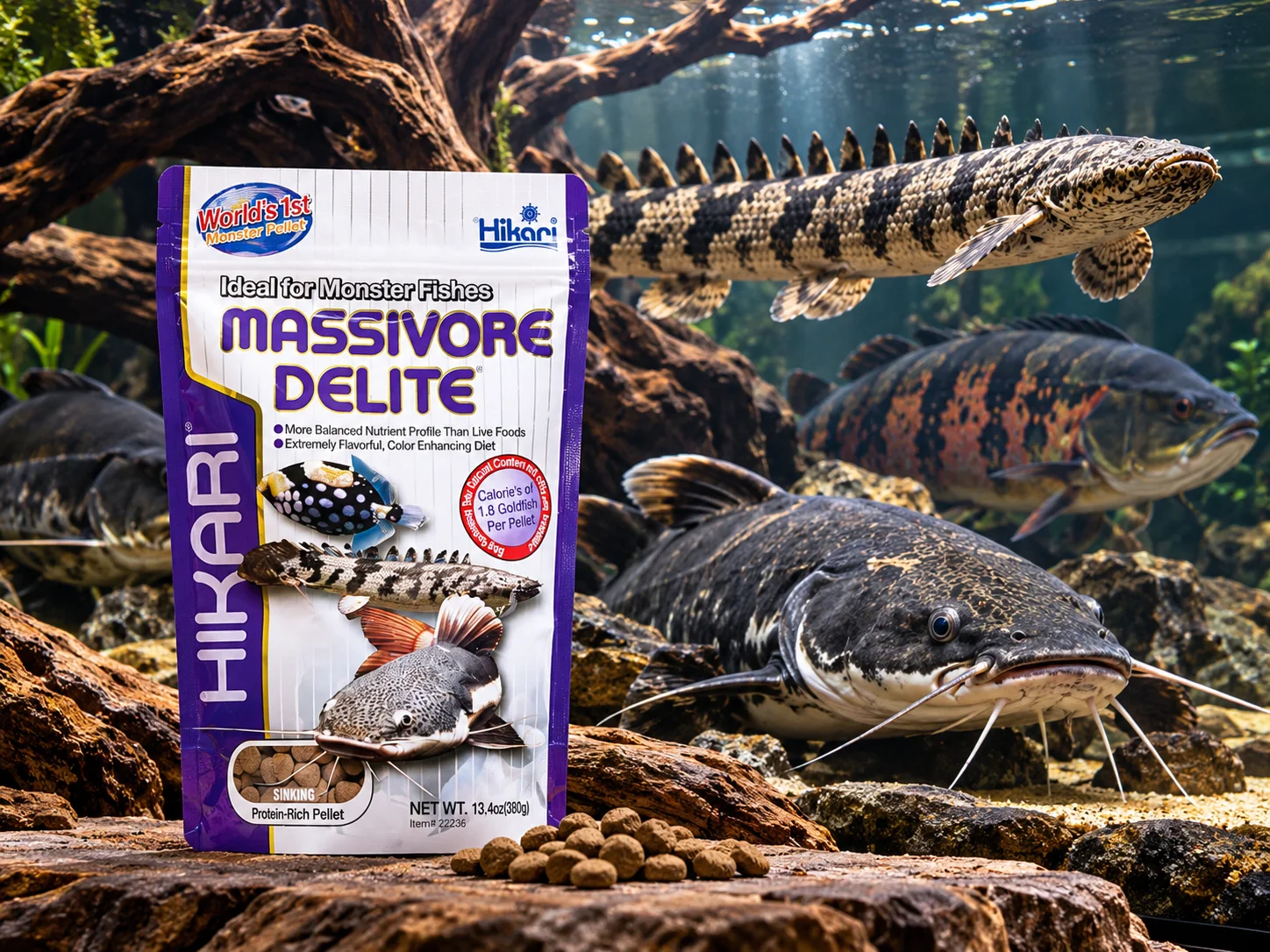
In captivity, they should receive a varied diet of suitable meaty foods. Earthworms, prawns, mussels and appropriately prepared fish flesh can all form part of their diet. Some specimens will also accept good-quality sinking carnivore pellets. A varied diet is preferable to relying exclusively on one type of food.
Feeder goldfish and other live feeder fish are best avoided because they can introduce parasites and diseases, while some species are nutritionally unsuitable as staple foods. Feeding live vertebrates is also again the law in the UK.
Similarly, mammalian and poultry meats are not appropriate everyday foods for bichirs.
Ornate Bichirs have relatively poor eyesight but a highly developed sense of smell, allowing them to locate food even in subdued lighting. Many specimens become particularly active during the evening, making this a useful time to offer food.
Adult fish generally do not require several large meals every day. Feeding frequency should be adjusted according to age, condition and appetite, while avoiding overfeeding.
Temperament and Suitable Tank Mates
Although predatory, Ornate Bichirs are not necessarily aggressive towards every fish they encounter. In fact, they can be relatively peaceful towards suitably sized tank mates. However, there is an important distinction between aggression and predation.
An Ornate Bichir may show little interest in attacking another large fish, yet readily swallow a smaller one that ventures too close.
Small tetras, guppies, rasboras and similar community fish should never be considered suitable companions. Even moderately sized fish can be vulnerable, particularly if they have slender bodies.
Potential companions may include certain larger catfish, robust cichlids and other suitably sized bichirs, provided the aquarium is large enough and their individual requirements are compatible.
Care must also be taken with aggressive or territorial species that may harass the relatively slow-moving bichir. Fish that nip fins or compete aggressively for food can cause problems.
For many aquarists, a dedicated aquarium containing one Ornate Bichir is a more sensible choice than attempting to create a busy community of large predators.
Behaviour: A Fish Unlike Most Others
One of the most appealing aspects of Ornate Bichirs is their unusual behaviour. Rather than swimming continuously through open water like many aquarium fish, they often move slowly along the substrate using their pectoral fins. Their movements can appear almost reptilian.
During daylight hours, they may remain hidden beneath driftwood or amongst rocks, only occasionally emerging to explore.
At night, their behaviour changes considerably as they begin searching for food. Owners may also notice them periodically rising to the surface to gulp air. This is normal behaviour and part of their specialised respiratory system.
However, the combination of nocturnal activity, large adult size and occasional sudden bursts of movement reinforces the need for a spacious, securely covered aquarium.
Lifespan and Long-Term Commitment
An Ornate Bichir is not a short-term aquarium purchase. With appropriate care, bichirs can live for well over a decade, and lifespans of around 15–20 years are often reported.
This means purchasing one represents a potentially lengthy commitment involving a very large aquarium, substantial filtration, appropriate feeding and ongoing maintenance. It is also worth remembering that large aquariums can be expensive to operate.
Heating several hundred litres of water throughout the year, particularly during colder months, can represent a noticeable electricity cost.
Aquarists should consider not only whether they can afford to purchase the fish but also whether they can provide suitable conditions throughout its life.
Breeding Ornate Bichirs
Breeding Ornate Bichirs in captivity is possible but uncommon and certainly not something most hobbyists are likely to achieve accidentally.
Males can generally be distinguished by their broader, thicker anal fins.
Like other bichirs, they are egg scatterers, with courtship and spawning behaviour associated with changing environmental conditions.
Successful breeding requires suitable adult fish, considerable space and carefully managed conditions.
For most owners, the priority should be maintaining a healthy adult specimen rather than attempting reproduction.
Is the Ornate Bichir Suitable for a Home Aquarium?
Technically, yes. However, only when the aquarium is sufficiently large and the keeper understands the species' requirements. For experienced aquarists maintaining large, purpose-built freshwater aquariums, Ornate Bichirs can be remarkable fish.
Their unusual appearance, prehistoric ancestry and fascinating behaviour make them unlike almost anything else commonly available in the hobby.
Unfortunately, the small juveniles frequently seen in aquatic shops can create the impression that these are manageable additions to ordinary aquariums. They are not.
An Ornate Bichir can grow into a powerful predator approaching 60cm in length, and keeping one properly requires a significant investment in space, equipment and long-term care.
They should never be purchased simply because a juvenile fits comfortably into an existing aquarium.
Final Thoughts
The Ornate Bichir is undoubtedly one of the most fascinating freshwater fish available to aquarium enthusiasts.
Its beautiful markings, ancient lineage and unusual movements make it an extraordinary species to observe. However, it is also another reminder of why researching the adult size of a fish before purchasing it is so important.
A small Ornate Bichir may look perfectly at home in a medium aquarium, but that same fish can eventually require an enclosure holding several hundred litres of water.
For those with the space, resources and experience to maintain one properly, the Ornate Bichir can be a rewarding long-term resident.
For everyone else, it is a species best left to specialist keepers with the facilities to accommodate its considerable adult size.
At Aquatic Specialist, we believe choosing fish that can be comfortably housed for their entire lives is one of the most important responsibilities of responsible fishkeeping.
Products We've Mentioned & Recommend
Below you'll find a selection of products we've mentioned in this article, along with a few others we think you might find useful. We've included Amazon links to make them easy to find.
A quick word about affiliate links...
Some of these links are affiliate links, which means we may earn a small commission from qualifying purchases, at no extra cost to you.
Unfortunately, the commission doesn't quite stretch to cocktails on a yacht or a garage full of sports cars. In reality, it helps cover the running costs of this website and, with a bit of luck, might eventually buy me a new pair of waders that don't leak!
We only recommend products we genuinely believe are worth considering, and your support helps us keep sharing free advice from our years of working with aquariums and ponds.
Thanks for supporting Aquatic Specialist!
As an Amazon Associate I earn from qualifying purchases.
Fluval
Fluval Fx 6 High Proformance Aquarium Canister Filter
Best for: Large, heavily stocked Malawi cichlid aquariums
As an Amazon Associate, we earn from qualifying purchases.
Fluval
Fluval Aqua Plus 500ml aquarium water conditioner
Best for: Routine water changes in freshwater and tropical aquariums
As an Amazon Associate, we earn from qualifying purchases.
Hikari
Hikari Massivore Delite
Best for: Large carnivorous aquarium fish, including adult Bichirs, predatory catfish and other tank buster species.
As an Amazon Associate, we earn from qualifying purchases.