Red Eye Tetra – A Hardy and Underrated Community Fish
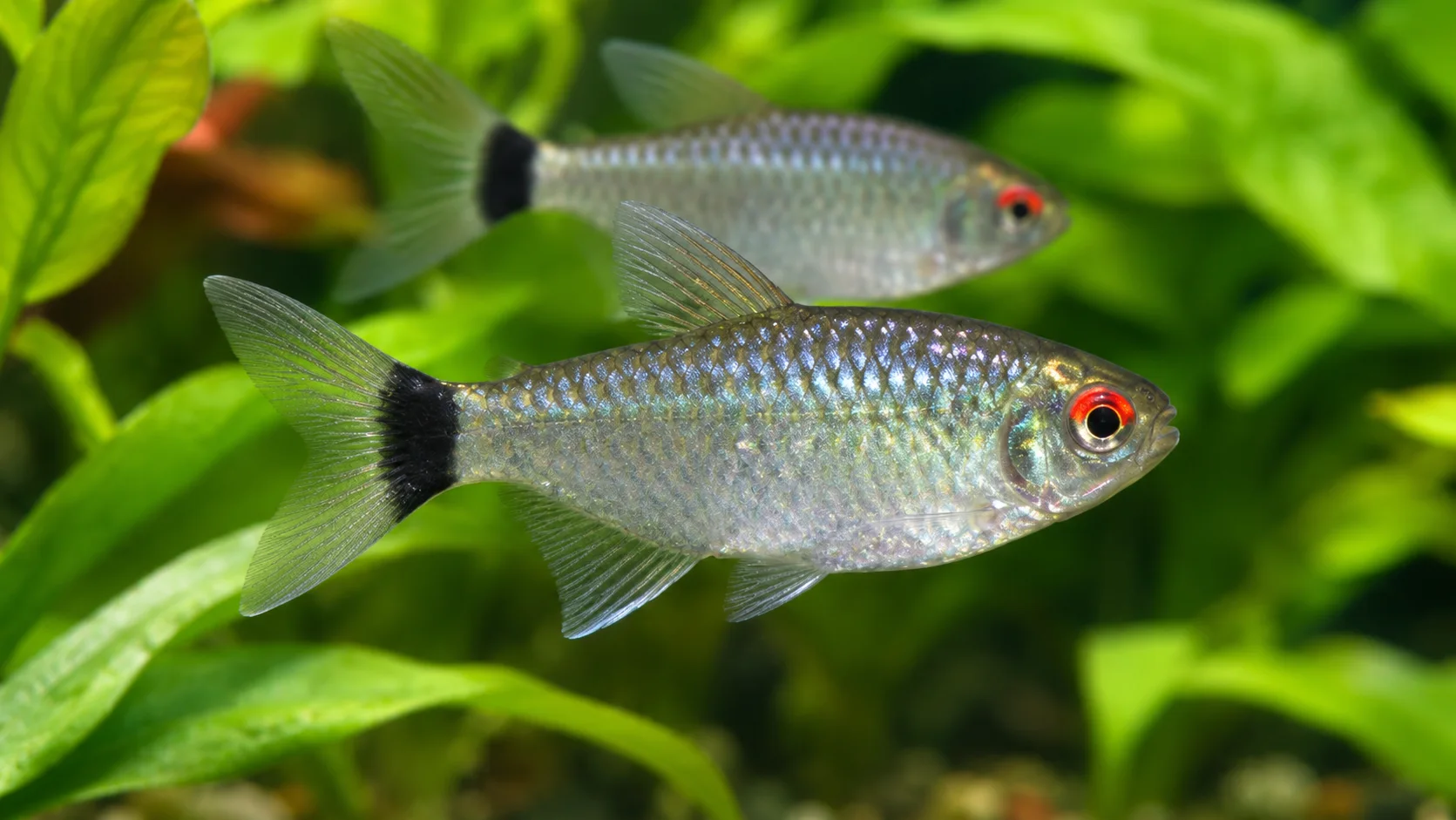
The Red Eye Tetra is a hardy, lively community fish with distinctive red eyes and black tail markings. Drawing on our aquarium maintenance experience, we explain why this underrated species deserves a place in larger community aquariums.
The Red Eye Tetra (Moenkhausia sanctaefilomenae) is one of those fish that has been available in the aquarium trade for as long as I can remember, yet it rarely seems to receive the attention it deserves. It isn't particularly colourful compared with some of the smaller tetras, but what it lacks in bright colours it makes up for in character, hardiness and activity.
With its silvery body, distinctive red eye and bold black marking at the base of the tail, the Red Eye Tetra is an attractive fish in its own right. Under good aquarium lighting, the scales have a lovely reflective quality, particularly when a group is swimming together.
In our experience, these are fish that often look considerably better in a well-maintained display aquarium than they do in a dealer's holding tank. Give them some space, decent lighting and a planted background, and they can be surprisingly impressive.
A Familiar Fish That Deserves More Attention
Red Eye Tetras originate from South America, where they inhabit freshwater rivers and associated waterways. They have been established in the aquarium hobby for decades and are generally regarded as one of the more adaptable tetra species.
Unlike some of the more delicate South American tetras, Red Eyes are fairly forgiving when it comes to water chemistry. This makes them particularly useful in areas such as Dorset and Hampshire, where we regularly encounter naturally hard tap water.
Although they will appreciate stable, good-quality water, they don't necessarily require the very soft, acidic conditions associated with some other tetra species. This adaptability is one of their greatest advantages.
They are also relatively substantial fish compared with smaller species such as Neon Tetras or Ember Tetras. Adults generally reach around 5–6 cm, giving them enough presence to stand out in a larger community aquarium.
Their Behaviour in a Community Aquarium
One thing worth understanding about Red Eye Tetras is that they are active fish. They spend much of their time swimming around the middle levels of the aquarium and are rarely content to remain in one place for long.
In our experience, they are at their best when kept in a reasonably large group. Six would be the minimum I would consider, although eight to twelve or more is preferable where the aquarium has sufficient space.
A larger group generally looks more natural and helps distribute the occasional chasing and squabbling that can occur between individuals.
Some of our clients particularly like fish that are constantly visible rather than species that spend much of their time hiding among plants. Red Eye Tetras certainly fit that description.
However, I wouldn't describe them as completely peaceful in every situation.
They have a reputation for occasionally nipping the fins of slower-moving fish, particularly those with long, flowing fins. This doesn't mean they are especially aggressive, but it is something worth considering when choosing their companions.
I would avoid keeping them with fancy guppies, long-finned Bettas or particularly slow-moving fish. More robust community species of a similar size generally make better companions.
Their behaviour is also influenced by the aquarium itself. A cramped tank containing only a few individuals is much more likely to produce problems than a spacious aquarium containing a properly established group.
Aquarium Size and Layout
Although Red Eye Tetras are sometimes sold as suitable for relatively small aquariums, I believe they benefit considerably from having more room.
For a group of adults, I would generally recommend an aquarium of around 100 litres or larger, ideally with a good length of uninterrupted swimming space.
They are active swimmers, and a longer aquarium is usually preferable to a tall, narrow one.
A planted aquarium suits them particularly well. I like to see taller plants positioned towards the back and sides, leaving the central area relatively open.
Java Fern, Amazon Swords and many of the more robust Cryptocoryne varieties can all work well. Pieces of bogwood also help create a natural appearance without taking away too much swimming space.
A darker background can make a noticeable difference to their appearance. Their silver bodies reflect the aquarium lighting beautifully against darker plants and wood.
In our maintenance work, we often find that relatively simple aquarium layouts are the most successful over the longer term. An attractive planted background, sensible stocking levels and reliable filtration usually produce better results than an aquarium packed with decorations.
Water Conditions and General Care
Red Eye Tetras are reasonably adaptable, but that shouldn't be confused with being able to tolerate poor water quality.
A temperature of approximately 23–27°C is suitable for most established aquarium groups, although they can tolerate a somewhat wider range.
They are generally comfortable in slightly acidic through to moderately alkaline conditions, provided the water parameters remain stable.
Regular partial water changes, sensible feeding and a mature biological filter are much more important than attempting to achieve an exact pH reading.
This is something we regularly explain to our aquarium maintenance customers. Consistency is often more valuable than constantly adjusting water chemistry, particularly when dealing with hardy community species.
Good filtration is important, but there is no need to create an excessively strong current. Moderate water movement and good oxygenation are perfectly adequate.
Like most tetras, Red Eyes are also sensitive to sudden deterioration in water quality. Elevated ammonia or nitrite levels can quickly cause problems, so they should only be introduced into a properly cycled aquarium.
Feeding Red Eye Tetras
Feeding is rarely a problem with this species. Red Eye Tetras are enthusiastic omnivores and will generally accept a wide variety of commercially prepared aquarium foods.
A good-quality tropical flakes or small granules makes an excellent everyday diet, supplemented occasionally with frozen foods such as bloodworm, daphnia or brine shrimp.
In our experience, they are rarely fussy feeders, although their enthusiasm can sometimes mean that slower-moving fish struggle to compete at feeding time.
It is worth watching how food is distributed around the aquarium, particularly in mixed communities.
As with most aquarium fish, I prefer to feed modest quantities rather than large amounts that eventually disappear into the gravel.
Overfeeding remains one of the most common causes of poor aquarium water quality that we encounter during maintenance visits.
Are Red Eye Tetras Suitable for Beginners?
I would certainly consider Red Eye Tetras suitable for beginners, provided the aquarium is large enough and their tank mates are chosen carefully.
Their hardiness, willingness to accept prepared foods and ability to adapt to a reasonable range of water conditions make them relatively straightforward to maintain. However, I wouldn't necessarily recommend them for every beginner's aquarium.
Someone setting up a small, peaceful community containing delicate or long-finned fish would probably be better choosing a smaller, gentler tetra species.
For a larger aquarium containing active community fish, however, Red Eyes can be an excellent choice.
Another species worth considering is the Head and Tail Light Tetra, which we have covered in a separate article. Like the Red Eye Tetra, it is a familiar species that doesn't always receive the recognition it deserves.
Our Final Thoughts
The Red Eye Tetra is unlikely to be the first fish that catches someone's attention in an aquarium shop, particularly when displayed alongside brightly coloured tetras and ornamental varieties.
Nevertheless, I think it deserves a place on the shortlist when planning a larger community aquarium.
Its combination of hardiness, attractive silver colouring and lively behaviour makes it a useful species for the right setup.
In our experience, some of the most successful aquariums aren't necessarily stocked with the rarest or most expensive fish. They are stocked with species that suit the available space, water conditions and one another.
The Red Eye Tetra is a good example of that principle. Given a suitably spacious aquarium, a decent-sized group and compatible companions, it can provide years of interest without demanding particularly complicated care.
Products We've Mentioned & Recommend
Below you'll find a selection of products we've mentioned in this article, along with a few others we think you might find useful. We've included Amazon links to make them easy to find.
A quick word about affiliate links...
Some of these links are affiliate links, which means we may earn a small commission from qualifying purchases, at no extra cost to you.
Unfortunately, the commission doesn't quite stretch to cocktails on a yacht or a garage full of sports cars. In reality, it helps cover the running costs of this website and, with a bit of luck, might eventually buy me a new pair of waders that don't leak!
We only recommend products we genuinely believe are worth considering, and your support helps us keep sharing free advice from our years of working with aquariums and ponds.
Thanks for supporting Aquatic Specialist!
As an Amazon Associate I earn from qualifying purchases.
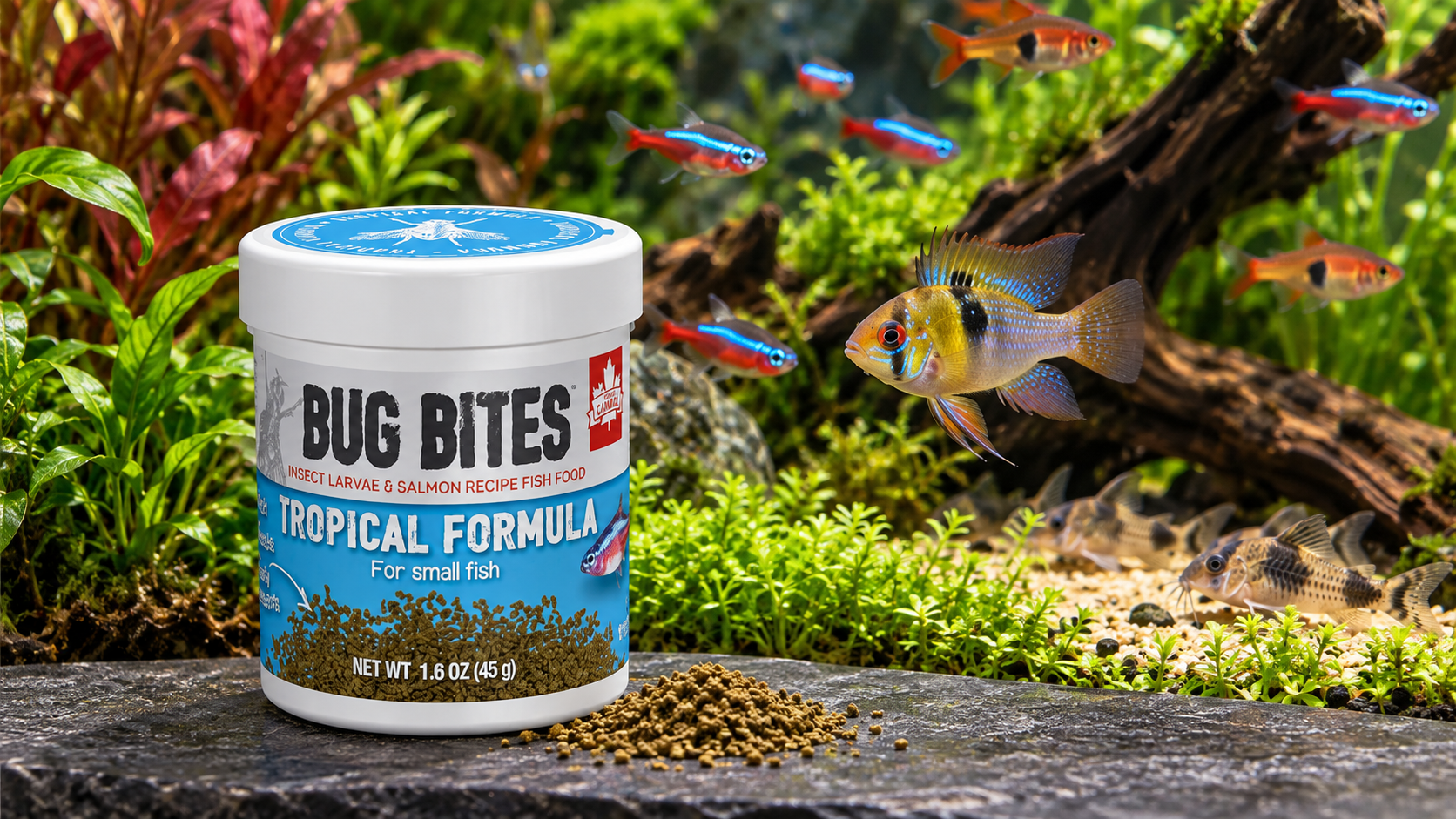
Fluval
Fluval Bug Bites Tropical Formula for small fish
Best for: Small tropical fish and dwarf cichlids
As an Amazon Associate, we earn from qualifying purchases.
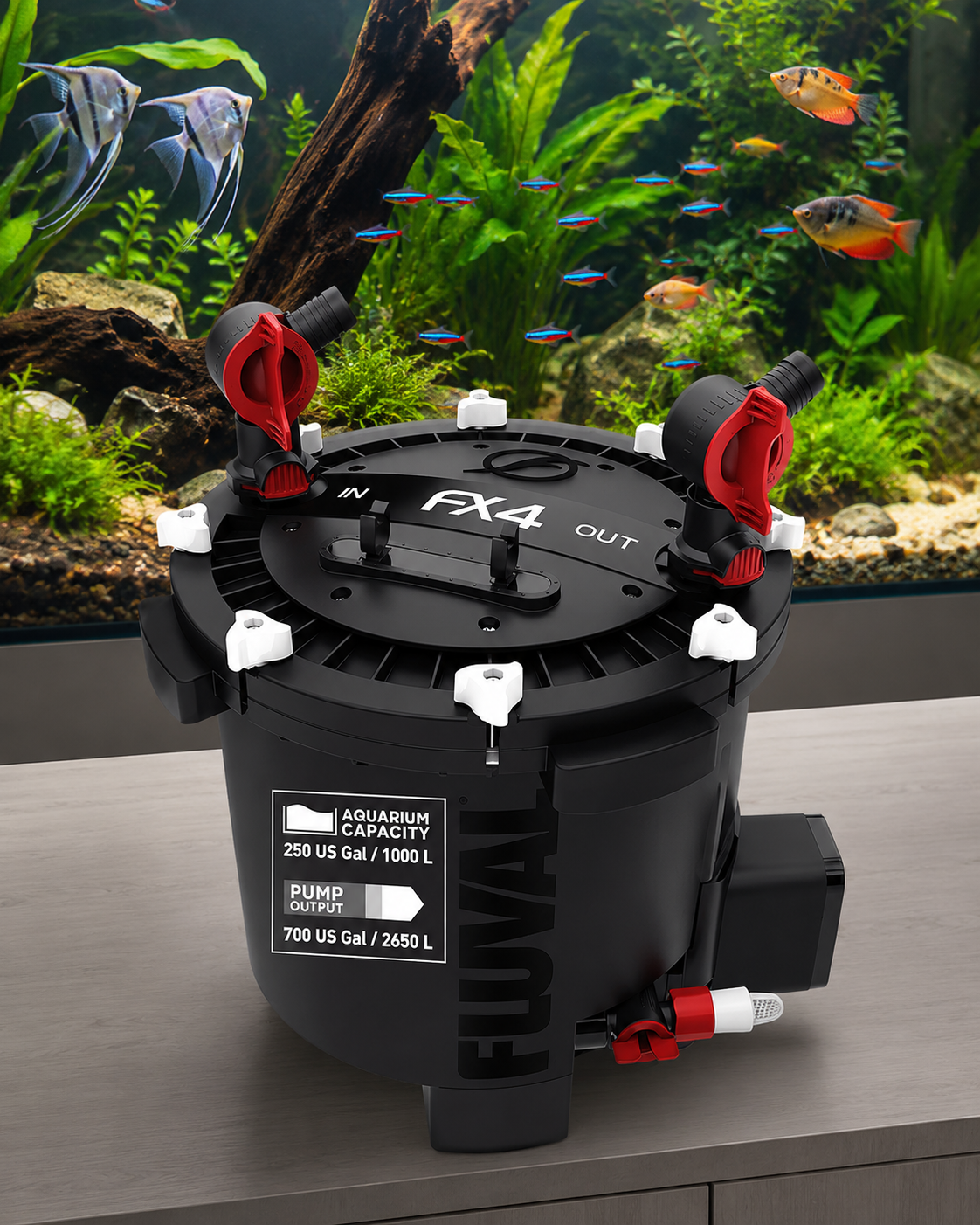
Fluval
Fluval Fx 4 Aquarium Canister Filter
Best for: Medium to large, heavily stocked freshwater aquariums
As an Amazon Associate, we earn from qualifying purchases.
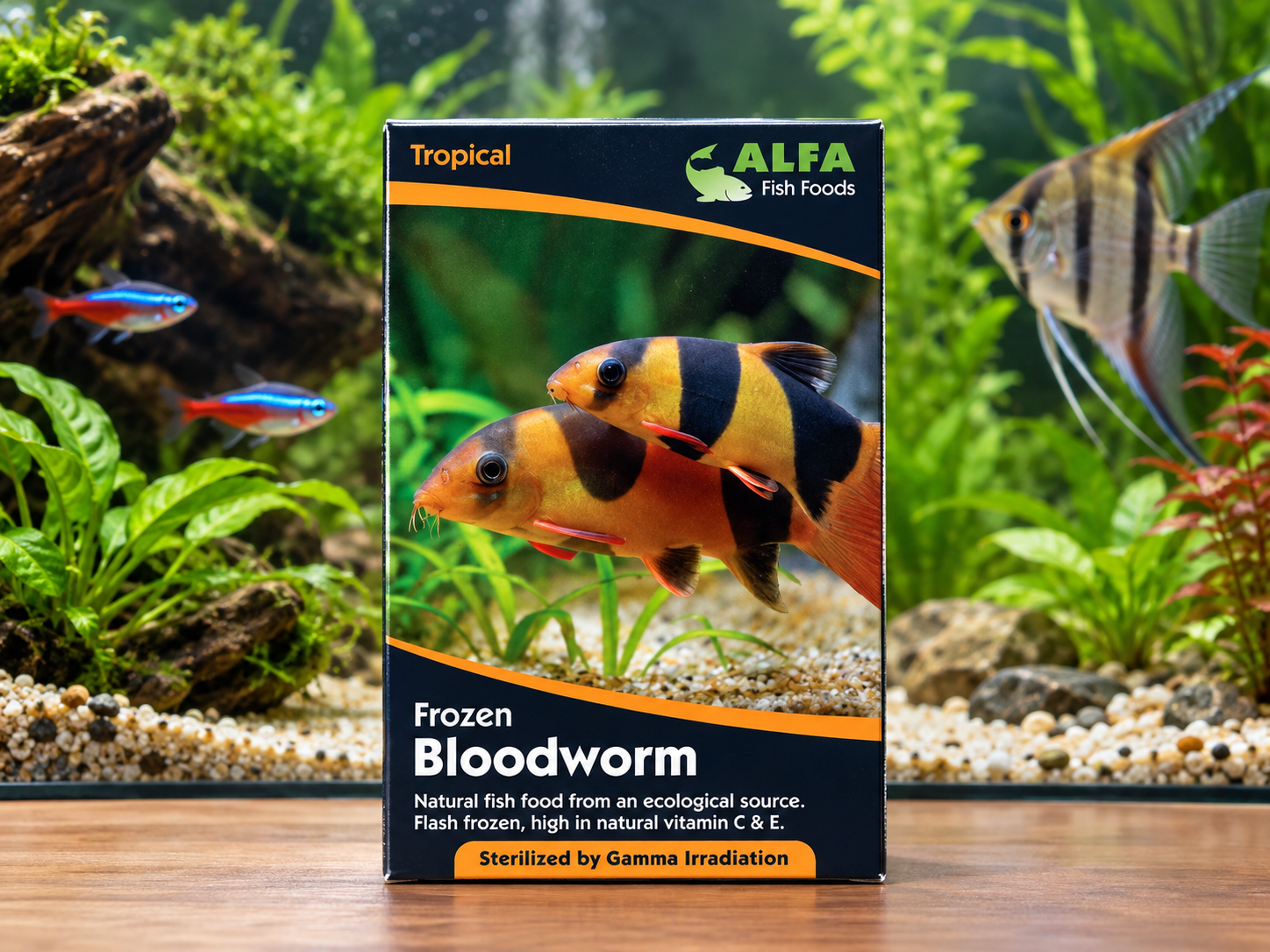
ALFA
Frozen Bloodworm Fish Food 10 Pack
Best for: Adding variety to tropical and coldwater fish diets
As an Amazon Associate, we earn from qualifying purchases.
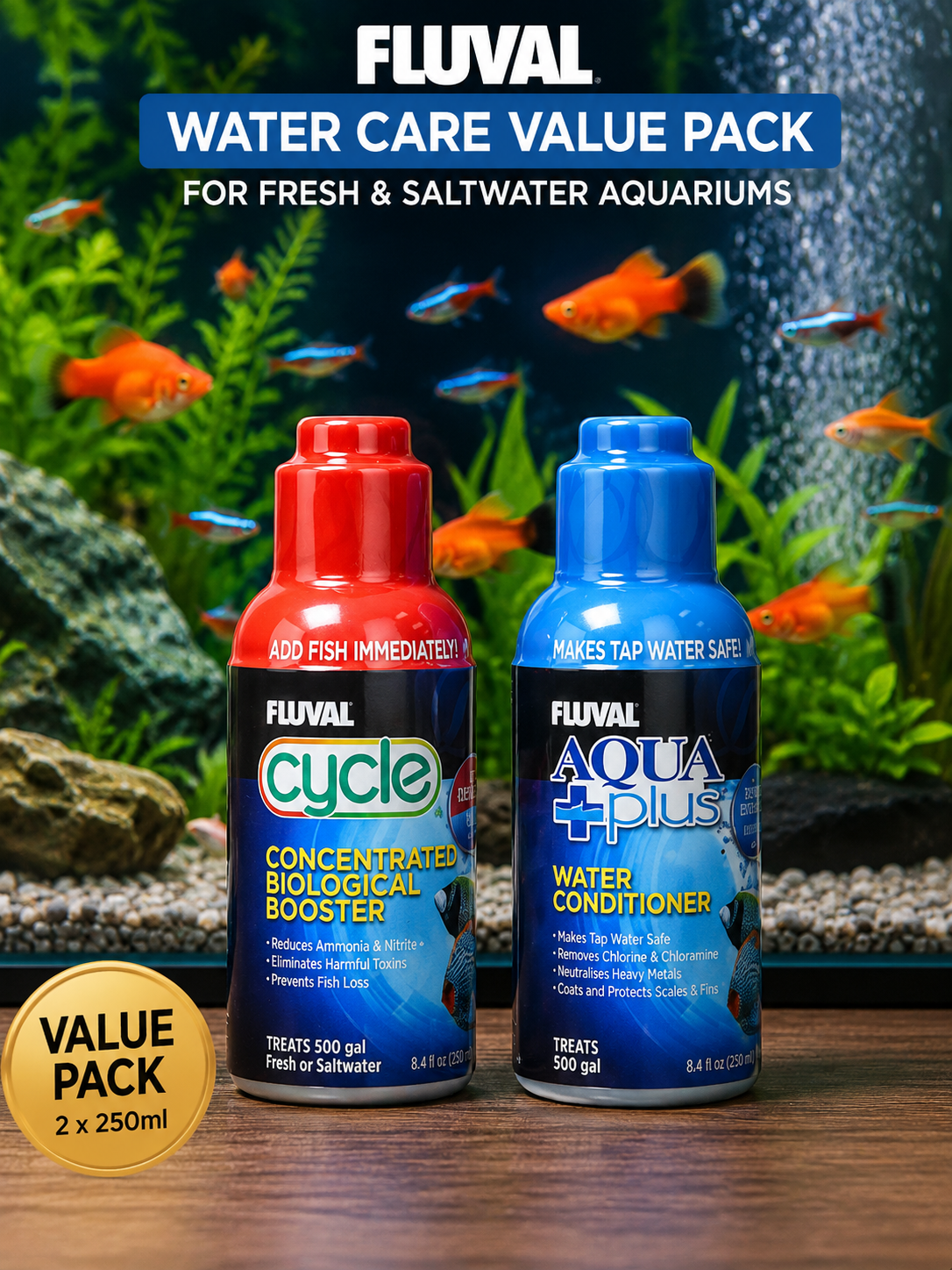
Fluval
Fluval Water Care Value Pack with Fluval Cycle & Aqua Plus, 500ml
Best for: New aquarium setups and routine water changes
As an Amazon Associate, we earn from qualifying purchases.
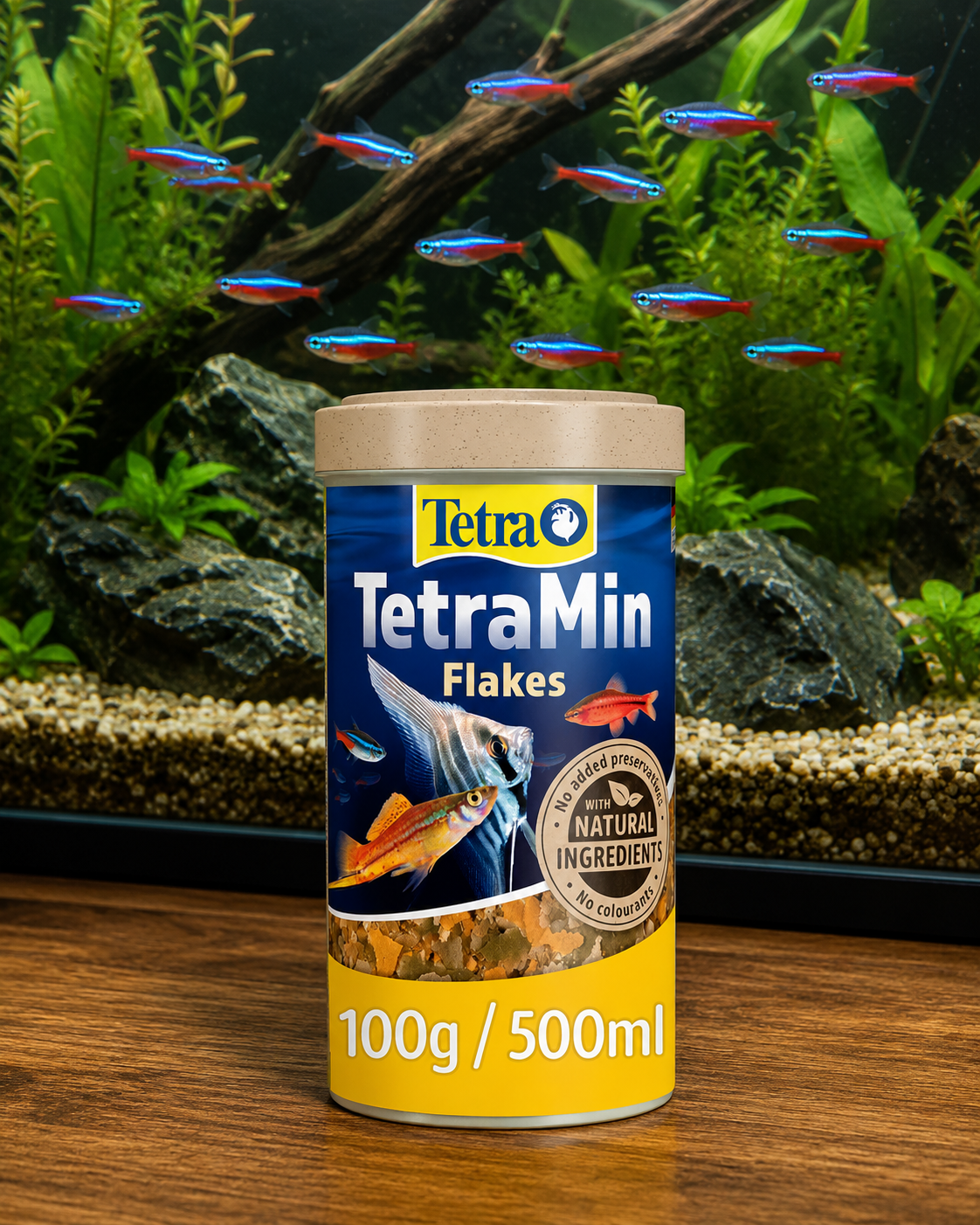
Tetra
Tetra Min Tropical Flake Food 500ml
Best for: Everyday feeding of tropical community fish
As an Amazon Associate, we earn from qualifying purchases.