How to Choose the Right Pond Pump: A Complete Buyer's Guide
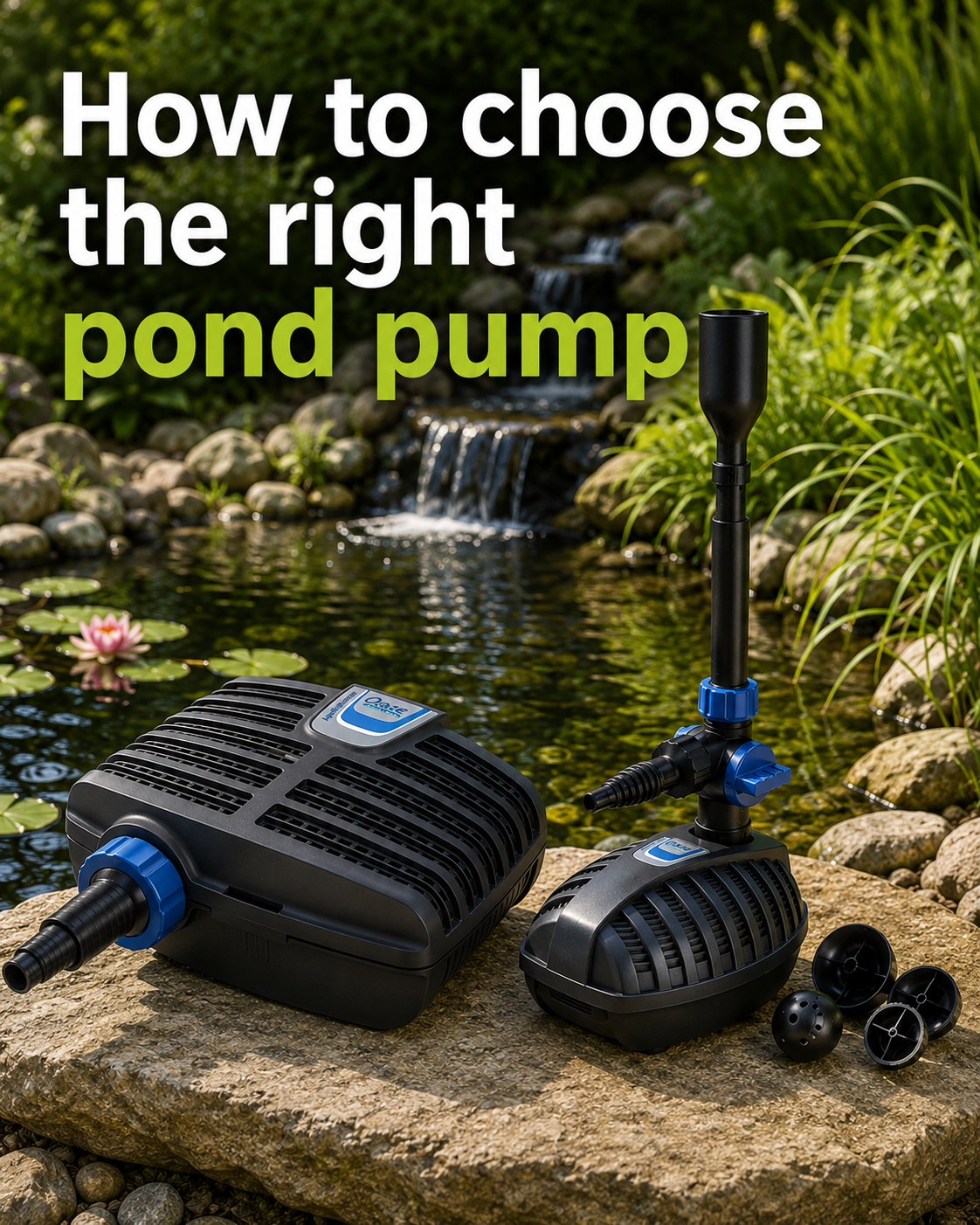
Choosing the right pond pump is about more than litres per hour. Learn how head height, hose diameter, filter resistance and waterfall design all affect performance, and discover how to select the best pump for a healthy, crystal-clear pond.
A pond pump is the heart of every healthy garden pond. It powers your filtration system, feeds waterfalls and streams, supplies fountains, and helps keep your pond water clean and well oxygenated.
Choosing the wrong pump is one of the most common mistakes pond owners make. A pump that is too small won't provide enough water flow, while an oversized pump can waste electricity and may exceed your filter's maximum flow rate.
In this guide, we'll explain how to choose the correct pond pump and the factors that many people overlook even some pros!
What Does a Pond Pump Do?
A pond pump has several important jobs:
- Circulates water through the filter.
- Carries waste to the filtration system.
- Powers waterfalls and streams.
- Supplies fountains.
- Improves oxygen levels by increasing surface movement.
- Prevents stagnant areas in the pond.
Without good water circulation, pond water quality quickly deteriorates.
Step 1 – Decide What the Pump Will Be Used For
The first question to ask is:
What will the pump actually power?
Different pumps are designed for different jobs.
Filter Pumps
For filtration systems, choose a solids-handling pump designed to move fish waste and debris without clogging.
The Oase AquaMax Eco range is an excellent example. These pumps are designed specifically for pond filtration and can comfortably handle leaves, fish waste and other debris.
Ideal for:
- Koi ponds
- Wildlife ponds
- Garden ponds
- Gravity and pressurised filters
- Fountain Pumps
If you're only running a fountain, choose a fountain pump such as the Oase Aquarius Fountain Set.
These pumps provide attractive fountain displays but aren't designed to transport solid waste to a filter.
Step 2 – Work Out Your Required Flow Rate
As a general guide:
Wildlife ponds
Turn the pond volume over every 2 hours.
Example:
2,000 litre pond
Pump around 1,000 litres per hour (before losses).
Goldfish ponds
Aim for the entire pond volume every 1–2 hours.
Koi ponds
Turn the pond over once every hour.
Many heavily stocked koi ponds require even higher circulation.
Step 3 – Don't Ignore Head Height
One of the biggest mistakes is buying a pump based solely on the flow shown on the box.
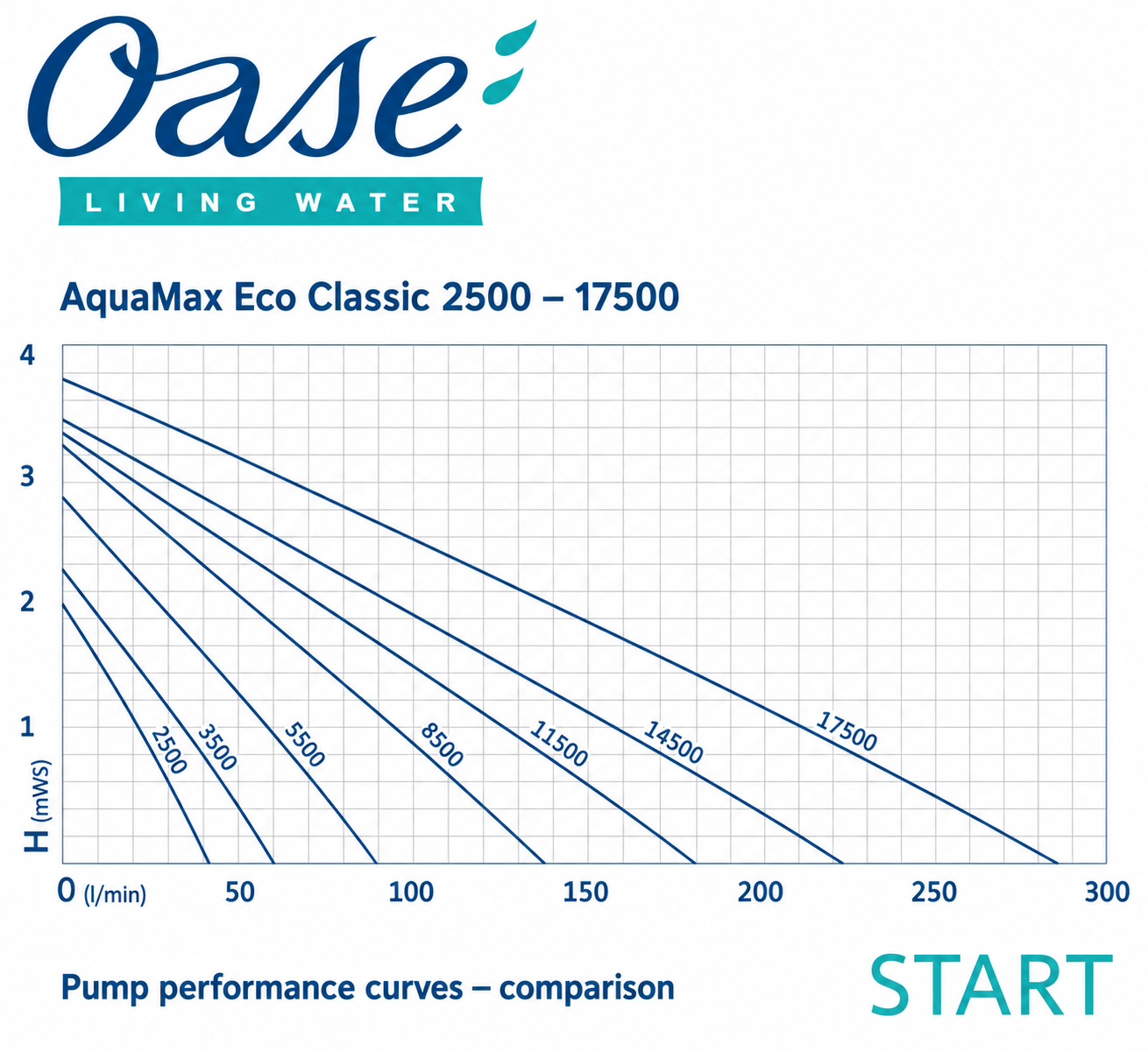
Manufacturers quote the maximum flow at zero head height.
As soon as water travels upwards:
- to a filter
- to a waterfall
- to a stream
the flow begins to reduce.
For example:
A pump rated at 10,000 litres per hour may only produce 7,000 litres per hour once it is lifting water 1.5 metres.
Always study the pump performance graph before buying.
Step 4 – Filters Reduce Flow Too
Many people forget that the filter itself creates resistance. As sponges and biological media become dirty, water flow gradually decreases. This is completely normal.
When sizing your pump, allow some extra capacity so that even with a partially clogged filter your pond still achieves the correct turnover rate. This is particularly important on koi ponds where water quality is critical.
Step 5 – Use the Correct Hose Diameter
This is another area that is frequently overlooked. Using hose that is too narrow can dramatically reduce your pump's performance.A smaller hose creates much greater friction, meaning:
- less water reaches the filter
- waterfalls become weaker
- fountains perform poorly
- the pump works harder
Always use the hose diameter recommended by the pump manufacturer. Although larger hose can cost a little more initially, it allows the pump to deliver much closer to its designed performance.
Step 6 – Keep Pipe Runs Short
Every bend, elbow and unnecessary length of hose increases resistance.
Try to:
- keep pipe runs as short as possible
- avoid tight bends
- use sweeping curves where possible
- minimise unnecessary fittings
Small improvements can noticeably increase water flow.
Step 7 – Waterfall Width Matters
Many people underestimate how much water is needed to create an attractive waterfall. A narrow waterfall only needs a modest flow. A wide waterfall needs significantly more water to produce a continuous sheet rather than several separate streams.
If you're building a waterfall, always choose the pump based on the waterfall width as well as the filter requirements.
Energy Efficiency
Modern pond pumps use a fraction of the electricity consumed by older models. Premium pumps such as the Oase AquaMax Eco range can save substantial amounts on electricity over several years. Although they cost more initially, the lower running costs often make them the better long-term investment. We have a useful tool for working out your energy use and you can even compare pumps. The article How much electricity does a garden pond use is really quite interesting.
Our Recommendations Best for Pond Filtration
✅ Oase AquaMax Eco
Reliable, energy efficient and excellent at handling solid waste.
Best for Fountains
✅ Oase Aquarius Fountain Set
Ideal for decorative fountain displays with multiple fountain nozzles.
Common Mistakes to Avoid
- Buying based only on maximum flow.
- Ignoring head height.
- Using hose that is too small.
- Forgetting filter resistance.
- Choosing a fountain pump for filtration.
- Buying purely on price rather than efficiency.
- Not allowing enough flow for waterfalls.
- Failing to clean filters regularly.
Final Thoughts
Choosing the correct pond pump isn't simply about buying the biggest model available. The right pump should provide enough flow after accounting for head height, filter resistance, hose size and waterfall requirements.
Spending a little extra time calculating your real flow requirements will result in cleaner water, healthier fish and lower running costs for many years to come.
Products We've Mentioned & Recommend
Below you'll find a selection of products we've mentioned in this article, along with a few others we think you might find useful. We've included Amazon links to make them easy to find.
A quick word about affiliate links...
Some of these links are affiliate links, which means we may earn a small commission from qualifying purchases, at no extra cost to you.
Unfortunately, the commission doesn't quite stretch to cocktails on a yacht or a garage full of sports cars. In reality, it helps cover the running costs of this website and, with a bit of luck, might eventually buy me a new pair of waders that don't leak!
We only recommend products we genuinely believe are worth considering, and your support helps us keep sharing free advice from our years of working with aquariums and ponds.
Thanks for supporting Aquatic Specialist!
As an Amazon Associate I earn from qualifying purchases.
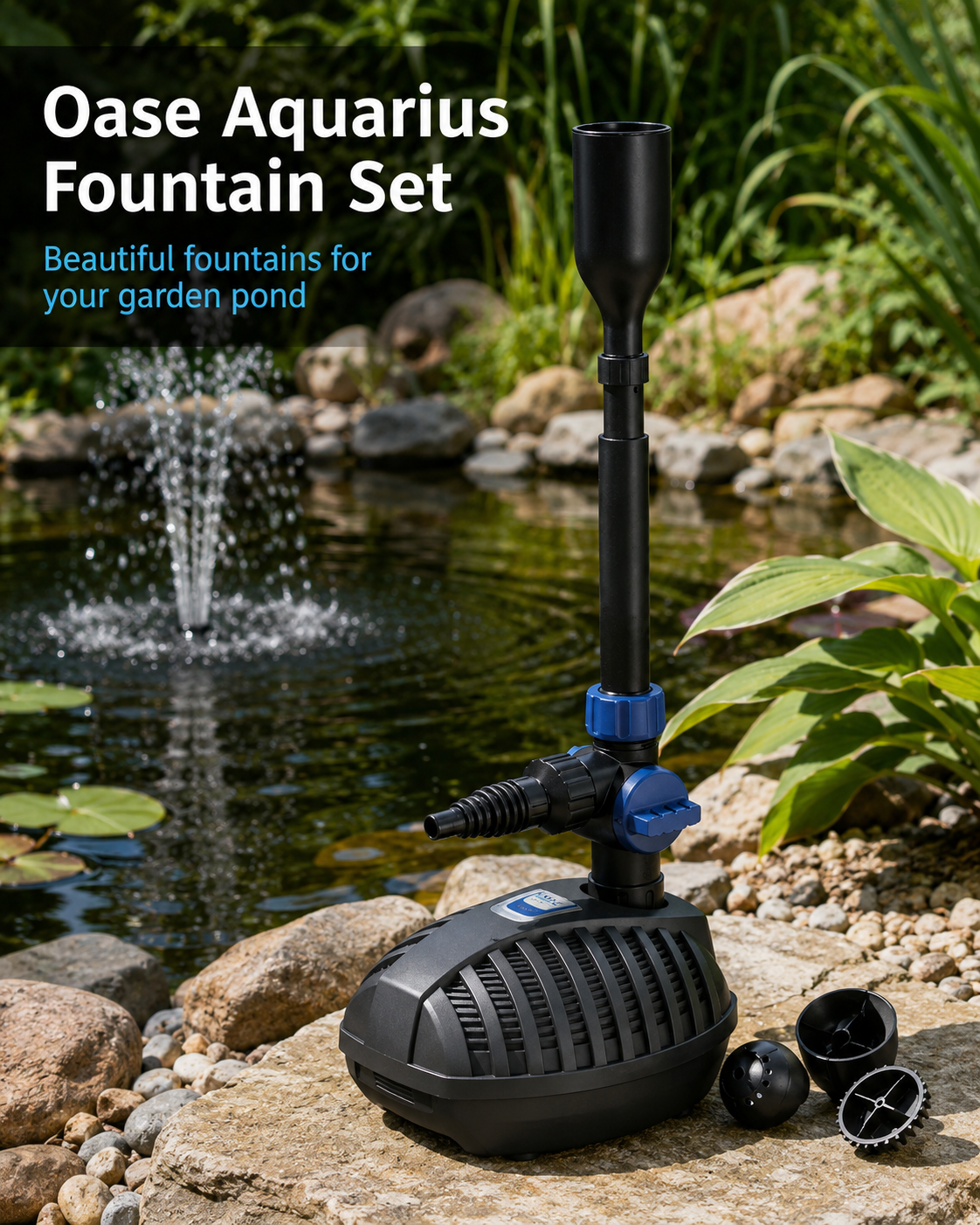
Oase Aquarius Fountain Pump Set
The Oase Aquarius Fountain Set is an energy-efficient fountain pump designed to create attractive water displays in garden ponds. Supplied with multiple fountain nozzles, it offers reliable performance, simple installation and helps improve water movement and oxygenation for a healthier pond.
Search on Amazon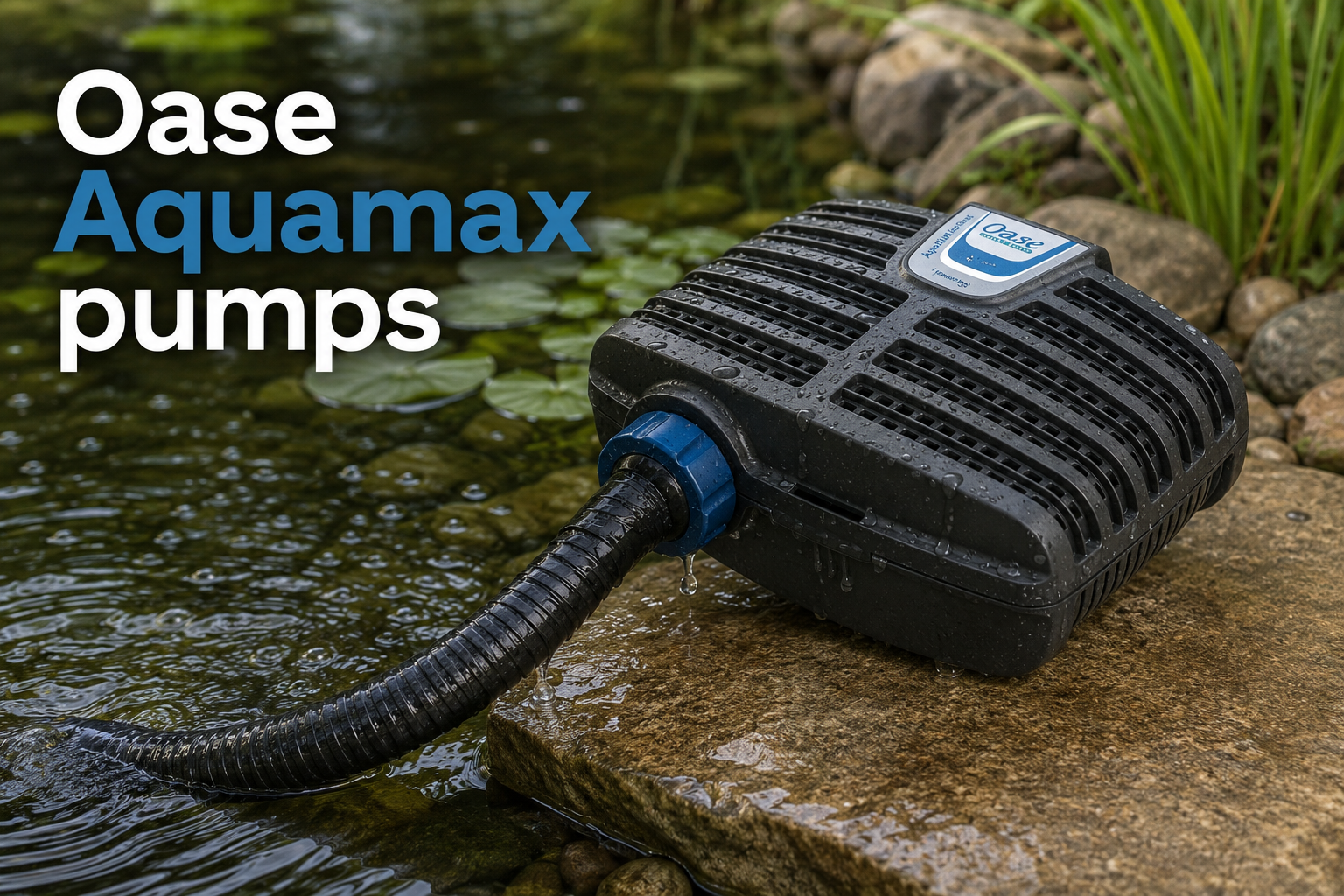
Oase Aquamax 5500 pump
The Oase AquaMax 5500 is an energy-efficient solids-handling pond pump, ideal for powering pond filters, waterfalls and streams. Built for reliable performance, it handles fish waste and debris with ease while providing excellent water circulation for a healthy pond ecosystem.
Search on Amazon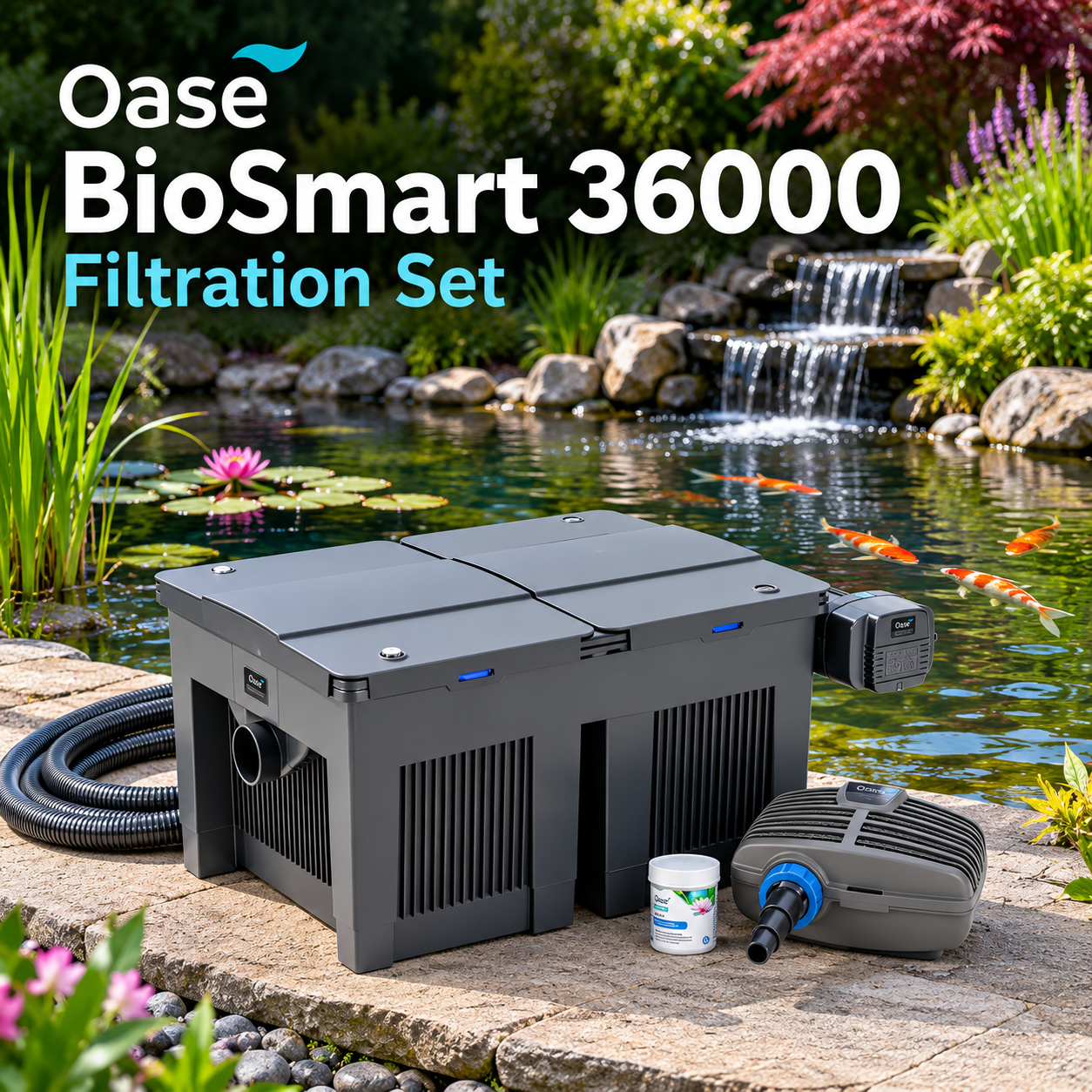
Oase BioSmart 36000 Filtration Set
The Oase BioSmart 36000 Filtration Set is a complete filtration solution for medium to large garden ponds. Supplied with an Oase AquaMax solids-handling pump and BioSmart flow-through filter, it provides excellent mechanical and biological filtration to help maintain clear, healthy water and thriving fish.
Search on Amazon