Black Neon Tetra (Hyphessobrycon herbertaxelrodi)
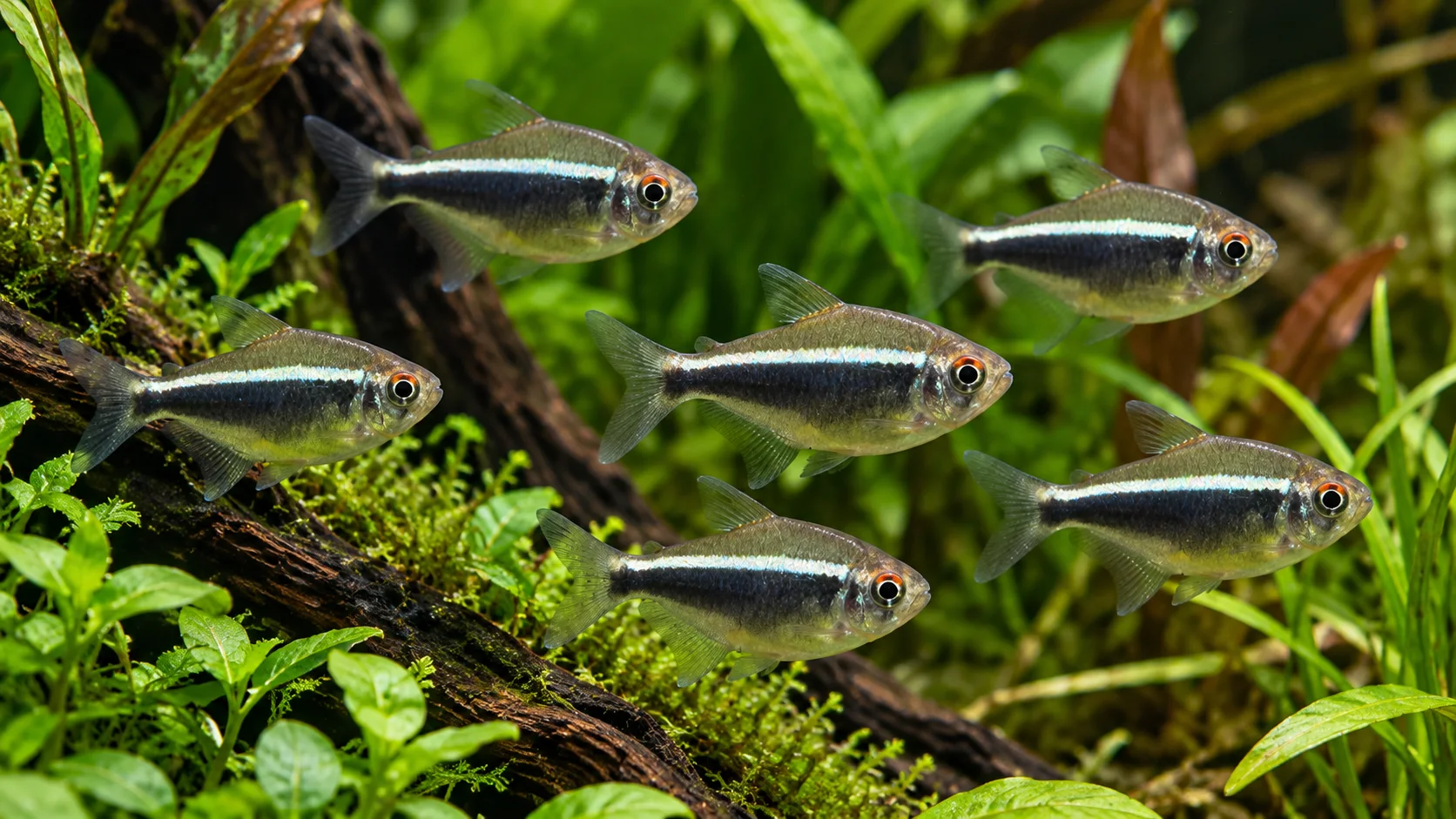
The Black Neon Tetra (Hyphessobrycon herbertaxelrodi) is a peaceful South American shoaling fish that we regularly use in client aquariums. Discover why this attractive and reliable tetra works so well in planted community tanks, with advice on feeding, water conditions, tank mates and breeding.
The Black Neon Tetra is a peaceful South American tetra that doesn't always receive the same attention as the familiar Neon or Cardinal Tetra. Its colouration is less obvious at first glance, but this is a species that can look particularly impressive once a good-sized group has settled into a planted aquarium. A bright reflective stripe runs along the body above a contrasting black band, creating a clean and distinctive appearance.
Known scientifically as Hyphessobrycon herbertaxelrodi. While they are sometimes seen simply as an alternative to the standard Neon Tetra, I think they deserve to be considered as a species in their own right. There are good practical reasons for this. They are attractive without dominating the aquarium, generally peaceful with other community fish and, once established, relatively straightforward to maintain. They also work well in the type of planted community aquarium that many of our clients prefer.
We regularly use Black Neon Tetras in aquariums. They've proved to be dependable community fish and work particularly well in planted displays where their bright lateral stripe contrasts strongly against darker planting.
Natural habitat
Black Neon Tetras originate from Brazil, particularly within the Paraguay River basin. Their natural environment includes streams, tributaries and other relatively calm freshwater habitats where vegetation and submerged organic material provide plenty of cover.
As with many South American tetra habitats, the surroundings can include fallen branches, roots and leaves. The water is often relatively soft and may be acidic, while vegetation around the waterways creates areas of shade.
An aquarium doesn't need to reproduce these conditions exactly. Most Black Neon Tetras available through the aquarium trade have adapted well to conventional aquarium conditions, but incorporating some elements of their natural habitat tends to produce a better display.
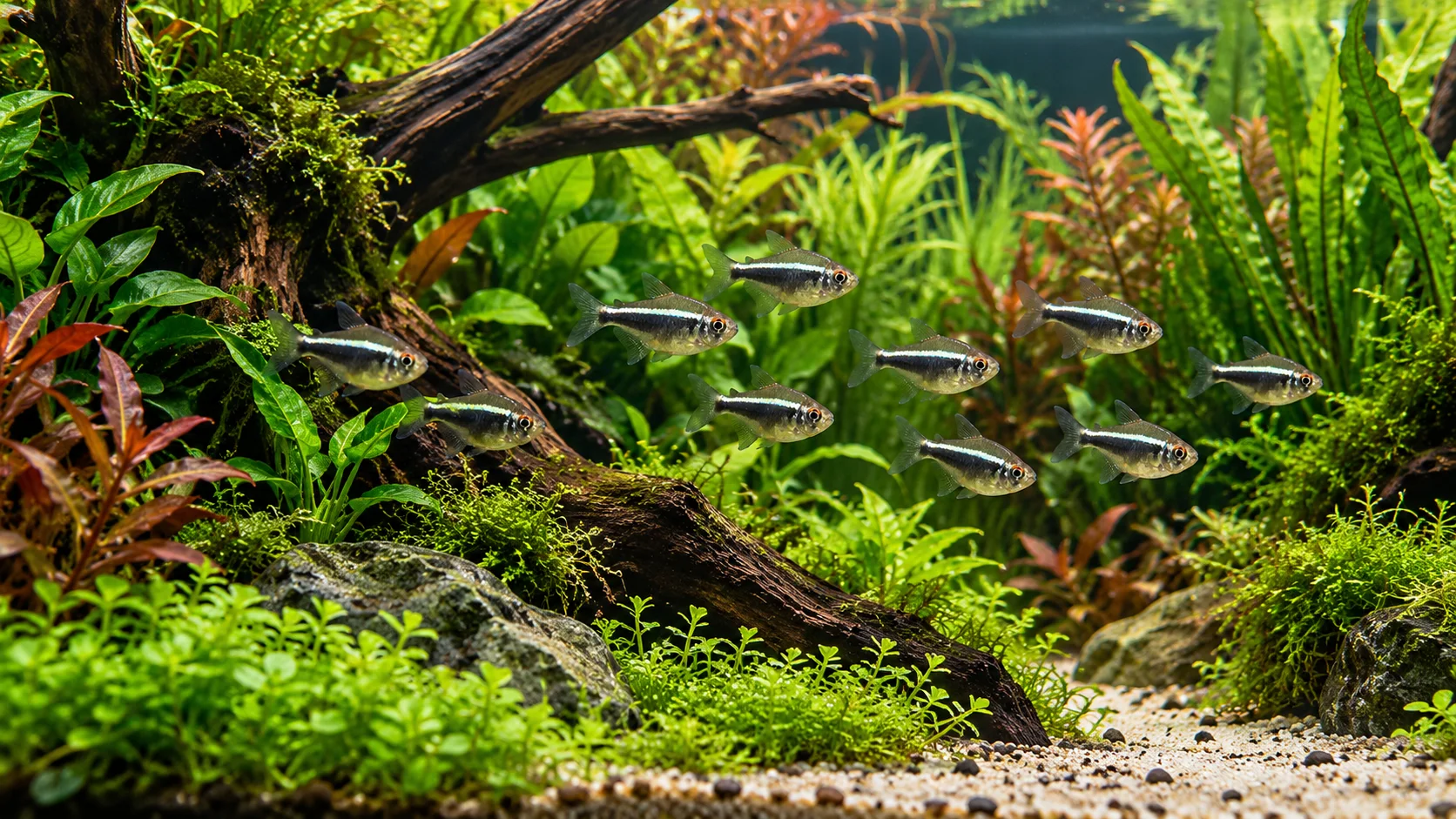
Plants around the sides and rear provide security, while driftwood can be used to break up the aquarium and create shaded areas. Floating plants like Amazon Frogbit can also work well, particularly in brightly illuminated tanks.
A darker substrate is worth considering. Black Neon Tetras have relatively subtle markings compared with many colourful tropical fish, and dark surroundings tend to make their reflective stripe and black lateral band considerably more noticeable.
Appearance and size
Adult Black Neon Tetras generally reach around 4 cm in length. Their body is relatively slender, and the most distinctive feature is the pair of horizontal bands running from behind the head towards the tail.
The upper stripe is reflective and can appear silvery white, pale green or even slightly golden depending on the aquarium lighting. Immediately below it is a much darker black stripe. The contrast between the two creates the characteristic Black Neon appearance.
There is also often a reddish or orange colour around the upper portion of the eye. It is a relatively small detail, but it becomes quite noticeable when the fish are viewed closely.
Unlike some tetra species, their appeal doesn't depend on intense body colour. Instead, the markings become more effective when several fish are swimming together. As a shoal turns, the reflective stripes catch the light simultaneously and can create a surprisingly bright flash across the aquarium.
Males and females are broadly similar. Mature females usually become fuller through the body, particularly when carrying eggs, while males tend to remain slimmer.
Aquarium requirements
Black Neon Tetras are small enough to live comfortably in moderately sized aquariums, although they shouldn't be treated as fish that require very little space. They are active swimmers and benefit from having a reasonable amount of horizontal swimming room.
An aquarium of around 60 litres or larger is suitable for a modest group, but we often use them in considerably larger client aquariums. This allows a larger shoal to be maintained, which is where the species really begins to look impressive.
A group of six should be regarded as the minimum, but I would usually prefer eight to twelve or more where space allows. In a larger display aquarium, a group of fifteen or twenty can work extremely well.
They don't necessarily remain tightly grouped throughout the day. Once comfortable, individuals may spread around the aquarium before coming together again when disturbed or when moving through open water. This is normal behaviour.
For planted aquariums, I prefer leaving a reasonable amount of open swimming space rather than filling every part of the tank with plants. Dense planting around the rear and sides gives the fish somewhere to retreat, while an open central area allows the group to remain visible.
This is particularly relevant in client aquariums. A fish can be perfectly suitable from a husbandry point of view but still be a poor choice if it spends most of its time hidden. Black Neon Tetras generally provide a good balance. They appreciate cover but, when kept in a suitable group, tend to remain visible enough to become part of the overall display.
Water conditions
Black Neon Tetras naturally occur in relatively soft water, often with an acidic pH. Captive fish are reasonably adaptable, however, and can be maintained successfully across a broader range of conditions.
A temperature of approximately 23–27°C works well, making them compatible with many other commonly kept tropical community fish.
Slightly acidic to neutral water is ideal, but stability is more important than continually trying to achieve a precise pH. This is something that becomes particularly obvious when maintaining aquariums professionally. A stable aquarium receiving consistent maintenance is generally far preferable to one where the chemistry is continually being adjusted in pursuit of supposedly perfect figures.
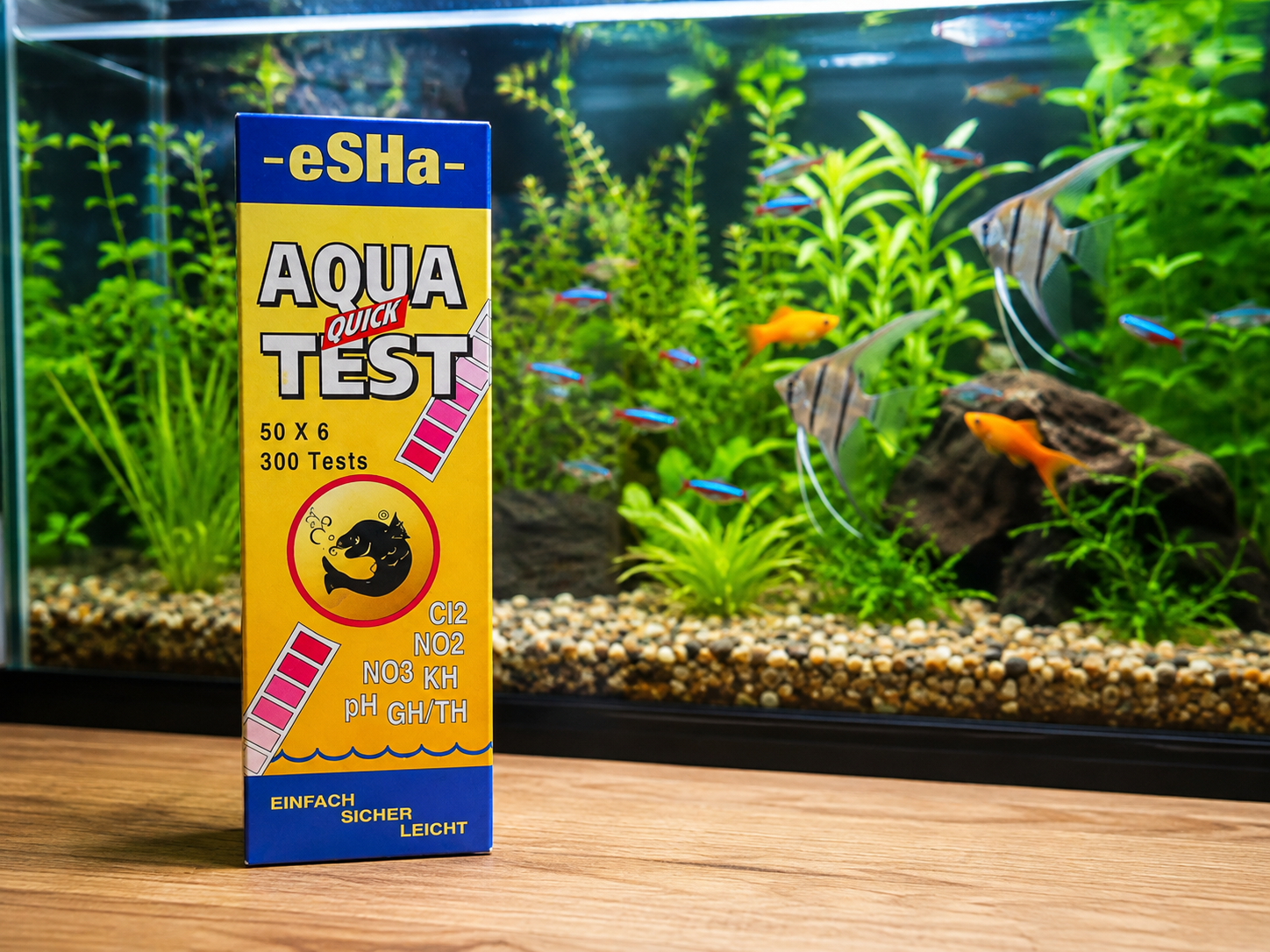
We recommend regular water testing. For clients we take a quick water test every visit using ESHA Quicktest strips and record the results on a professional aquarium app we designed. Over time we can monitor any changes and how they relate to the health of the tank. In a home aquarium it's a good idea to do the same.
Ammonia and nitrite should remain at zero, while nitrate should be controlled through sensible stocking, appropriate feeding and regular water changes.
A mature filter providing moderate circulation is normally sufficient. Black Neon Tetras don't require extremely powerful currents, although good water movement and oxygenation contribute to maintaining a healthy aquarium.
Regular maintenance also keeps the fish looking their best. Their reflective markings can appear considerably more impressive in clean, clear water.
Feeding Black Neon Tetras
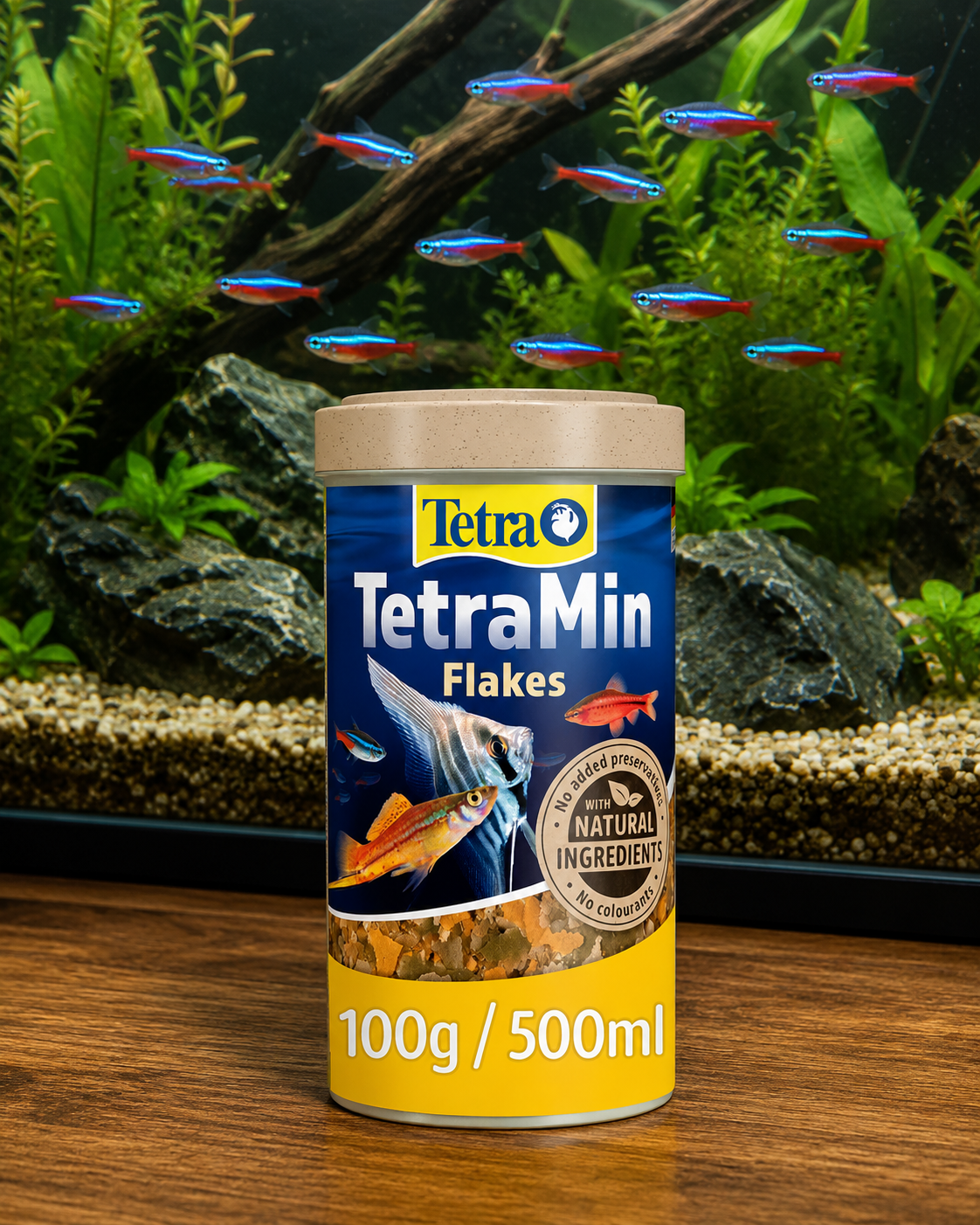
Black Neon Tetras are easy to feed and aren't particularly demanding when it comes to diet. A good-quality flake food, micro pellet or small granulated food can provide the basis of their everyday feeding.
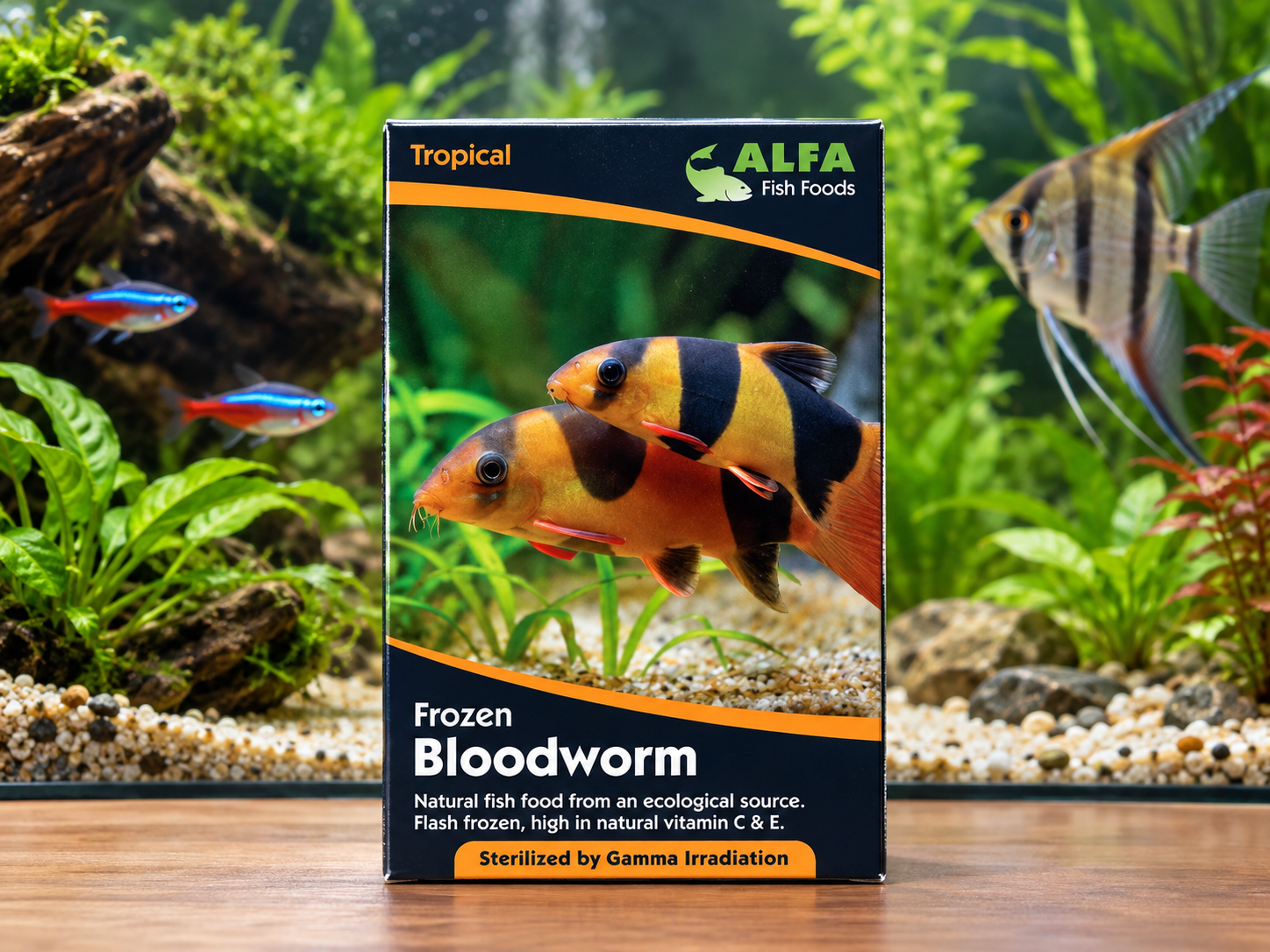
We normally prefer some variety rather than relying permanently on a single food. Frozen daphnia, Cyclops, Artemia and bloodworm can all be useful additions, while suitable live foods encourage natural feeding behaviour.
Their mouths are relatively small, so food needs to be appropriately sized. Larger flakes can easily be crushed before feeding.
They are generally confident feeders and will quickly move towards food when it enters the aquarium. This is another characteristic that makes them useful in mixed community tanks, as they are usually capable of competing effectively without becoming excessively aggressive.
Small amounts once or twice a day are normally sufficient. As with most aquarium fish, overfeeding creates far more problems than feeding slightly conservatively.
Temperament and suitable tank mates
Black Neon Tetras are peaceful and can be combined with a wide range of community fish.
Other peaceful tetras make obvious companions, while Corydoras catfish work particularly well because they occupy a different part of the aquarium. We have an article here on 5 common Corydoras catfish and how to keep them. Rasboras, smaller peaceful barbs and many other similarly sized tropical species can also be suitable.
They can work very well alongside peaceful dwarf cichlids in a South American-style aquarium. A group of Black Neons occupying the middle levels, Corydoras along the bottom and a pair of Apistogramma around the planted and structured areas can produce an interesting aquarium without any one species overwhelming the others.
Larger predatory fish should be avoided. Even though Black Neon Tetras are active swimmers, their small size means that sufficiently large fish may simply view them as food.
They are also generally a better match for relatively peaceful community species than extremely boisterous fish. Constantly being chased or outcompeted will prevent the shoal from displaying the relaxed behaviour that makes them attractive.
Breeding
Black Neon Tetras can be bred in captivity, although a separate breeding aquarium provides a much better chance of raising fry than allowing them to spawn in a community tank.
They are egg scatterers and provide no parental care. The adults may eat their own eggs, so breeding setups usually include fine-leaved plants, spawning mops or mesh that allows the eggs to fall somewhere the adults cannot easily reach them.
Potential breeding fish can be conditioned with a varied diet containing live and frozen foods. Soft, slightly acidic water is generally preferable for spawning and successful egg development.
Once spawning has occurred, the adults should be removed. Keeping the aquarium relatively dim during the early stages can also be beneficial.
The newly hatched fry are extremely small and need correspondingly tiny foods once they become free swimming. Infusoria or specialist fry foods may initially be required before the young become large enough to take newly hatched Artemia.
Good water quality is particularly important while raising the fry. Small, frequent water changes are usually preferable to making large changes that could rapidly alter temperature or chemistry.
A tetra we regularly choose for community aquariums
There are hundreds of small tropical fish available, but some species prove themselves repeatedly when they are actually used in established aquariums over long periods. The Black Neon Tetra is one of those fish.
We often use Black Neon Tetras in client aquariums because they offer a useful combination of attractive appearance, peaceful behaviour and relatively straightforward care. They work especially well where the aim is to create a planted community aquarium that remains visually interesting without relying on one large feature fish.
They can also be a good alternative when someone wants a tetra but doesn't necessarily want the familiar bright blue and red appearance of Neon or Cardinal Tetras. Black Neons have a slightly more restrained appearance, which can complement natural wood, rocks and planting particularly well.
Group size makes a significant difference. Six fish may satisfy the basic requirement for a shoaling species, but a larger group creates a much stronger display. In bigger aquariums, a substantial shoal moving through the plants can become one of the most attractive parts of the tank.
For anyone looking for a reliable, peaceful and distinctive tetra, Hyphessobrycon herbertaxelrodi deserves serious consideration. Given clean water, a varied diet, suitable tank mates and enough companions of its own species, the Black Neon Tetra is an excellent choice for both established community aquariums and carefully designed planted displays.
Products We've Mentioned & Recommend
Below you'll find a selection of products we've mentioned in this article, along with a few others we think you might find useful. We've included Amazon links to make them easy to find.
A quick word about affiliate links...
Some of these links are affiliate links, which means we may earn a small commission from qualifying purchases, at no extra cost to you.
Unfortunately, the commission doesn't quite stretch to cocktails on a yacht or a garage full of sports cars. In reality, it helps cover the running costs of this website and, with a bit of luck, might eventually buy me a new pair of waders that don't leak!
We only recommend products we genuinely believe are worth considering, and your support helps us keep sharing free advice from our years of working with aquariums and ponds.
Thanks for supporting Aquatic Specialist!
As an Amazon Associate I earn from qualifying purchases.
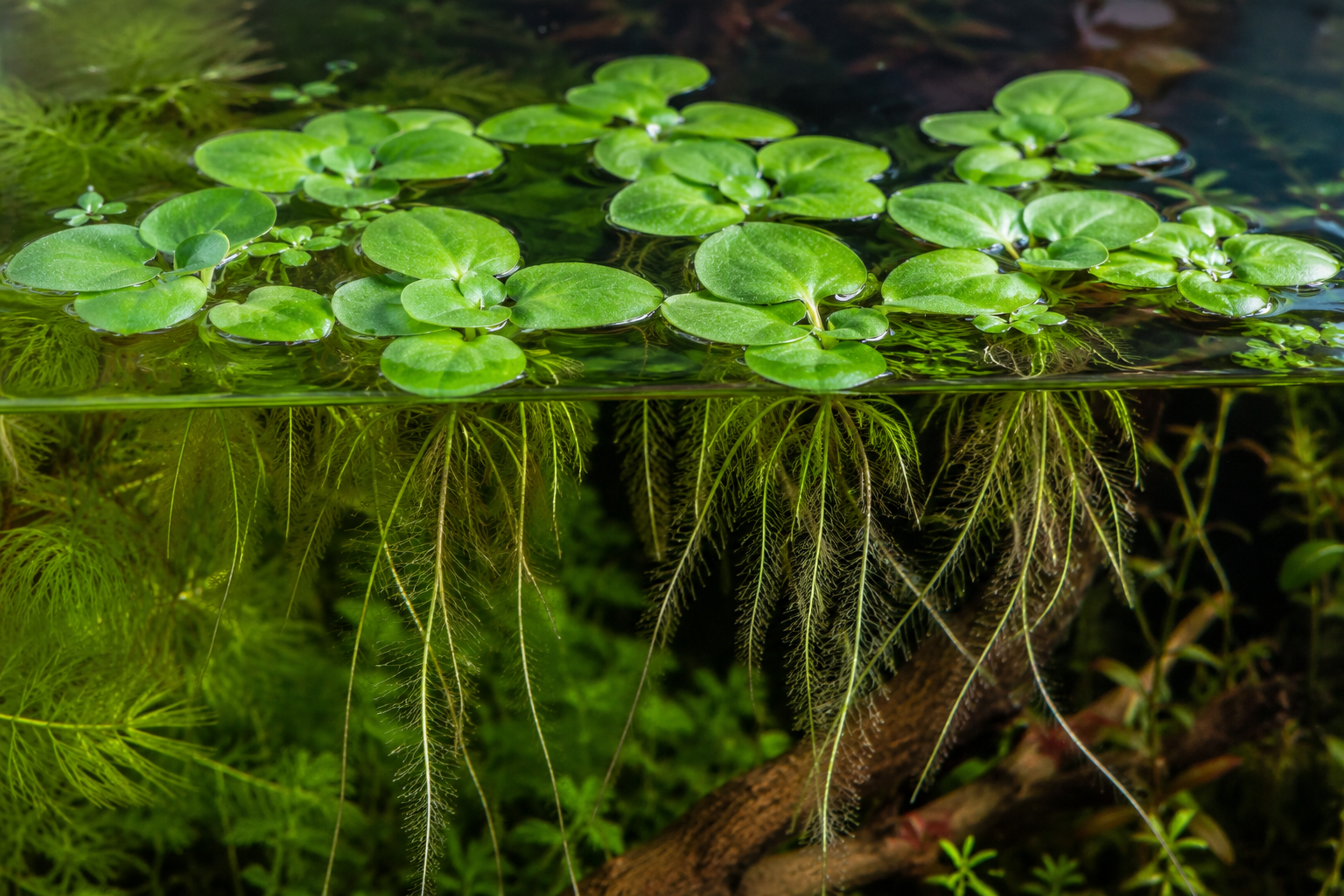
Amazon Frogbit
Best for: Natural aquariums, fry tanks, shrimp tanks and surface cover
As an Amazon Associate, we earn from qualifying purchases.
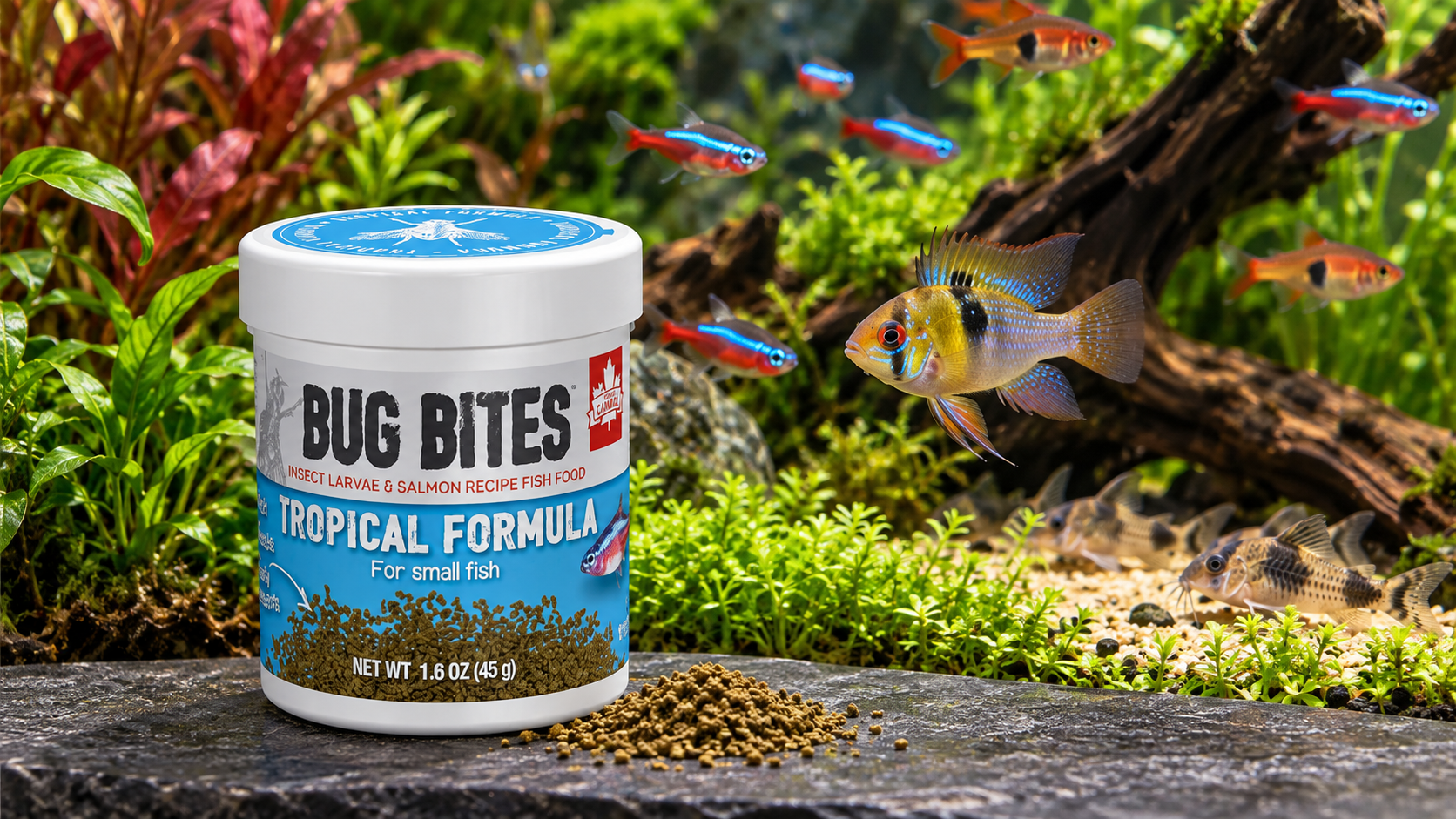
Fluval
Fluval Bug Bites Tropical Formula for small fish
Best for: Small tropical fish and dwarf cichlids
As an Amazon Associate, we earn from qualifying purchases.
Tetra
Tetra Min Tropical Flake Food 500ml
Best for: Everyday feeding of tropical community fish
As an Amazon Associate, we earn from qualifying purchases.
ALFA
Frozen Bloodworm Fish Food 10 Pack
Best for: Adding variety to tropical and coldwater fish diets
As an Amazon Associate, we earn from qualifying purchases.
Esha
ESHA Aqua Quicktest
Best for: Fast routine water-quality checks in freshwater aquariums.
As an Amazon Associate, we earn from qualifying purchases.