Why Has My Pond Water Turned Brown? Causes and Solutions
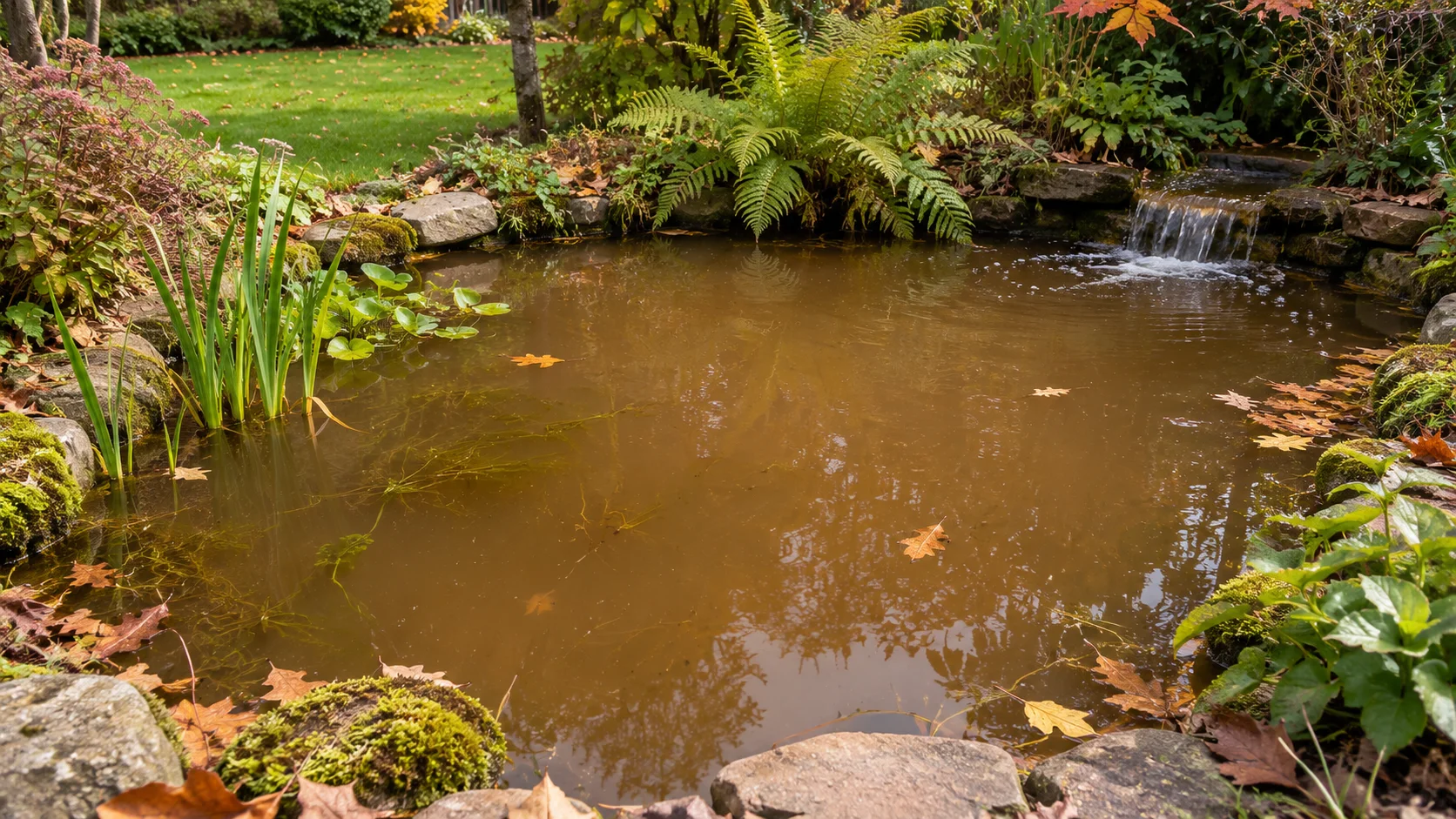
Has your pond water turned brown, muddy or tea-coloured? From fallen leaves releasing tannins to disturbed sludge, soil runoff and filtration problems, there are several possible causes. Drawing on over 27 years of practical aquatic experience, we explain why pond water turns brown, how to identify the problem and the best ways to restore clear, healthy water.
A healthy garden pond should be something you can enjoy looking into, whether you're watching your fish swimming beneath the surface or simply appreciating the plants and wildlife. When the water suddenly turns brown, it can be frustrating, particularly if the pond was previously clear.
Brown pond water is a problem we come across during our pond maintenance work, and there isn't always one simple explanation. Sometimes the cause is perfectly natural, while on other occasions it indicates that the pond needs attention.
In our experience maintaining ponds across Dorset and Hampshire, the most important thing is to establish exactly what is making the water brown before attempting to treat it. Adding products without understanding the cause can waste money and occasionally make the situation worse.
Fortunately, most cases of brown pond water can be resolved with some straightforward maintenance and a little patience.
Is Your Pond Water Brown or Just Stained?
Before looking at possible causes, it's worth understanding that there are two quite different types of brown pond water.
The first is water that remains reasonably clear but has a brown or yellowish tint, rather like a cup of weak tea. You might still be able to see your fish and the bottom of the pond, but everything appears slightly discoloured.
The second is cloudy, muddy-looking water that makes it difficult to see beneath the surface. This can range from a light brown haze to water that looks almost like muddy puddle water. Although they might appear similar at first, the causes are often completely different.
One simple way to investigate is to collect some pond water in a clear glass or jar and leave it undisturbed overnight. If particles settle at the bottom and the water above becomes clearer, suspended sediment is probably responsible. If the water remains clear but brown, dissolved organic compounds are a more likely explanation.
This simple test can save a considerable amount of unnecessary work.
Fallen Leaves and Tannins
One of the most common reasons for tea-coloured pond water is the breakdown of leaves and other organic materials.
As leaves fall into a pond and begin decomposing, they release natural compounds known as tannins. These gradually dissolve into the water and produce a yellow or brown tint.
It's particularly noticeable during autumn when large quantities of leaves can enter a pond within a relatively short period.
Ponds surrounded by mature trees are especially vulnerable. Oak leaves, for example, can contribute significant staining, although many different types of leaves and woody materials can have the same effect.
In our experience, ponds beneath overhanging trees often require more frequent attention during autumn than ponds situated in open gardens.
The good news is that tannins themselves are not necessarily harmful to fish. Many natural freshwater environments contain tannins, and some fish species naturally inhabit heavily stained water.
However, large quantities of decomposing leaves can create other problems. As organic material breaks down, the decomposition process consumes oxygen and contributes to the accumulation of sludge.
We generally recommend removing fallen leaves before they sink and begin decomposing. A pond net can be particularly useful during autumn, provided it's properly fitted and doesn't trap wildlife.
If the water has already become stained, removing the source and carrying out modest partial water changes can help gradually improve its appearance.
Activated carbon placed within a suitable filter can also help remove dissolved organic staining, although it will eventually become exhausted and require replacement.
Sludge and Sediment Being Disturbed
Another common cause of brown pond water is sediment being stirred up from the bottom. Over time, almost every established garden pond accumulates some sludge. This usually consists of decomposed leaves, fish waste, uneaten food and other organic debris.
A small amount of sediment is perfectly normal, particularly in wildlife ponds. Problems develop when substantial deposits accumulate or become disturbed.
In our experience, this is particularly noticeable in older ponds that haven't received regular maintenance.
Fish can contribute to the problem, especially larger koi that naturally investigate and disturb material on the pond floor. Even goldfish can stir up fine sediment while searching for food.
Pumps can also be responsible. If a pump is positioned directly within a deep layer of sludge, its suction and surrounding water movement may continually disturb fine particles.
We've found that simply improving pump positioning can sometimes make a noticeable difference to water clarity.
Pond cleaning can temporarily create the same problem. Disturbing years of accumulated sediment without removing it effectively can leave the water looking considerably worse than before.
When dealing with heavily silted ponds, our preference is to remove the accumulated material rather than repeatedly stirring it into the water.
A suitable pond vacuum can be useful for smaller deposits, while heavily neglected ponds may benefit from a more comprehensive clean.
It's important not to remove everything unnecessarily, particularly in established wildlife ponds where the sediment provides habitat for numerous organisms.
Heavy Rain and Soil Washing Into the Pond
Heavy rainfall is another cause that pond owners sometimes overlook. If the surrounding garden slopes towards the pond, rainwater can carry fine soil, compost and other particles directly into the water. This can turn a previously clear pond brown surprisingly quickly.
We've encountered ponds where the underlying problem wasn't filtration at all, but the way water drained through the surrounding garden.
Flowerbeds positioned immediately alongside the pond can be particularly problematic, especially if loose soil can wash across paving or edging stones.
Newly constructed ponds can also experience temporary cloudiness when soil from planting baskets escapes into the water.
The solution is usually to prevent more material entering rather than simply treating the discoloured water.
Improving edging, redirecting surface runoff or securing pond planting baskets can make a significant difference.
Once the source has been addressed, finer suspended particles can gradually settle or be captured by the filtration system.
Can Poor Filtration Cause Brown Pond Water?
Filtration certainly plays a part in maintaining clear pond water, but it's important to understand what different filters are designed to achieve. Mechanical filtration removes suspended debris, while biological filtration provides a home for beneficial bacteria involved in processing fish waste.
If the mechanical filtration is inadequate, fine particles may continually circulate around the pond.
This is something we regularly consider when inspecting pond systems, particularly where the water is cloudy despite the pump running continuously.
Filters that haven't been maintained properly can also become clogged with accumulated waste, reducing their effectiveness.
In our experience, a correctly sized and properly maintained filter is usually more valuable than repeatedly adding water treatments.
Sometimes improving the existing filter media is enough to make a difference. Fine mechanical media can capture smaller particles, although it needs regular cleaning to prevent blockages.
It's also worth checking that water isn't bypassing the filter media or escaping through an incorrectly fitted section.
One mistake we occasionally see is pond owners expecting their ultraviolet clarifier to resolve every water clarity problem.
UV clarifiers are primarily designed to control suspended single-celled algae, which commonly cause green water.
They won't remove dissolved tannins or physically filter out mud and sludge.
If your pond water is brown because of sediment or decomposing leaves, replacing the UV bulb is unlikely to solve the underlying issue.
Could Brown Water Be Caused by Algae?
Although green water is the most familiar algae problem, some microscopic algae can produce a yellowish or brown appearance.
A pond that experiences a sudden change in water colour during warm weather may therefore have an algae-related issue rather than simple sediment.
Algae blooms can develop when sunlight, nutrients and suitable temperatures combine.
An existing bloom that suddenly dies back can also leave water discoloured as the organisms decompose.
This is particularly important in heavily stocked fish ponds because decomposition can reduce dissolved oxygen levels.
If fish are gathering around waterfalls, gasping at the surface or behaving unusually, water quality and oxygen levels should be checked promptly.
Increasing aeration is a sensible immediate precaution while investigating the problem.
We would also recommend checking ammonia and nitrite levels, particularly if the pond has become heavily polluted.
How We Would Approach Clearing Brown Pond Water
When investigating a brown pond, our first priority is to identify where the discolouration is coming from.
There is little benefit in thoroughly cleaning a filter if soil is continually washing into the pond during rainfall. Equally, installing additional filtration won't necessarily resolve tannin staining caused by large quantities of decomposing leaves.
For ponds containing significant sludge, careful removal of accumulated waste is often the most effective long-term solution.
We would also inspect the pump, filtration system, pond edges and surrounding planting to see whether they are contributing to the problem.
Where partial water changes are appropriate, they should be carried out gradually, taking care to avoid sudden changes in temperature or water chemistry. Replacement mains water must also be treated to remove chlorine or chloramine before it comes into contact with fish.
We generally prefer a measured approach rather than making several major changes simultaneously.
This allows us to identify which improvements are actually working while avoiding unnecessary disturbance to the pond's biological balance.
Preventing Brown Pond Water From Returning
Once the water has cleared, prevention is usually much easier than dealing with another major deterioration. Regular removal of leaves, dead plant material and excessive sludge helps reduce the amount of organic waste accumulating on the bottom.
Maintaining the filtration system is equally important, particularly in ponds containing koi or larger populations of goldfish.
It's also worth checking the condition of pond plants. Overgrown or dying vegetation can contribute considerable amounts of organic material if left unattended.
Our experience has shown that ponds receiving regular, sensible maintenance tend to have fewer persistent water clarity problems than those left untouched for long periods.
That doesn't mean every pond needs to be spotless. A wildlife pond will naturally contain more organic material than a formal koi pond, and that's not necessarily a problem.
The aim should always be to maintain a healthy, balanced environment appropriate for the pond and its inhabitants.
Final Thoughts
Brown pond water doesn't automatically mean something is seriously wrong. A slight tea-coloured tint caused by tannins may be largely cosmetic, while muddy water often indicates disturbed sediment or soil entering the pond. More persistent problems can involve accumulated sludge, inadequate mechanical filtration or occasionally algae.
After years of maintaining garden ponds, we've learned that identifying the cause is far more effective than reaching immediately for another treatment.
Most brown water problems can be improved through sensible cleaning, effective filtration and preventing excess organic material from entering the pond. The key is to treat the cause rather than simply trying to change the colour of the water.
With the right approach, even a badly discoloured pond can often be restored to a much clearer, healthier condition without unnecessary chemicals or expensive equipment.
Products We've Mentioned & Recommend
Below you'll find a selection of products we've mentioned in this article, along with a few others we think you might find useful. We've included Amazon links to make them easy to find.
A quick word about affiliate links...
Some of these links are affiliate links, which means we may earn a small commission from qualifying purchases, at no extra cost to you.
Unfortunately, the commission doesn't quite stretch to cocktails on a yacht or a garage full of sports cars. In reality, it helps cover the running costs of this website and, with a bit of luck, might eventually buy me a new pair of waders that don't leak!
We only recommend products we genuinely believe are worth considering, and your support helps us keep sharing free advice from our years of working with aquariums and ponds.
Thanks for supporting Aquatic Specialist!
As an Amazon Associate I earn from qualifying purchases.
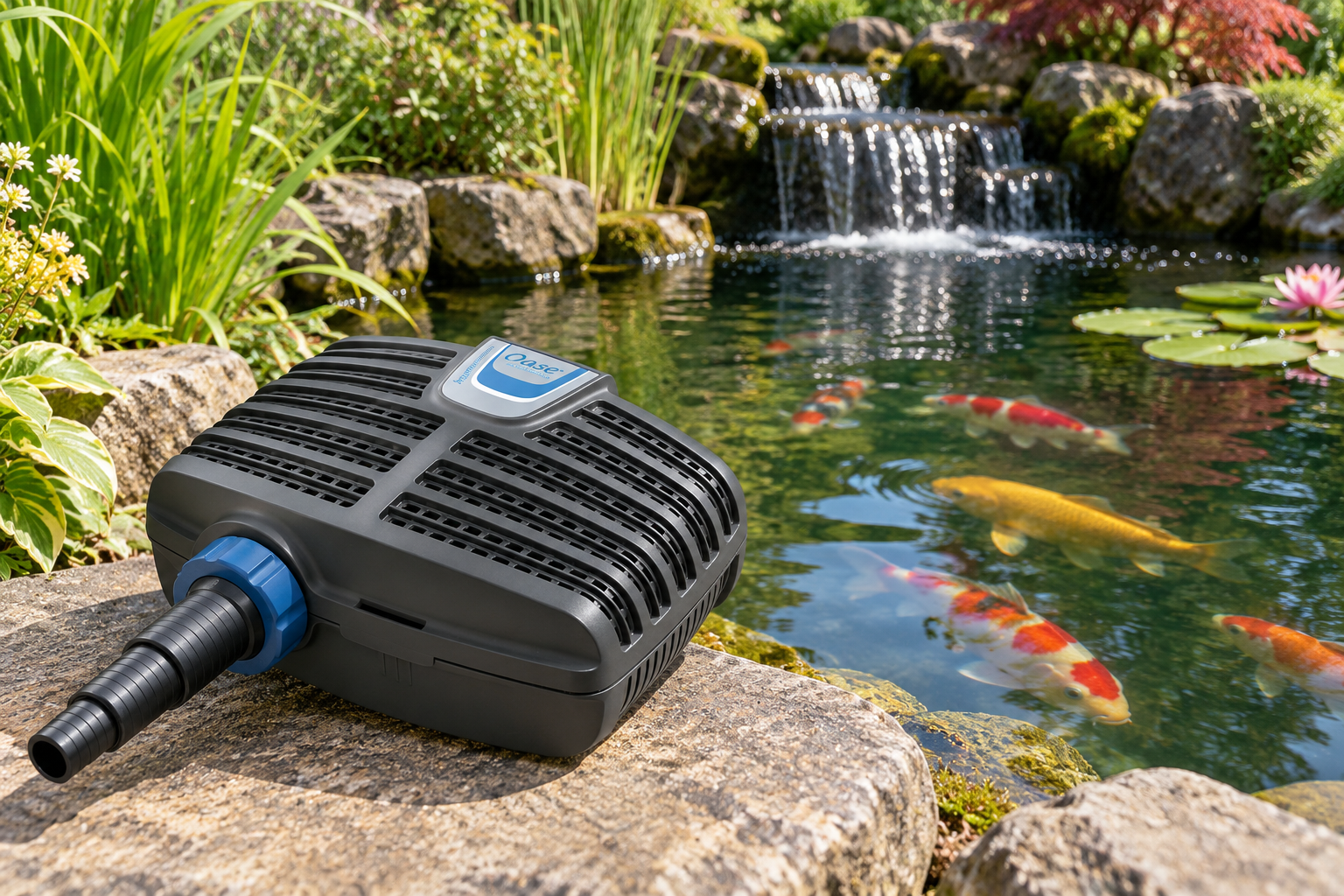
Oase
Oase Aquamax Eco Classic 11500 Pond Pump
Best for: Medium to large koi and garden ponds
As an Amazon Associate, we earn from qualifying purchases.
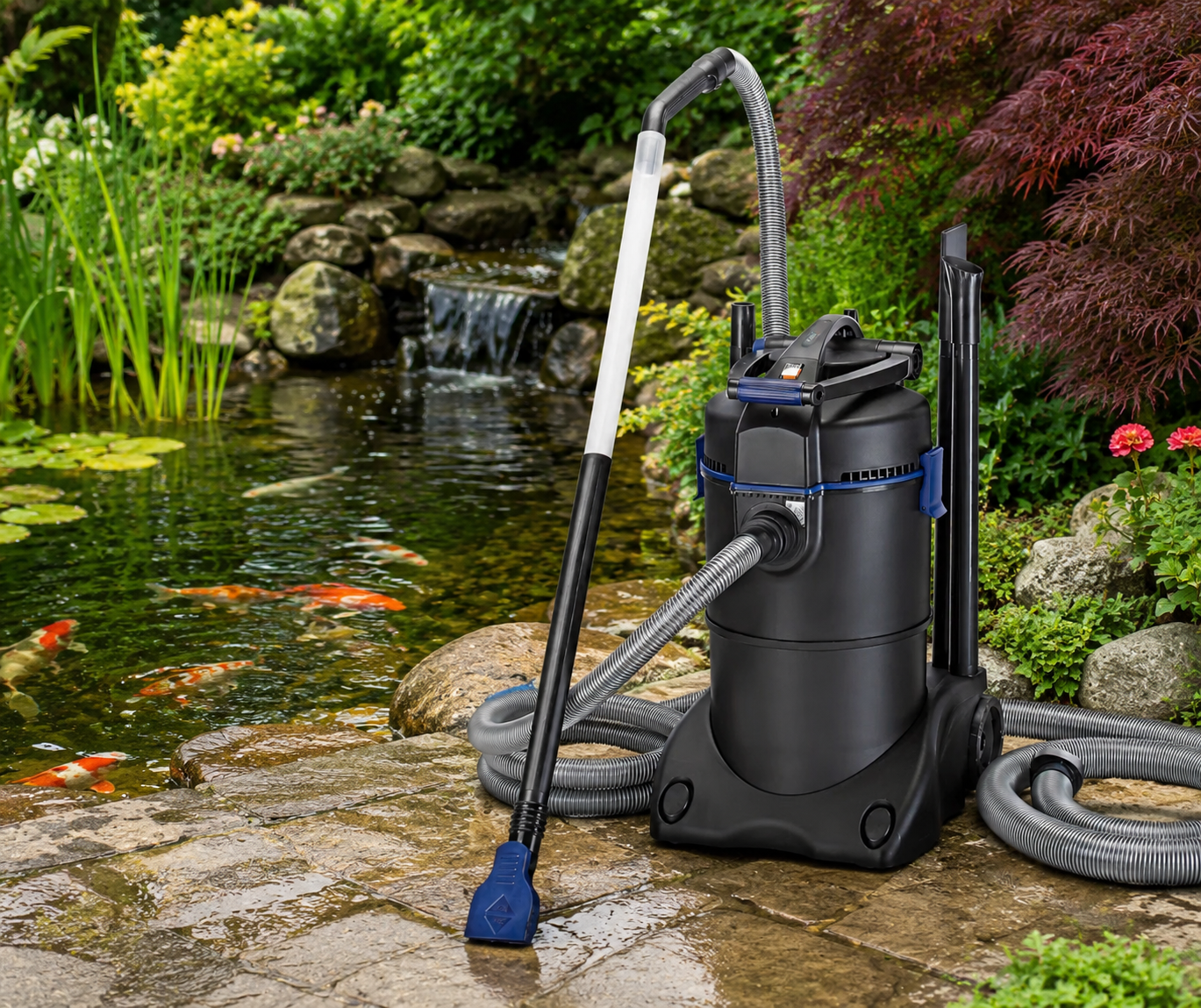
Oase
Oase PondoVac 4 Pond Vacuum Cleaner
Best for: Regular pond cleaning and larger garden ponds
As an Amazon Associate, we earn from qualifying purchases.