Why Are My Aquarium Plants Turning Yellow?
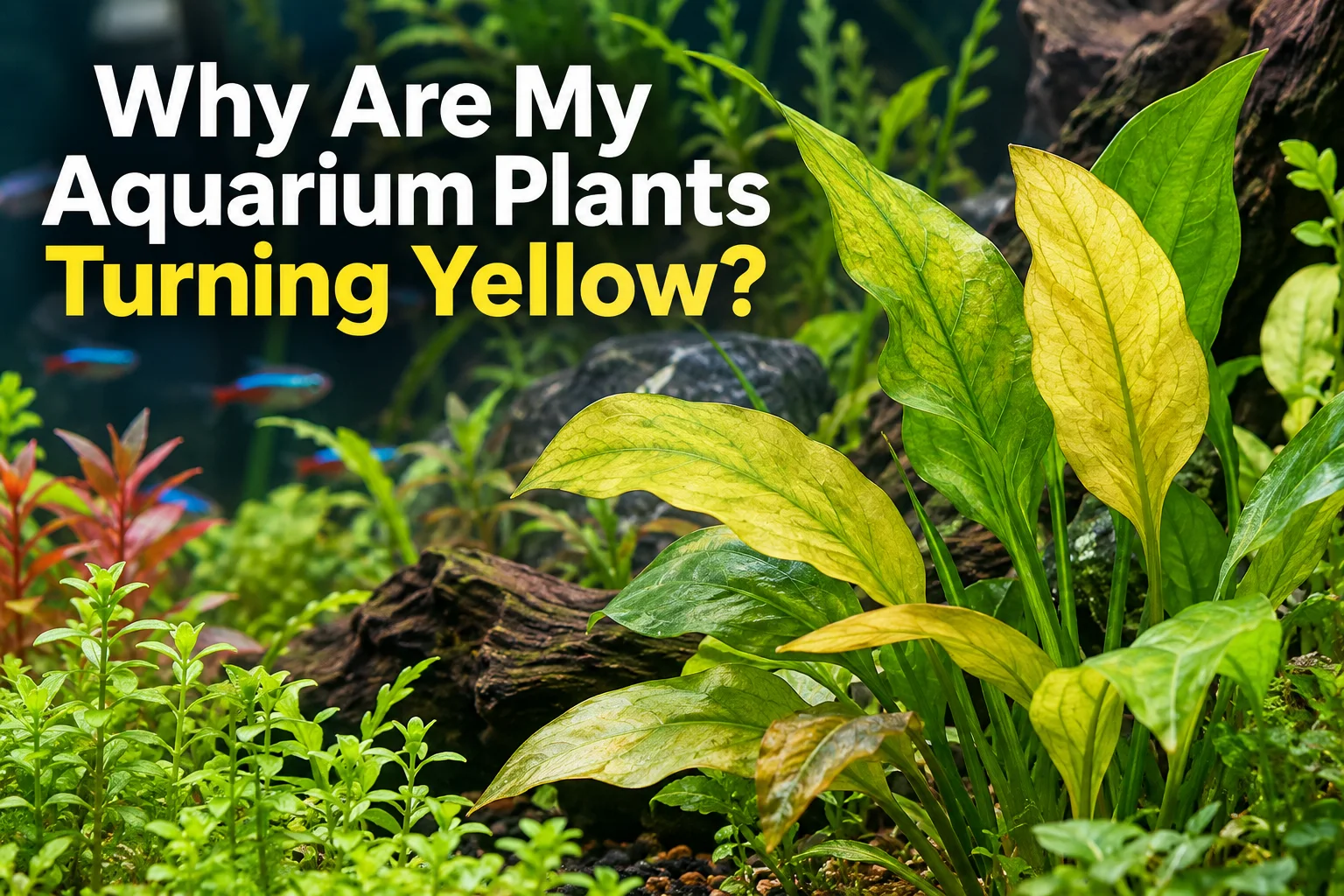
Yellow aquarium leaves can be caused by nutrient deficiencies, lighting, CO₂, exhausted substrate or natural plant adjustment. Learn how to identify the likely cause from where and how the yellowing appears.
Healthy aquarium plants should usually produce vibrant green growth, so when their leaves begin turning pale or yellow it is often a sign that something in the aquarium needs attention. Yellowing leaves are particularly common in newly established planted tanks, but they can also appear suddenly in aquariums that have been running successfully for months or even years. We see it quite often in aquariums.
The difficulty is that yellow leaves do not have a single cause. Nutrient deficiencies are an obvious possibility, but lighting, carbon dioxide, damaged roots, old leaves and even the natural adjustment of newly purchased plants can produce very similar symptoms.
Before adding fertiliser or changing your lighting, it is worth looking at where the yellowing is occurring and which leaves are affected. These clues can often tell you what the plant is lacking.
Nitrogen deficiency
Nitrogen is one of the main nutrients required for plant growth. Aquarium plants use it to produce new tissue and chlorophyll, which gives leaves their green colour.
When nitrogen becomes limited, plants often begin taking nutrients from their older leaves and redirecting them towards new growth. As a result, the older leaves usually become pale green and eventually yellow, while the newest leaves may initially remain greener.
This is particularly common in heavily planted aquariums with relatively few fish. Fish waste and uneaten food naturally introduce nitrogen compounds into an aquarium, so lightly stocked planted tanks can sometimes become nutrient deficient surprisingly quickly.
Very low nitrate isn't automatically desirable in a planted aquarium. While excessive nitrate can indicate problems with maintenance or stocking, plants still require a source of nitrogen.
If nitrate is consistently extremely low or undetectable and plants are becoming pale, a suitable complete aquarium plant fertiliser containing nitrogen may help.
Iron deficiency
Iron is probably one of the best-known nutrients associated with yellow aquarium plants, although it is also one of the most frequently blamed when another issue is actually responsible.
Iron deficiency tends to affect newer growth rather than the oldest leaves. New leaves may appear unusually pale or yellow while the veins remain slightly greener. In more severe cases, new growth can become almost white.
Fast-growing stem plants can make this particularly noticeable because their new shoots may look dramatically different from the healthy leaves lower down.
Adding more iron isn't always the answer, however. Plants only require relatively small quantities, and repeatedly dosing iron without identifying the underlying problem can create unnecessary nutrient imbalances.
A good complete planted-aquarium fertiliser will normally provide iron alongside the other micronutrients plants require.
Potassium deficiency
Potassium deficiency can also cause yellowing, although the symptoms often develop differently.
Older leaves may begin developing small holes, yellow patches or damaged edges. Tiny pinholes can gradually enlarge until sections of the leaf deteriorate completely.
Because damaged leaves cannot repair themselves, improvement should be judged by the condition of the new growth rather than expecting existing holes to disappear.
Potassium shortages are more likely in aquariums with strong plant growth where nutrients are being consumed rapidly.
Magnesium deficiency
Magnesium is an important component of chlorophyll, so insufficient magnesium can cause leaves to lose their normal green appearance.
One of the more characteristic signs is yellowing between the veins while the veins themselves remain greener. This is known as interveinal chlorosis.
Magnesium deficiency isn't necessarily common in every aquarium because tap water can contain a reasonable amount of magnesium. However, very soft water, remineralised RO water or an unsuitable mineral balance can potentially leave plants short.
Before adding individual magnesium supplements, it is worth considering your water hardness and existing fertilisation routine.
The substrate may be exhausted
Not every nutrient problem originates in the water column. Many popular aquarium plants, including Amazon swords and Cryptocoryne species, obtain a significant proportion of their nutrients through their roots. A plant can therefore struggle even when liquid fertiliser is being added regularly.
Nutrient-rich substrates gradually become depleted, particularly in mature aquariums containing large root-feeding plants. I striped down and re-designed the aquarium below after the plants were starting to look leggy with some yellowing leaves. Adding fresh Fluval Stratum Aquasoil when I redesigned the tank gave the old plants a boost so I along with a few new plants the new set up looked amazing in a matter of weeks
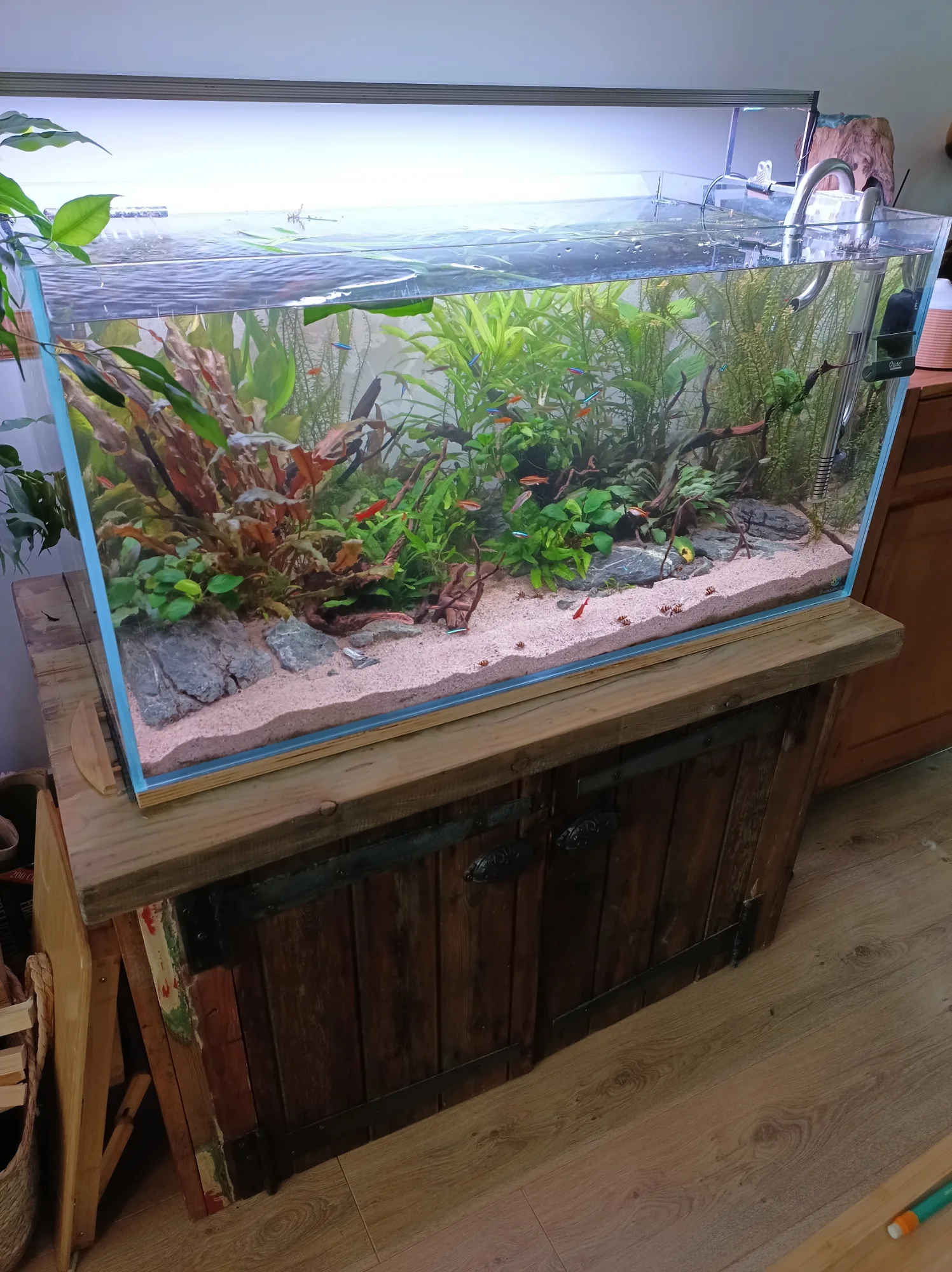
If an established sword plant has become pale and weak while surrounding stem plants remain healthy, the substrate is worth investigating. Root tabs placed around the root system can provide nutrients directly where they are needed.
Too much or too little light
Lighting problems can sometimes resemble nutrient deficiencies. If aquarium lighting is extremely weak, plants may struggle to produce enough energy for healthy growth. Leaves can become pale, stems may become elongated and growth may slow considerably.
Increasing the light isn't automatically the solution. Plants grown under stronger lighting generally require more nutrients and carbon dioxide because their potential growth rate increases. Turning the lights up without supplying what the plants need can actually make existing problems worse and encourage algae.
For many planted aquariums, a moderate and consistent lighting period is considerably easier to manage than trying to provide maximum intensity.
Carbon dioxide can become the limiting factor
Carbon dioxide is another important part of plant growth. In low-tech aquariums without injected CO₂, plants rely on naturally available carbon dioxide. Many slower-growing species can do perfectly well under these conditions, particularly when lighting is moderate.
Problems can occur when an aquarium has powerful lighting and fast-growing plants but insufficient available carbon. Growth may become weak, leaves can deteriorate and algae may begin colonising struggling plants.
In an aquarium using injected CO₂, poor distribution or inconsistent levels can be just as problematic as insufficient injection. Good circulation helps distribute carbon dioxide and nutrients throughout the aquarium.
New plants may simply be adjusting
A yellow leaf doesn't necessarily mean something is wrong. Many aquarium plants are commercially grown emersed, with their leaves above water. Once placed permanently underwater, the plant may discard these leaves and replace them with submerged growth.
Cryptocoryne species are particularly well known for reacting dramatically to environmental changes. Existing leaves can deteriorate rapidly after planting while the root system remains perfectly healthy.
Rather than immediately changing fertilisers, lighting and water chemistry, look closely at the plant's centre. If fresh healthy leaves are beginning to appear, the plant may simply be adapting.
Old leaves naturally die
Leaves do not live forever. It is perfectly normal for an established plant to occasionally lose its oldest leaves. A single yellow leaf at the bottom of an otherwise healthy plant is very different from an entire aquarium gradually becoming pale.
Old or badly deteriorated leaves can usually be removed. This prevents the plant wasting resources maintaining damaged tissue and keeps decomposing material out of the aquarium.
Don't diagnose a deficiency from colour alone
One of the biggest mistakes with planted aquariums is seeing yellow leaves and immediately adding a particular nutrient. Instead, look at the aquarium as a whole.
- Are the old leaves yellow but new leaves healthy? Consider mobile nutrients such as nitrogen.
- Are the new leaves unusually pale? Iron or another micronutrient issue becomes more plausible.
- Are there holes and yellow patches in older leaves? Potassium may deserve attention.
- Is the plant a heavy root feeder while surrounding plants look healthy? The substrate may simply need replenishing.
It is also worth checking nitrate, water hardness, lighting duration, fertiliser dosing and, where applicable, CO₂ before making major changes.
Most importantly, change one thing at a time. Adding several supplements, increasing the light and altering CO₂ simultaneously makes it almost impossible to identify what actually solved the problem.
Yellow aquarium plants are usually recoverable
Yellow leaves can look worrying, but they rarely mean that an aquarium plant is beyond saving.
Once the underlying problem is corrected, the existing damaged leaves may remain yellow, but healthy new growth should begin to appear. This new growth is the best indication that conditions have improved.
A successful planted aquarium isn't about maintaining maximum light or adding as much fertiliser as possible. It is about keeping light, carbon dioxide and nutrients in balance.
When plants begin turning yellow, treat the symptoms as useful clues rather than simply reaching for another bottle of fertiliser. Identifying which leaves are affected, how quickly the problem developed and which species are struggling will usually bring you much closer to the real cause.
Products We've Mentioned & Recommend
Below you'll find a selection of products we've mentioned in this article, along with a few others we think you might find useful. We've included Amazon links to make them easy to find.
A quick word about affiliate links...
Some of these links are affiliate links, which means we may earn a small commission from qualifying purchases, at no extra cost to you.
Unfortunately, the commission doesn't quite stretch to cocktails on a yacht or a garage full of sports cars. In reality, it helps cover the running costs of this website and, with a bit of luck, might eventually buy me a new pair of waders that don't leak!
We only recommend products we genuinely believe are worth considering, and your support helps us keep sharing free advice from our years of working with aquariums and ponds.
Thanks for supporting Aquatic Specialist!
As an Amazon Associate I earn from qualifying purchases.
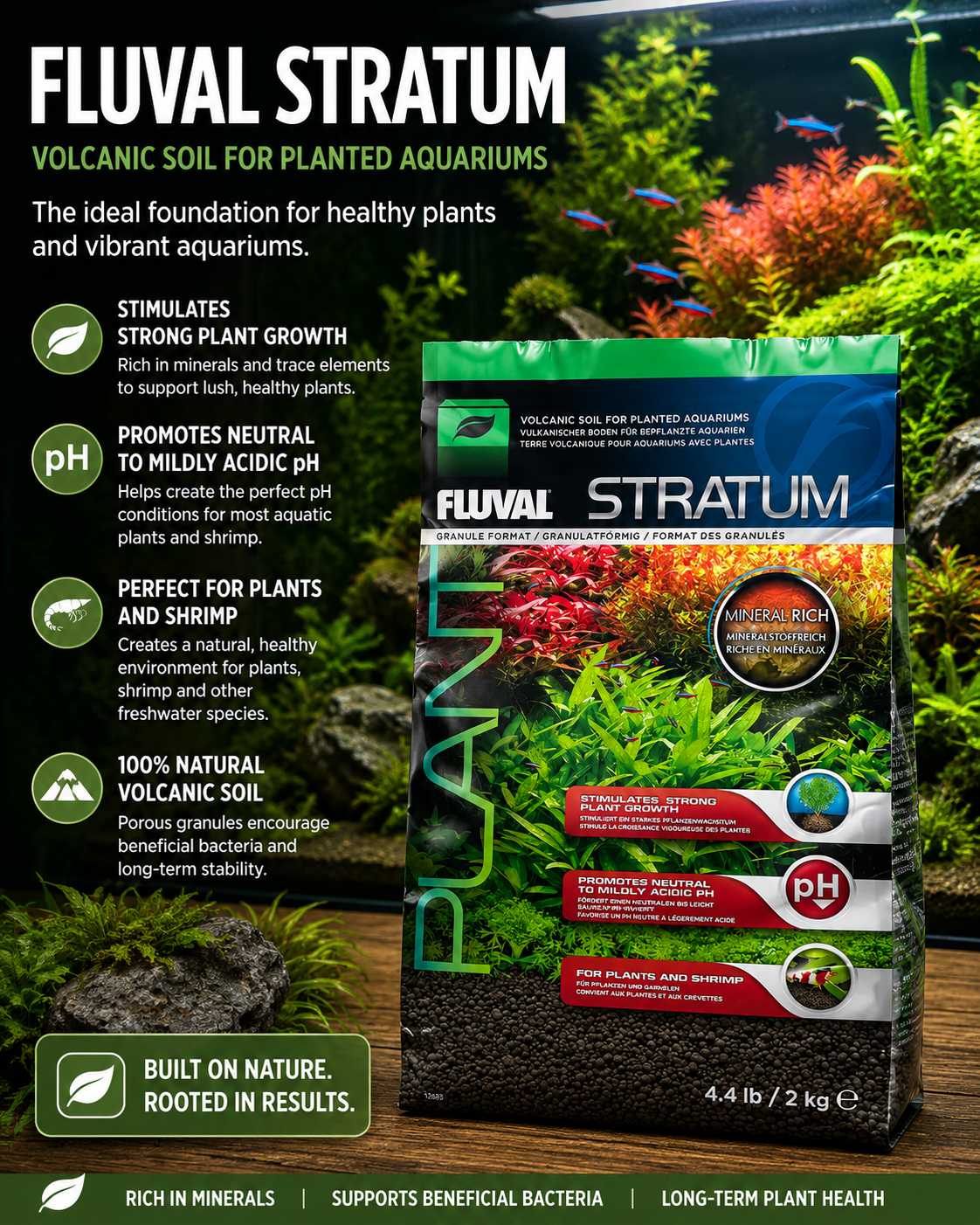
Fluval
Fluval Stratum Aquasoil 8kg
Best for: Planted aquariums, aquascapes and freshwater shrimp tanks
As an Amazon Associate, we earn from qualifying purchases.
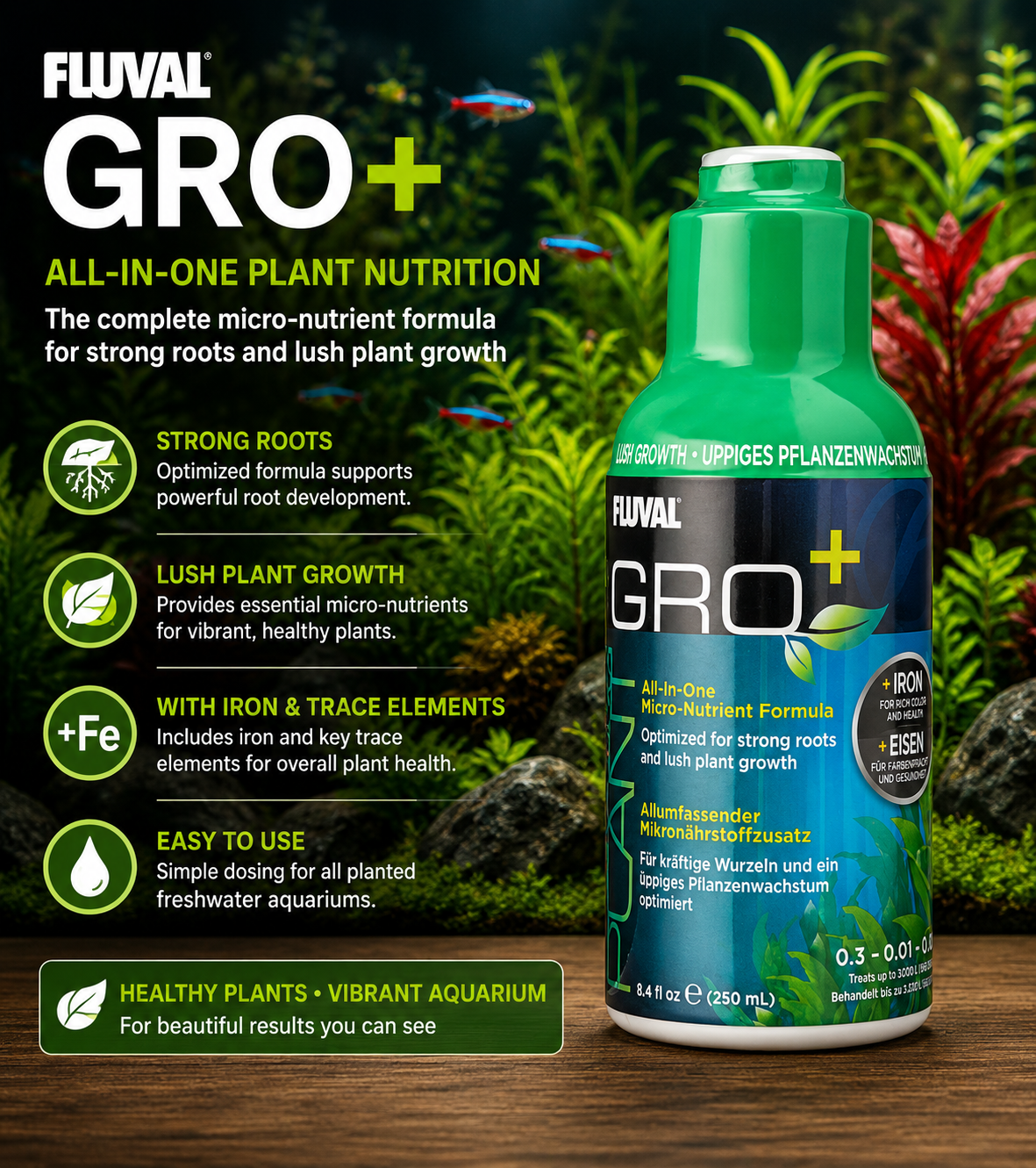
Fluval
Fluval Gro Plus Aquarium Plant Fertiliser
Best for: Low-tech and everyday planted freshwater aquariums
As an Amazon Associate, we earn from qualifying purchases.
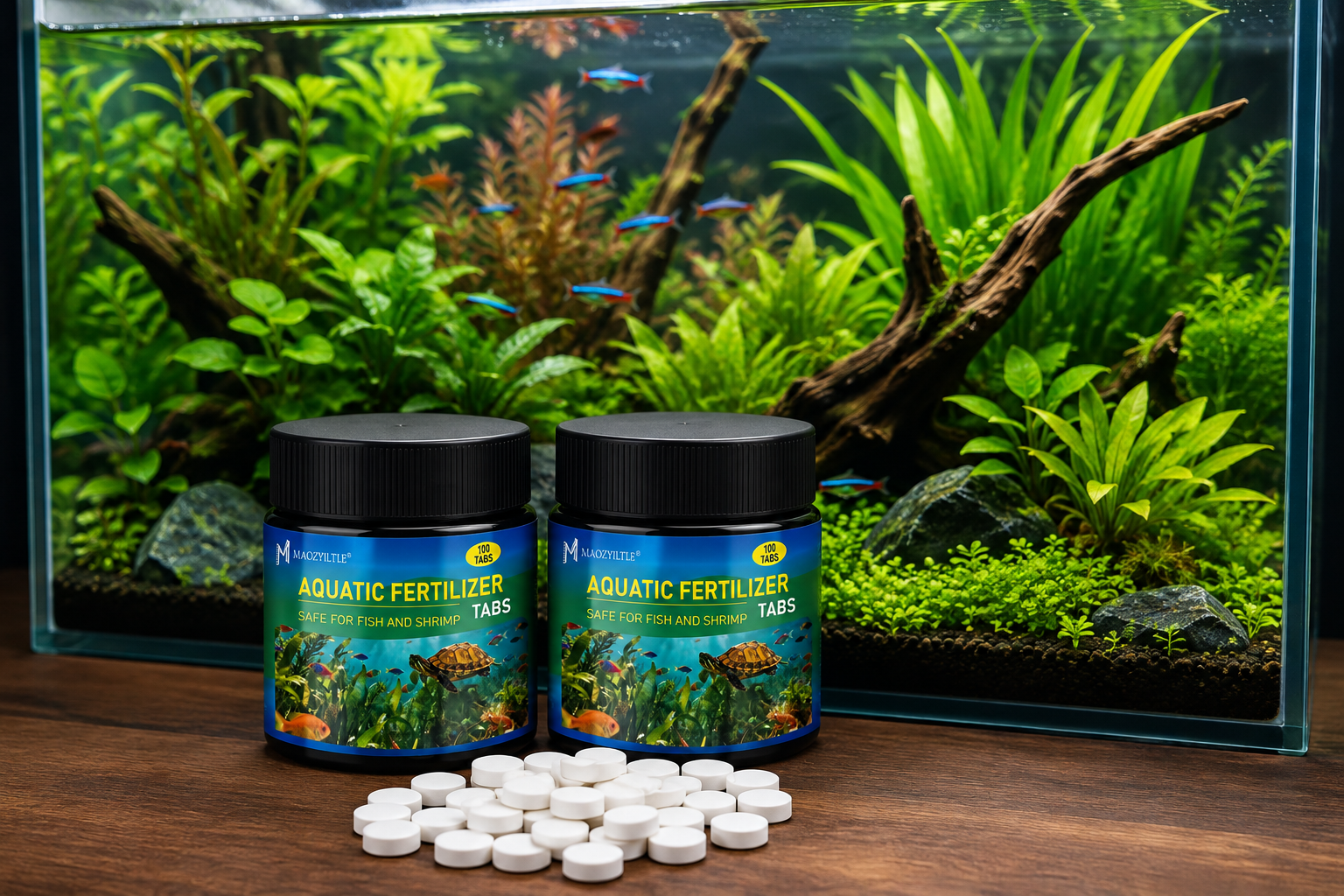
Newpie
Root Tabs for Live Aquarium Plants, Freshwater Plant Fertilizer - 100 x 2
Best for: Cryptocoryne, Amazon swords, Vallisneria and other heavy root-feeding aquarium plants
As an Amazon Associate, we earn from qualifying purchases.