Using Barley Straw Effectively in a Fish Pond
Barley straw can be a useful natural aid for managing algae in garden ponds, but timing and application matter. This guide explains how to use traditional barley straw, pellets and liquid extract effectively, and when each option is most suitable.
Barley straw has been used in garden ponds for many years as a natural way of helping to control algae. It is particularly associated with reducing green water and blanket weed, and is available today in several different forms, including traditional barley straw, barley straw pellets and concentrated liquid barley straw extract.
Although it can be useful, barley straw is sometimes misunderstood. It isn't an instant algae treatment and shouldn't be expected to clear a badly affected pond overnight. It works best as part of a longer-term pond maintenance routine, alongside good filtration, sensible fish stocking, aquatic plants and the regular removal of excess organic waste.
Understanding how to use it properly can make a considerable difference to the results.
How does barley straw work?
Traditional barley straw gradually decomposes once it is placed in the pond. During this process, compounds are released that can help inhibit the development of algae.
The exact process involved isn't completely understood, but oxygen, sunlight and the decomposition of the straw all appear to play a part. Importantly, barley straw is generally regarded as a preventative treatment rather than something that directly kills large quantities of established algae.
Research and practical guidance on barley straw therefore generally recommend adding it before serious algae problems develop. Penn State Extension, for example, notes that barley straw inhibits new algae growth rather than killing algae already present.
That distinction is important.
If you have a pond covered in thick blanket weed, simply adding a bag of barley straw is unlikely to make all of the existing growth disappear. Remove as much of the blanket weed as practical first, investigate why it is growing so strongly and then use barley straw to help reduce further development.
Using traditional barley straw
Traditional loose barley straw is probably the form most people associate with ponds. NT Labs have a convenient twin pack which we often recommend for wildlife ponds.
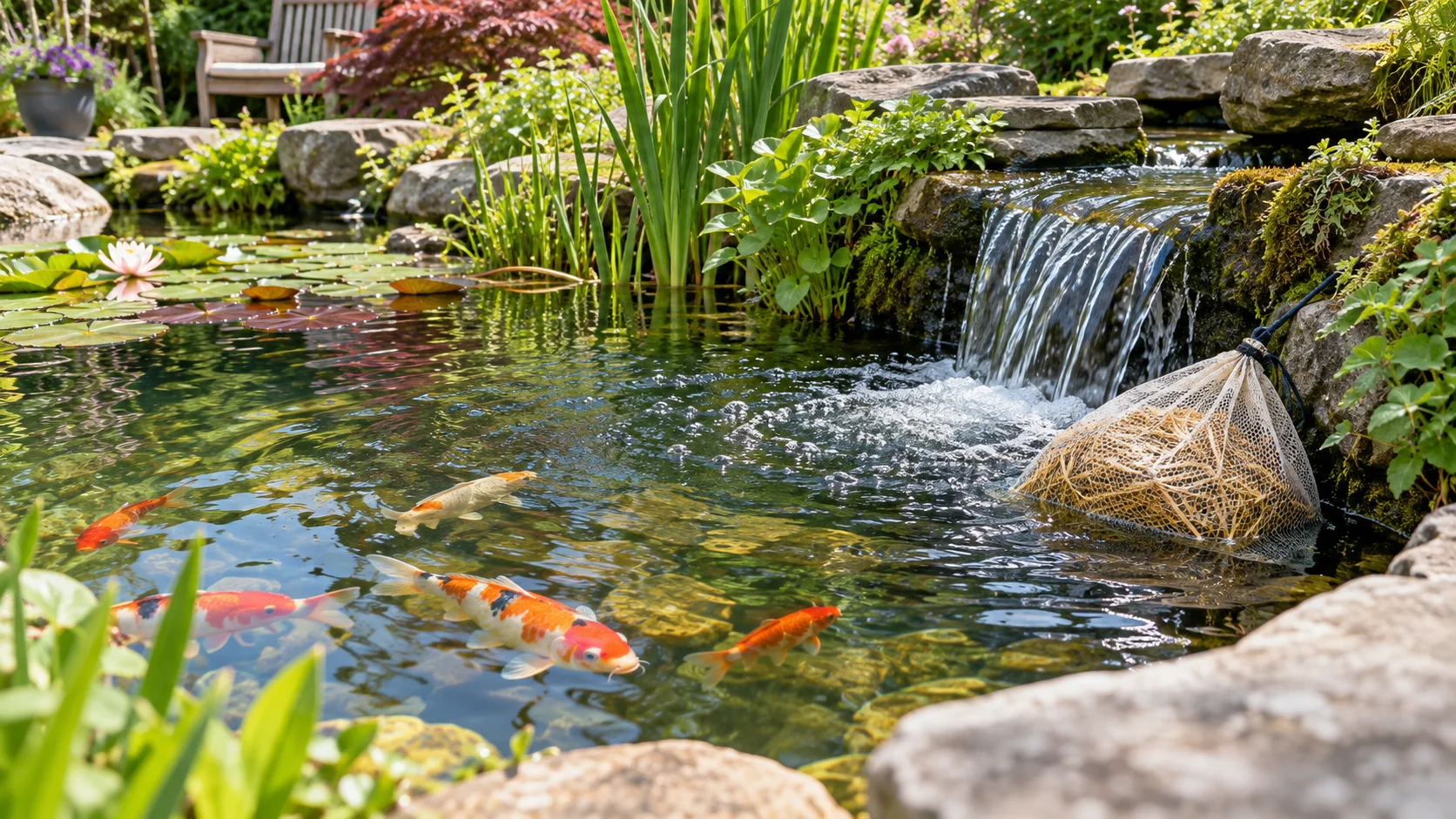
The straw is normally placed inside a mesh bag, net or purpose-made barley straw holder. It should remain reasonably loose rather than being compressed into a dense bundle.
Water needs to circulate around and through the straw, and the decomposition process also requires oxygen. Placing a tightly packed bag of straw in a stagnant corner of the pond is therefore unlikely to produce the best results.
A position close to moving water is usually preferable. This could be near a waterfall return, filter outlet or another area where there is good circulation.
It is also worth positioning the straw where it receives some daylight rather than hiding it in a completely dark area beneath a filter.
For smaller ornamental ponds, purpose-made barley straw pads or small mesh bags are usually much easier to manage than trying to use agricultural bales.
The RHS recommends floating barley straw in a mesh bag and gives a general guideline of around 50g per square metre of pond surface area. Different products may have their own application rates, however, so always check the instructions supplied with the product you are using.
Don't use too much
More barley straw doesn't necessarily mean better results.
As organic material decomposes it consumes oxygen. Adding excessive amounts of straw, particularly during warm weather when dissolved oxygen levels can already be relatively low, can potentially create water-quality problems.
This is particularly important in heavily stocked fish ponds.
Koi and goldfish require plenty of dissolved oxygen, and biological filters also depend on oxygen to function effectively. Barley straw should therefore be used sensibly rather than filling large areas of the pond with decomposing material.
Penn State also warns that excessive amounts of decomposing barley straw can reduce oxygen levels and, in extreme cases, contribute to fish losses.
Good aeration is sensible whenever you have a heavily stocked pond, regardless of whether barley straw is being used.
When should barley straw be added?
Timing is one of the biggest factors affecting how successful barley straw can be.
Because traditional straw has to begin decomposing before it becomes effective, it is much better to add it before algae becomes a major problem.
Early spring is often an ideal time.
As temperatures and daylight levels increase, algae can develop very quickly. Having barley straw already in place gives it time to begin working before conditions become ideal for heavy algae growth.
In colder water the process can take several weeks, while decomposition occurs more quickly as the water warms.
This is why adding barley straw after the pond has already turned bright green in midsummer can be disappointing. It hasn't necessarily failed; it may simply have been added too late to prevent the initial algae bloom.
Barley straw pellets
Barley Straw Pellets provide a more compact alternative to loose straw.
They are manufactured from compressed barley straw and can be particularly useful for smaller garden ponds where owners don't want a visible bag or bundle of straw floating near the surface.
The pellets gradually absorb water and break down.
One advantage is convenience. They are easy to store, easy to measure and don't require a large mesh bag of straw in the pond.
However, they should still be used according to the manufacturer's dosage instructions. Avoid simply throwing large quantities into the pond.
Because pellets can settle onto the bottom, it is also worth considering where they are being placed. You don't want large amounts of decomposing organic material accumulating in an area with poor water movement.
Where possible, use them in areas with reasonable circulation and monitor the pond as they break down.
Barley straw extract liquid
Liquid Barley Straw extract has become increasingly popular because it removes much of the waiting and mess associated with traditional straw.
Rather than placing straw into the pond and allowing it to decompose naturally, a prepared barley straw product is added directly to the water.
This makes it particularly convenient for ornamental fish ponds where appearance matters or where there simply isn't a suitable place to position a bag of straw.
Application is also straightforward because the correct amount can be measured according to the pond volume.
Different liquid products vary considerably in concentration, so there isn't one universal dosage. Follow the manufacturer's instructions carefully and calculate your pond volume as accurately as possible.
Liquid products can also require repeat treatments, so check how frequently the particular product should be added.
Straw, pellets or liquid – which is best?
All three options have their place.
Traditional barley straw is simple, relatively inexpensive and has a long history of use. Its main disadvantage is that it takes time to begin decomposing and can look untidy in a small decorative pond.
Barley straw pellets are more discreet and convenient. They can work particularly well where using loose straw would be impractical.
Liquid barley straw extract is the easiest option to apply and is useful where you don't want decomposing straw physically sitting in the pond. It is also straightforward to dose once you know the volume of your pond.
Whichever form you choose, think of barley straw as one part of the overall management of the pond rather than a complete algae-control system.
Don't ignore the reason algae is growing
Persistent algae normally tells you something about the pond.
Excess fish waste, uneaten food, decaying leaves, accumulated sediment, high nutrient levels and strong sunlight can all contribute towards algae growth.
Regular filter maintenance, removing dead vegetation, avoiding overfeeding and introducing suitable pond plants can all help reduce the conditions algae needs to thrive.
Some algae is perfectly normal. A healthy mature pond doesn't need to look sterile, and a thin coating of algae on rocks and pond surfaces provides habitat and food for many small organisms.
The aim should usually be to prevent excessive growth rather than attempting to remove every trace of algae.
Is barley straw safe for pond fish?
When a dedicated pond product is used correctly and at the recommended dosage, barley straw is commonly used in ponds containing goldfish and koi.
The biggest potential problem comes from using excessive quantities of organic material and allowing it to decompose in poorly oxygenated water.
Always make sure the pond has adequate circulation and aeration, particularly during warm weather.
If using pellets or liquid extract, use products specifically intended for ponds and follow their instructions rather than estimating the dosage.
Final thoughts
Barley straw can be a useful addition to a fish pond, but expectations need to be realistic.
Traditional barley straw works slowly and is most useful when introduced before algae becomes established. Pellets provide a neater and more convenient alternative, while liquid barley straw extract offers perhaps the simplest option for pond owners who don't want physical straw in the pond.
None of them replace good pond management.
Keep the filter maintained, remove accumulating debris, avoid excessive feeding, provide good water movement and deal with blanket weed before it becomes overwhelming.
Used alongside those basic maintenance practices, barley straw can provide another useful tool for keeping a fish pond clear, balanced and enjoyable throughout the warmer months.
Products We've Mentioned & Recommend
Below you'll find a selection of products we've mentioned in this article, along with a few others we think you might find useful. We've included Amazon links to make them easy to find.
A quick word about affiliate links...
Some of these links are affiliate links, which means we may earn a small commission from qualifying purchases, at no extra cost to you.
Unfortunately, the commission doesn't quite stretch to cocktails on a yacht or a garage full of sports cars. In reality, it helps cover the running costs of this website and, with a bit of luck, might eventually buy me a new pair of waders that don't leak!
We only recommend products we genuinely believe are worth considering, and your support helps us keep sharing free advice from our years of working with aquariums and ponds.
Thanks for supporting Aquatic Specialist!
As an Amazon Associate I earn from qualifying purchases.
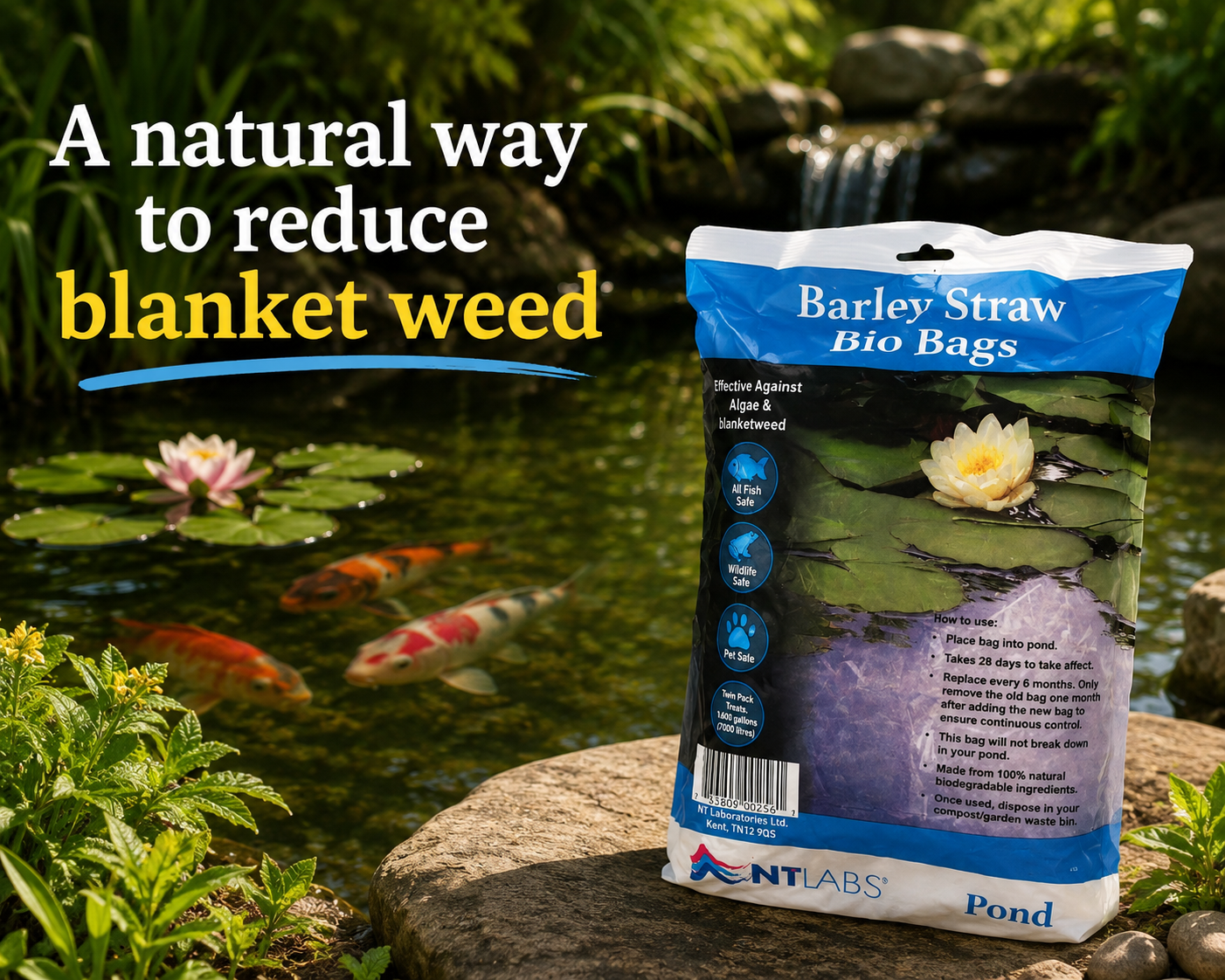
NT Labs
NT Labs Barley Straw
Best for: Natural, preventative blanket weed and green water control
As an Amazon Associate, we earn from qualifying purchases.
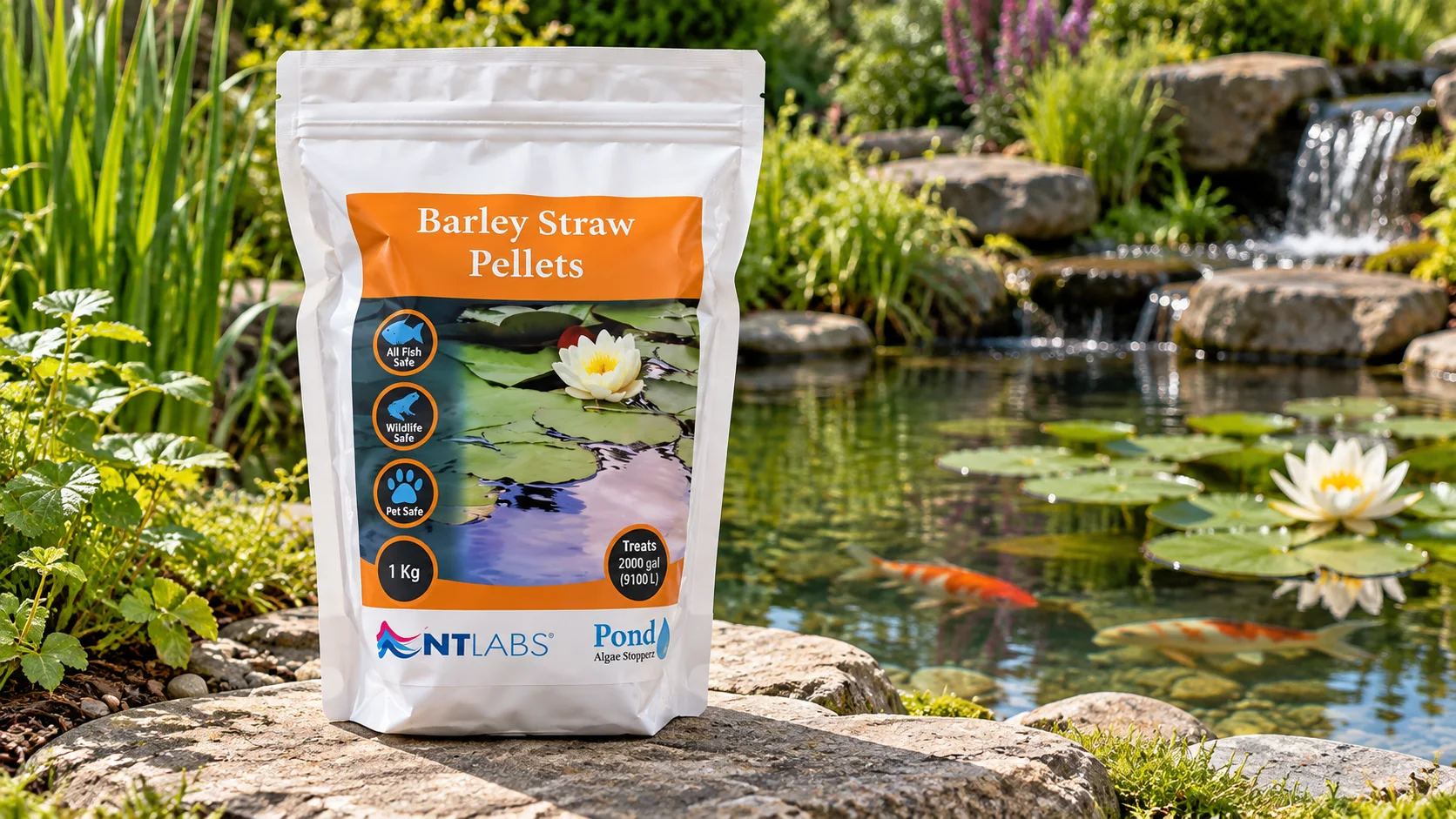
NT Labs
NT Labs Pond Algae Barley Straw Pellets
Best for: Preventative algae control in garden fish ponds
As an Amazon Associate, we earn from qualifying purchases.
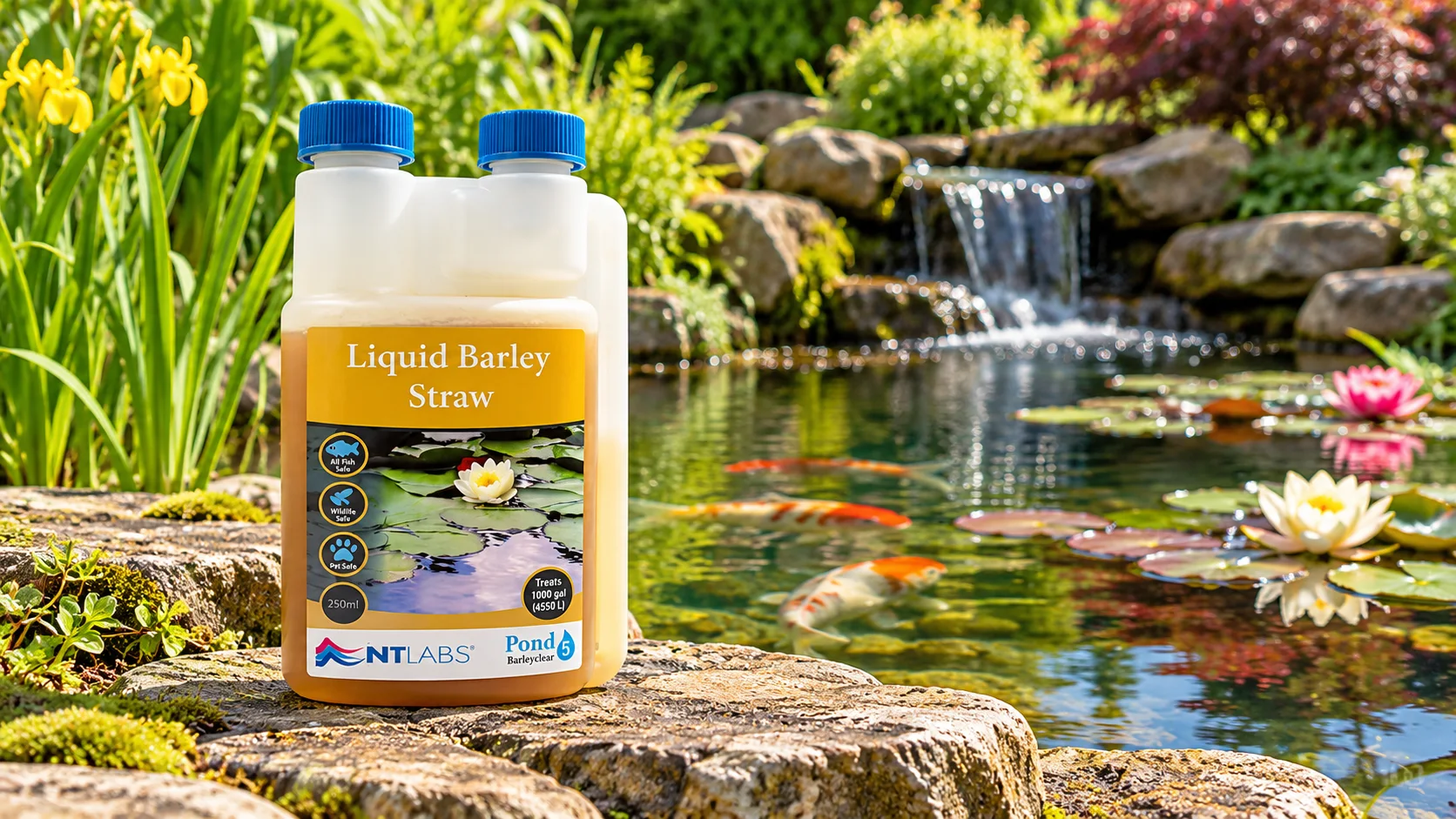
NT Labs
NT Labs Pond Barleyclear Liquid Barley Straw
Best for: Easy, mess-free algae control in garden ponds
As an Amazon Associate, we earn from qualifying purchases.