The Best Reef Clean-Up Crew: Snails, Shrimp and Other Invertebrates
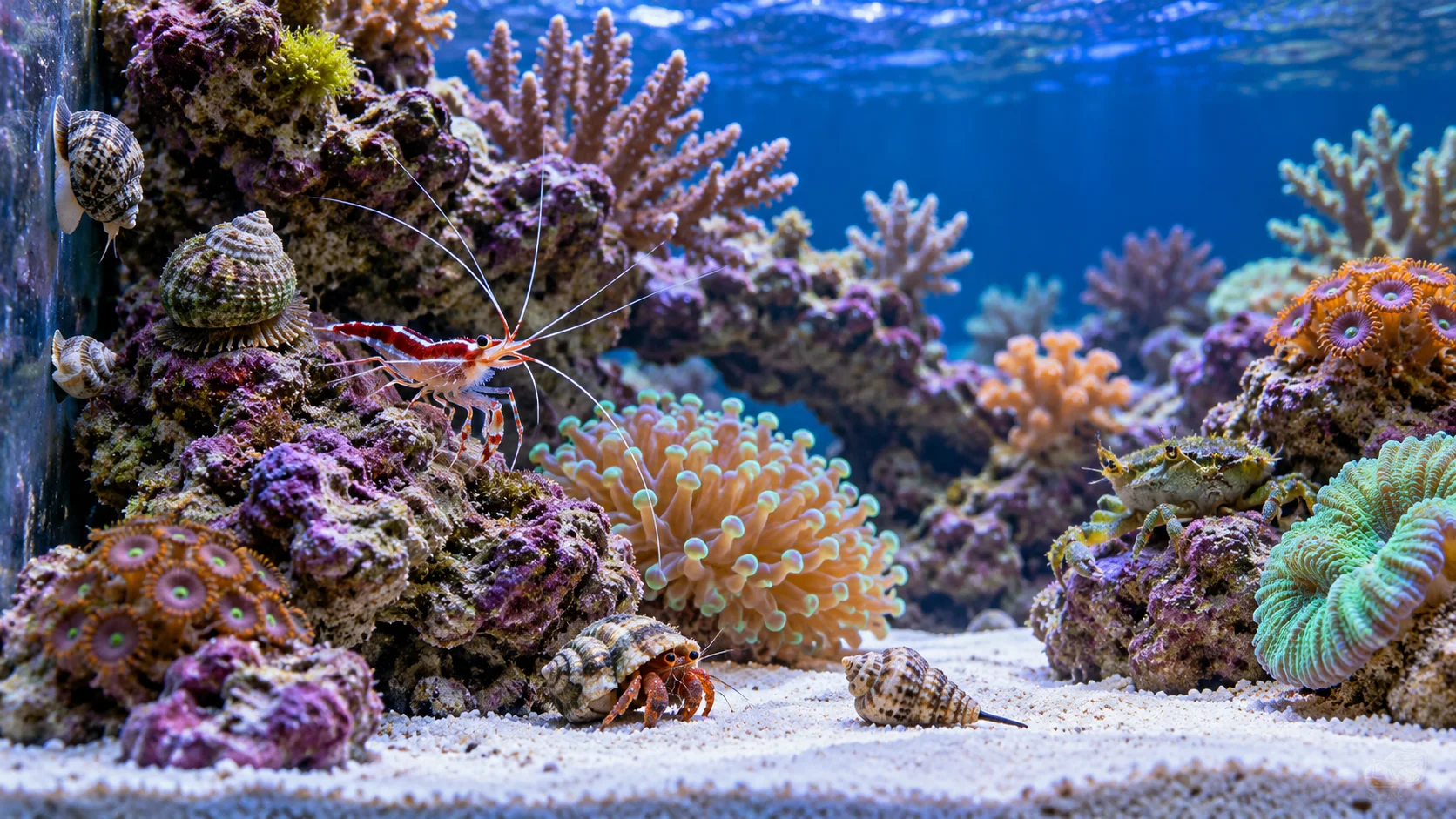
A healthy reef aquarium benefits from a carefully selected clean-up crew. From algae-eating Trochus snails and sand-sifting Nassarius snails to cleaner shrimp, hermit crabs and sea urchins, discover which invertebrates are most useful, what they actually clean and how to create a balanced, sustainable reef ecosystem.
A thriving reef aquarium is much more than a collection of colourful fish and corals. Beneath the surface, countless small organisms contribute to the health and stability of the marine environment. Among the most useful are the snails, shrimp, crabs and other invertebrates collectively known as the reef clean-up crew.
These animals help control algae, consume uneaten food, disturb the sand bed and recycle organic material. Some even provide additional benefits, such as removing parasites from fish or controlling unwanted pests.
However, not every invertebrate is suitable for every reef aquarium. Some are excellent algae grazers but poor scavengers, while others may damage corals or compete with their tankmates for food.
Understanding what each species actually does is the key to creating an effective clean-up crew that supports your aquarium without introducing unnecessary problems.
Why Does a Reef Aquarium Need a Clean-Up Crew?
Even a carefully maintained reef aquarium produces waste. Fish release organic material, corals shed mucus, uneaten food settles between rocks, and algae naturally develop on illuminated surfaces.
Without regular maintenance, this material can accumulate and contribute to declining water quality.
A well-chosen clean-up crew helps manage some of these problems by grazing algae and consuming organic matter before it builds up.
However, these animals do not eliminate waste entirely. Much of what they consume is eventually returned to the aquarium as waste of their own. Protein skimming, biological filtration, sensible feeding and water changes remain essential.
The most effective approach is to select several species that occupy different ecological roles rather than relying on large numbers of one particular animal.
The Best Snails for Reef Aquariums
Snails are arguably the most useful members of a marine clean-up crew. Different species specialise in grazing algae from rocks, cleaning glass or searching through the substrate.
Trochus Snails
Trochus snails are among the best all-round algae grazers for reef aquariums.
They feed on film algae, diatoms and some softer filamentous algae growing across aquarium glass and live rock. Their relatively small size allows them to reach surfaces that larger snails may struggle to access.
One particularly useful characteristic is their ability to right themselves if overturned, something that certain other marine snails cannot reliably do.
Trochus snails may also reproduce successfully in established reef aquariums, occasionally producing a naturally replenishing population.
For most reef keepers, they are an excellent starting point.
Turbo Snails
Turbo snails are powerful algae grazers, particularly useful when an aquarium develops substantial growth of green algae.
Their appetite can make them effective additions to larger aquariums with plenty of natural grazing material.
However, their size creates a potential disadvantage. Turbo snails can dislodge unsecured coral fragments and occasionally move small pieces of rockwork.
They also require sufficient food to survive. Introducing several into an aquarium with very little algae can eventually result in starvation.
It is worth checking the exact species being sold, as some Turbo snails originate from cooler waters and are unsuitable for permanently warm tropical reef aquariums.
Cerith Snails
Cerith snails are smaller, often overlooked members of the clean-up crew.
They feed on diatoms, soft algae films and some organic material, moving across rocks, glass and the sand surface.
Many spend considerable time partially buried in the substrate, emerging after dark to feed.
Their ability to move between several areas of the aquarium makes them particularly useful when combined with Trochus snails.
Nassarius Snails
Unlike most popular marine snails, Nassarius snails are not algae eaters.
Instead, they are scavengers that specialise in finding uneaten food and decaying animal material.
They spend much of their time buried beneath the sand, often emerging rapidly when food enters the aquarium.
This behaviour helps disturb the upper layers of the substrate, although they should not be considered a complete solution to poor sand-bed maintenance.
Nassarius snails are especially useful in aquariums containing sand, but they need access to suitable meaty foods to survive.
Astraea Snails
Astraea snails are effective grazers of green and brown film algae.
They are particularly useful for cleaning rockwork and aquarium glass, although they have one important weakness.
Many struggle to turn themselves upright after falling onto their backs. If left overturned, they may become vulnerable to predators or eventually die.
For this reason, Trochus snails are often the more practical choice, particularly in aquariums containing hermit crabs.
Shrimp: Colourful and Useful Reef Invertebrates
Marine shrimp are popular not only for their appearance but also for their interesting behaviour.
Although shrimp do not generally control algae in the same way as snails, several species are useful scavengers or specialised pest feeders.
Skunk Cleaner Shrimp
The skunk cleaner shrimp (Lysmata amboinensis) is one of the most recognisable reef aquarium invertebrates.
Its distinctive red-and-white body makes it an attractive addition to a marine display.
In the wild, cleaner shrimp establish cleaning stations where fish may approach to have parasites and dead tissue removed.
Similar behaviour can sometimes be observed in aquariums.
Cleaner shrimp also consume small pieces of leftover food, although they should never be relied upon to prevent or treat fish diseases.
Their generally peaceful temperament makes them suitable for many community reef aquariums, provided they are not housed with predatory fish.
Peppermint Shrimp
Peppermint shrimp are particularly interesting because certain species feed on Aiptasia, the troublesome glass anemones that can spread rapidly through reef aquariums.
Species such as Lysmata boggessi and Lysmata wurdemanni are commonly associated with Aiptasia control.
However, results are inconsistent. Some individuals readily consume small Aiptasia, while others appear uninterested.
Several similar-looking shrimp are also sold under the peppermint shrimp name, making accurate identification important.
Although generally considered suitable for reef aquariums, some individuals may steal food from corals or occasionally damage coral tissue.
They are best regarded as a potential biological control rather than a guaranteed solution.
Blood Red Fire Shrimp
The blood red fire shrimp (Lysmata debelius) is one of the most striking ornamental shrimp available.
With its deep red colouring and bright white markings, it makes an attractive addition to a peaceful reef aquarium.
Like skunk cleaner shrimp, fire shrimp may display cleaning behaviour and will scavenge leftover food.
They are generally more secretive, spending considerable time beneath ledges or among live rock.
While they contribute to the aquarium's clean-up crew, their main attraction is their appearance rather than exceptional cleaning ability.
Hermit Crabs: Helpful but Not Always Harmless
Hermit crabs are frequently included in commercial reef clean-up crew packages.
Small species, including scarlet reef hermits and blue-legged hermits, may consume algae, leftover food and other organic material.
Their ability to explore narrow spaces between rocks makes them useful scavengers.
However, hermit crabs are opportunistic feeders, and some will attack living snails, particularly when searching for a suitable shell.
Providing empty shells in several sizes may reduce competition, although it cannot eliminate the risk.
For reef aquariums containing valuable snails, a small population of carefully selected hermit crabs is generally preferable to a large group.
It is also perfectly reasonable to maintain a successful reef aquarium without hermit crabs.
Emerald Crabs for Bubble Algae
The emerald crab (Mithraculus sculptus) is often recommended for controlling bubble algae, particularly species of Valonia.
These green, bubble-shaped algae can become troublesome when they spread across live rock and around corals.
Some emerald crabs readily consume bubble algae, while others show little interest.
They may also graze other algae and consume leftover food.
However, larger or poorly fed individuals can become opportunistic, occasionally picking at corals or other invertebrates.
Emerald crabs are therefore better introduced to address a particular problem rather than automatically included in every clean-up crew.
Other Useful Reef Invertebrates
Several less commonly considered animals can make valuable contributions to an established reef aquarium.
Fighting Conchs
Fighting conchs are excellent sand-surface grazers.
They move across the substrate consuming diatoms, algae films and associated organic material.
Unlike Nassarius snails, which primarily scavenge animal-based food, fighting conchs spend much of their time grazing the sand surface.
They are particularly useful in established aquariums with an extensive, mature sand bed.
However, they require enough suitable grazing area and food. Small or newly established aquariums may struggle to support them.
Tuxedo Sea Urchins
Tuxedo sea urchins are effective algae grazers and can help control troublesome algae growth on live rock.
Their compact size makes them more manageable than some larger sea urchin species.
Nevertheless, they may remove coralline algae and have a tendency to carry loose objects, including small coral fragments, across the aquarium.
Corals should be securely attached before introducing one.
Brittle Stars
Many brittle stars are useful scavengers, feeding on organic particles and leftover food within the rockwork.
Small hitchhiking brittle stars are often beneficial inhabitants of established reef systems.
Larger species require more careful selection, as their feeding behaviour and compatibility vary considerably.
In particular, green brittle stars are opportunistic predators and are not suitable for every community aquarium.
Sea Cucumbers
Certain sand-sifting sea cucumbers process sand as they feed on organic material and microorganisms.
They can be useful in large, mature reef aquariums with suitable substrates.
However, they are specialist animals rather than essential clean-up crew members.
Some species may release harmful substances when severely stressed or injured, and many require substantial natural food supplies.
For beginners, snails and other simpler invertebrates are generally safer choices.
What About Sand-Sifting Starfish?
Sand-sifting starfish are sometimes marketed as an easy solution for keeping aquarium sand clean.
Although they continuously move through the substrate, many feed heavily on the small organisms living within it.
In smaller aquariums, they can gradually deplete these natural food populations and eventually starve.
For most reef aquariums, a combination of suitable snails, careful feeding and occasional substrate maintenance is a more sustainable approach.
How Many Clean-Up Crew Animals Do You Need?
One of the most common mistakes is introducing too many animals into a newly established aquarium.
Commercial clean-up crew packages sometimes contain large numbers of snails and crabs based on aquarium volume alone.
However, aquarium size is only part of the equation.
A mature reef with substantial algae growth may support far more grazing animals than a newly established aquarium of identical dimensions.
For a modest reef aquarium, beginning with a few Trochus and Cerith snails, together with Nassarius snails if a suitable sand bed and food supply are present, is often more sensible than purchasing a large collection immediately.
Additional animals can be introduced gradually as the aquarium develops.
The objective should be to maintain a population that has enough natural food to thrive.
Introducing Your Clean-Up Crew Safely
Marine invertebrates can be particularly sensitive to sudden changes in salinity, temperature and water chemistry.
Before introducing new animals, ensure the aquarium has completed its nitrogen cycle and has stable conditions.
Carefully compare the salinity of the transport water with that of the aquarium, and follow suitable acclimation procedures for the species concerned.
Copper-based fish medications are toxic to many marine invertebrates and should not be used in reef aquariums containing a clean-up crew.
It is also worth inspecting new arrivals for unwanted hitchhikers or signs of poor health.
Always consider compatibility with existing fish, particularly wrasses, puffers and other species that may prey on crustaceans or molluscs.
Creating a Balanced Reef Aquarium
The best reef clean-up crew is not necessarily the largest or most expensive.
A carefully selected mixture of Trochus, Cerith and Nassarius snails can provide an excellent foundation, with cleaner shrimp, hermit crabs or more specialised animals introduced where appropriate.
Each species should have a clear purpose and sufficient food to support it.
Just as importantly, a clean-up crew should complement good aquarium husbandry rather than compensate for excessive feeding, inadequate filtration or poor maintenance.
By understanding the natural feeding habits of these fascinating invertebrates, reef keepers can create a more balanced marine environment while enjoying the remarkable diversity of life that makes reef aquariums so rewarding.
Products We've Mentioned & Recommend
Below you'll find a selection of products we've mentioned in this article, along with a few others we think you might find useful. We've included Amazon links to make them easy to find.
A quick word about affiliate links...
Some of these links are affiliate links, which means we may earn a small commission from qualifying purchases, at no extra cost to you.
Unfortunately, the commission doesn't quite stretch to cocktails on a yacht or a garage full of sports cars. In reality, it helps cover the running costs of this website and, with a bit of luck, might eventually buy me a new pair of waders that don't leak!
We only recommend products we genuinely believe are worth considering, and your support helps us keep sharing free advice from our years of working with aquariums and ponds.
Thanks for supporting Aquatic Specialist!
As an Amazon Associate I earn from qualifying purchases.
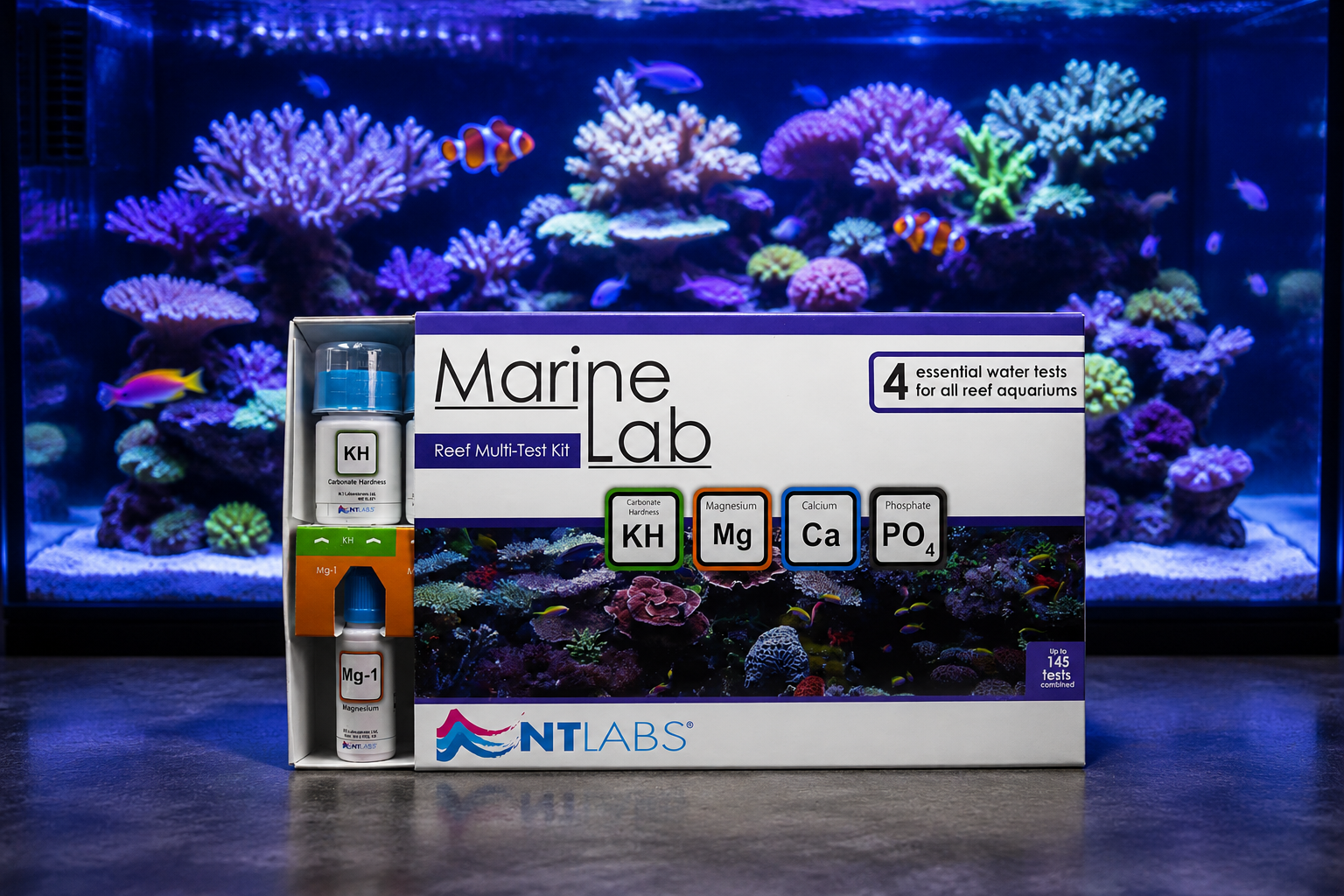
NT Labs
NT Labs Marine Lab Reef Multi-Test Kit
Best for: Reef aquariums requiring regular monitoring of KH, calcium, magnesium and phosphate.
As an Amazon Associate, we earn from qualifying purchases.
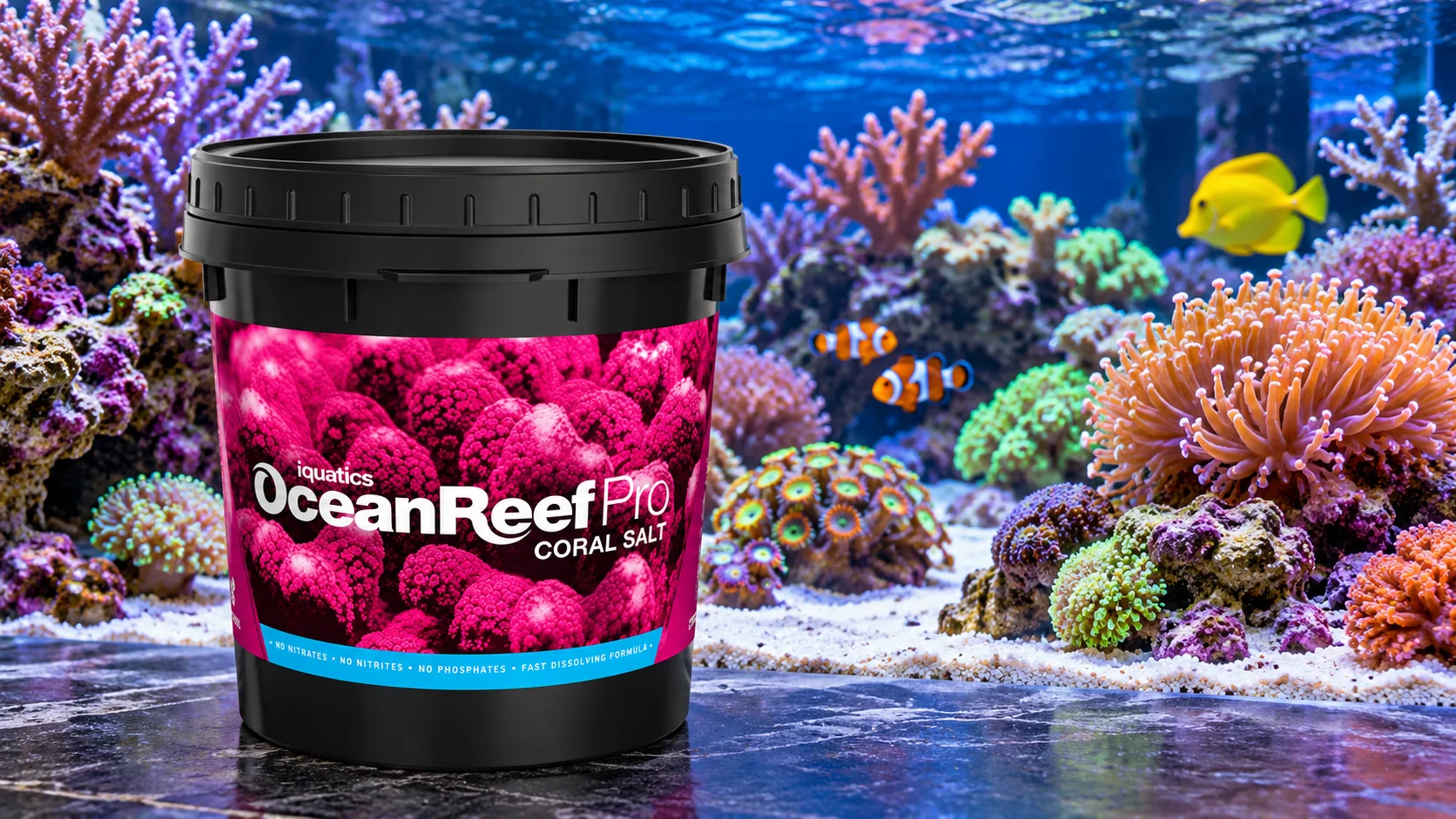
iQuatics
iQuatics Ocean Reef Pro Coral Salt
Best for: Budget-conscious reef keepers with mixed coral aquariums.
As an Amazon Associate, we earn from qualifying purchases.