Red Rainbowfish Care Guide – Glossolepis Incisus
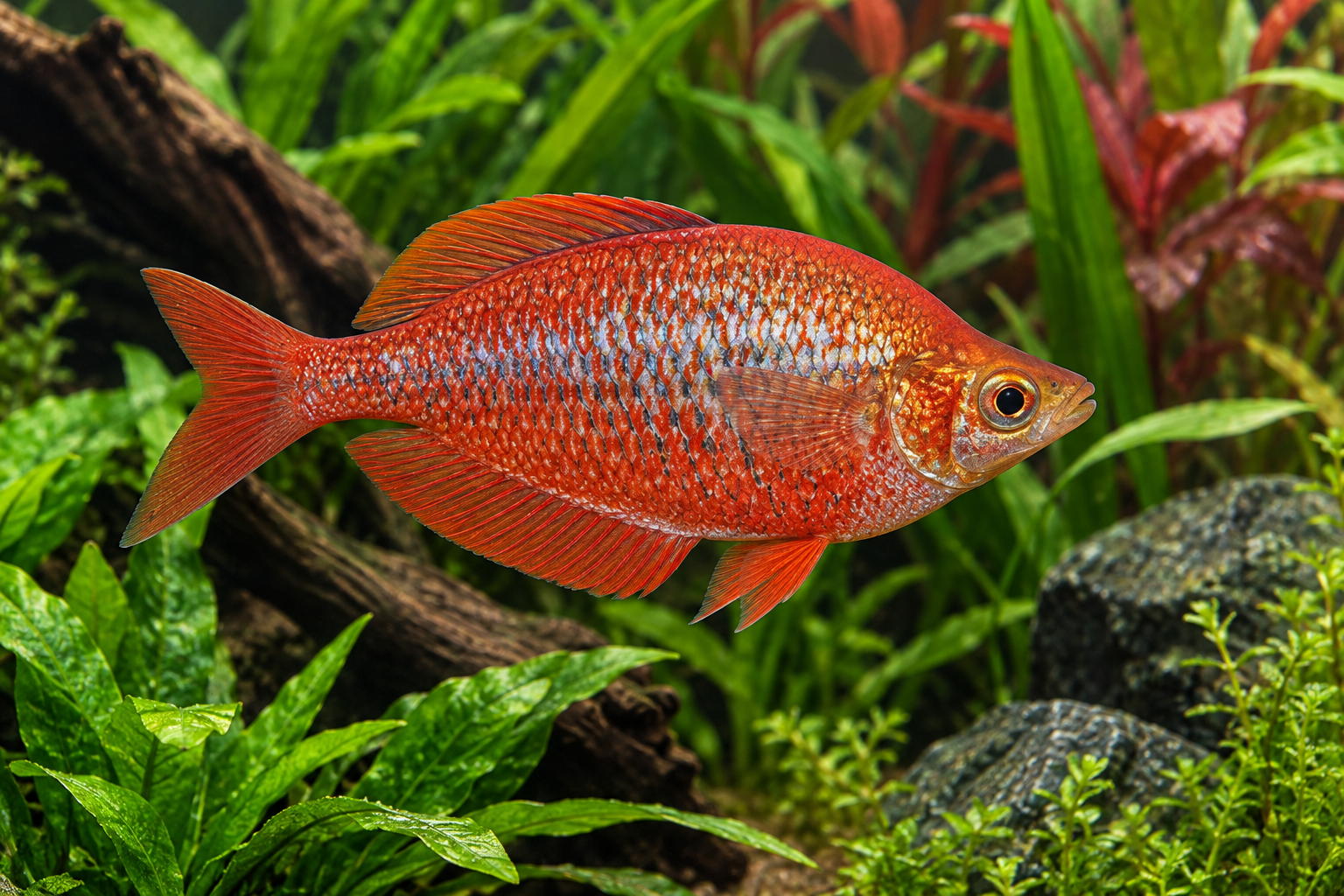
The Red rainbowfish (Glossolepis incisus) is a large, active species known for the intense red colour of mature males. Learn how to keep a healthy group, provide the right aquarium conditions and bring out their best colour.
The Red rainbowfish is one of the most striking larger rainbowfish available for the freshwater aquarium. Mature males can develop an intense red colour across almost the entire body, creating a spectacular display when several adults are kept together in a spacious planted aquarium.
Its scientific name is Glossolepis incisus, although it is also commonly sold as the Red Irian rainbowfish or Salmon-red rainbowfish. Like many rainbowfish, young specimens can look surprisingly unremarkable in aquarium shops. Juveniles and females tend to be much more subdued than fully grown males, and it can take time for their true colours to develop.
This is an active, social species rather than a fish to keep individually. Red rainbowfish need plenty of swimming space, good water quality and the company of their own kind. Given the right conditions, however, they are relatively straightforward to maintain and can become impressive centrepiece fish in a larger community aquarium.
A selection of large rainbow fish look amazing in large display aquariums. The also live for years and years. When we have a large display aquarium to fill for clients we often recommend a mix of large rainbows. A mix of Reds, Turquoise, Bosemani and a couple of others can look quite stunning.
WHERE DO RED RAINBOWFISH COME FROM?
Glossolepis incisus is native to Lake Sentani and surrounding waters in northern New Guinea, in the Indonesian province of Papua. This relatively restricted natural distribution is worth considering when buying the species, and captive-bred specimens should be chosen wherever possible.
In their natural environment, Red rainbowfish inhabit warm tropical freshwater and occur around areas of aquatic vegetation as well as more open water.
An aquarium doesn't need to be an exact recreation of Lake Sentani, but understanding their natural behaviour helps when designing a suitable setup. These are strong, active swimmers that benefit from a combination of vegetation and large areas of unobstructed swimming space.
HOW BIG DO RED RAINBOWFISH GROW?
Red rainbowfish are substantially larger than smaller species such as the Forktail rainbowfish. Mature males can reach around 12–15 cm, while females are generally somewhat smaller and less heavily built.
Their body shape also changes considerably as they mature. Adult males can become deep-bodied and powerful-looking, particularly when they are in good condition.
This means that an aquarium that appears perfectly adequate for a group of juveniles may become cramped as the fish mature.
For a proper group, I would recommend an aquarium at least around 120 cm long, with a larger aquarium being preferable. Swimming length is particularly important because these fish spend a great deal of time moving through open water.
They are not suitable for small aquariums simply because the juveniles being offered for sale happen to be small at the time.
KEEPING RED RAINBOWFISH IN GROUPS
Red rainbowfish are social fish and should be kept as a group.
Six fish would be a sensible minimum, but a larger group can produce a much more impressive display if aquarium space allows. Keeping multiple males and females also encourages the social and displaying behaviour that makes rainbowfish so interesting.
Males regularly display towards females and rival males. These encounters usually involve intensified colour, extended fins and short periods of chasing rather than serious fighting.
A group also spreads this attention between several individuals. Keeping only one or two fish can prevent them from displaying the natural social behaviour you would see in a larger shoal.
If possible, avoid having a single female surrounded by several males. Keeping a reasonable number of females helps distribute the males' attention.
MALE AND FEMALE RED RAINBOWFISH
The difference between mature males and females can be considerable.
Adult males are responsible for the intense red colour that gives the species its common name. Depending on age, genetics, diet, lighting and condition, a good male can develop rich orange-red through to deep crimson colouration.
Females are generally more subdued. They tend to remain more silvery, bronze or yellowish and have a slimmer body shape.
Young males may initially resemble females, which can make sexing juveniles difficult. Their colour develops as they mature, so don't assume that relatively plain young fish will remain that way.
The quality of the stock also matters. Genetics can influence the eventual colour and body shape of the fish, so buying healthy specimens from a reputable supplier is worthwhile.
THE BEST AQUARIUM SETUP
A planted aquarium can make an excellent home for Red rainbowfish, but the layout needs to reflect their active nature.
I would concentrate taller plants around the rear and sides of the aquarium while leaving a substantial open swimming area through the centre and front.Vallisneria Americana and other tall plants can create an effective background, while plants such as Java Fern and Anubias Nana can be attached to wood and rocks. Lower plants can then be used without filling the entire swimming area.
Driftwood and rockwork can provide additional structure, but there is little reason to create a maze of caves. Red rainbowfish are primarily open-water swimmers and generally have much more use for swimming room than enclosed hiding places.
A secure lid is important. Rainbowfish are powerful swimmers and are capable of jumping, particularly if frightened.
Good filtration is also essential. A group of adult Red rainbowfish represents a reasonable biological load, particularly because they are enthusiastic feeders.
WATER CONDITIONS
Red rainbowfish prefer warm, clean and well-oxygenated water.
A temperature of approximately 24–28°C is suitable for most aquarium-kept specimens. They generally do well around neutral to moderately alkaline conditions and are usually better suited to moderately hard water than extremely soft, acidic conditions. Remember to check your water quaility regularly. We use Esha Quicktest for a quick and easy way of testing aquarium water.
There is little benefit in constantly adjusting the aquarium to achieve one supposedly perfect pH number. Stable conditions, good filtration and regular water changes are much more important.
These fish respond particularly well to good water quality. Regular partial water changes can help maintain their colour, appetite and general condition while preventing nitrate and dissolved waste from gradually accumulating. When using tap water ensure that a good quality water conditioner is used.
Some water movement is beneficial, but the aquarium doesn't need to resemble a fast-flowing river. Good surface agitation will help maintain oxygen levels.
As with most aquarium fish, Red rainbowfish should be introduced to a properly cycled aquarium rather than a newly filled tank with an immature biological filter.
FEEDING RED RAINBOWFISH
Red rainbowfish are enthusiastic omnivorous feeders and are generally very easy to feed in captivity.
A good-quality flake food or appropriately sized pellet or granules can provide the foundation of their diet, but variety is important if you want the fish to remain in excellent condition and display their strongest colour.
Frozen foods such as brine shrimp, daphnia, mysis and bloodworms can all be offered. Suitable live foods can also be used occasionally and are particularly useful when conditioning adults for breeding.
Some vegetable content is worthwhile as part of a balanced diet, either within a quality prepared food or through suitable supplementary foods.
Rather than providing one very large meal, I prefer sensible portions once or twice each day. Feed enough for the group to eat readily without allowing significant quantities to disappear into the substrate or filter.
Rainbowfish have a talent for looking hungry even when they have already eaten plenty. Overfeeding won't improve their colour and will eventually have the opposite effect if excess food begins reducing water quality.
Diet does influence appearance, but food isn't the only factor responsible for a deep red male. Genetics, maturity, social behaviour, water quality and general health all contribute to the final colour of the fish.
RED RAINBOWFISH TANK MATES
Despite their size and energetic behaviour, Red rainbowfish are generally peaceful community fish.
They work particularly well alongside other medium-sized peaceful species that are comfortable with similar water conditions. Other appropriately sized rainbowfish are an obvious choice, while many peaceful barbs, larger tetras, Corydoras and suitable catfish can also work.
Very small or timid fish need more consideration.
An adult Red rainbowfish is a fast, powerful feeder, and a group can dominate feeding time without deliberately behaving aggressively. Slow or nervous species may therefore struggle to compete.
Extremely small fish may also be unsuitable simply because of the difference in size.
Fin-nipping species are another poor choice. Rainbowfish have attractive fins that can become targets for persistent nippers.
The best community is one where the different species are reasonably matched for size, activity and feeding behaviour as well as water requirements.
WHY IS MY RED RAINBOWFISH NOT RED?
This is one of the most common questions surrounding the species.
If you buy young Red rainbowfish, they may initially show very little of the spectacular colour associated with adult males. This is completely normal.
Sex is the first consideration. Females don't normally develop the intense overall red colour of mature males.
Age is another major factor. Young males need time to mature, and their appearance can continue improving as they grow.
Stress can also dramatically reduce colour. Fish that have recently been transported, introduced to a new aquarium or kept under unsuitable conditions may appear washed out.
Poor water quality, inadequate diet and inappropriate social conditions can all affect appearance.
Lighting also changes how we perceive the colour. A mature male viewed under good aquarium lighting against green plants and a darker background can look far more impressive than the same fish in a brightly lit bare dealer's tank.
BREEDING RED RAINBOWFISH
Red rainbowfish can be bred in captivity and follow the general spawning pattern associated with many rainbowfish.
They are egg scatterers rather than fish that guard a nest or care for their offspring.
Well-conditioned adults may spawn amongst fine-leaved plants or artificial spawning mops. The eggs are adhesive and become attached to the spawning material.
Using spawning mops makes it easier to collect eggs and move them into a separate rearing aquarium.
Adults provide no parental care and may eat eggs or fry, so separating the eggs gives considerably better results if you are deliberately trying to breed the species.
Once the fry hatch, they require very small foods before eventually becoming large enough to take newly hatched brine shrimp and other larger fry foods.
Raising rainbowfish fry requires patience, clean water and regular feeding, but breeding your own fish can be particularly rewarding with a species as impressive as Glossolepis incisus.
HOW LONG DO RED RAINBOWFISH LIVE?
With good care, Red rainbowfish can live for several years, with approximately five to eight years being a reasonable expectation for well-maintained aquarium specimens. We had one client that had two male Red Rainbows which were close to 10 years old when finally passed. Both were stunning looking fish right upto the last 6 months of their lives.
Water quality, diet, genetics and the conditions in which they were raised will all influence lifespan.
Buying healthy young fish and maintaining them properly from the beginning gives them the best opportunity to develop into large, colourful adults.
ARE RED RAINBOWFISH GOOD FOR BEGINNERS?
Red rainbowfish aren't particularly difficult to keep, but their eventual size means I wouldn't recommend them for someone looking for a small, low-maintenance aquarium.
Their water requirements aren't especially complicated and they readily accept aquarium foods. The main challenge is providing sufficient space and maintaining good water quality once a group reaches adulthood.
For someone comfortable maintaining a larger established aquarium, they can be relatively straightforward fish.
The biggest mistake is buying several small juveniles without appreciating just how large and active they will become.
FINAL THOUGHTS
The Red rainbowfish is one of the most impressive choices for a larger freshwater community aquarium.
A mature male Glossolepis incisus displaying its full red colour amongst a group of rainbowfish can easily become the centrepiece of the aquarium. Their appeal isn't limited to colour either. These are active, social fish that bring constant movement to the tank.
Success comes from giving them the basics they actually need rather than trying to make their care unnecessarily complicated. Provide a long aquarium with plenty of swimming space, keep them as a group, maintain clean and well-oxygenated water and offer a varied diet.
Plants around the edges of the aquarium can provide an attractive natural backdrop while leaving the central area open for swimming and displaying.
Most importantly, be patient with young fish. The relatively plain juvenile you bring home from an aquarium shop may bear little resemblance to the deep red adult male it can eventually become.
Given enough space, good food and consistently good water quality, a group of Red rainbowfish can develop into one of the most colourful and active displays possible in a freshwater aquarium.
Products We've Mentioned & Recommend
Below you'll find a selection of products we've mentioned in this article, along with a few others we think you might find useful. We've included Amazon links to make them easy to find.
A quick word about affiliate links...
Some of these links are affiliate links, which means we may earn a small commission from qualifying purchases, at no extra cost to you.
Unfortunately, the commission doesn't quite stretch to cocktails on a yacht or a garage full of sports cars. In reality, it helps cover the running costs of this website and, with a bit of luck, might eventually buy me a new pair of waders that don't leak!
We only recommend products we genuinely believe are worth considering, and your support helps us keep sharing free advice from our years of working with aquariums and ponds.
Thanks for supporting Aquatic Specialist!
As an Amazon Associate I earn from qualifying purchases.
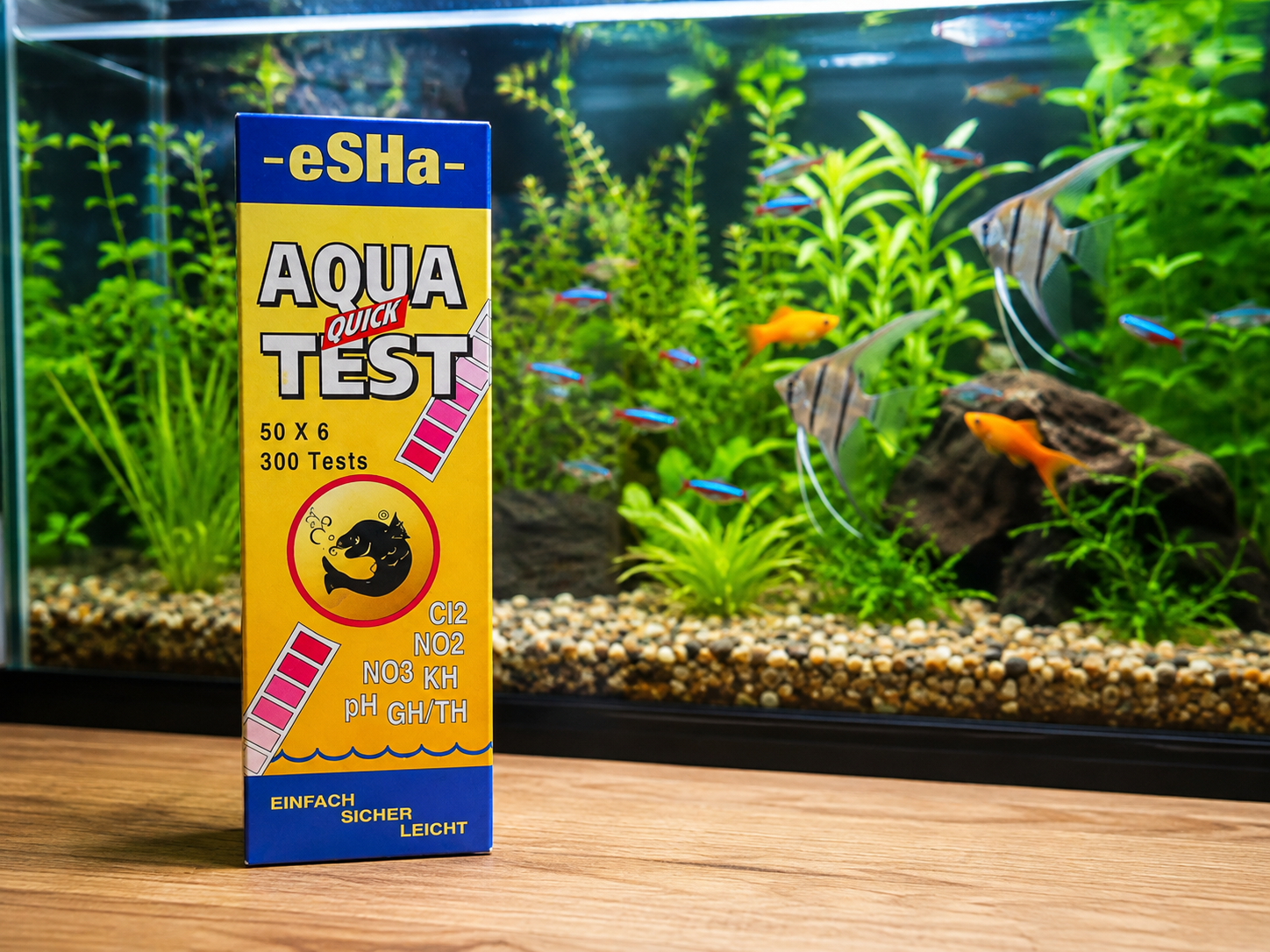
Esha
ESHA Aqua Quicktest
Best for: Fast routine water-quality checks in freshwater aquariums.
As an Amazon Associate, we earn from qualifying purchases.
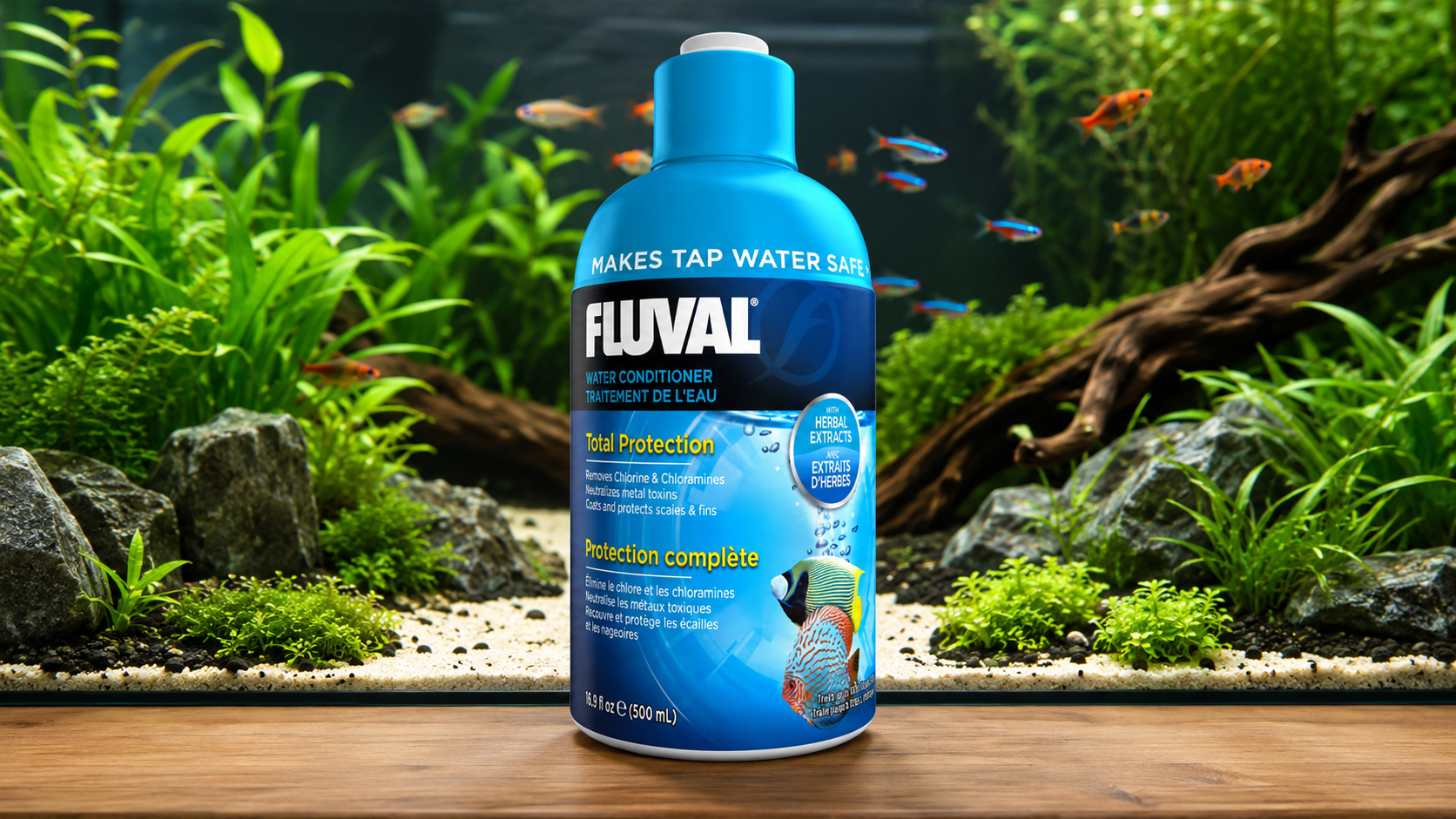
Fluval
Fluval Aqua Plus 500ml aquarium water conditioner
Best for: Routine water changes in freshwater and tropical aquariums
As an Amazon Associate, we earn from qualifying purchases.
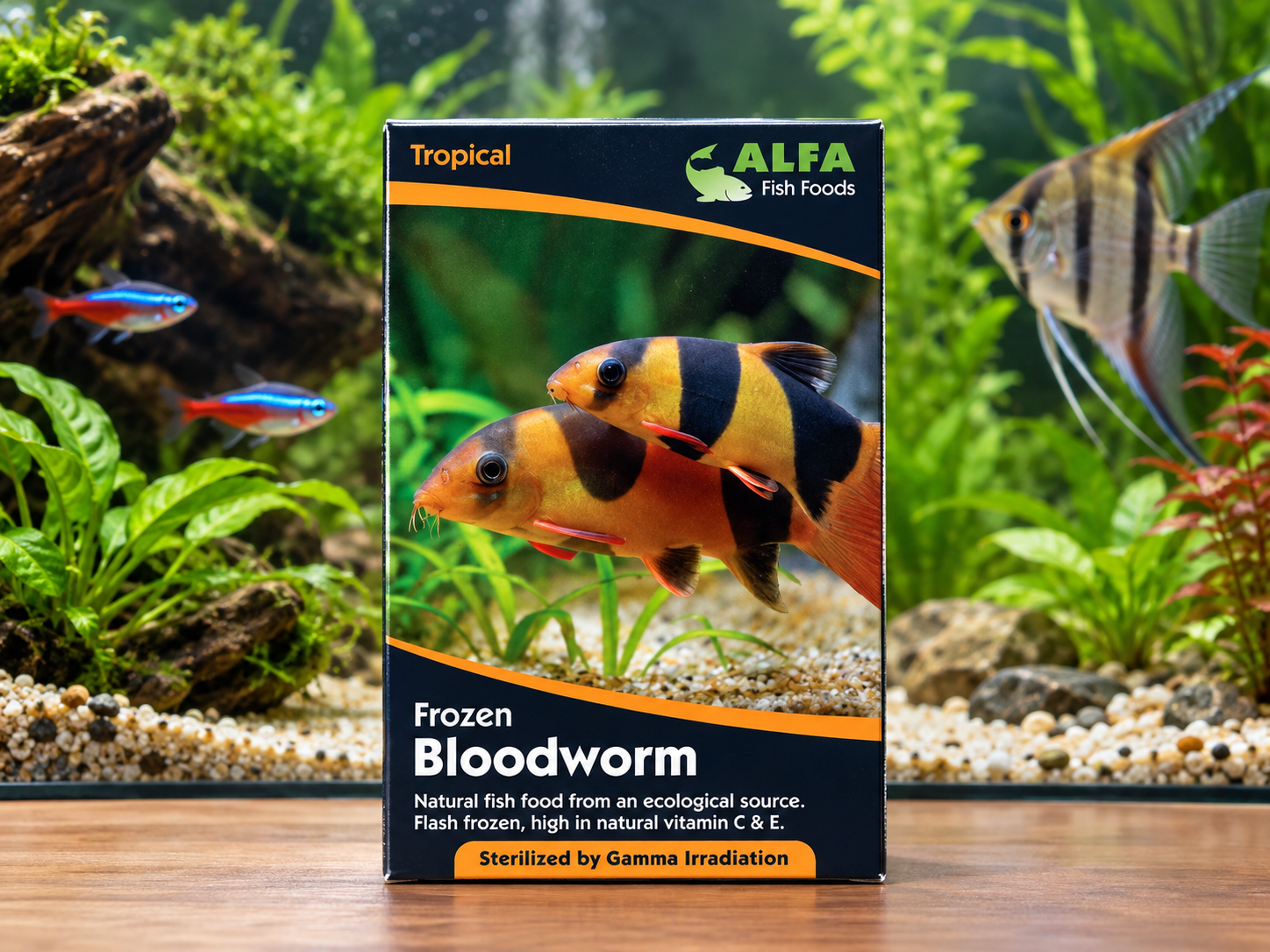
ALFA
Frozen Bloodworm Fish Food 10 Pack
Best for: Adding variety to tropical and coldwater fish diets
As an Amazon Associate, we earn from qualifying purchases.
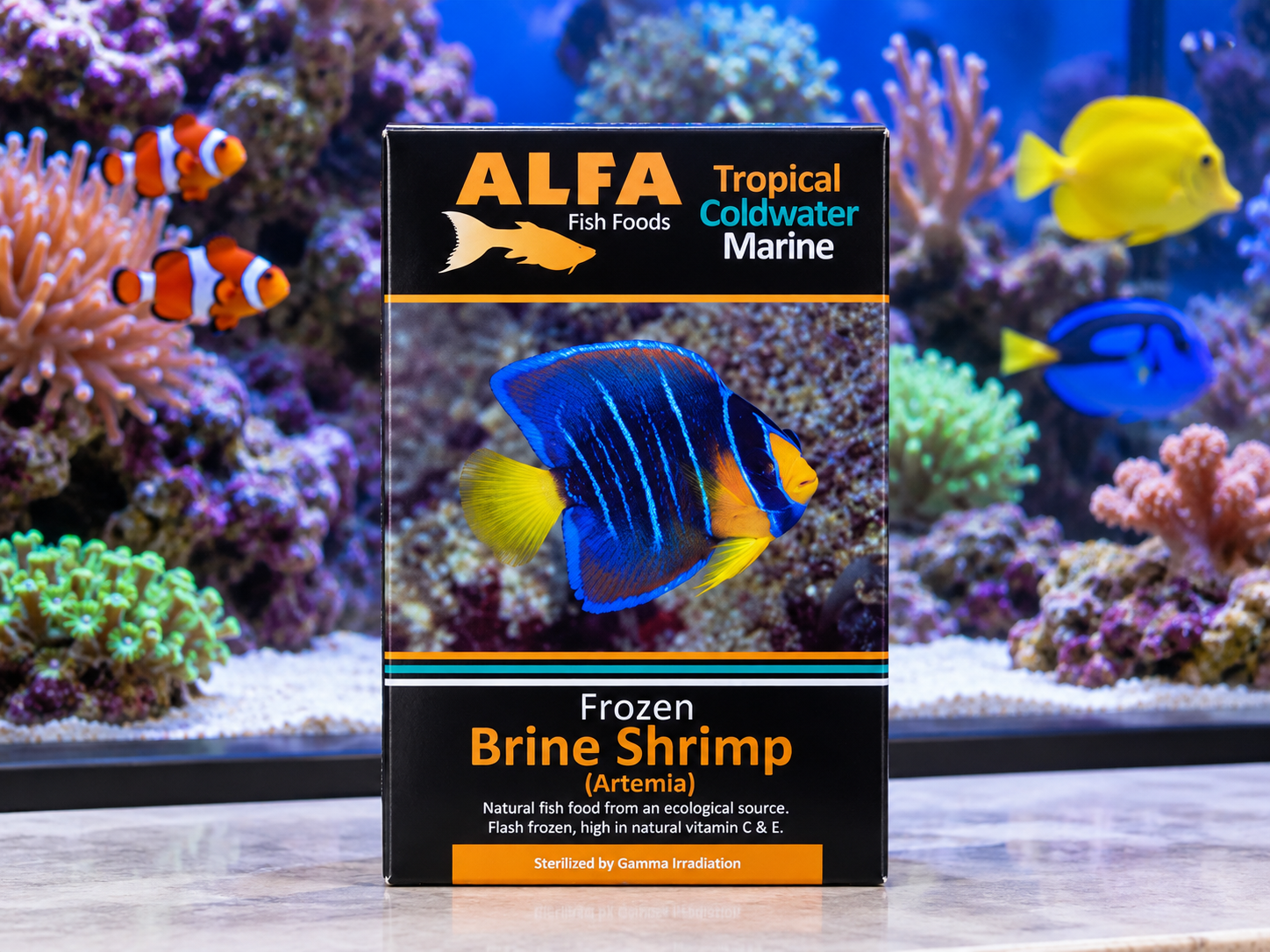
ALFA
Frozen Brine Shrimp/Artemia x5
Best for: Tropical, coldwater and marine fish needing a varied diet
As an Amazon Associate, we earn from qualifying purchases.
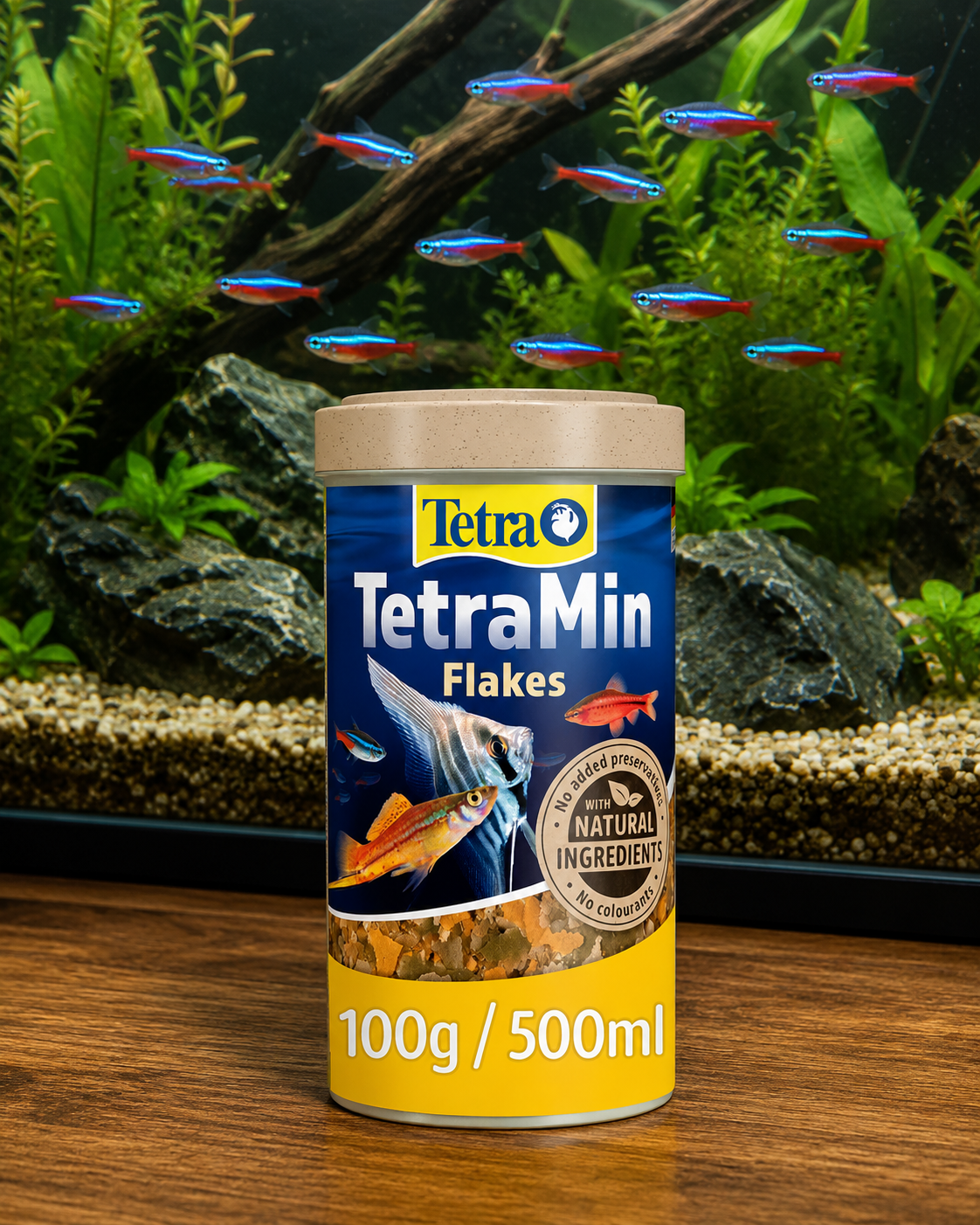
Tetra
Tetra Min Tropical Flake Food 500ml
Best for: Everyday feeding of tropical community fish
As an Amazon Associate, we earn from qualifying purchases.
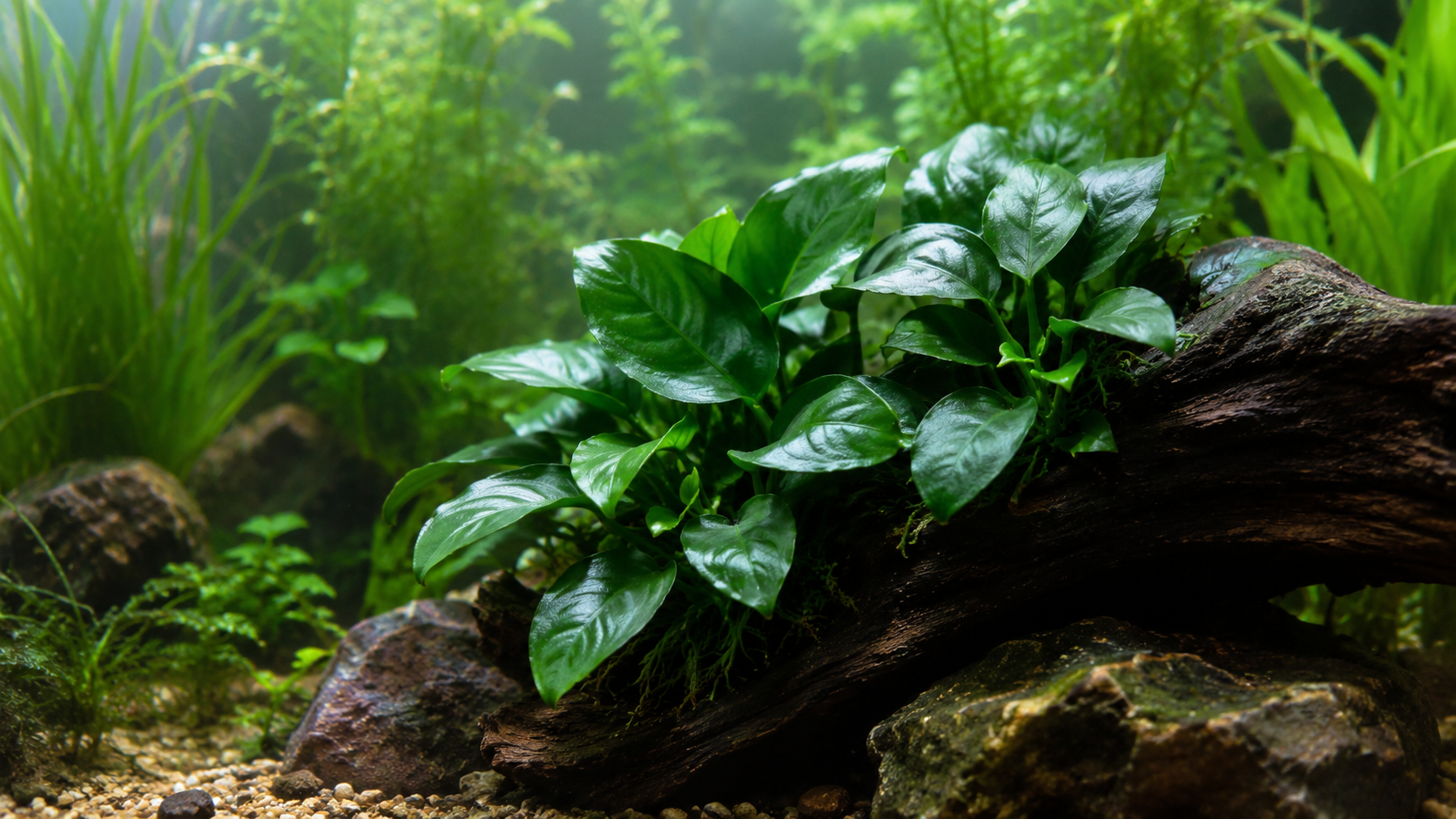
Anubias Nana
Best for: Beginners, low-light aquariums and low-tech planted tanks
As an Amazon Associate, we earn from qualifying purchases.
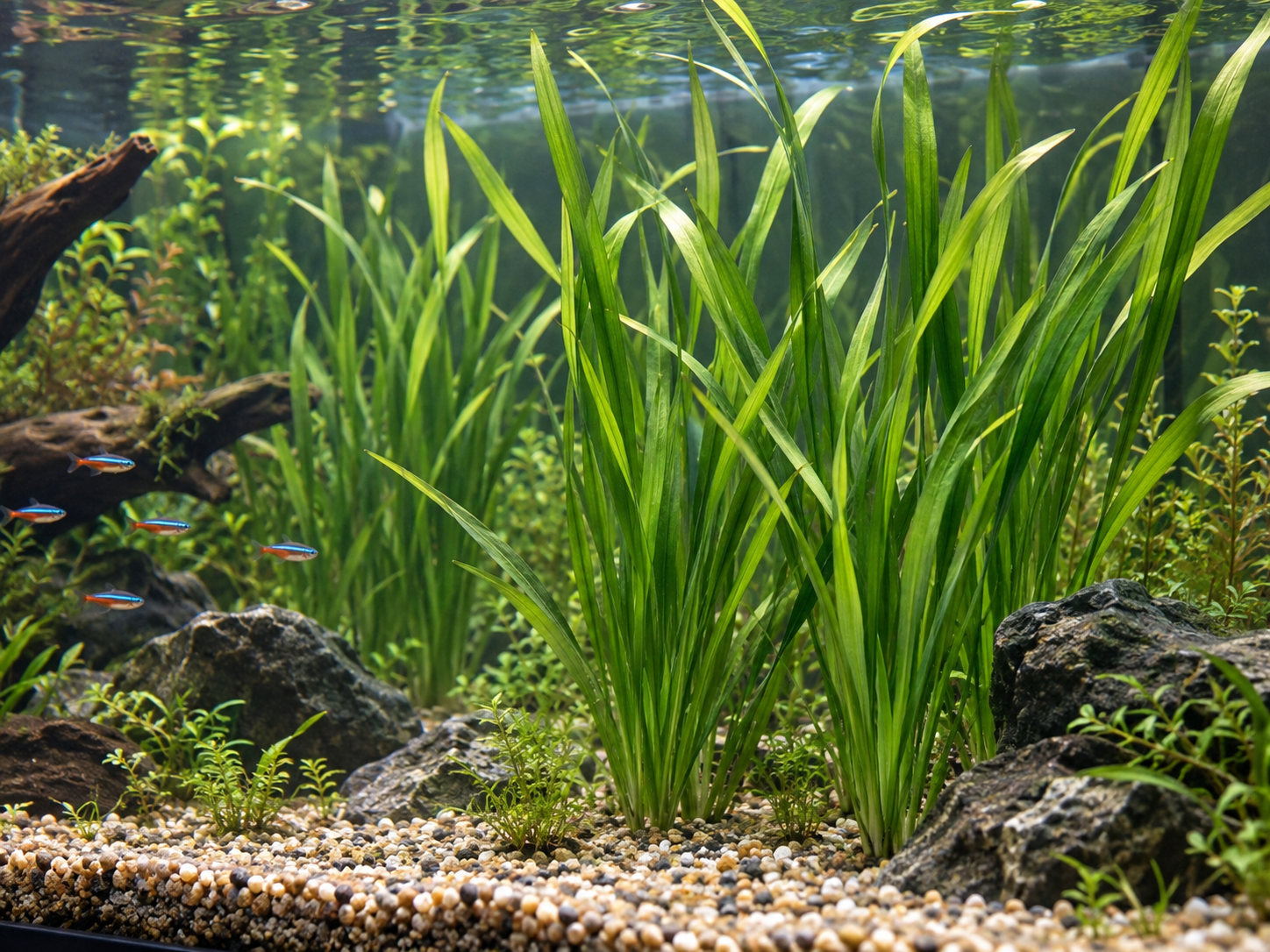
Vallisneria Americana
Best for: Easy background planting in freshwater aquariums
As an Amazon Associate, we earn from qualifying purchases.
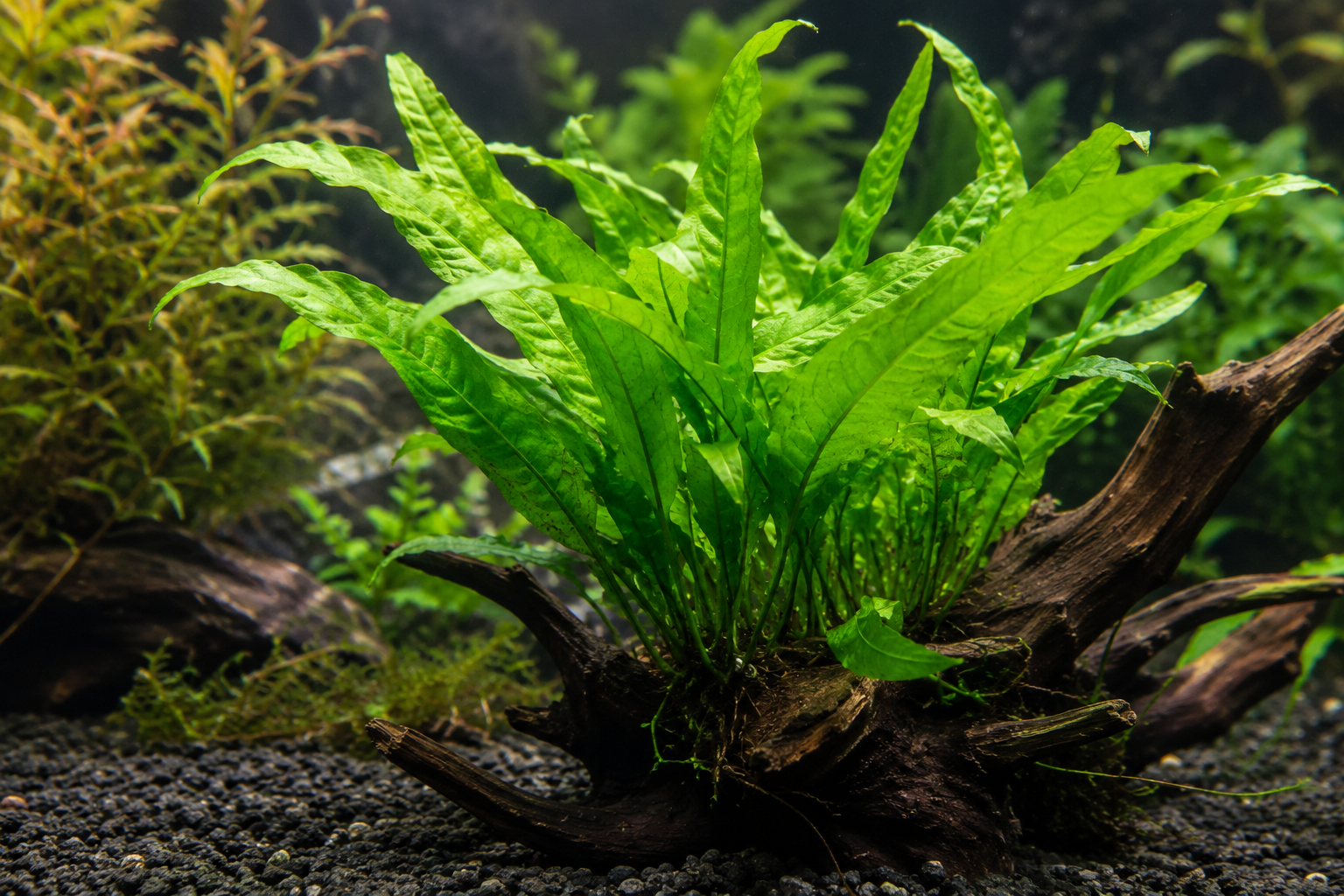
Java Fern
Best for: Beginners, low-tech aquariums and attaching to rocks or driftwood
As an Amazon Associate, we earn from qualifying purchases.
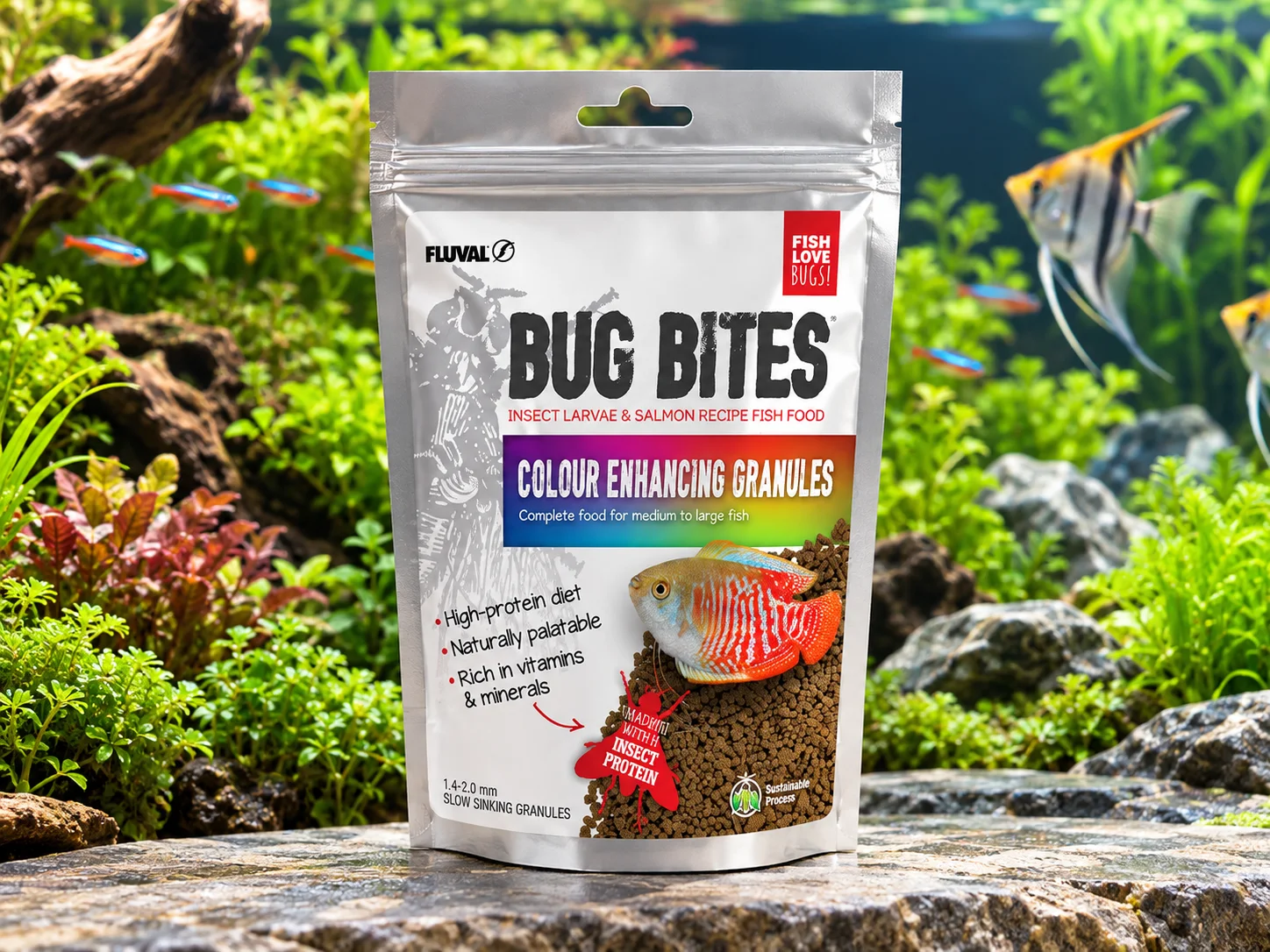
Fluval
Fluval Bug Bites Colour Enhancing Fish Food
Best for: Medium to large tropical fish and colourful community species
As an Amazon Associate, we earn from qualifying purchases.