Red Neon Blue-Eye Rainbowfish Care Guide – Pseudomugil Luminatus
Working in aquatics since 1997 and founder of Aquatic Specialist in 2003, Richard specialises in reef aquariums and pond maintenance and has lectured at Sparsholt College. Read Richard's profile.
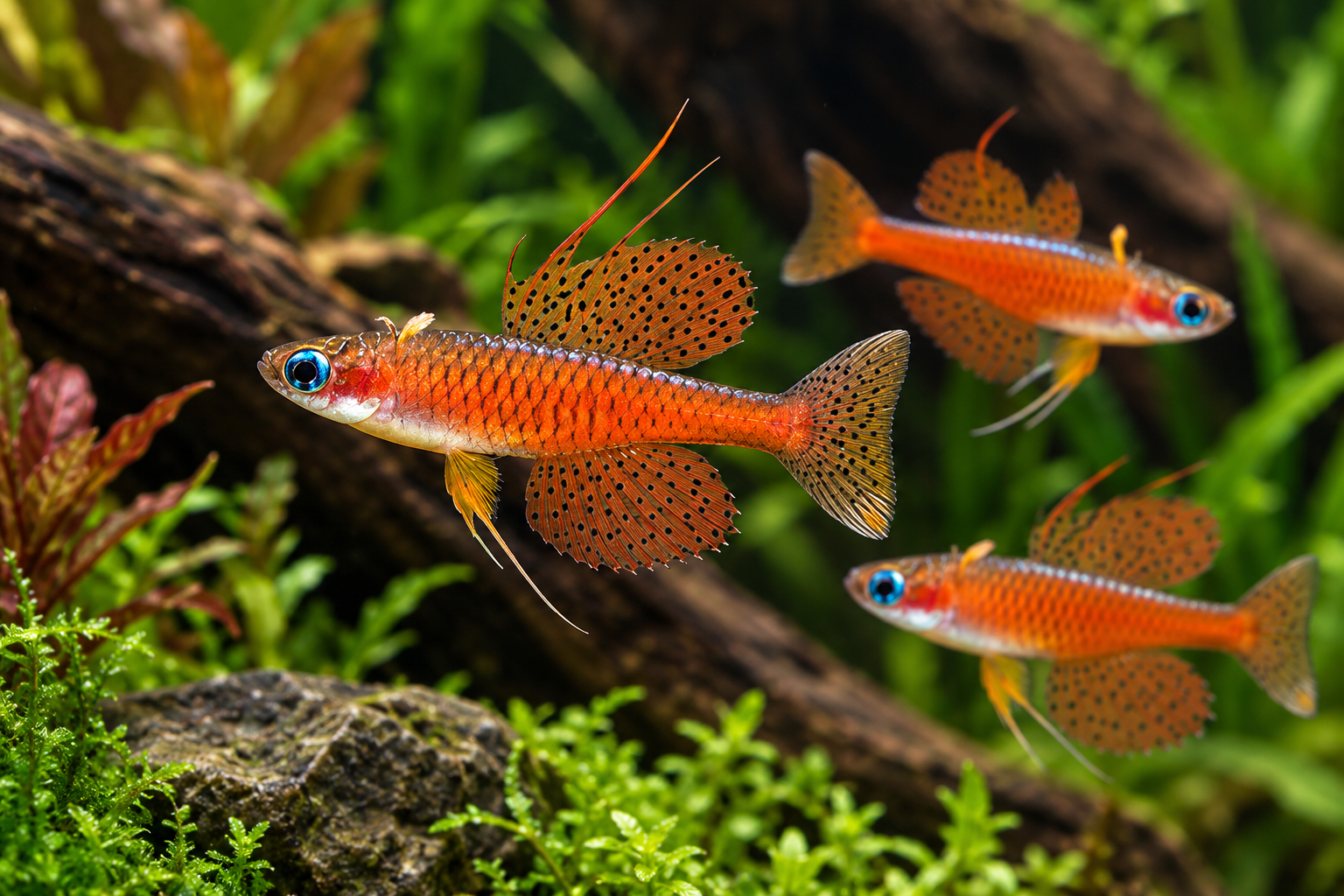
Red Neon Blue-Eye rainbowfish (Pseudomugil luminatus) are small, colourful fish with vivid red bodies and brilliant blue eyes. Based on my own experience keeping and breeding them, this guide covers their care, feeding, unusually large eggs, nitrate sensitivity and how to successfully raise the fry.
The Red Neon Blue-eye rainbowfish is one of the most distinctive small rainbowfish available to freshwater aquarists. Its combination of a vivid red-orange body, brilliant blue eyes and dark-edged fins makes Pseudomugil luminatus particularly impressive when a group is kept in a well-planted aquarium.
I have kept and bred these fish myself, and they are a species I find particularly interesting. They are small enough to work in relatively compact planted aquariums but still display much of the fascinating social and breeding behaviour associated with larger rainbowfish.
They also have a few characteristics that aren't immediately obvious when you first encounter them. Their eggs, for example, are surprisingly large in relation to the size of the adult fish, especially when compared with the eggs produced by some much larger species of rainbowfish. I have also found them to be particularly sensitive to nitrate, with the eggs and newly hatched fry being even less tolerant than the adults.
This sensitivity to water quality is something I consider important when keeping and especially when breeding the species. Pseudomugil luminatus isn't necessarily difficult, but consistently clean water makes a significant difference.
WHERE DO RED NEON BLUE-EYES COME FROM?
Pseudomugil luminatus originates from southern New Guinea, where it occurs in freshwater habitats associated with dense vegetation.
Their natural environment gives us a good indication of how they should be housed. These aren't fish that need a bare aquarium with a huge expanse of open water. They are very comfortable moving amongst aquatic plants and look particularly natural in a densely planted setup.
That doesn't mean every centimetre of the aquarium should be filled with vegetation. Providing areas of dense planting alongside open swimming space allows the fish to move freely while still having plenty of cover.
Floating plants, mosses and fine-leaved plants can all be useful, particularly if you intend to breed them.
HOW BIG DO RED NEON BLUE-EYE RAINBOWFISH GROW?
Red Neon Blue-eyes are genuinely small fish, generally reaching around 3–4 cm as adults.
Males tend to attract the most attention because of their colour and fin development. A mature male in good condition can look remarkably impressive for such a small fish, particularly when displaying towards another male.
Although their size makes them suitable for relatively small aquariums, I wouldn't use this as an excuse to squeeze a group into the smallest tank possible.
They are active, social fish and benefit from swimming room. An aquarium around 45–60 cm long can make a good home for a group, while a larger planted aquarium allows a more substantial group to be maintained.
A secure lid is also worthwhile. Like many rainbowfish and blue-eyes, they are capable of jumping.
KEEPING RED NEON BLUE-EYES IN GROUPS
Red Neon Blue-eyes should be kept in a group. Six would be the minimum I would consider, but eight, ten or more creates a much better display when aquarium size allows.
One of the reasons for keeping several males is their displaying behaviour. Mature males will extend their fins and intensify their colour when interacting with one another. There may be short chases, but in a suitably sized and well-planted aquarium these interactions are normally displays rather than serious aggression.
A group containing both males and females also gives you a good chance of seeing courtship and spawning behaviour. Rather than having one male dominating the aquarium, keeping several allows their attention to be distributed throughout the group.
MALES AND FEMALES
Male Pseudomugil luminatus generally develop the strongest red-orange colour and the most impressive fins. The dark markings on their fins contrast with the body, while the characteristic bright blue eyes stand out particularly well under good aquarium lighting.
Females are generally less intensely coloured and have shorter, less elaborate fins.
Young fish don't necessarily show these differences clearly, so sexing juveniles can be more difficult.
Their colour also depends on condition. A stressed fish in poor water can look very different from a mature individual living in a stable planted aquarium and receiving a varied diet.
THE BEST AQUARIUM SETUP
A planted aquarium is ideal for Red Neon Blue-eyes. I prefer plenty of vegetation around the rear and sides, with additional fine-leaved plants or mosses like Java Moss providing cover throughout the aquarium. Some open water should still be retained for swimming and displaying.
A darker substrate works particularly well because it provides a strong contrast with the orange-red colour of the fish.
Wood and small rocks can be incorporated into the aquascape, although caves aren't particularly important. These fish spend most of their time swimming amongst vegetation and through open water rather than hiding inside enclosed spaces.
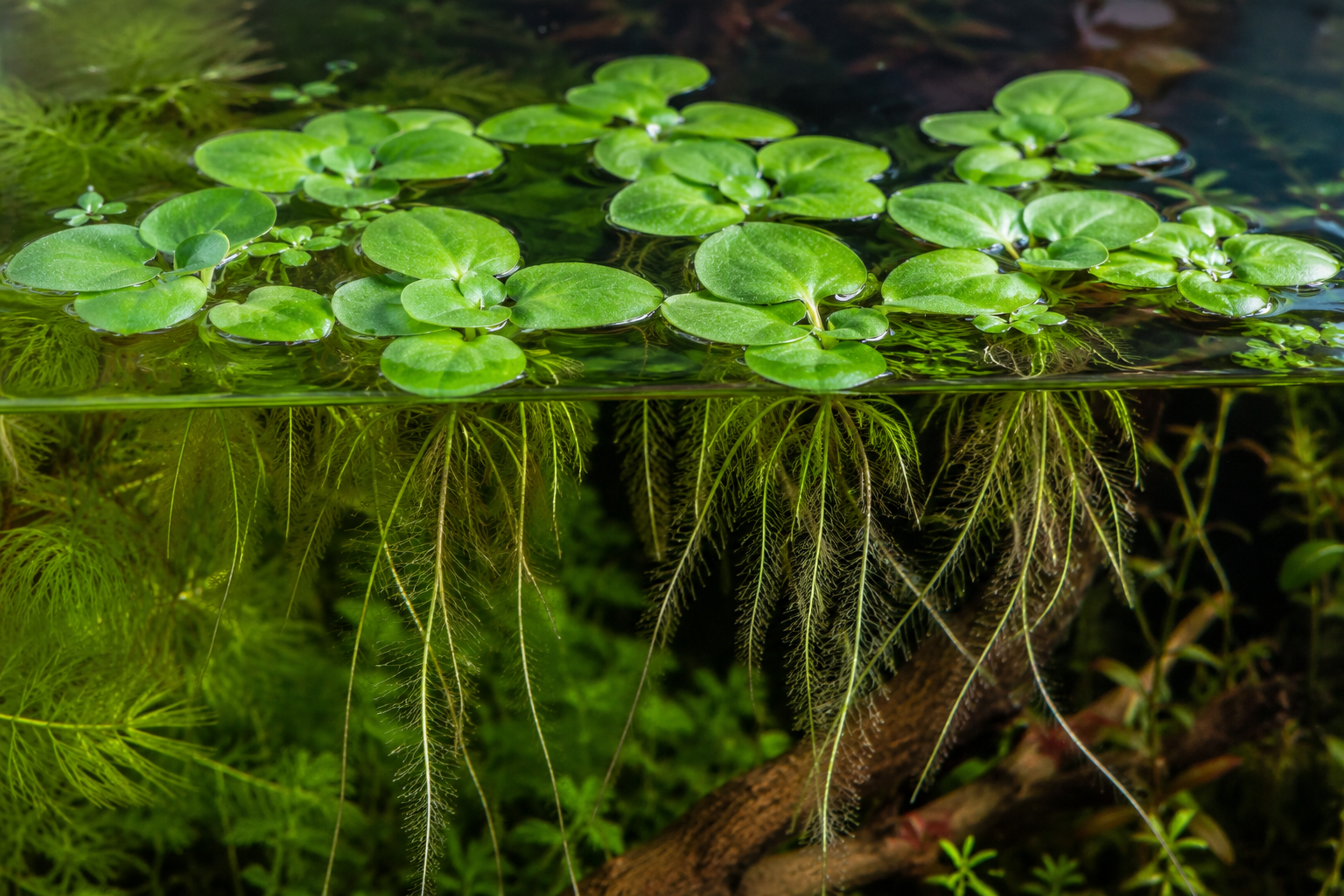
Floating plants like Amazon Frogbit can also be useful. As well as creating additional cover, their roots provide another interesting area for small fish to explore.
Filtration should be effective without creating excessive current. Good oxygenation and clean water are more important than producing a powerful flow.
WATER QUALITY AND NITRATE
Water quality deserves particular attention with Pseudomugil luminatus.
In my experience, these fish are sensitive to nitrate, and this becomes even more important when breeding them. The eggs and fry can be particularly vulnerable.
This means I wouldn't simply rely on nitrate being below the level that might normally be considered acceptable for a general community aquarium. I prefer to keep nitrate as low as reasonably possible through sensible stocking, good filtration, plant growth and regular partial water changes. This is especially important in breeding and fry-rearing aquariums.
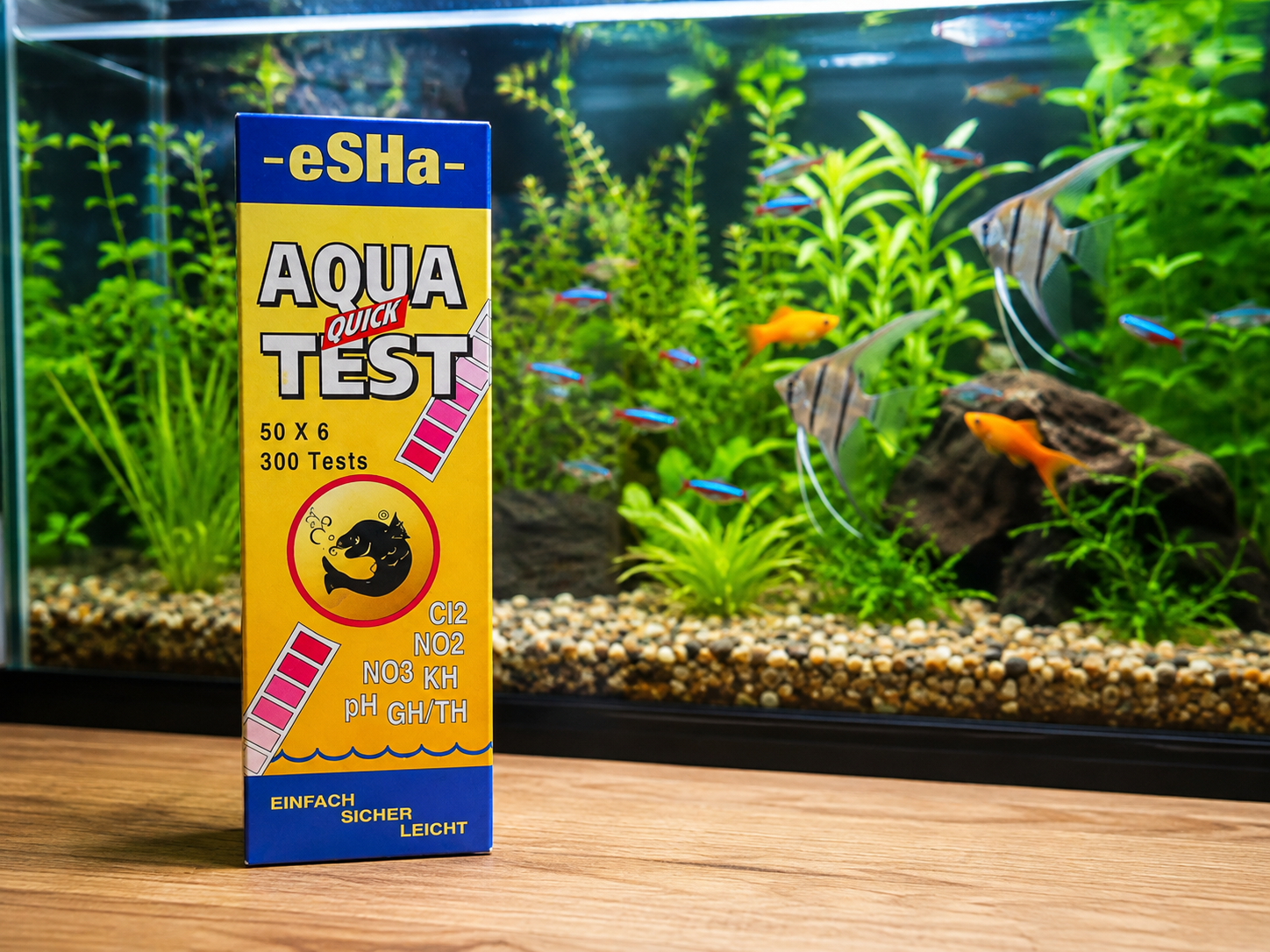
It is easy to concentrate on ammonia and nitrite when raising young fish and assume that everything is fine once both remain at zero. With Red Neon Blue-eyes, nitrate also deserves close attention. Use a quality water test to keep track. We use ESHA Quicktest for a quick and easy way to monitor water quality. At one stage I had 36 aquariums in my fish room (shed) so water testing had to quick and accurate and after trying several dip test Esha was a clear winner.
The challenge when raising fry is that they require regular feeding. More feeding inevitably introduces more nutrients and waste into a small volume of water, so maintaining excellent water quality becomes increasingly important.
Small, frequent water changes can be particularly useful because they allow water quality to be maintained without causing the sudden changes that can accompany infrequent large water changes. Remember to use a quality water conditioner if you are using tap water.
Adults are somewhat more forgiving than eggs and fry, but I would still regard low nitrate as an important part of their long-term care.
A temperature of approximately 24–28°C suits the species, with around 25–26°C being a sensible everyday temperature.
They can adapt to a reasonable range of water chemistry, particularly captive-bred fish. Stable conditions are generally preferable to constantly altering pH or hardness in an attempt to achieve one supposedly perfect number.
FEEDING RED NEON BLUE-EYES
The small mouth of Pseudomugil luminatus needs to be considered when choosing food. A good-quality fine flake or genuinely small micro pellet or granules can form the basis of the diet. larger flakes should be crushed before feeding. I did this rather than buying another different tub of food.
Frozen and live foods are particularly useful. Cyclops, daphnia, bloodworm and appropriately sized brine shrimp can all be offered, while newly hatched brine shrimp are readily accepted.
The fry are much harder to feed. When they first hatch you need infusoria then micro worms. Both need 6-8 feeds a day. We will have an article on how do get these foods at a later date.
I prefer variety rather than relying exclusively on one prepared food. This is particularly useful when conditioning fish for breeding.
Feed small quantities rather than adding a large amount at once. These are tiny fish and don't require much food.
Overfeeding is particularly undesirable with this species because the resulting deterioration in water quality works directly against the low-nitrate conditions I prefer to maintain.
TANK MATES
Red Neon Blue-eyes are peaceful fish and work well with other small, peaceful species.
The main consideration isn't aggression from the Red Neon Blue-eyes themselves but their small adult size.
Large fish should be avoided even when they aren't normally regarded as aggressive. A fish measuring only a few centimetres can easily become potential prey.
Very boisterous feeders can also cause problems because they may consume most of the available food before the smaller rainbowfish get enough.
Other small rainbowfish and blue-eyes, peaceful rasboras and similarly sized community species can potentially work well where their water requirements overlap.
Small Corydoras can also make suitable companions.
Adult freshwater shrimp may coexist with them, although I wouldn't expect newly hatched shrimplets to be completely safe. Dense planting and moss will improve the chances of young shrimp avoiding predation.
BREEDING RED NEON BLUE-EYE RAINBOWFISH
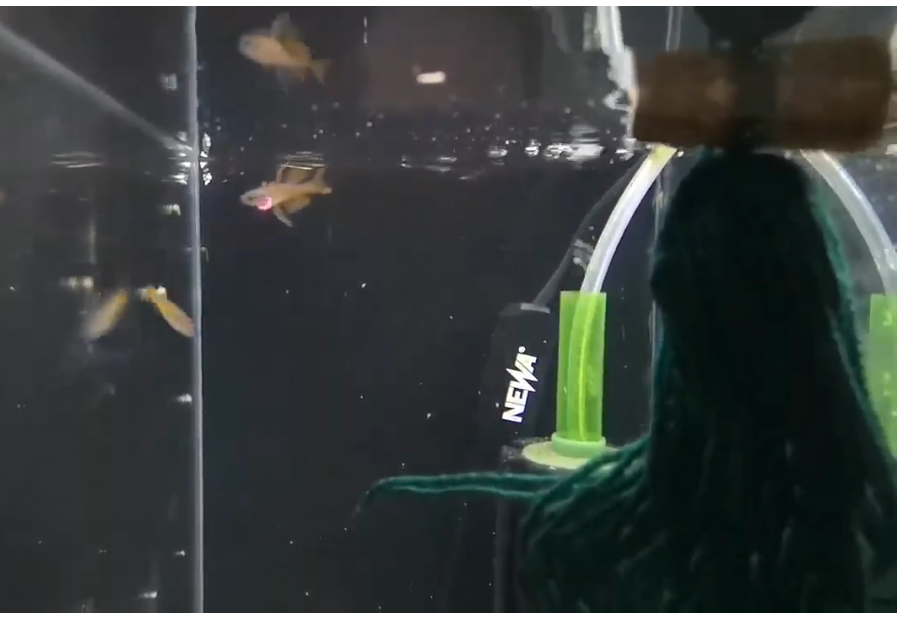
I have bred Pseudomugil luminatus myself, and breeding them is one of the most interesting aspects of keeping the species. The above image (sorry about the quality) is of my some breeding group getting ready to spawn.
They are egg scatterers and will deposit adhesive eggs amongst fine-leaved plants, mosses or artificial spawning mops. The above image you can see the woollen mop tied to a wine cork which was my preferred way for egg collection.
Spawning mops make deliberate breeding considerably easier because they allow individual eggs to be found and removed without having to dismantle a planted aquarium.
One thing that immediately stands out when breeding them is the size of the eggs.
Considering how small the adult fish are, the eggs are surprisingly large. This becomes even more noticeable if you have bred some of the larger rainbowfish species. A tiny Pseudomugil luminatus can produce an egg that seems disproportionately large compared with its body size.
The eggs can be collected from spawning material and incubated separately. This prevents the adults and other aquarium inhabitants from eating them and makes it easier to control the conditions around the developing embryos.
This is where water quality becomes particularly important.
I have found the eggs to be sensitive to nitrate, so I would pay close attention to the quality of the water used for incubation rather than simply moving the eggs into a small container and forgetting about them.
The same applies once the fry hatch.
RAISING THE FRY
Red Neon Blue-eye fry are tiny and require appropriately small foods when they first become free swimming.
Infusoria and other very small fry foods can be used initially. As the fry develop, they can progress onto newly hatched brine shrimp and increasingly larger foods.
The difficulty is balancing frequent feeding with excellent water quality.
Young fish need regular access to food to grow properly, but every additional feed has the potential to increase waste and nitrate.
Because I have found the fry particularly sensitive to nitrate, cleanliness is important. Uneaten food should not be allowed to accumulate, and small regular water changes can help maintain stable, low-nitrate conditions.
Care also needs to be taken when cleaning a fry aquarium. Newly hatched fish are extremely small and can easily be accidentally siphoned out.
A mature sponge filter is particularly useful because it provides gentle biological filtration without creating a dangerous intake that can trap fry.
Once the young fish are large enough to take newly hatched brine shrimp reliably, feeding becomes considerably easier.
HOW LONG DO RED NEON BLUE-EYES LIVE?
Red Neon Blue-eyes aren't especially long-lived compared with many larger aquarium fish.
Around two to three years is a reasonable expectation, although individual fish may live longer under particularly good conditions.
Their relatively short lifespan is another reason breeding them can be worthwhile. Maintaining several generations can allow a healthy group to remain in the aquarium long after the original adults have disappeared.
ARE RED NEON BLUE-EYES DIFFICULT TO KEEP?
I wouldn't describe Pseudomugil luminatus as particularly difficult, but neither would I treat them as an indestructible beginner fish.
Healthy adults maintained in a mature aquarium can be relatively straightforward. Their small size, however, means deteriorating conditions can affect them more quickly than some larger community fish.
Their sensitivity to nitrate is another reason I prefer them in an established, well-maintained aquarium rather than a recently set-up tank.
Breeding and raising the fry requires more attention. The combination of sensitive eggs, tiny fry and the need to maintain very low nitrate while feeding regularly makes successful rearing more demanding than simply keeping the adults.
FINAL THOUGHTS
The Red Neon Blue-eye is a fish that offers far more than its small size initially suggests.
A group of Pseudomugil luminatus moving through a planted aquarium is attractive in its own right, but the displaying behaviour of mature males makes them considerably more interesting.
Having bred them myself, I also think their breeding behaviour adds another dimension to keeping the species. Their surprisingly large eggs are particularly interesting when compared with those of much larger rainbowfish.
The main lesson I have taken from keeping and breeding them is the importance of water quality. Adults appreciate clean water, but the eggs and fry are particularly sensitive to nitrate. Keeping nitrate as low as practical can make a real difference when attempting to raise the next generation.
Provide a mature planted aquarium, keep them in a good-sized group, offer a varied selection of appropriately sized foods and maintain consistently clean water.
Do that, and these tiny red fish with their brilliant blue eyes can become one of the most interesting rainbowfish species to keep and breed at home.
Products We've Mentioned & Recommend
Below you'll find a selection of products we've mentioned in this article, along with a few others we think you might find useful. We've included Amazon links to make them easy to find.
A quick word about affiliate links...
Some of these links are affiliate links, which means we may earn a small commission from qualifying purchases, at no extra cost to you.
Unfortunately, the commission doesn't quite stretch to cocktails on a yacht or a garage full of sports cars. In reality, it helps cover the running costs of this website and, with a bit of luck, might eventually buy me a new pair of waders that don't leak!
We only recommend products we genuinely believe are worth considering, and your support helps us keep sharing free advice from our years of working with aquariums and ponds.
Thanks for supporting Aquatic Specialist!
As an Amazon Associate I earn from qualifying purchases.
Amazon Frogbit
Best for: Natural aquariums, fry tanks, shrimp tanks and surface cover
As an Amazon Associate, we earn from qualifying purchases.
Esha
ESHA Aqua Quicktest
Best for: Fast routine water-quality checks in freshwater aquariums.
As an Amazon Associate, we earn from qualifying purchases.
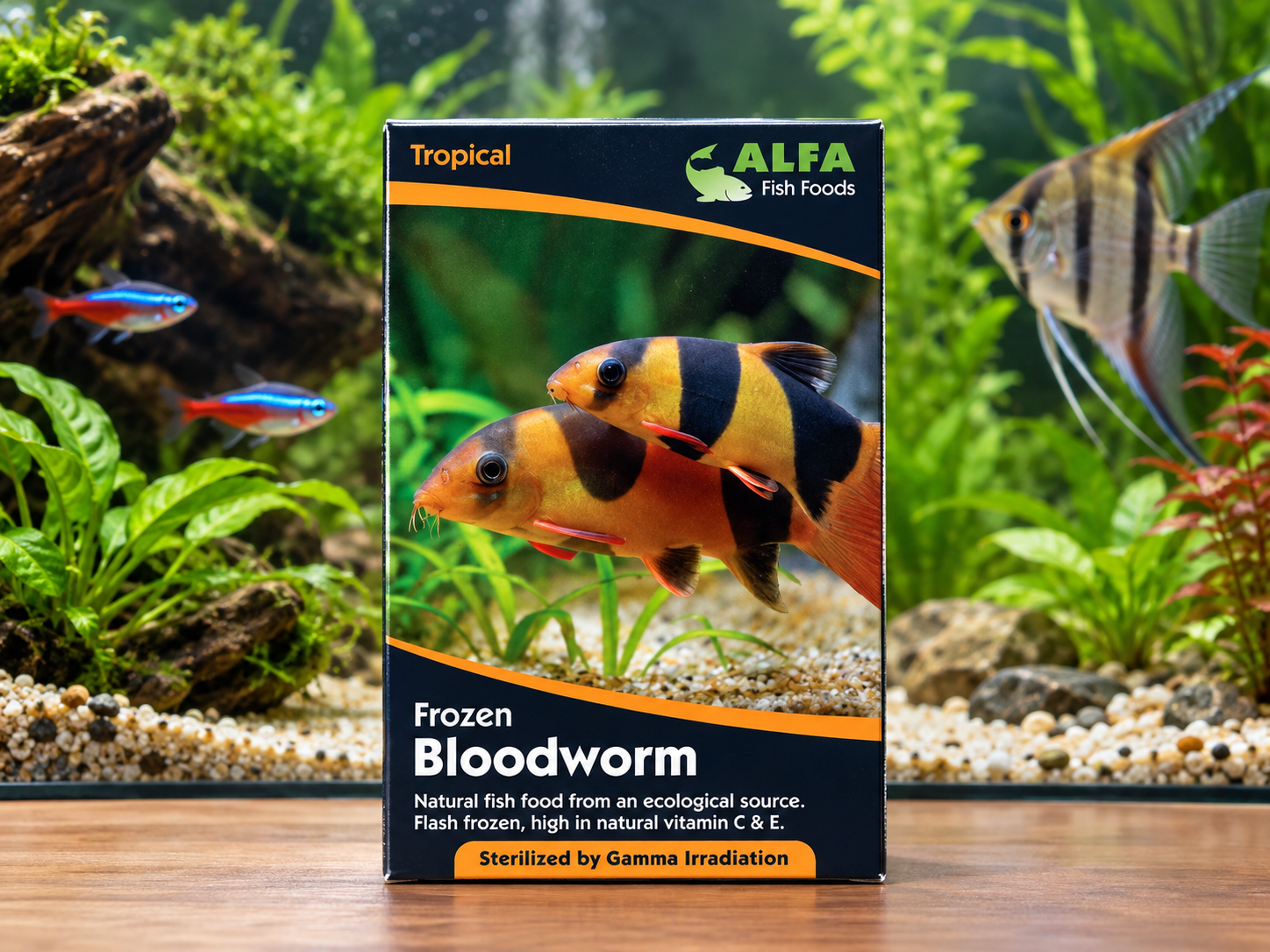
ALFA
Frozen Bloodworm Fish Food 10 Pack
Best for: Adding variety to tropical and coldwater fish diets
As an Amazon Associate, we earn from qualifying purchases.
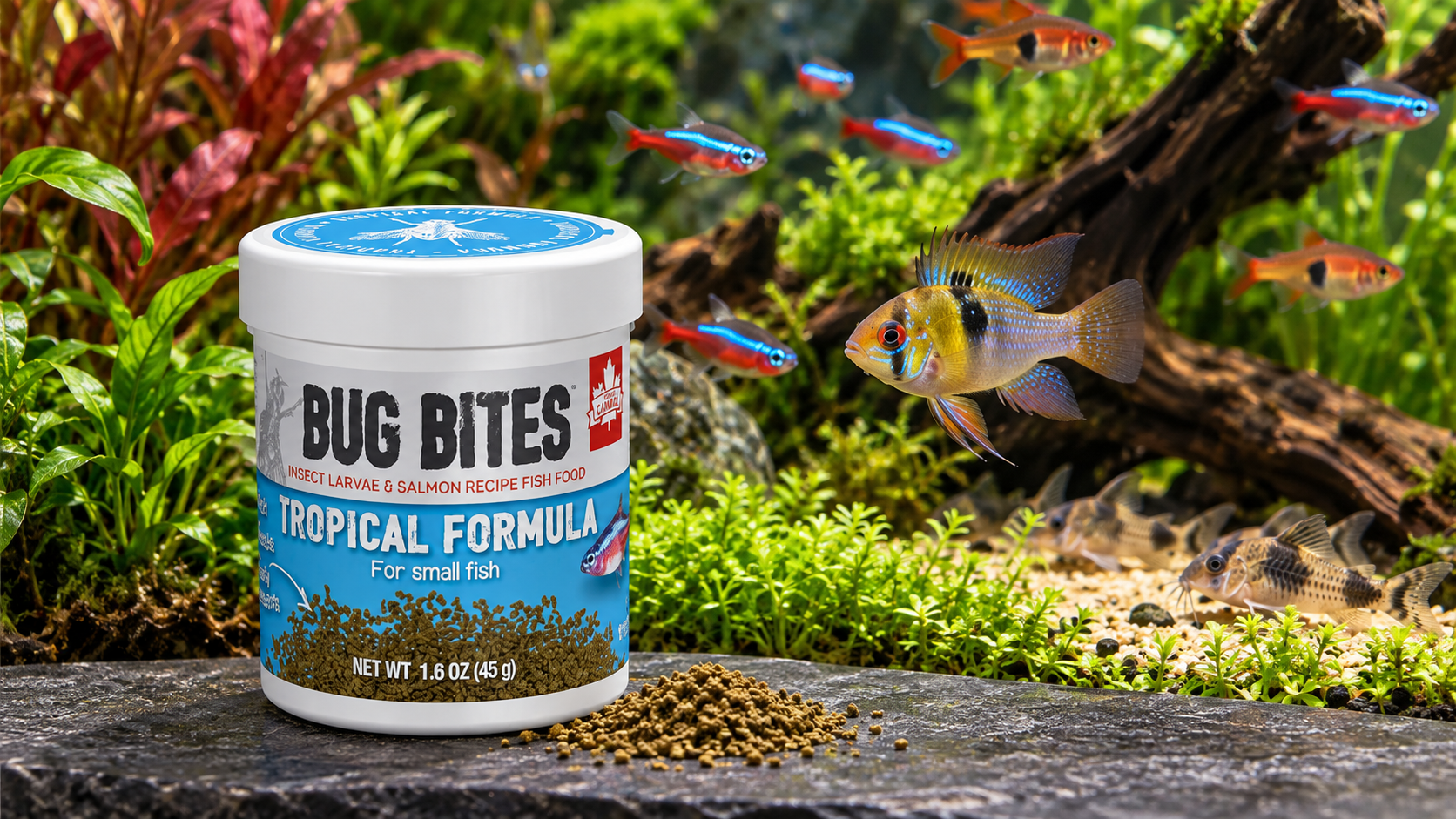
Fluval
Fluval Bug Bites Tropical Formula for small fish
Best for: Small tropical fish and dwarf cichlids
As an Amazon Associate, we earn from qualifying purchases.
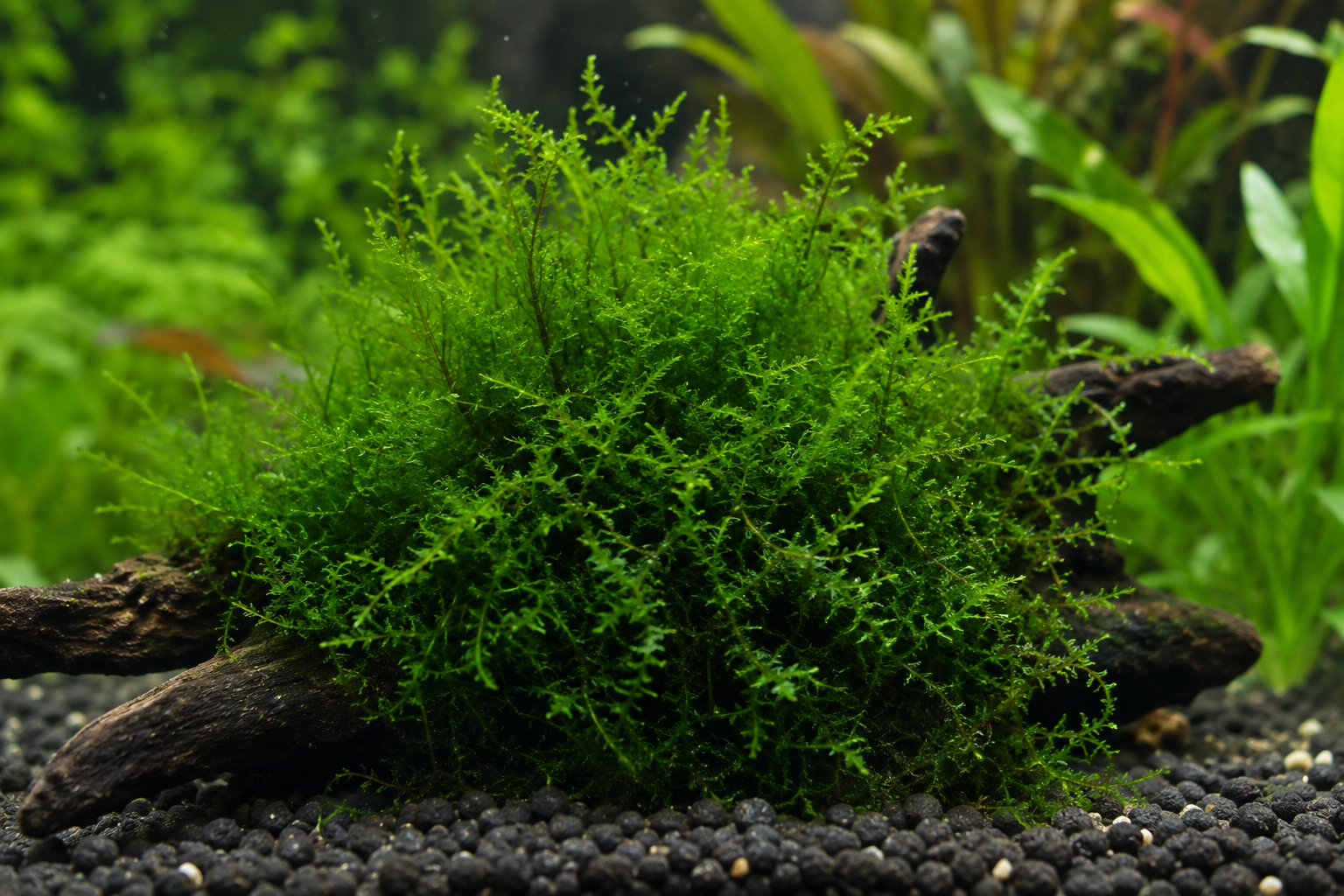
Java Moss
Best for: Beginners, shrimp tanks, breeding aquariums and natural aquascapes
As an Amazon Associate, we earn from qualifying purchases.
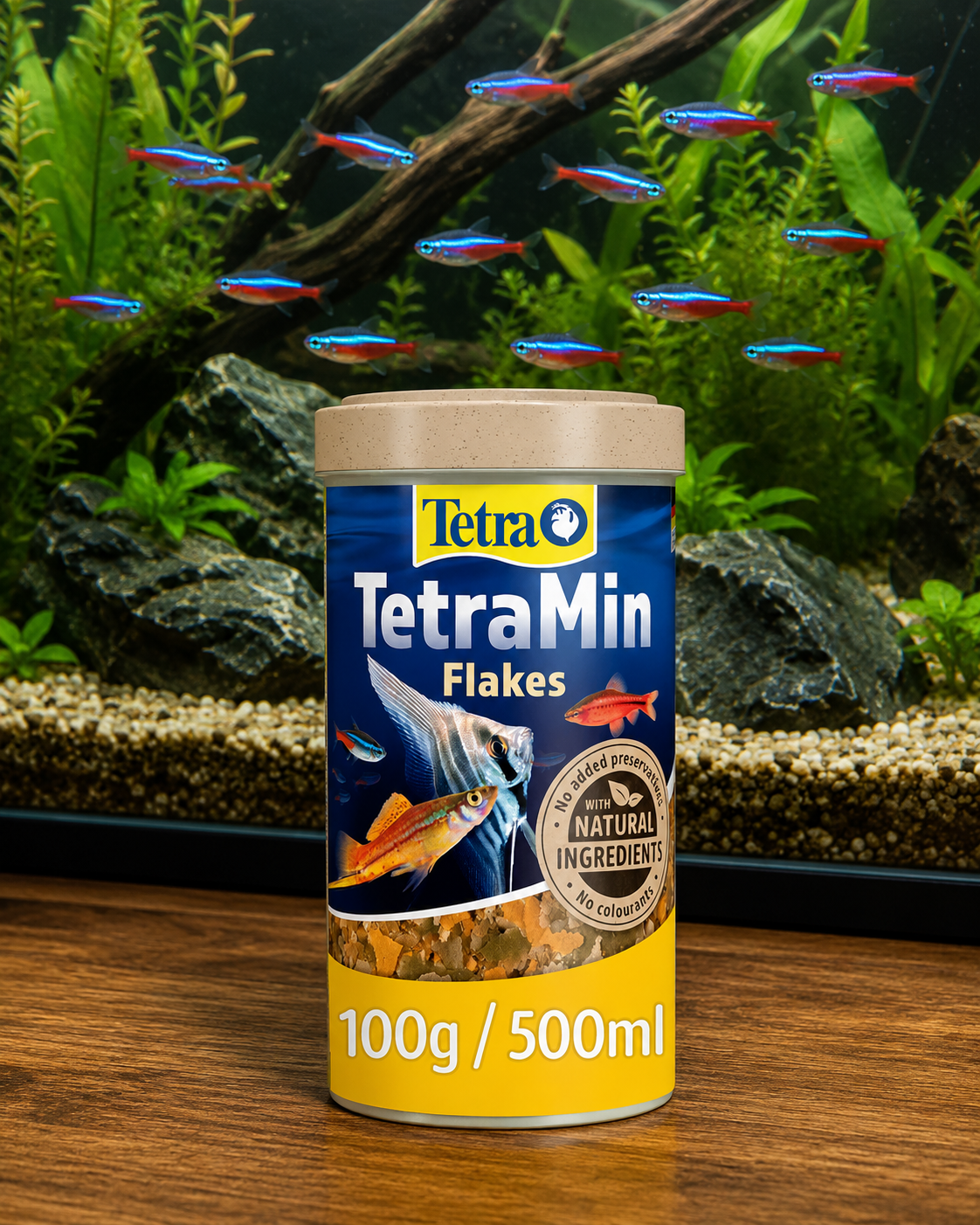
Tetra
Tetra Min Tropical Flake Food 500ml
Best for: Everyday feeding of tropical community fish
As an Amazon Associate, we earn from qualifying purchases.
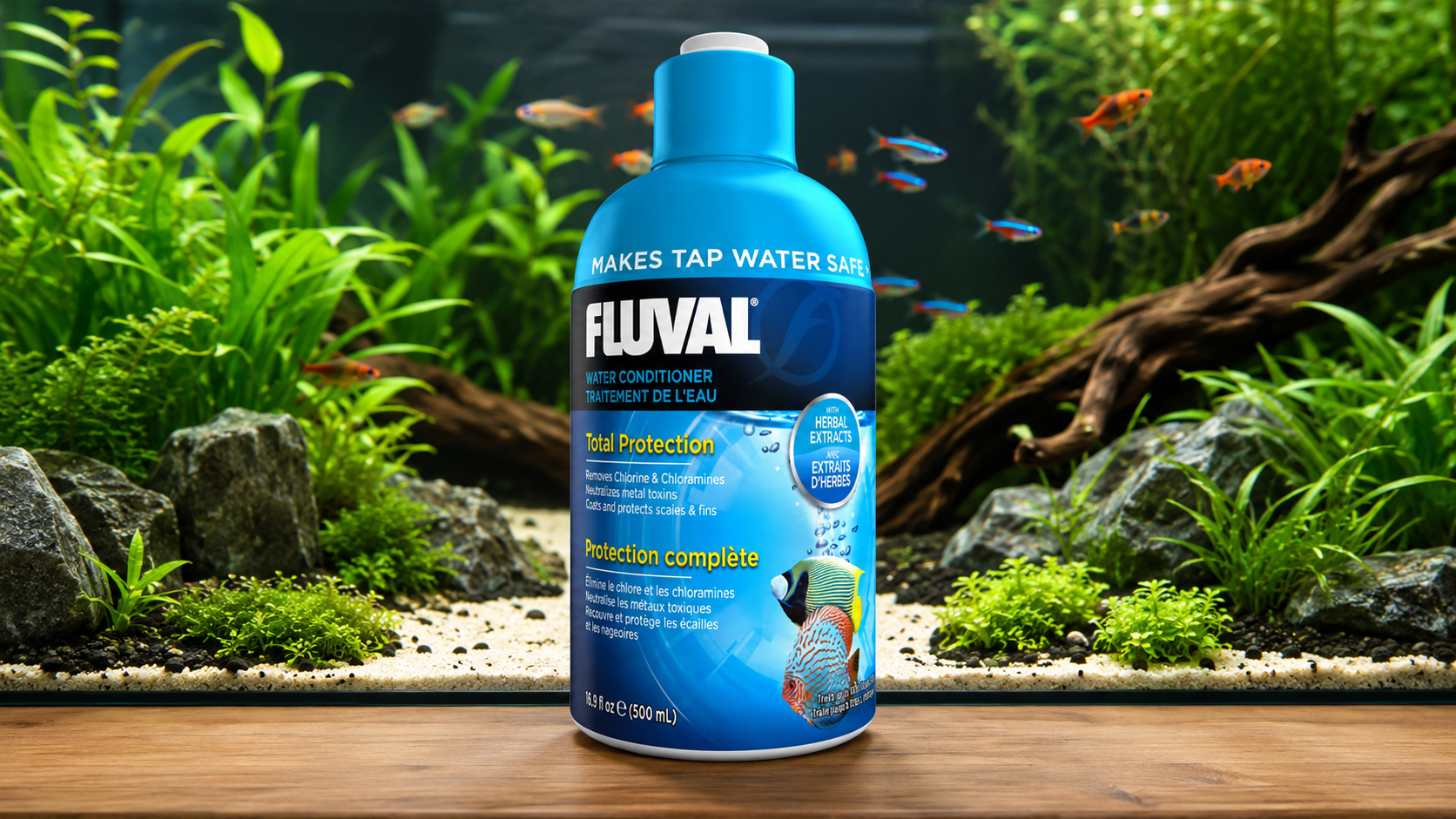
Fluval
Fluval Aqua Plus 500ml aquarium water conditioner
Best for: Routine water changes in freshwater and tropical aquariums
As an Amazon Associate, we earn from qualifying purchases.