Pond Sludge Treatments: How They Work and When to Use Them
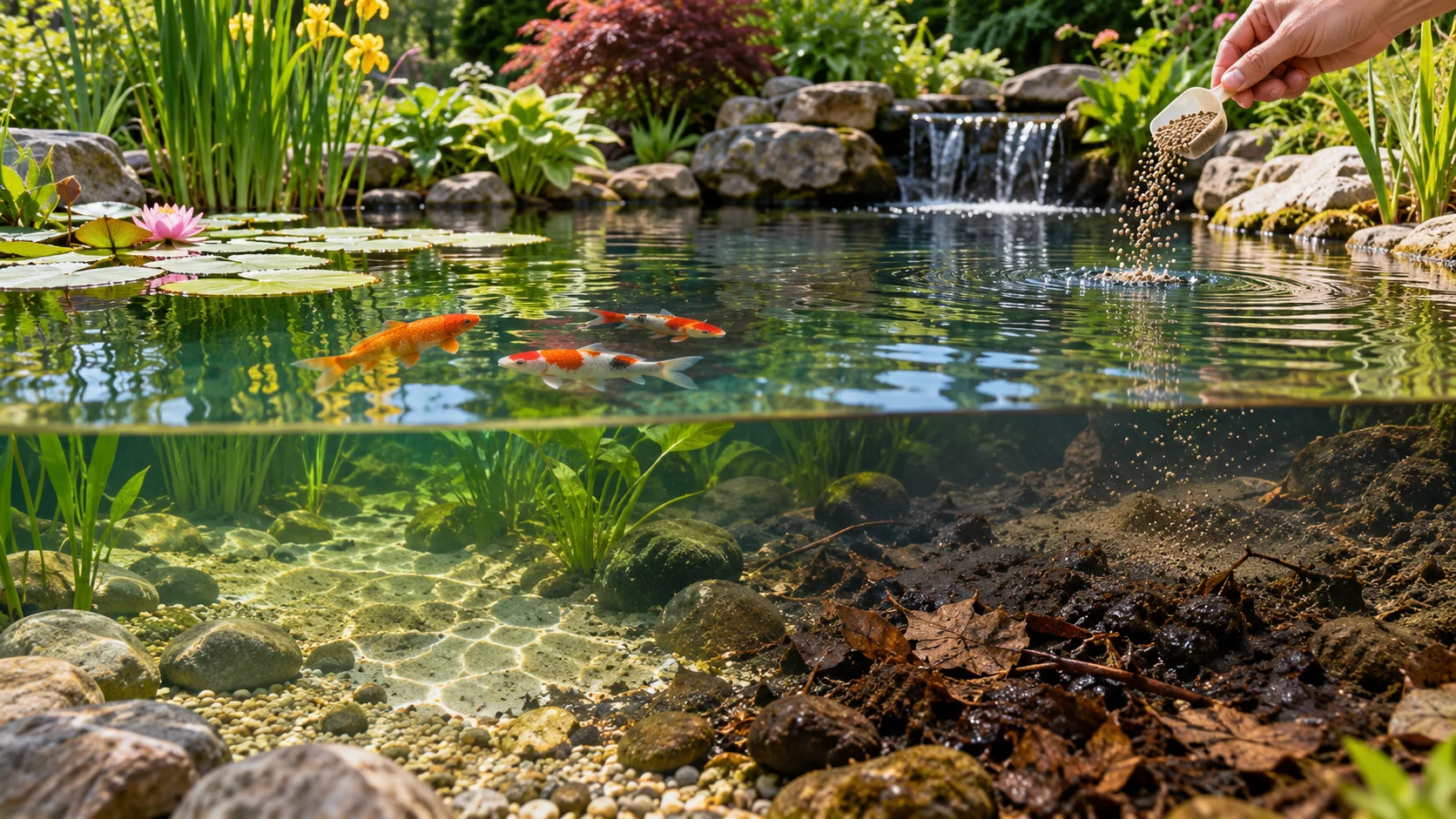
Pond sludge treatments can help break down organic waste such as dead leaves, algae, fish waste and uneaten food. This guide explains how bacterial and enzyme-based treatments work, when they are most effective, and when physical cleaning is still the better option.
Sludge is something that almost every established pond develops eventually. Even a well-filtered pond will gradually collect dead leaves, decomposing plants, fish waste, uneaten food, dead algae and other organic material on the bottom.
A small amount is perfectly normal. The problem comes when that thin layer becomes a thick blanket of soft debris.
Heavy sludge can make a pond unpleasant to maintain, clog pumps and filters and provide a constant supply of nutrients that can contribute to algae problems. In badly affected ponds it can also create areas on the bottom where oxygen levels become very low.
One option is to physically remove the sludge with a pond vacuum, net or complete pond clean. Another is to use one of the many pond sludge treatments now available.
But what exactly is in these treatments, where does the sludge actually go, and do they really work?
What is pond sludge?
Pond sludge is essentially the material that settles on the bottom faster than it can naturally decompose.
Some of it comes directly from the fish. Fish waste and uneaten food gradually break apart and settle into corners, underneath plants and in areas where there is little water movement.
A surprisingly large amount can also come from plants.
Leaves falling from surrounding trees are an obvious source, particularly during autumn, but aquatic plants also continuously shed old leaves and stems. Blanket weed and other algae eventually die as well, adding more organic material.
Over time these different materials begin to decompose and combine into the soft brown or black layer that we recognise as pond sludge.
It is important, however, to distinguish organic sludge from ordinary silt.
Organic sludge contains biodegradable material such as leaves, algae, fish waste and plant debris. Biological sludge treatments can help break this material down.
Fine sand, soil and clay washed into the pond are different. Bacteria cannot digest them, so if the bottom of a pond contains several centimetres of mineral silt, no biological sludge treatment is going to make it disappear.
That distinction explains why sludge treatments appear to work extremely well in some ponds and seem to do very little in others.
How do pond sludge treatments work?
Most pond sludge treatments aren't chemicals that somehow dissolve dirt.
Instead, many contain concentrated populations of beneficial bacteria, frequently accompanied by enzymes.
These microorganisms perform the same decomposition that would naturally take place in a pond, but adding additional bacteria can increase the biological activity available to process the accumulated organic material.
The enzymes help with the first stage.
Large organic molecules found in dead plants, algae, food and fish waste are difficult for bacteria to use directly. Enzymes break these materials into progressively smaller compounds that microorganisms can process more easily.
The bacteria then use this organic material as a source of energy and nutrients.
As decomposition continues, some of the carbon contained within the sludge is eventually released as carbon dioxide, while other material becomes bacterial biomass or dissolved compounds that can subsequently be processed by the pond's filtration system and wider ecosystem.
It is therefore better to think of sludge treatments as accelerating natural decomposition rather than making sludge magically disappear.
Why oxygen is important
One of the most important factors affecting a sludge treatment is oxygen.
Efficient decomposition of organic waste is generally much faster under well-oxygenated conditions.
Unfortunately, the bottom of a dirty pond is often exactly where oxygen levels are poorest.
Thick sludge creates an environment where oxygen can quickly be consumed. Deep areas with very little circulation can become particularly stagnant.
This is one reason we would normally recommend making sure a pond has good circulation and aeration when dealing with a substantial sludge problem.
An air pump and diffuser can be particularly useful, especially during warm weather when water naturally holds less oxygen.
There is another reason to be cautious.
Bacteria themselves use oxygen while breaking down organic matter. Adding a large biological treatment to a heavily polluted, poorly aerated pond isn't a substitute for improving the underlying conditions.
If fish are already gathering around waterfalls, filter returns or the surface, concentrate on oxygenation first.
Temperature makes a difference too
Biological pond treatments are also affected by temperature.
Bacterial activity generally increases considerably as the water becomes warmer, which is why biological sludge treatments tend to be most useful during the normal pond season rather than in the middle of winter.
Always check the manufacturer's recommended minimum temperature before using a particular product.
Throwing repeated doses of bacteria into very cold water is unlikely to give the same results as treating the pond when conditions favour biological activity.
This also makes spring a useful time to begin a sludge-management programme. As the pond warms, accumulated material from the previous autumn and winter can gradually be dealt with before summer.
Can sludge treatments replace a pond vacuum?
Sometimes—but not always.
This is probably where expectations around sludge removers become unrealistic.
If a pond has a light layer of organic material over the liner, biological treatments can be a very useful way of gradually reducing it and preventing further accumulation.
If you have ten years' worth of compacted debris on the bottom, treating it biologically could take a considerable amount of time.
In ponds we maintain, I would much rather physically remove a severe accumulation first and then use biological treatments as part of the ongoing maintenance programme.
A pond vacuum physically exports the waste from the pond.
That is an important difference.
When you vacuum sludge away, the nutrients contained within that material leave the system completely. Biological treatment processes the material within the pond, so filtration, plants, regular maintenance and sensible feeding are still important.
The two methods therefore work very well together.
Remove the worst of the sludge mechanically and allow biological treatments to deal with the smaller amounts continually being produced afterwards.
Sludge treatments after algae treatments
Another particularly useful time for a sludge treatment is after treating a significant algae or blanket weed problem.
Killing or removing algae doesn't necessarily remove all of the organic material it contains.
Dead algae can settle through the water and become yet another layer of waste on the pond bottom.
This can be particularly noticeable after treating green water or a large quantity of blanket weed.
Using an appropriate biological sludge treatment afterwards can help the pond process that newly created organic load. Some manufacturers specifically recommend their sludge treatments following algae treatments for this reason.
Always check compatibility and follow the instructions for the individual products being used rather than adding several treatments together at the same time.
What about black, foul-smelling sludge?
A thin layer of soft brown organic material is one thing. Thick black sludge with a strong rotten-egg smell deserves more caution.
That smell can indicate gases produced within oxygen-poor decomposing material.
Avoid aggressively stirring a large quantity of this type of sludge through the pond, particularly when fish are present.
Instead, increase aeration and tackle heavily contaminated areas gradually. In severe cases, physically removing the material may be much more appropriate than expecting a bacterial treatment to deal with everything.
This is particularly important in smaller fish ponds where disturbing a large amount of decomposing material can quickly affect water quality.
Preventing sludge is easier than removing it
Sludge treatment works far better when it is part of good pond maintenance rather than being used to compensate for an underlying problem.
If a large tree drops thousands of leaves into the pond every autumn, treating the sludge afterwards makes far less sense than stopping most of those leaves entering in the first place.
A temporary autumn pond net can make an enormous difference.
Dead lily leaves and marginal plants should also be cut back before they completely decompose.
Fish should be fed appropriately rather than allowing large quantities of food to sink to the bottom, and mechanical filters should be cleaned often enough to physically remove captured waste from the system.
Good circulation also helps carry suspended waste towards the filter instead of allowing it to collect in dead areas around the pond.
Every handful of organic material that can be removed before it decomposes is material that the bacteria won't subsequently have to process.
Do pond sludge treatments actually work?
Yes, but within realistic limits.
Biological sludge treatments can help reduce the organic component of pond sludge and are particularly useful for controlling smaller accumulations over a long period.
They are not a replacement for every pond-cleaning job.
They won't digest gravel, sand or clay. They won't immediately remove years of accumulated debris. And they won't correct a pond that is continually being overloaded with leaves, fish waste or uneaten food.
Their biggest advantage is as a maintenance tool.
After a pond has been cleaned, regular biological treatment can help the natural decomposition process keep pace with the amount of organic material being produced. This can reduce the rate at which sludge returns and potentially extend the period between major pond cleans.
For an established pond with fish, plants and filtration, that is usually a much more sensible objective than trying to keep the bottom completely sterile.
A healthy pond is a biological ecosystem. Some organic material will always be present.
The aim is simply to prevent it accumulating faster than the pond can deal with it.
Used alongside good filtration, sensible feeding, plant maintenance, aeration and occasional physical removal, sludge treatments can be a genuinely useful addition to a pond maintenance programme.
Products We've Mentioned & Recommend
Below you'll find a selection of products we've mentioned in this article, along with a few others we think you might find useful. We've included Amazon links to make them easy to find.
A quick word about affiliate links...
Some of these links are affiliate links, which means we may earn a small commission from qualifying purchases, at no extra cost to you.
Unfortunately, the commission doesn't quite stretch to cocktails on a yacht or a garage full of sports cars. In reality, it helps cover the running costs of this website and, with a bit of luck, might eventually buy me a new pair of waders that don't leak!
We only recommend products we genuinely believe are worth considering, and your support helps us keep sharing free advice from our years of working with aquariums and ponds.
Thanks for supporting Aquatic Specialist!
As an Amazon Associate I earn from qualifying purchases.
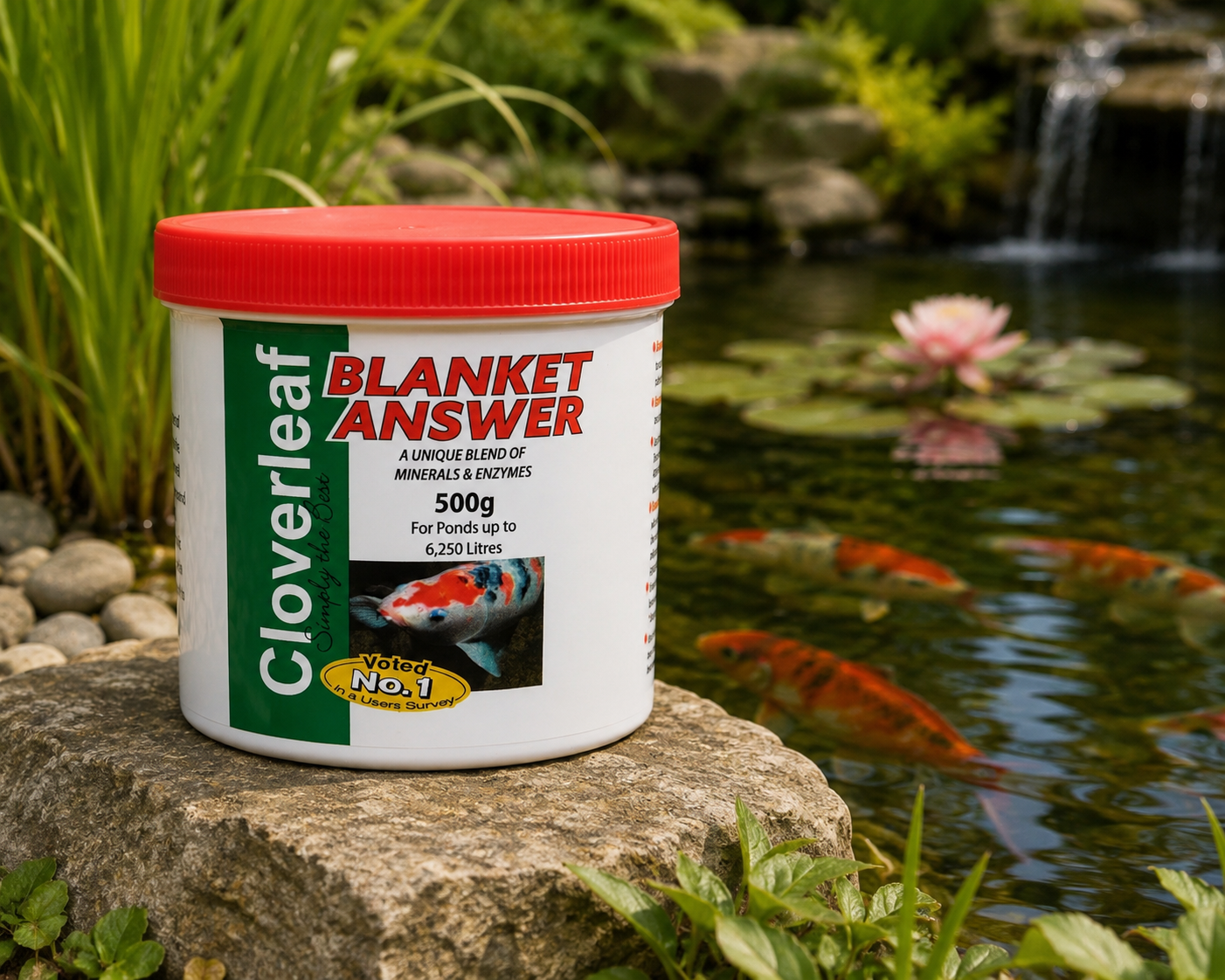
Cloverleaf
Cloverleaf Blanket Answer 500g
Best for: Treating stubborn blanket weed in garden ponds
As an Amazon Associate, we earn from qualifying purchases.
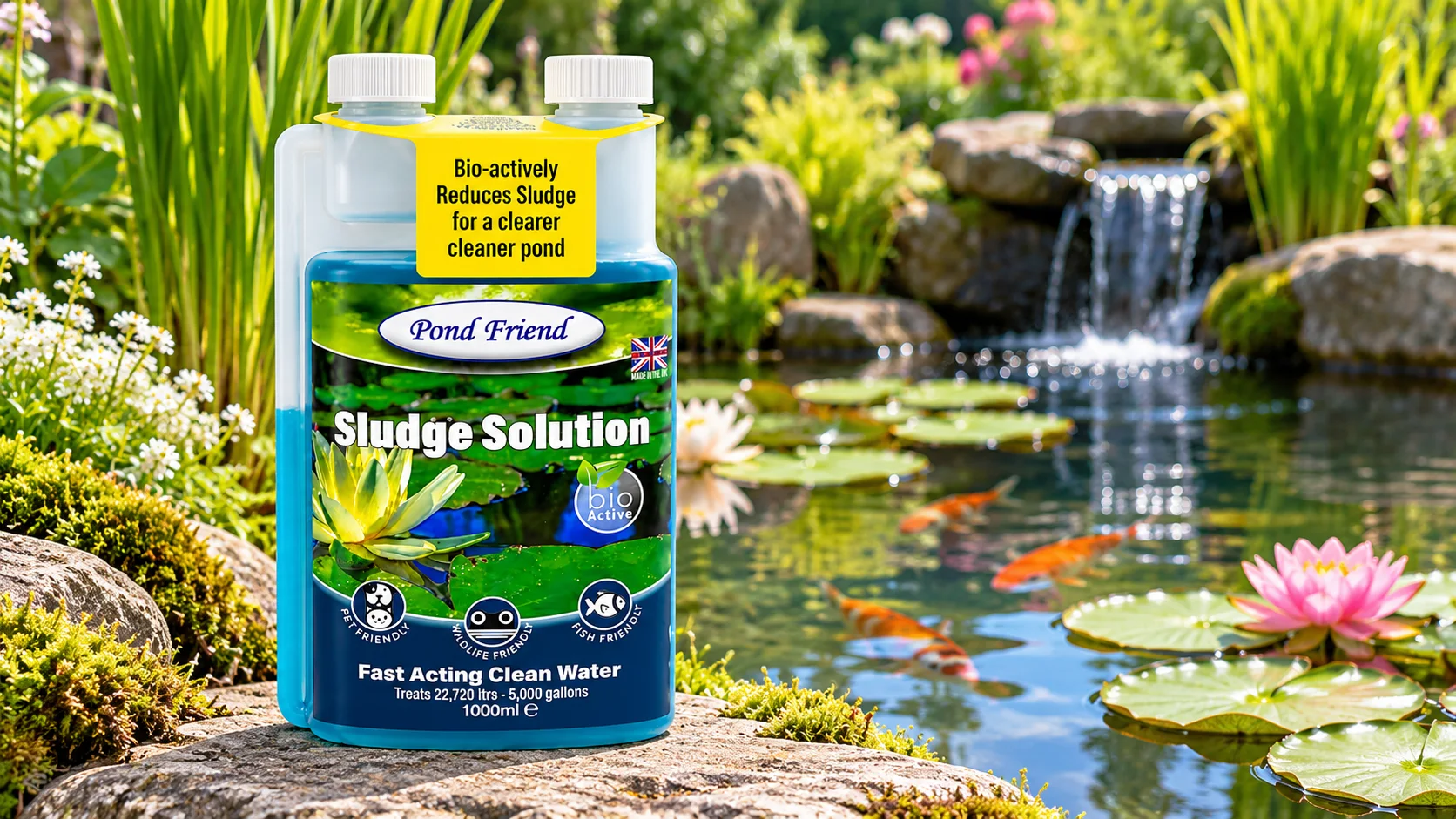
Pond Friend
Sludge Solution – Natural Sludge Remover for Ponds & Filters
Best for: Routine control of organic sludge in established garden ponds
As an Amazon Associate, we earn from qualifying purchases.