Mistakes to Avoid When Stocking Fish in Small Ponds
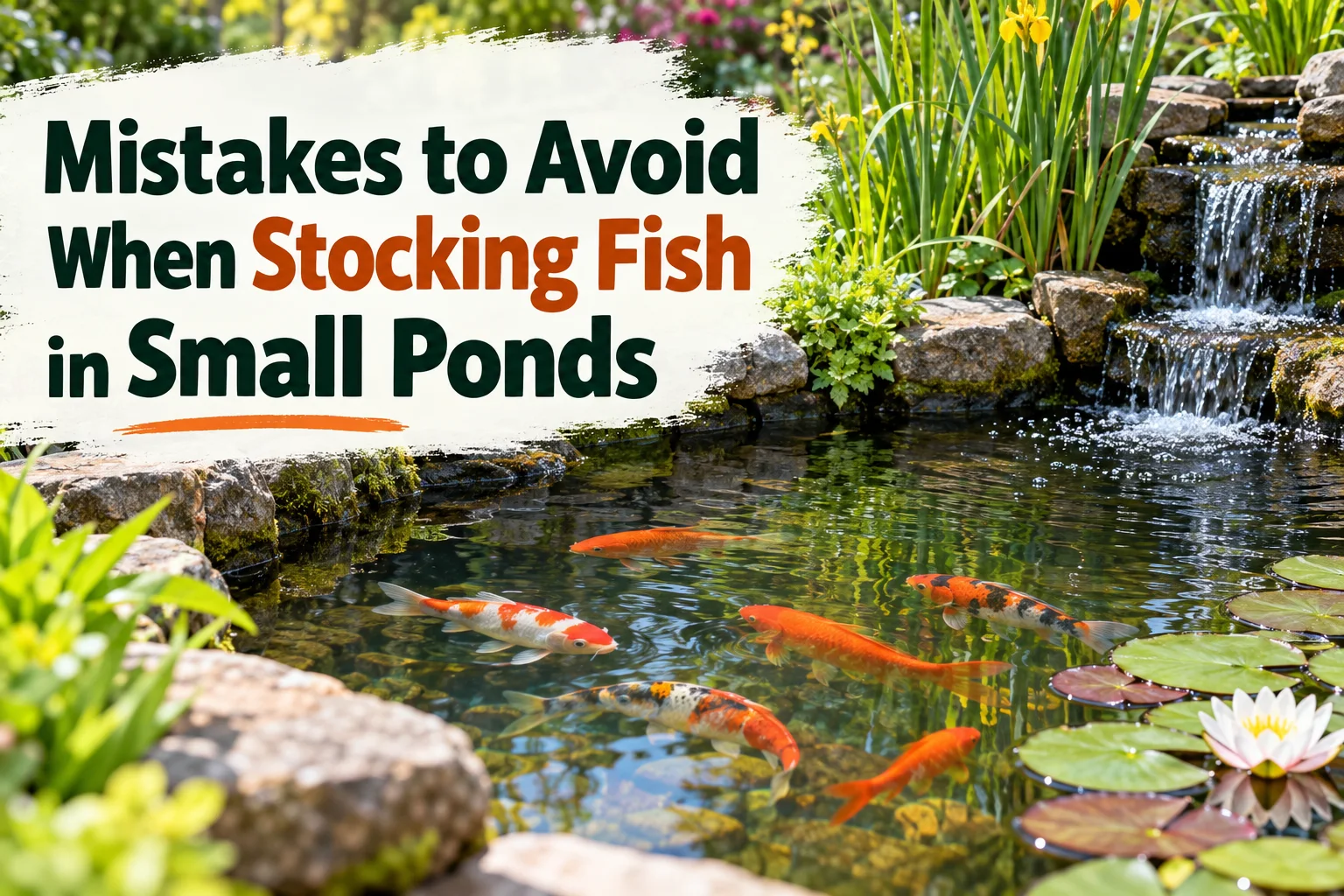
Small ponds can quickly run into problems if they are stocked too heavily. This guide covers the most common fish stocking mistakes, from adding too many fish and choosing unsuitable species to underestimating filtration, oxygen and adult fish size.
Small ponds can make excellent homes for fish, but they are far less forgiving than larger ponds. With a limited volume of water, changes in temperature, oxygen levels and water quality can happen quickly, and a stocking decision that seems harmless at first can become a much bigger problem as the fish grow.
One of the most common issues we see with small garden ponds is simply too many fish for the amount of water and filtration available. Overstocking makes almost every other aspect of pond keeping more difficult. Filters clog more quickly, oxygen levels can fall, algae can become harder to control and water quality can deteriorate surprisingly fast.
The best approach is usually to stock lightly, choose species carefully and give the pond plenty of time to mature.
Adding too many fish at once
A newly constructed pond can look very empty when only a handful of small fish are swimming around it. This often encourages people to add more fish immediately.
The problem is that every fish produces waste. That waste is eventually broken down into ammonia, which then needs to be processed by beneficial bacteria within the pond and filter.
In a newly established pond, the biological filter may still be developing. If too many fish are introduced at once, the amount of waste being produced can exceed the filter's ability to process it. This can result in ammonia and nitrite appearing in the water, both of which are harmful to fish.
Whenever possible, add fish gradually and allow the pond and filter time to adjust before increasing the stock level.
Stocking according to the size of the fish in the shop
Another common mistake is choosing fish based on their current size rather than their eventual adult size.
A small goldfish may only be a few centimetres long when purchased, but common goldfish, comets and shubunkins can eventually become substantial fish.
Koi are an even more obvious example. Small koi are readily available and can look perfectly suitable for a small pond when they are young. However, koi can grow to more than 60cm in good conditions, with some becoming considerably larger. They also produce a significant amount of waste.
A pond that comfortably holds several small koi in their first year may be completely unsuitable for them a few years later. Always think about the size the fish will become, not just the size they are when you buy them.
Trying to fill the pond to its maximum stocking level.
There are plenty of stocking calculators online that suggest a certain number of centimetres of fish for each litre or gallon of water. These can provide a rough guide, but they should never be treated as an exact target.
Fish don't all produce the same amount of waste. A large, heavily fed fish places a much greater demand on the filtration system than several tiny fish with the same combined body length.
Temperature, oxygen levels, filtration, water movement and feeding also make a significant difference. Rather than trying to work out the absolute maximum number of fish a pond can hold, it is much better to leave some spare capacity.
A lightly stocked pond is usually easier to maintain, more stable and more forgiving if something goes wrong.
Choosing unsuitable species
Not every fish sold for ponds is suitable for a small garden pond. Goldfish varieties are generally a much more sensible choice than koi for smaller ponds. Shubunkins can also work well and provide plenty of colour without eventually reaching the same size as koi.
Very fancy goldfish can be more vulnerable outdoors, particularly in colder or deeper ponds, while some species may require warmer conditions than a typical UK garden pond can provide.
Before buying any fish, check its eventual size, temperature requirements and behaviour.
It is also worth remembering that some fish sold at very small sizes may become predators as they mature. Always research the species rather than relying entirely on how harmless it looks in a shop tank.
Underestimating the importance of filtration
Fish stocking and filtration go hand in hand. The more fish you keep, the greater the demand placed on the biological filter.
Mechanical filtration removes solid waste and debris, while biological filtration provides an environment for beneficial bacteria that convert harmful ammonia into nitrite and then into nitrate.
Filter manufacturers often provide a maximum pond volume for their equipment, but these figures should be treated carefully. A filter may comfortably cope with a lightly stocked ornamental pond while struggling with the same volume of water containing a much heavier fish population.
If you intend to keep fish, particularly larger goldfish or koi, it is usually sensible to choose a filter with more capacity than you think you need. Having slightly oversized filtration is rarely a disadvantage.
Forgetting about oxygen
Small ponds can lose oxygen surprisingly quickly, particularly during warm weather. Warm water naturally holds less dissolved oxygen than cold water, while fish consume more oxygen as temperatures rise and their metabolism increases.
Aquatic plants produce oxygen during daylight but consume it at night, and algae can cause large fluctuations in oxygen levels.
A heavily stocked small pond can therefore become vulnerable during hot summer nights. Good water movement helps considerably. A waterfall, fountain, venturi or dedicated air pump can all increase oxygen levels.
If fish regularly gather around a waterfall or gasp at the surface, particularly first thing in the morning, this should never be ignored.
Overfeeding the fish
Overfeeding is closely linked to overstocking. The more food that enters the pond, the more waste eventually has to be processed by the filter.
Uneaten food also decomposes, adding nutrients to the water and potentially contributing to green water and blanket weed.
Fish rarely need as much food as people think they do. Feed only what the fish will consume readily and reduce feeding if food is being left behind.
During colder weather, feeding should also be reduced significantly as fish metabolism slows.
Ignoring the actual volume of the pond
People often overestimate how much water their pond contains. A pond measuring two metres by two metres isn't necessarily four cubic metres of water. Shelves, sloping sides, rocks and planting areas can reduce the actual volume considerably.
Knowing the pond volume is important not only for stocking but also for treating fish, dosing pond products and choosing filtration equipment. If the pond has a relatively regular shape, calculate the approximate length, width and average depth rather than using the maximum depth.
For irregular ponds, a water meter used while filling the pond can provide a much more accurate figure.
Adding fish before the pond is ready
It is understandable to want fish in a new pond as soon as possible, but patience pays off. A new pond needs time to settle and the biological filtration needs time to develop.
Water should ideally be tested for ammonia, nitrite, nitrate and pH, particularly after the first fish are introduced. Adding a large number of fish to a completely new system increases the chance of water quality problems.
Starting with a small number and monitoring the water gives you the opportunity to spot problems before they become serious.
Assuming clear water means good water quality
A pond can look perfectly clear and still contain harmful levels of ammonia or nitrite. Clear water simply means there isn't a large amount of suspended material or algae in the water. It doesn't tell you whether the chemistry is safe. This is particularly important in small, heavily stocked ponds where conditions can change quickly.
If fish appear lethargic, stop feeding, clamp their fins or start gasping at the surface, water testing should be one of the first things you do.
Forgetting that fish may reproduce
Goldfish can reproduce readily in garden ponds. You might begin with six fish and find yourself with considerably more a few years later.
Not every fry will survive, particularly in ponds containing larger fish, but successful spawning can still increase stocking levels over time.
If the pond is already heavily stocked, even a modest increase in numbers can create problems. Keeping the original stock level conservative gives you more room to accommodate natural reproduction.
Adding more fish instead of improving the pond
It can be tempting to treat fish as decoration and keep adding different colours and varieties. However, a small number of healthy fish in a well-balanced pond will usually look far better than a crowded pond full of fish competing for space.
Good planting, attractive stonework, clear water and healthy fish all contribute to the appearance of a pond. You don't need large numbers of fish to make a small pond interesting.
Final thoughts
When stocking a small pond, less is usually more. Choose fish with their adult size in mind, add them gradually and avoid trying to reach some theoretical maximum stocking level.
Good filtration, adequate oxygen and sensible feeding are just as important as the number of fish themselves.
Small ponds can be extremely successful, but they work best when they are not pushed to their limits. Leaving some spare capacity makes the pond more stable, reduces maintenance and gives the fish a much healthier environment in which to grow.
Products We've Mentioned & Recommend
Below you'll find a selection of products we've mentioned in this article, along with a few others we think you might find useful. We've included Amazon links to make them easy to find.
A quick word about affiliate links...
Some of these links are affiliate links, which means we may earn a small commission from qualifying purchases, at no extra cost to you.
Unfortunately, the commission doesn't quite stretch to cocktails on a yacht or a garage full of sports cars. In reality, it helps cover the running costs of this website and, with a bit of luck, might eventually buy me a new pair of waders that don't leak!
We only recommend products we genuinely believe are worth considering, and your support helps us keep sharing free advice from our years of working with aquariums and ponds.
Thanks for supporting Aquatic Specialist!
As an Amazon Associate I earn from qualifying purchases.
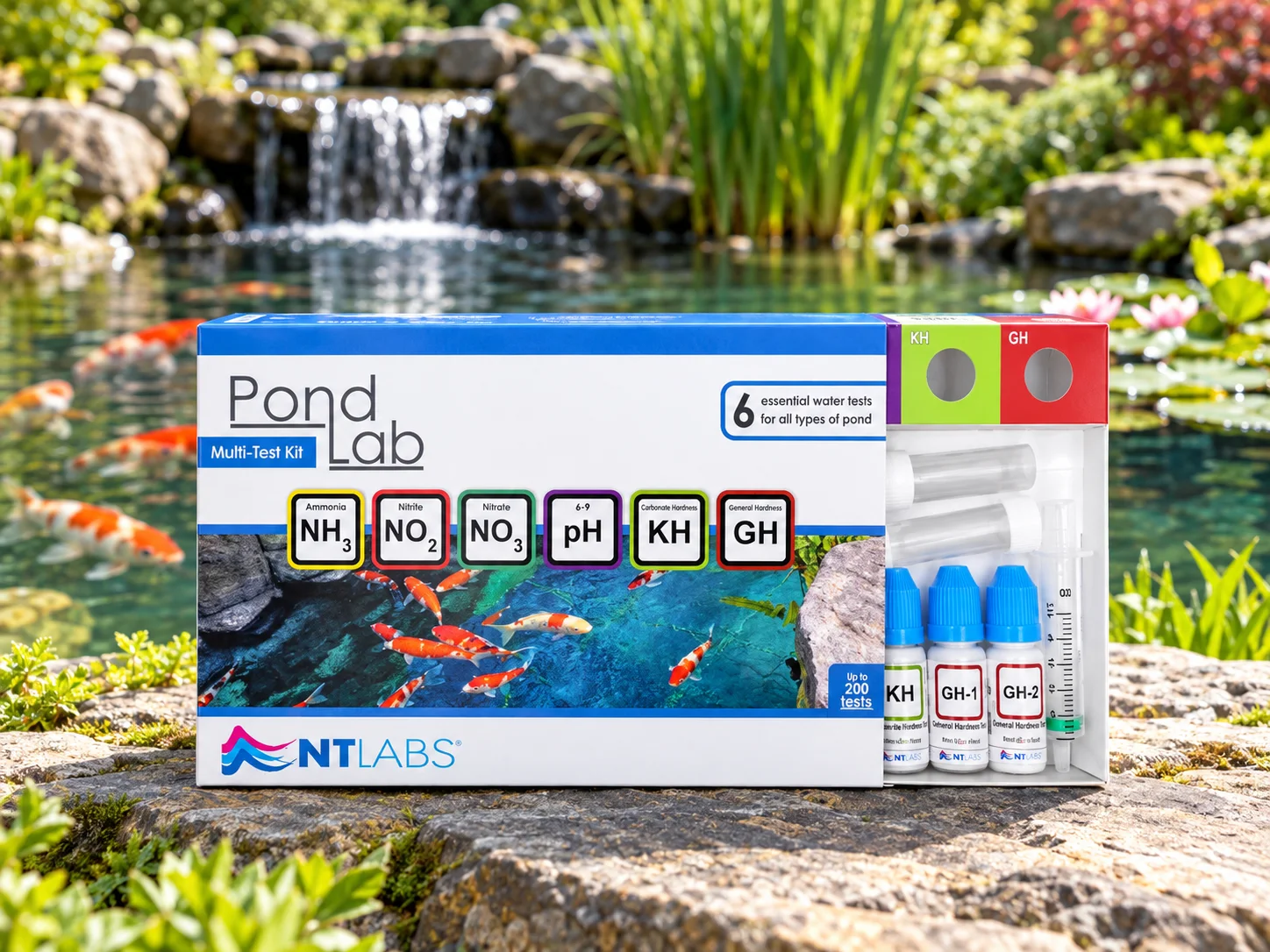
NT Labs
NT Labs Pond Lab Multi Test Kit
Best for: Complete routine water testing for fish ponds
As an Amazon Associate, we earn from qualifying purchases.