Koi Pond Salt Treatment: When to Use Salt and How Much to Add
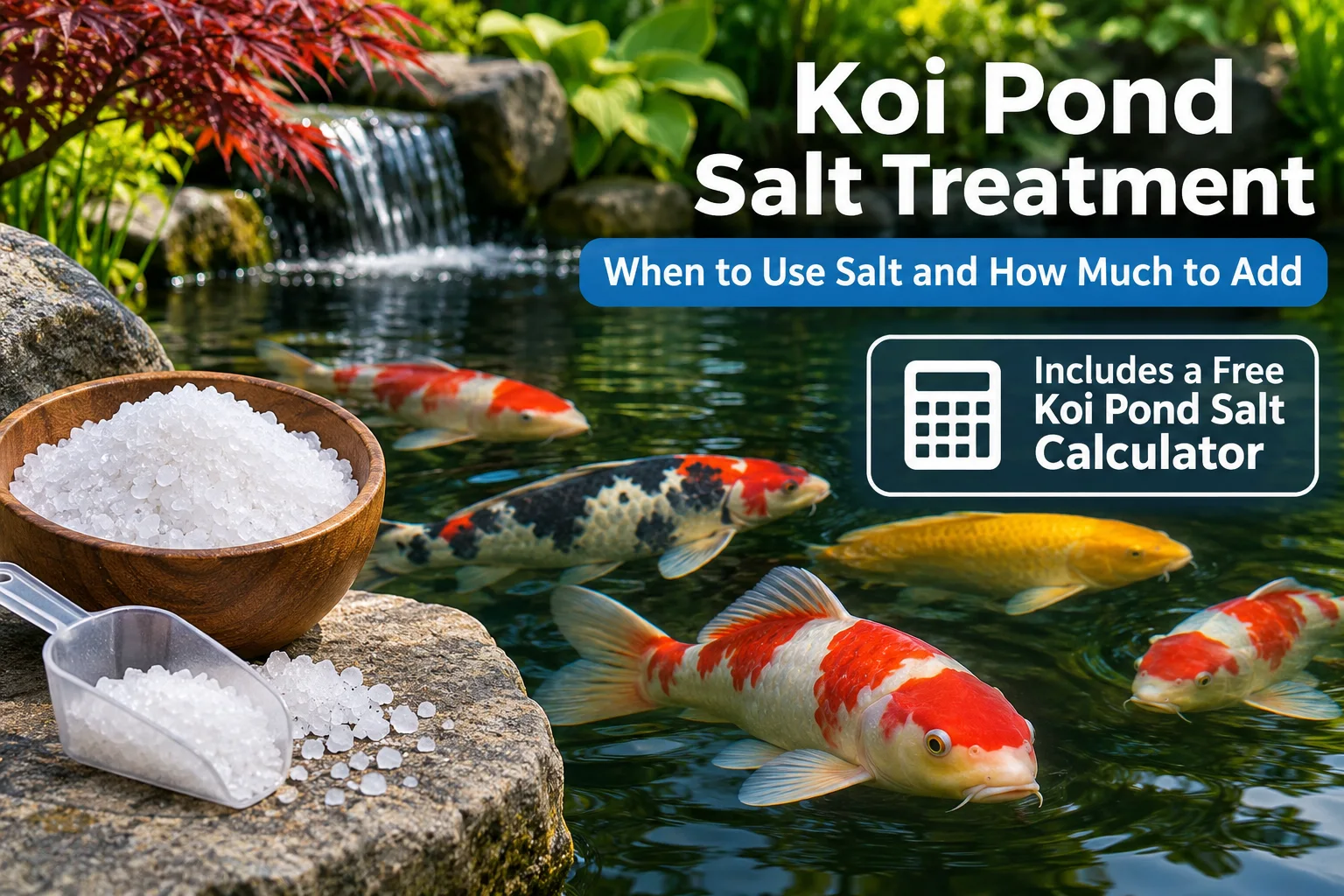
Salt can be a valuable tool in koi health management when used correctly. Discover its benefits, limitations and how to calculate the correct quantity for your pond with our free salt calculator.
Salt has been used in koi keeping for many years and, when used correctly, can be a valuable tool in the management of fish health. It is relatively inexpensive, readily available and can provide support to fish suffering from certain health problems. However, there is often confusion surrounding how much salt should be added to a pond, when it should be used and whether it is beneficial to maintain a permanent salt concentration.
With over 27 years of experience in the aquatic industry, we believe that understanding why a treatment is being used is just as important as knowing how much to add. Salt is no exception, and whilst it certainly has its place in koi keeping, it should not be seen as a cure for every problem.
Why is salt used in koi ponds?
Koi are freshwater fish, but the fluids within their bodies contain a higher concentration of dissolved salts than the surrounding pond water. Because of this difference, water naturally enters the fish through its gills and other permeable surfaces.
The fish must continually regulate its internal water and mineral balance through a process known as osmoregulation. A healthy koi is perfectly capable of managing this process without additional salt being present in the pond.
However, when a fish is injured, stressed or suffering from damage to its skin or protective mucus layer, maintaining this balance can become more demanding.
Increasing the salt concentration of the surrounding water can reduce this burden, providing additional support while the fish recovers.
It is important to remember that salt does not necessarily treat the underlying cause of the problem. A fish suffering from a bacterial infection, for example, may require additional treatment.
Using salt to support koi with ulcers and damaged skin
One of the reasons salt is sometimes used is to support koi suffering from ulcers, damaged scales or other external injuries.
The skin and mucus layer form an important protective barrier. When this barrier becomes damaged, it can affect the fish's ability to regulate its internal fluid balance.
Carefully controlled salinity may help reduce this additional stress, allowing the fish to devote more energy towards recovery.
In our line of work, we always encourage pond owners to investigate why a fish has developed an ulcer or injury in the first place. Poor water quality, parasites, bacterial infections and physical damage can all contribute to these problems.
Simply adding salt without investigating the underlying cause may delay more appropriate treatment.
Using salt to reduce nitrite toxicity
One of the most important applications of salt is helping to protect freshwater fish against elevated nitrite levels.
Nitrite can enter the bloodstream through the gills and interfere with the blood's ability to transport oxygen. Fish exposed to elevated nitrite may become lethargic, breathe more rapidly or spend time near areas of increased water movement.
The chloride contained within sodium chloride competes with nitrite during uptake through the gills, helping to reduce the amount entering the bloodstream.
However, a relatively small quantity of salt may provide sufficient protection against nitrite toxicity. A full 0.3% salt treatment is not normally necessary solely for this purpose.
The appropriate amount depends on the measured nitrite and chloride concentrations in the pond.
Salt does not remove nitrite from the water, so attention must also be given to the biological filtration, feeding levels, stocking density and water quality.
Is salt effective against koi parasites?
Salt can be effective against certain external parasites, but its effectiveness varies considerably depending on the parasite involved, the concentration used and the duration of exposure.
One of the problems with treating koi without identifying the cause of their symptoms is that many different conditions can produce very similar behaviour.
Fish that are flicking, rubbing against pond surfaces, clamping their fins or producing excessive mucus may be suffering from parasites, but they may also be reacting to poor water quality.
We recommend checking water quality and arranging a microscopic examination of a skin scrape where parasites are suspected.
Once the parasite has been identified, a more appropriate treatment can be selected. Salt should not be considered a universal alternative to specialist koi medications.
How much salt should you add to a koi pond?
Salt concentrations are commonly expressed as a percentage, although some digital salinity meters display their readings in parts per thousand, often abbreviated to ppt.
A concentration of 0.1% is equivalent to one gram of salt per litre of pond water, or one part per thousand. A concentration of 0.3% is equivalent to three grams per litre, or three parts per thousand.
For example, achieving a salt concentration of 0.3% in a 10,000-litre pond with no existing added salt would require 30 kilograms of sodium chloride.
At 0.1%, the same pond would require 10 kilograms, whilst a concentration of 0.2% would require 20 kilograms.
Concentrations between 0.1% and 0.3% are used in certain freshwater fish management situations. Higher concentrations may be appropriate for specific diagnosed conditions, but should not be used without specialist guidance.
To make calculating the correct quantity easier, we have developed our own free Koi Pond Salt Calculator. Simply enter the volume of your pond, its existing salt concentration and the concentration you wish to achieve.
The calculator will work out how much additional salt is required.
Koi Pond Salt Calculator
Estimate additional salt or the effect of partial water changes using measured pond salinity.
Use your pond’s total water volume, including connected filtration.
1 UK gallon = 4.54609 L · 1 US gallon = 3.785411784 L
Measure the existing salinity before dosing; do not assume it is zero.
Choose your intended concentration. The 0–1% input range is not a safe treatment range.
Enter your pond volume and measured salinity, then choose your intended calculation values.
Water changes and salt
The reduction estimate assumes negligible salt in replacement water, unchanged total pond volume, and complete mixing between each consecutive water change. Measure again to confirm the actual salinity.
Evaporated water does not remove salt. Replacement water must be suitably conditioned before it enters the pond.
Salt concentration reference
This table is a mathematical reference, not a treatment recommendation. Quantities show total salt at each concentration, not additional salt to add.
| Concentration | g/L | ppt | Salt per 1,000 litres | Salt per 10,000 litres |
|---|---|---|---|---|
| 0.1% | 1 | 1 | 1 kg | 10 kg |
| 0.2% | 2 | 2 | 2 kg | 20 kg |
| 0.3% | 3 | 3 | 3 kg | 30 kg |
| 0.4% | 4 | 4 | 4 kg | 40 kg |
| 0.5% | 5 | 5 | 5 kg | 50 kg |
| 0.6% | 6 | 6 | 6 kg | 60 kg |
Knowing the volume of your pond
Before adding salt or any other pond treatment, it is essential to know how much water your pond actually contains.
Many garden ponds have irregular shapes, varying depths and planting shelves, which can make estimating their volume surprisingly difficult. The water contained within an external filtration system should also be included where it forms part of the circulating pond system.
Underestimating or overestimating pond volume can result in an incorrect treatment concentration.
Where possible, we recommend recording the volume during the initial filling of a pond using a water meter.
What type of salt should be used?
A suitable pond salt should consist of high-purity sodium chloride without unnecessary additives, fragrances or other ingredients.
Dedicated koi pond salt is readily available, although other suitable grades of pure sodium chloride may also be used.
Products intended for de-icing roads, household cleaning or containing unknown additives should be avoided.
Marine aquarium salt is also unnecessary, as it contains additional minerals designed to replicate seawater rather than simply increase the sodium chloride concentration.
How to add salt safely
Before beginning treatment, check the existing salt concentration using a suitable salinity meter. This is particularly important if salt has previously been added to the pond.
Salt should be introduced carefully into an area of good water circulation or dissolved in pond water before being distributed around the system.
Avoid allowing undissolved salt to accumulate on the bottom of the pond, particularly in areas where koi may be resting.
Maintain good circulation and aeration throughout the treatment and monitor the behaviour of the fish.
Once the salt has fully dissolved and circulated throughout the system, check the concentration again rather than relying solely on the calculated quantity.
Can salt damage pond plants?
One of the disadvantages of treating an entire garden pond with salt is its potential effect on aquatic plants.
Many freshwater plants have a limited tolerance to increased salinity. Water lilies, floating plants and certain marginal plants may suffer, particularly when exposed to higher concentrations for extended periods.
Other pond inhabitants, including freshwater snails and invertebrates, may also be affected.
Where only an individual koi requires treatment, a properly equipped quarantine or hospital tank may be a more suitable option than treating the entire pond.
Can salt be used alongside other pond treatments?
Not all pond medications are suitable for use in water containing elevated salt concentrations.
Always check the manufacturer's instructions before combining salt with another treatment. If compatibility is unclear, contact the manufacturer or seek professional advice before proceeding.
This is another reason why we do not recommend routinely maintaining elevated salt concentrations in healthy garden ponds. Doing so may unnecessarily complicate future treatment options.
How do you remove salt from a koi pond?
Unlike many other pond treatments, salt does not naturally break down or evaporate.
When water evaporates from a pond, the salt remains behind. Topping up evaporated water therefore does not remove salt from the system.
The most practical way to reduce the concentration is through controlled partial water changes.
For example, replacing 20% of the pond water with fresh, dechlorinated water containing negligible salt would reduce a concentration of 0.3% to approximately 0.24%.
Further partial water changes would gradually reduce the concentration. Always monitor salinity during this process and take care to avoid sudden changes in other water parameters.
Should you permanently add salt to a koi pond?
Our advice is that a healthy, well-maintained koi pond should not normally require additional salt. Good biological filtration, regular maintenance, adequate oxygen levels and appropriate stocking densities are far more important to the long-term health of koi.
Salt is a useful management and supportive treatment option when there is a genuine reason for using it, but it should not become a substitute for good pond management.
If you are unsure why your koi are behaving differently or showing signs of illness, we recommend investigating the cause before adding any treatment.
Our free Koi Pond Salt Calculator is designed to take the guesswork out of calculating salt quantities, helping pond owners achieve an established target concentration more accurately.
The calculator provides dosage information only and does not diagnose fish health problems or recommend treatment concentrations.
Products We've Mentioned & Recommend
Below you'll find a selection of products we've mentioned in this article, along with a few others we think you might find useful. We've included Amazon links to make them easy to find.
A quick word about affiliate links...
Some of these links are affiliate links, which means we may earn a small commission from qualifying purchases, at no extra cost to you.
Unfortunately, the commission doesn't quite stretch to cocktails on a yacht or a garage full of sports cars. In reality, it helps cover the running costs of this website and, with a bit of luck, might eventually buy me a new pair of waders that don't leak!
We only recommend products we genuinely believe are worth considering, and your support helps us keep sharing free advice from our years of working with aquariums and ponds.
Thanks for supporting Aquatic Specialist!
As an Amazon Associate I earn from qualifying purchases.
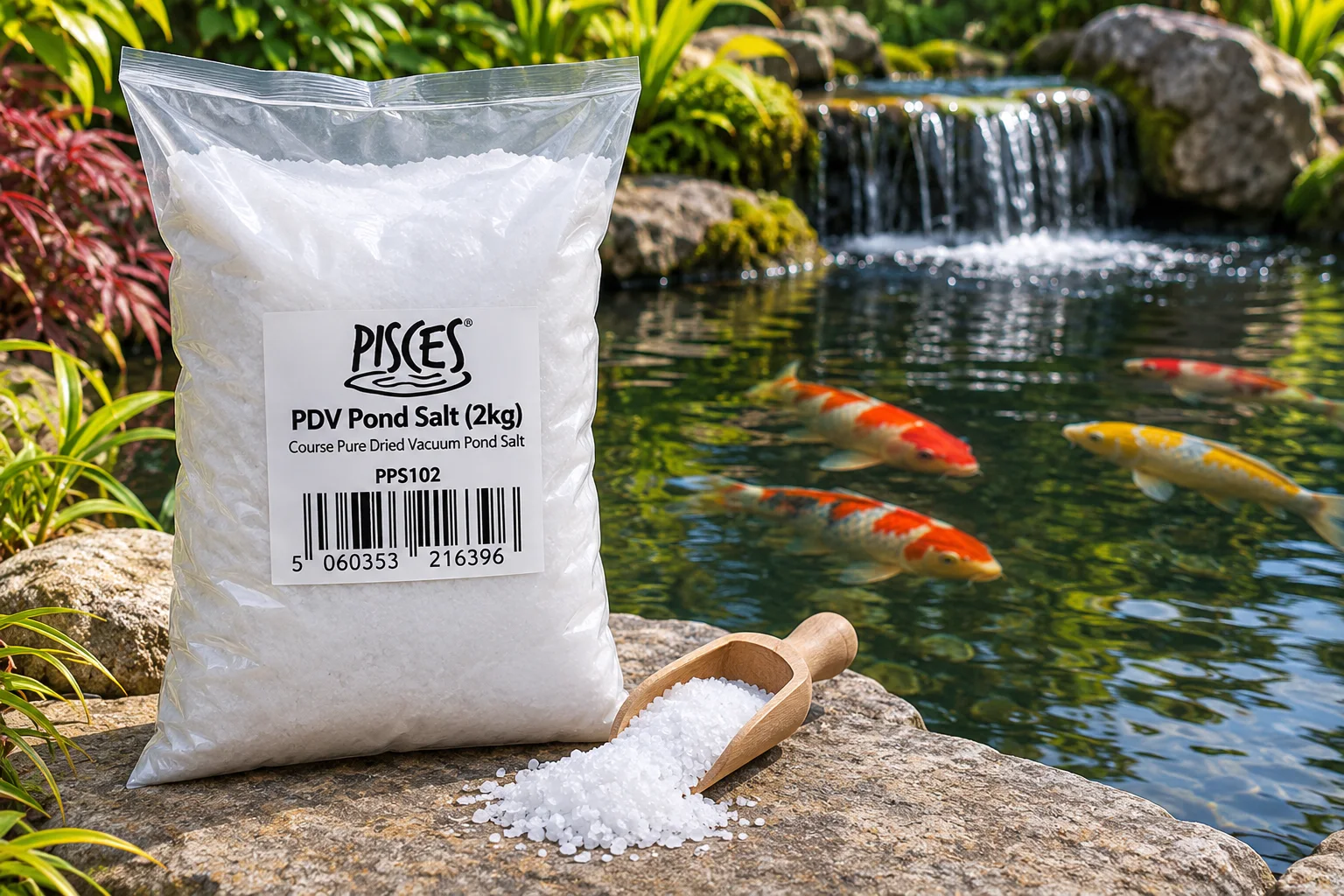
Pisces
Pond Salt
Best for: Small koi ponds, quarantine tanks and controlled salt treatments for freshwater pond fish.
As an Amazon Associate, we earn from qualifying purchases.
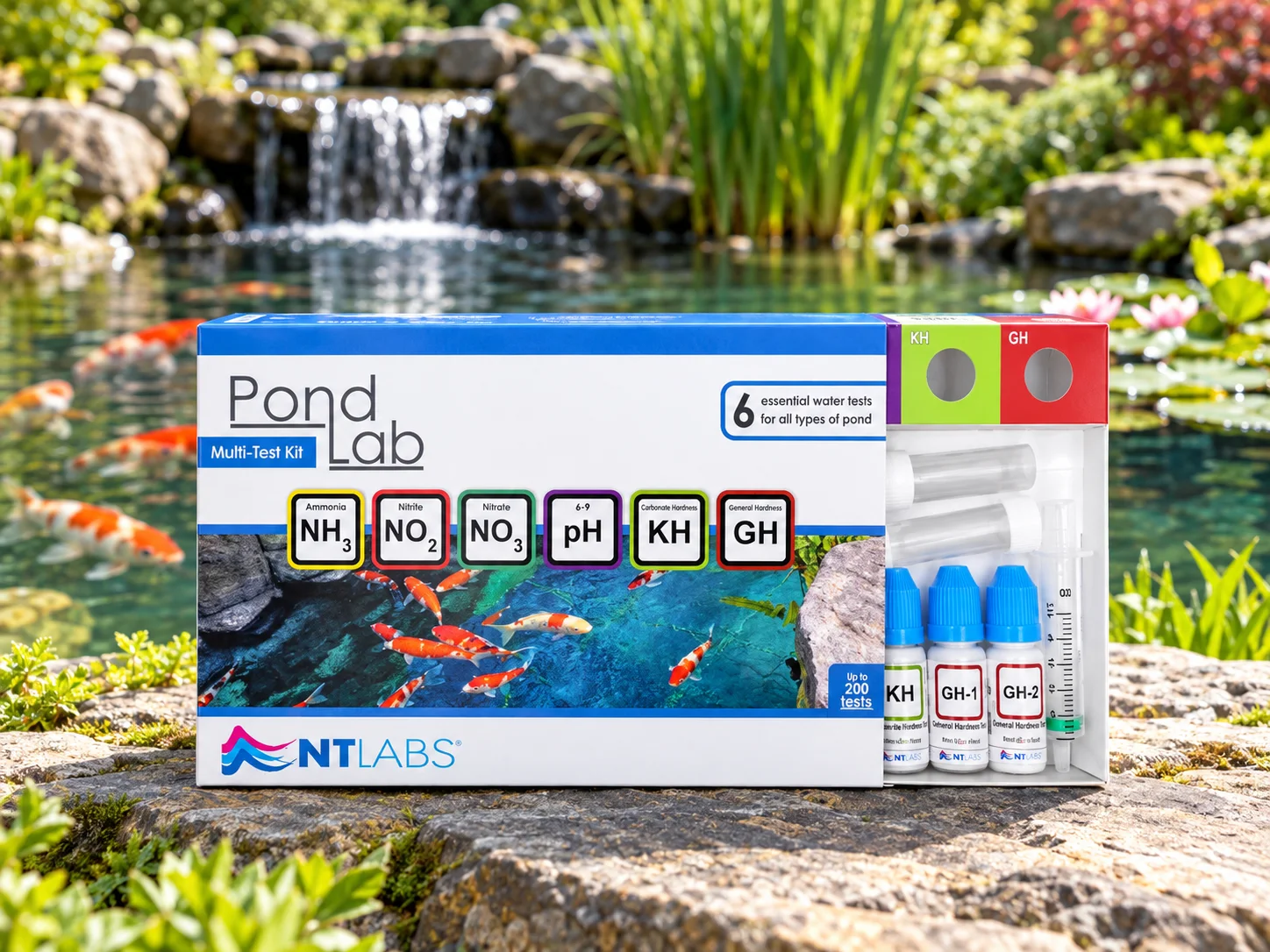
NT Labs
NT Labs Pond Lab Multi Test Kit
Best for: Complete routine water testing for fish ponds
As an Amazon Associate, we earn from qualifying purchases.