How to Culture Microworms for Fish Fry
Working in aquatics since 1997 and founder of Aquatic Specialist in 2003, Richard specialises in reef aquariums and pond maintenance and has lectured at Sparsholt College. Read Richard's profile.
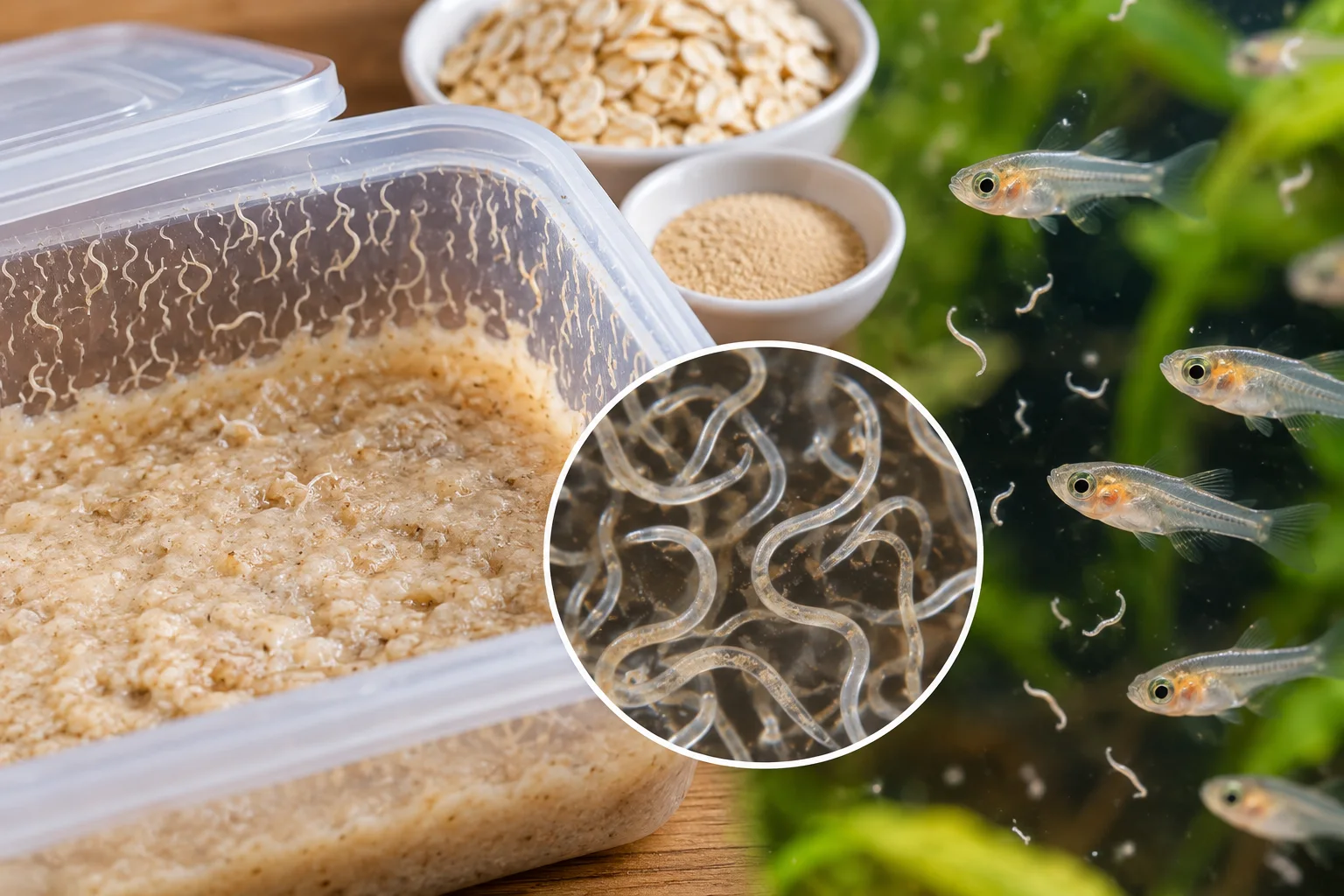
Microworms are an easy and inexpensive live food for small fish fry. This guide explains how I culture them using porridge oats and yeast, and how I use them when raising rainbowfish fry after they have progressed from infusoria.
Raising very small fish fry can be one of the most difficult parts of breeding aquarium fish. Newly hatched fry often need food that is much smaller than anything normally fed to adult fish, and for some species even newly hatched brine shrimp can initially be too large.
One live food that I have found particularly useful is the microworm.
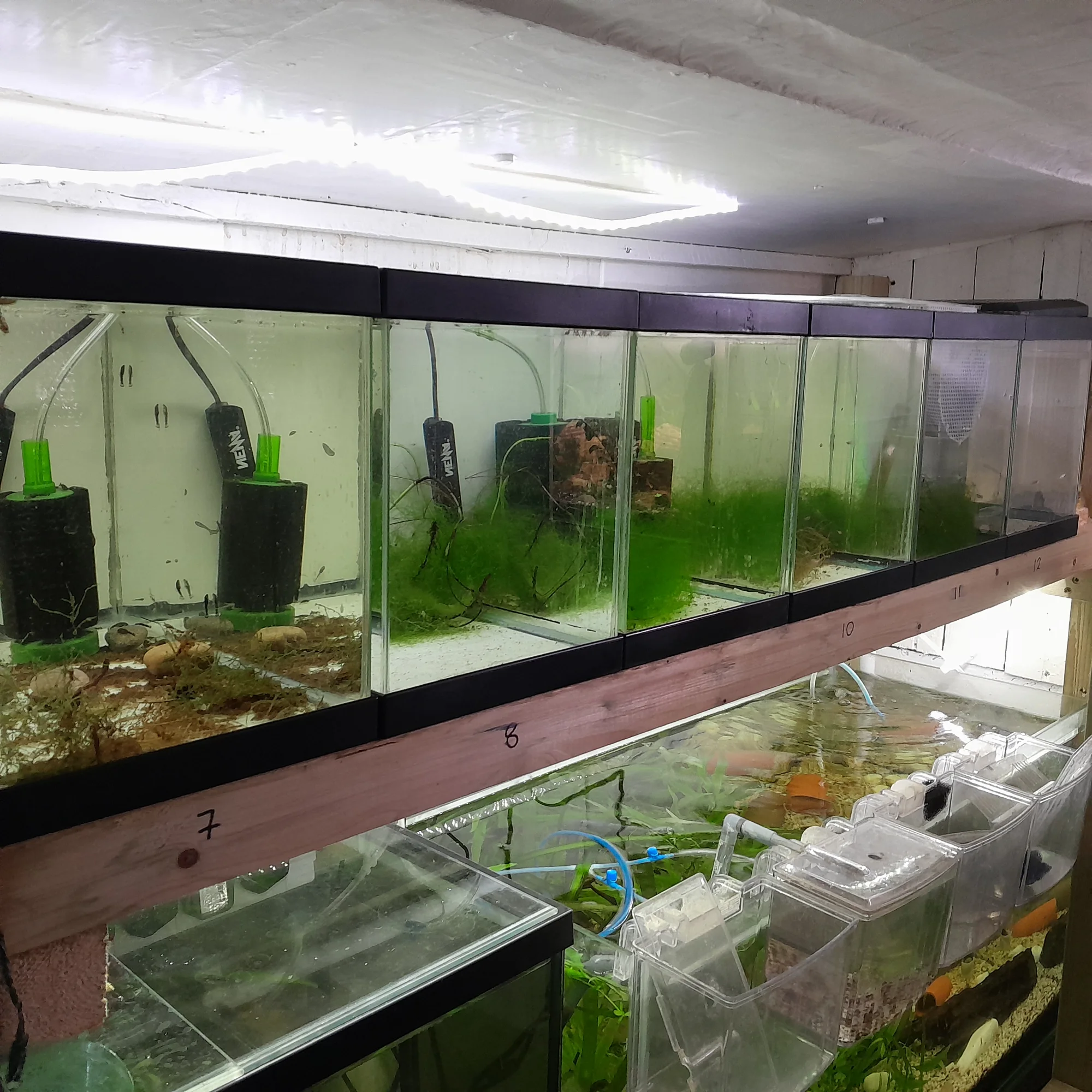
I have cultured microworms myself when raising rainbowfish fry. I normally start very small fry on infusoria and then introduce microworms once they have grown enough to take something slightly larger. They provide a useful stepping stone before the fry move on to larger foods such as newly hatched brine shrimp.
The good thing about microworms is that they are incredibly easy to produce at home. You do not need specialist equipment, air pumps or complicated hatcheries. I started with a microworm culture ordered online and have grown them using little more than porridge oats and yeast.
Once a culture becomes established, it can produce enormous numbers of worms from a relatively small container.
What Are Microworms?
Microworms are tiny free-living nematodes commonly cultured as live food for fish fry. One of the species most frequently used in the aquarium hobby is Panagrellus redivivus.
Individual worms are extremely small. Adult microworms are generally around 1.5–2 mm long, while newly produced worms are considerably smaller. Their narrow body shape and constant wriggling movement make them relatively easy for small fish fry to see and eat.
They also reproduce extremely quickly under suitable conditions. Females produce live young rather than laying eggs, helping a culture build up surprisingly fast.
For the fish keeper, however, the biology is less important than the fact that a small container can continuously produce thousands of tiny live foods.
Why Microworms Are Useful for Fish Fry
One of the biggest problems when raising fry is bridging the gap between microscopic first foods and larger foods.
Infusoria can be ideal during the earliest stage because the organisms are extremely small. The problem is that as fry grow, they quickly require something more substantial.
This is where I have found microworms particularly useful when raising rainbowfish.
After the fry have been feeding on infusoria, microworms can be introduced as a larger live food. As the fry continue growing, newly hatched brine shrimp and other foods can gradually be added.
Microworms also have the advantage of remaining alive in freshwater for a period after being added. Their movement attracts the fry and encourages a natural feeding response.
They are particularly useful for species producing very small fry, including many rainbowfish, killifish, tetras and other small egg-laying aquarium fish.
They are not necessarily something I would use as the sole long-term diet, however. Once the fry are large enough, I prefer to introduce additional foods so that they receive a more varied diet.
Starting a Microworm Culture
The easiest way to begin is to purchase a starter culture.
Microworm cultures are readily available online from aquarium breeders and live-food suppliers. You only need a small quantity because, once placed into suitable growing conditions, the worms reproduce rapidly.
For my cultures I use a simple porridge and yeast method.
You will need a shallow plastic container with a lid, some plain porridge oats, yeast, water and your starter microworm culture.
The container does not need to be particularly large. In fact, several smaller cultures can be more useful than one enormous culture.
The lid should not create a completely airtight seal. Microworm cultures need some gas exchange, although you certainly do not want large openings that allow flies or other insects to enter.
Making the Porridge Growing Medium
Prepare some plain porridge using oats and water.
You are aiming for a thick paste rather than a bowl of porridge you would eat for breakfast. It needs enough moisture for the culture to remain damp but should not be swimming in water.
Spread a layer across the bottom of the container.
You do not need a particularly deep layer. A relatively shallow layer gives the worms plenty of food while making the culture easier to manage.
Allow it to cool completely before adding your starter culture.
Once cool, sprinkle a small amount of yeast over the surface.
The yeast plays an important part in the culture. Microworm culture systems commonly use yeast alongside a cereal-based medium, and the resulting microbial growth provides the food supporting the worms.
You only need a small amount. Adding excessive yeast does not necessarily make the culture better and can cause it to deteriorate more quickly.
Finally, spread some of the starter culture across the surface.
Fit the lid and leave the container somewhere at normal room temperature.
How Long Does a Microworm Culture Take to Establish?
You should start seeing signs of activity relatively quickly.
Under suitable conditions microworm populations increase rapidly, and within several days you may begin seeing worms congregating around the edges of the culture.
A healthy established culture can contain an astonishing number of worms.
One of the easiest ways to recognise a productive culture is to look carefully at the sides of the container immediately above the porridge. Microworms gradually crawl up the plastic, producing a slightly shimmering or creamy film.
These worms climbing the sides are exactly what you want to harvest.
Harvesting Microworms
Harvesting is one of the reasons I like microworms.
There is no need to scoop out the porridge itself.
Instead, wipe the worms from the inside walls of the container above the level of the growing medium. A clean finger, cotton bud, small brush or similar tool can be used.
The collected worms can then be rinsed directly into the fry aquarium.
Try to avoid transferring the porridge mixture into the aquarium. The worms themselves are what you want, not the culture medium.
With a mature culture it is possible to harvest worms regularly, and the population continues reproducing underneath.
Feeding Microworms to Rainbowfish Fry
When I have bred rainbowfish, I have used microworms after the fry have progressed from infusoria.
I prefer to think of fry feeding as a gradual progression rather than suddenly changing from one food to another.
Initially, extremely small fry may depend heavily on infusoria. As they grow, I begin adding microworms. Later, once they are large enough, newly hatched brine shrimp and other foods can be introduced.
There can be some overlap between these stages.
You do not necessarily need to stop feeding infusoria the moment you start using microworms. Likewise, you can continue feeding microworms after the fry begin taking brine shrimp.
This means that fry of slightly different sizes still have something they can eat.
Microworms gradually sink through the water, so they are particularly useful where fry will feed throughout the aquarium rather than exclusively from the surface.
Feed relatively small quantities at a time. With fry it can be tempting to add large amounts of food because you want to make sure every fish finds something, but excessive feeding can quickly damage water quality.
Several small feeds are generally better than dumping a large quantity into the aquarium at once.
Keeping a Microworm Culture Going
A microworm culture will not remain productive forever. Over time the porridge begins to break down. It becomes increasingly liquid, the smell becomes stronger and eventually worm production starts declining.
Rather than waiting until the culture completely collapses, I prefer to start another one.
Prepare another container of porridge and yeast exactly as before and transfer a small quantity from the existing culture into it.
The worms quickly colonise the fresh medium.
It is also worth keeping more than one culture running if you regularly breed fish.
This provides some insurance.
Live-food cultures occasionally crash. A container can dry out, become contaminated or simply deteriorate faster than expected. If you only have one culture and it fails while you have hundreds of hungry fry, the timing can be extremely inconvenient.
Two small cultures kept at slightly different stages are much safer.
When Should You Replace the Culture?
A fresh microworm culture normally has a relatively mild fermented smell.
As it ages the medium becomes wetter and darker. Eventually the smell becomes considerably stronger.
If it becomes very runny, discoloured or unpleasantly rancid, I would start a replacement rather than continually trying to rescue it.
Keeping cultures clean also helps. Always harvest from the sides rather than repeatedly pushing dirty tools into the porridge.
Starting a new culture takes very little effort, so there is little benefit in trying to keep an old one running indefinitely.
Microworms Versus Newly Hatched Brine Shrimp
Microworms and brine shrimp are not really competitors because they are useful at slightly different stages.
Newly hatched brine shrimp are one of the best foods available for many growing fish fry. However, they are larger than microworms and some very small fry cannot initially eat them.
Microworms can help bridge that gap.
They also require considerably less daily preparation. Once a microworm culture is established, you simply harvest what you need. Brine shrimp normally need eggs, saltwater, aeration and time to hatch each batch.
I therefore tend to regard microworms as one part of a broader fry-feeding system rather than a replacement for every other food.
Infusoria can provide the first food, microworms the next step and brine shrimp can become increasingly important as the fry grow.
Are Microworms Worth Culturing?
If you regularly breed aquarium fish, particularly species producing very small fry, I think microworms are one of the easiest live foods worth maintaining.
A starter culture costs very little and can potentially be kept going indefinitely simply by transferring worms into fresh cultures.
You do not need specialist equipment and the ingredients cost almost nothing. Porridge oats, yeast, a plastic container and a small starter culture are essentially all that is required.
Having bred rainbowfish myself, I have found them particularly useful during that awkward period when fry are beginning to outgrow infusoria but are still extremely small.
They should not necessarily form the entire diet, and I would still introduce other suitable foods as the fry develop. But as a simple, inexpensive and extremely productive source of live food, microworms are difficult to beat.
If you are planning to breed small aquarium fish, setting up a culture before the eggs hatch means you can have a ready supply waiting when the fry reach the stage where they can use it.