How Long Should Aquarium Lights Be On? Getting the Balance Right
Working in aquatics since 1997 and founder of Aquatic Specialist in 2003, Richard specialises in reef aquariums and pond maintenance and has lectured at Sparsholt College. Read Richard's profile.
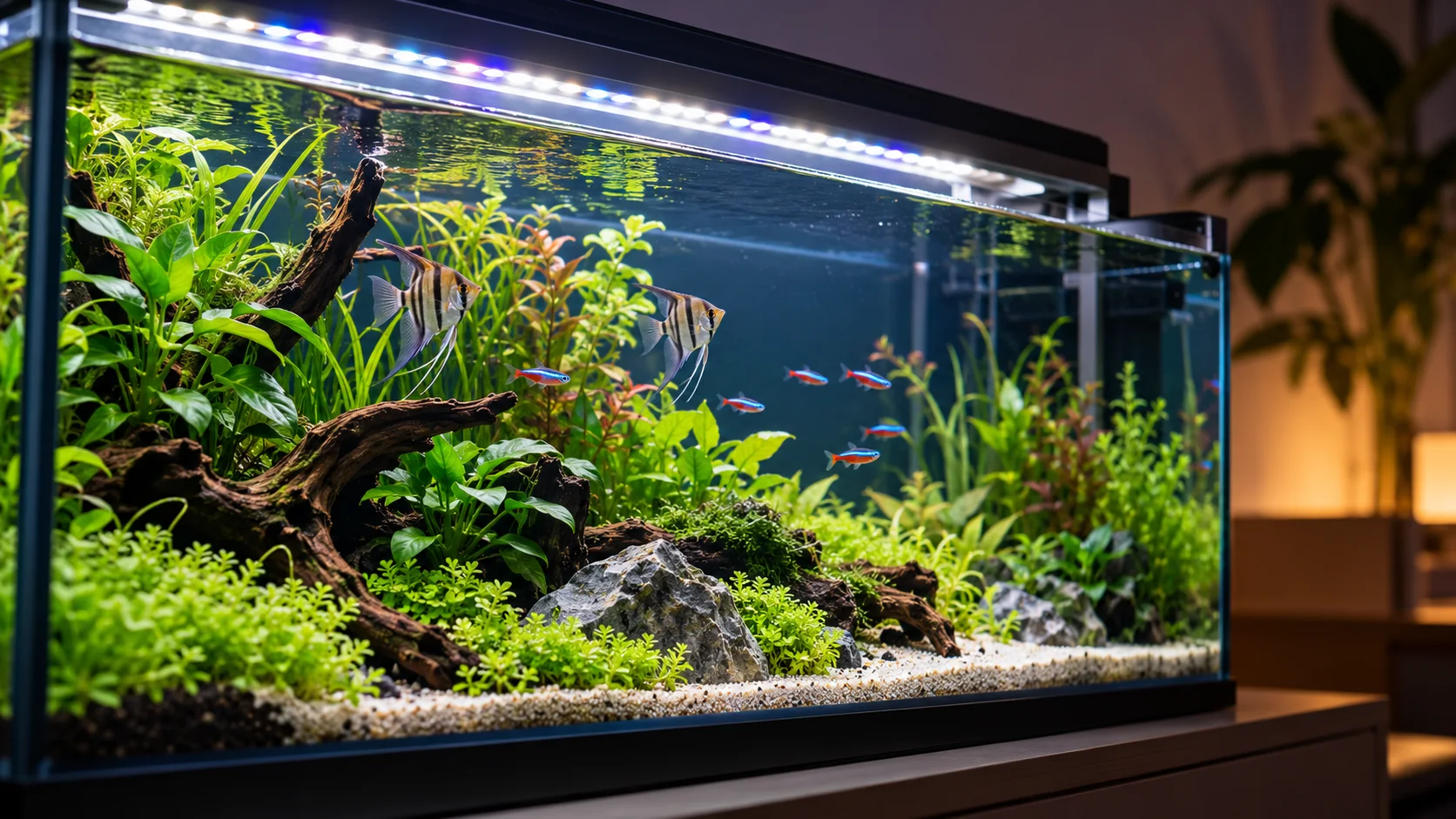
Getting aquarium lighting right is essential for healthy fish, thriving plants and controlling algae. Drawing on our experience maintaining freshwater aquariums, we explain why 6–8 hours of lighting is usually ideal, how to adjust your schedule and why programmable LED lights such as the Fluval Aquasky make aquarium lighting easier to manage.
Aquarium lighting is one of those things that seems straightforward until you start getting problems. You buy a light, switch it on in the morning, turn it off before bed and assume everything will be fine. Then, a few weeks later, the glass starts turning green, algae appears on the plants and you begin wondering whether the lights are on for too long.
It's something we regularly discuss with customers during our aquarium maintenance visits. Lighting plays a much bigger part in the overall health and appearance of an aquarium than many people realise, but getting it right doesn't have to be complicated.
The important thing to understand is that there's no single lighting schedule that suits every aquarium. A tank containing a few artificial plants and some community fish has very different requirements from a heavily planted aquascape. However, there are some simple principles that work for most aquariums, and making a few small adjustments can often make a noticeable difference.
How Many Hours Should Aquarium Lights Be On?
For most freshwater aquariums, we recommend starting with around 6–8 hours of lighting per day. This provides enough time to enjoy the aquarium while giving most commonly kept aquatic plants a reasonable period of light for photosynthesis.
It's tempting to leave aquarium lights running for 10 or 12 hours, particularly if you're at home throughout the day. After all, most tropical fish come from regions where daylight lasts considerably longer.
However, the light reaching fish and plants in their natural habitat isn't necessarily the same as the bright, concentrated lighting produced by a modern aquarium LED.
In the wild, sunlight is filtered through trees, floating vegetation and the water itself. Light levels also change throughout the day, rather than remaining at full intensity from morning until evening.
This is why we generally favour a shorter, consistent lighting period rather than leaving the aquarium illuminated for as long as possible.
For an established aquarium with healthy plant growth and very little algae, extending the lighting to eight or nine hours may work perfectly well. The key is to observe how the aquarium responds rather than assuming that more light must be better.
Why New Aquariums Often Need Less Light
One mistake we frequently see is new aquariums being given too much light before the biological system has had time to settle.
When an aquarium is first established, the plants are still adapting to their surroundings, the filter bacteria are developing and the balance between nutrients and plant growth hasn't yet stabilised.
Algae, unfortunately, is very good at taking advantage of these conditions.
For newly established planted aquariums, we recommend beginning with approximately six hours of lighting each day. Once the plants have settled and are showing signs of healthy growth, the lighting period can gradually be increased.
There's no need to rush this process. Increasing the lighting by half an hour and observing the results over the following week or two is usually a much better approach than suddenly adding several hours.
A little patience during the first few months can prevent a lot of unnecessary algae problems later.
Do Fish Actually Need Aquarium Lighting?
Fish don't require the same strong lighting that many aquatic plants do. In fact, some species naturally prefer subdued conditions.
Many popular aquarium fish originate from shaded streams, forest pools and rivers where overhanging vegetation reduces the amount of direct sunlight reaching the water.
Bright lighting can make these fish more nervous, particularly in aquariums without enough plants, driftwood or other places to shelter.
What fish do benefit from is a reasonably consistent day-and-night cycle. Just as in nature, they need a period of darkness when they can rest.
Leaving the aquarium lights on continuously isn't a good idea. Even if the fish appear active, constant illumination can interfere with their normal behaviour.
If your aquarium contains artificial decorations rather than live plants, the lighting is largely there for your enjoyment. You can therefore arrange the hours around when you're most likely to be watching the fish, provided they still receive a proper period of darkness.
Getting the Lighting Right for Live Plants
Planted aquariums need slightly more consideration because light is essential for photosynthesis. However, the amount of light required depends heavily on the plants being grown.
Hardy species such as Java fern, Anubias and many Cryptocoryne varieties generally cope well with relatively modest lighting. These are excellent choices for aquariums where simplicity and low maintenance are priorities.
More demanding plants, particularly some carpeting plants and red-stemmed varieties, often require stronger lighting alongside suitable nutrients and, in some cases, additional carbon dioxide. This is where it's important to distinguish between lighting duration and lighting intensity.
A powerful LED running for six hours can deliver considerably more light than a weaker unit operating for eight hours. Simply increasing the number of hours won't necessarily compensate for a light that isn't powerful enough to reach plants growing near the substrate.
Equally, increasing the brightness without ensuring that plants have sufficient nutrients and available carbon can create problems.
For most everyday planted aquariums, we would rather see a sensible lighting schedule and steady plant growth than extremely powerful lighting that becomes difficult to manage.
Can Leaving Aquarium Lights On Too Long Cause Algae?
Absolutely, although lighting is rarely the only factor involved. One of the first things we check when visiting an aquarium with persistent algae problems is how long the lights are operating.
It's not unusual to discover that they're being switched on before work and left running until late evening. That can easily amount to 12 or 14 hours every day.
Reducing this to seven or eight hours can make a considerable difference, particularly when combined with regular maintenance and sensible feeding.
However, algae growth is also influenced by available nutrients, plant growth, water quality and the amount of natural light entering the aquarium. An aquarium positioned near a sunny window may receive several additional hours of light even when its LED unit is switched off.
This is worth remembering because adjusting the aquarium light alone won't necessarily solve the problem if direct sunlight is reaching the glass.
We also wouldn't recommend continually changing the lighting settings every few days. Aquariums respond better to consistency, and plants need time to adjust.
If algae is becoming troublesome, reduce the lighting slightly, review the general maintenance routine and give the aquarium time to respond.
Modern LED Lighting Makes Everything Easier
One of the biggest improvements in aquarium equipment over recent years has been the development of programmable LED lighting. Years ago, aquarium lighting was often controlled by a simple plug-in timer, and adjusting the brightness usually wasn't an option.
Today, many LED units can be controlled directly through a smartphone app, allowing you to set the lighting hours, adjust the intensity and create gradual sunrise and sunset periods.
We use several different lighting brands across the aquariums we maintain, but one of the most popular ranges we use is the Fluval Aquasky.
We've found the Fluval Aquasky range easy to work with, and in our experience, the units have generally proved more reliable than some of the cheaper brands available.
The app control is particularly useful. Rather than relying on somebody to remember to switch the aquarium lights on and off, we can programme a consistent daily schedule.
Fluval Aquasky 2.0 lights use the FluvalSmart app, while the newer Aquasky 3.0 range uses FluvalConnect.
Both allow lighting schedules to be customised, including gradual changes in brightness throughout the day.
We particularly like being able to create a gentle sunrise in the morning followed by a gradual reduction in lighting during the evening.
This is less abrupt for the fish than suddenly switching a bright light on in a dark room, and it also makes the aquarium look more natural.
You don't necessarily need an expensive programmable LED to achieve good results, though. A basic aquarium light connected to a reliable timer can still do an excellent job. The important thing is that the lighting schedule remains consistent.
What About Blue Moonlight at Night?
Many modern LED lights include a blue moonlight setting, which can look attractive when the main lighting switches off.
A short period of subdued blue lighting during the evening is generally fine, but we wouldn't recommend leaving it operating throughout the entire night.
Fish still need a proper dark period, and even relatively dim lighting can interfere with that if it remains on continuously.
If you're using an app-controlled light, it's easy to programme a short evening transition before the aquarium becomes completely dark. We generally prefer this approach to having blue lighting running until morning.
Finding the Right Schedule for Your Aquarium
Ultimately, the best lighting schedule is the one that produces healthy plants, comfortable fish and manageable algae growth.
For a typical freshwater community aquarium, a good starting point would be to have the lights come on around midday and switch off at approximately 8pm.
There's no particular advantage to having the aquarium illuminated early in the morning if nobody is there to enjoy it. Setting the lights to operate during the afternoon and evening often makes much more sense.
Once you've established a schedule, try to keep it consistent for a few weeks before making further adjustments.
Pay attention to how the plants are growing, whether algae is developing on the glass and how the fish behave when the lighting comes on. If everything is looking healthy, there's little reason to change anything.
After many years of maintaining aquariums, one thing we've learned is that keeping things simple often produces the best results.
You don't need the brightest lighting unit or the most complicated programme. A good-quality LED, a sensible lighting period and regular aquarium maintenance will usually achieve far better results than constantly adjusting settings in search of the perfect balance.
For most freshwater aquariums, six to eight hours of consistent lighting is an excellent place to start. From there, let the aquarium tell you whether anything needs changing.
Products We've Mentioned & Recommend
Below you'll find a selection of products we've mentioned in this article, along with a few others we think you might find useful. We've included Amazon links to make them easy to find.
A quick word about affiliate links...
Some of these links are affiliate links, which means we may earn a small commission from qualifying purchases, at no extra cost to you.
Unfortunately, the commission doesn't quite stretch to cocktails on a yacht or a garage full of sports cars. In reality, it helps cover the running costs of this website and, with a bit of luck, might eventually buy me a new pair of waders that don't leak!
We only recommend products we genuinely believe are worth considering, and your support helps us keep sharing free advice from our years of working with aquariums and ponds.
Thanks for supporting Aquatic Specialist!
As an Amazon Associate I earn from qualifying purchases.
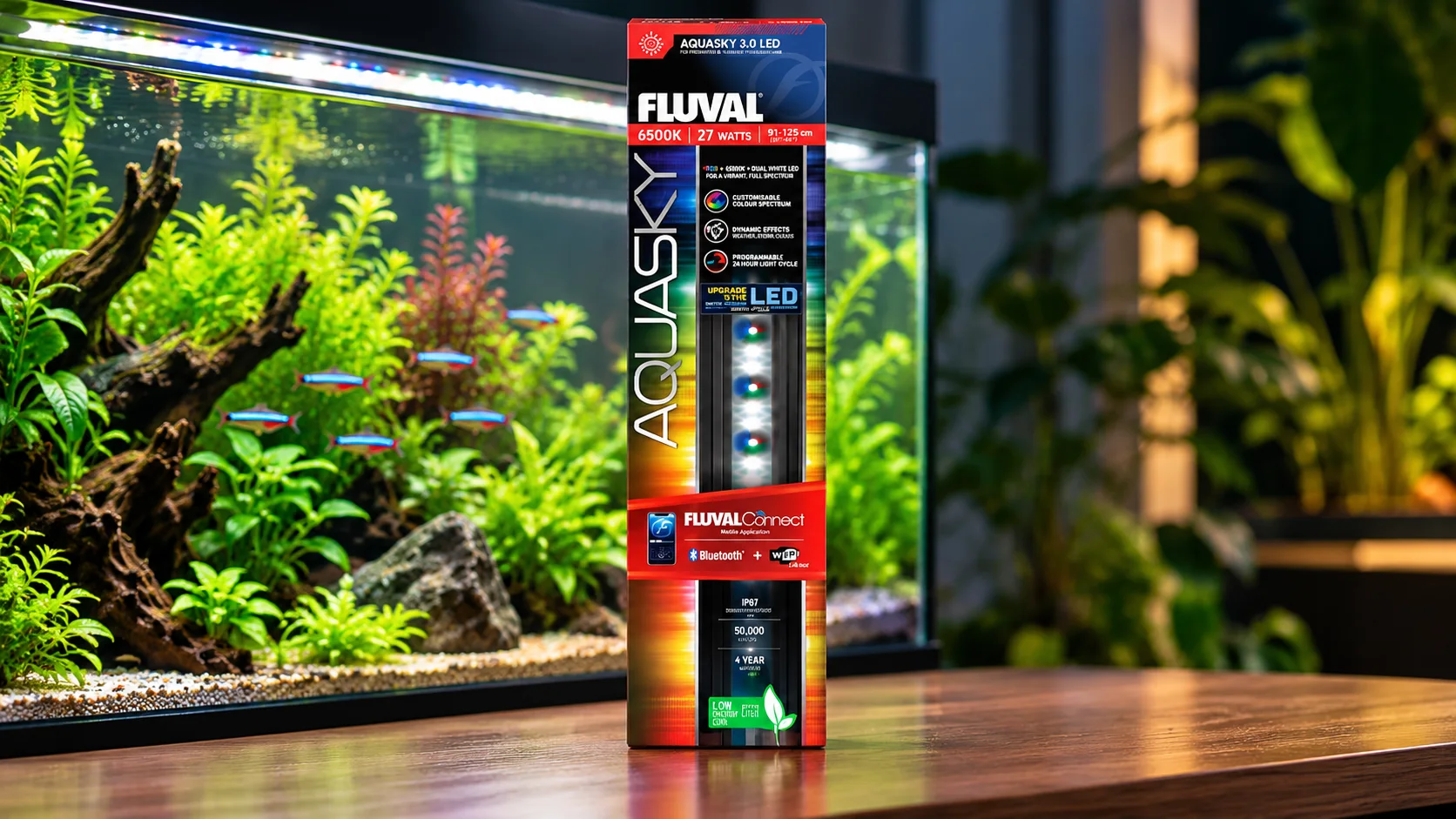
Fluval
Fluval Aquasky 3.0 LED Aquarium Lighting (12W–33W)
Best for: Freshwater community aquariums and low-to-medium-light planted tanks, with models available for different aquarium sizes.
As an Amazon Associate, we earn from qualifying purchases.