Frontosa Cichlid Care Guide: Keeping the Majestic Humphead Cichlid
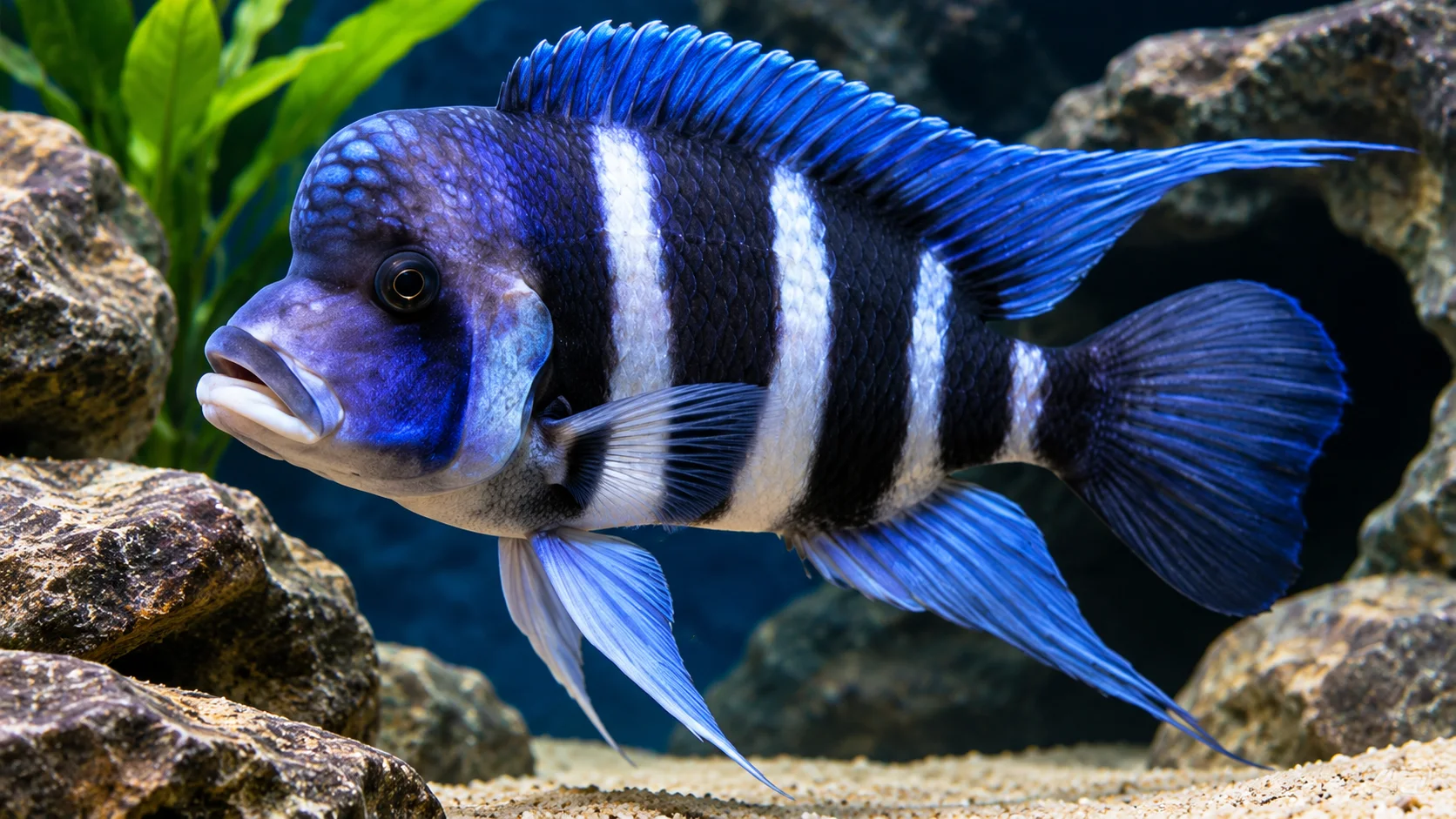
The Frontosa Cichlid is one of Lake Tanganyika's most impressive fish, recognised by its bold stripes, beautiful blue fins and distinctive forehead hump. Discover how to keep these magnificent African cichlids healthy, from choosing the right aquarium and tankmates to feeding, water conditions and breeding.
There are few freshwater aquarium fish quite as impressive as the Frontosa Cichlid. With its bold black and white stripes, beautiful blue fins and distinctive hump-shaped forehead, this magnificent African cichlid has an unmistakable appearance. Unlike many of the smaller, constantly active cichlids, Frontosas tend to move slowly and deliberately around the aquarium, giving them an almost regal presence.
The Frontosa Cichlid (Cyphotilapia frontosa), also known as the Humphead Cichlid, originates from Lake Tanganyika in East Africa. Although these fish are generally peaceful compared with some other large African cichlids, their considerable adult size and particular requirements mean they are best suited to experienced fishkeepers with plenty of space.
For anyone considering keeping Frontosas, understanding their natural environment is the key to keeping them healthy and allowing their fascinating behaviour to develop.
Where Do Frontosa Cichlids Come From?
Lake Tanganyika is one of the world's largest and deepest freshwater lakes, stretching across several East African countries. It is famous for its extraordinary variety of cichlids, many of which are found nowhere else in the world.
Frontosas inhabit the deeper rocky areas of the lake, often living at depths of 20 metres or more. Here, the water is exceptionally clear, alkaline and rich in dissolved minerals.
Unlike the colourful, territorial cichlids commonly associated with Lake Malawi, Frontosas naturally form social groups. They spend much of their time moving slowly between rocks, occasionally venturing into more open areas in search of food.
Several geographical varieties are available within the aquarium trade, including Burundi and Kigoma Frontosas. Their colouring and banding can vary depending on their place of origin.
It is also worth mentioning that some of the particularly striking blue varieties sold as Frontosas, including Blue Zaire, actually belong to the closely related species Cyphotilapia gibberosa. Both species have broadly similar care requirements, although they should not be mixed indiscriminately, particularly when breeding.
How Big Do Frontosa Cichlids Grow?
One of the biggest considerations when purchasing Frontosas is their eventual size. Adult males can reach approximately 30–35cm (12–14 inches), while females generally remain somewhat smaller. Their deep bodies and substantial weight make them considerably larger than many other popular aquarium cichlids.
The distinctive forehead hump becomes more prominent as the fish mature, particularly in dominant males. However, females can also develop a noticeable hump, so this feature alone cannot reliably determine their sex.
Frontosas are relatively slow-growing fish, and it can take several years for them to reach full maturity.
They are also long-lived, potentially surviving for 15–20 years or more under suitable conditions. Purchasing a group of young Frontosas is therefore a considerable long-term commitment.
The Ideal Aquarium for Frontosa Cichlids
In our experience maintaining large aquariums, providing sufficient space from the beginning is always preferable to repeatedly upgrading equipment as fish grow.
For an established group of adult Frontosas, we would recommend an aquarium measuring at least 240cm (8 feet) long, ideally holding around 850–1,000 litres or more. Larger aquariums provide additional room for social interactions and help maintain stable water conditions.
Although juveniles can temporarily be housed in smaller aquariums, their adult requirements should always be considered before purchasing them.
A natural Frontosa aquarium should incorporate substantial rock formations, caves and areas of open sand.
Large rocks provide shelter and help establish a comfortable environment, while open spaces allow the fish to move around without constantly encountering one another.
Any substantial rockwork should be securely supported before adding the sand, preventing fish from undermining unstable structures.
Fine sand makes an excellent substrate and closely resembles the natural environment of Lake Tanganyika.
We would avoid excessively bright lighting. Frontosas originate from deeper water and generally appear more comfortable under subdued illumination. Modern adjustable LED lighting makes it relatively straightforward to create a suitable environment.
Water Conditions and Filtration
Frontosas require hard, alkaline water, reflecting the conditions found in their natural habitat. A temperature of approximately 23–27°C is suitable, with a pH between 8.0 and 9.0 and general hardness around 10–25°dGH.
Working in an area where much of the tap water is naturally hard, we regularly encounter aquariums where mineral-rich water can be an advantage when keeping certain species.
However, hard water does not automatically mean the chemistry is suitable for Frontosas. Testing both pH and hardness is important, particularly if the aquarium is being established specifically for Tanganyikan cichlids.
More important than constantly adjusting the water is maintaining stable conditions.
Large Frontosas produce a considerable amount of waste, making effective biological and mechanical filtration essential. We would recommend substantial external filtration or a properly designed sump, depending on the aquarium's dimensions.
Regular partial water changes are equally important. Around 25–30% weekly can be a useful starting point, with the actual schedule determined by stocking levels, feeding and water testing.
Frontosas appreciate well-oxygenated water, but they do not require excessively powerful currents.
What Should You Feed Frontosa Cichlids?
In the wild, Frontosas are predators, feeding on smaller fish and various aquatic invertebrates. Fortunately, aquarium specimens generally adapt well to prepared foods.
A good-quality sinking cichlid pellet should form the basis of their diet, supplemented with suitable frozen foods such as krill, mysis shrimp, prawns and mussels.
Providing variety helps maintain good condition and encourages natural feeding behaviour. We would avoid feeding live feeder fish, which can introduce parasites and diseases. Mammalian meat, including beef heart, is also unsuitable as a regular food.
Frontosas are not particularly fast feeders, especially when housed alongside more energetic species. It is important to ensure that every fish receives sufficient food without allowing uneaten food to accumulate.
As with most large aquarium fish, overfeeding can quickly affect water quality.
Are Frontosa Cichlids Aggressive?
Despite their imposing appearance, Frontosas are generally calmer than many other large African cichlids. They establish a social hierarchy, with dominant males often occupying preferred areas of the aquarium. Nevertheless, they are naturally sociable and should not normally be kept alone.
A group of at least five or six is preferable, with one male and several females often providing a suitable arrangement where space allows.
Aggression can occur, especially between competing males or when the aquarium is overcrowded. Choosing tankmates requires particular care.
Although Frontosas are relatively peaceful, they are still predators and may consume smaller fish, particularly during periods of reduced lighting. Small community fish and many smaller Tanganyikan cichlids are therefore unsuitable companions.
Larger, compatible Lake Tanganyika species may work in sufficiently spacious aquariums, although a dedicated Frontosa aquarium is often the most straightforward approach.
Breeding Frontosa Cichlids
Breeding Frontosas can be particularly rewarding, although patience is essential. These fish may take several years to become sexually mature, and successful breeding is more likely in established groups with stable water conditions.
Frontosas are maternal mouthbrooders, meaning the female carries the fertilised eggs inside her mouth until the young are sufficiently developed.
A female may carry her eggs and developing fry for approximately five to seven weeks, sometimes longer. During this period, she may become more withdrawn and spend additional time in sheltered areas.
Unlike some other mouthbrooding cichlids, female Frontosas can take in small food particles while carrying their young.
When the fry are eventually released, they are relatively large and can be offered appropriately sized foods such as newly hatched brine shrimp.
Providing a peaceful environment and avoiding unnecessary disturbance gives breeding females the best chance of successfully raising their young.
Are Frontosa Cichlids Worth Keeping?
For aquarists with sufficient space, Frontosas are among the most impressive freshwater fish available. Their combination of striking colouration, substantial size and surprisingly calm behaviour makes them fascinating inhabitants of a large aquarium.
However, they are certainly not suitable for everyone. Their slow growth can make young specimens appear manageable, but their eventual size, social requirements and long lifespan must never be underestimated.
At Aquatic Specialist, we always encourage fishkeepers to consider the adult requirements of a species rather than simply choosing fish based on their appearance in an aquatic shop.
With a properly planned aquarium, stable water chemistry, quality filtration and a suitable group, Frontosa Cichlids can become a magnificent centrepiece for many years.
For anyone looking to create a dedicated Lake Tanganyika aquarium, few fish can match the presence of a mature Frontosa.
Products We've Mentioned & Recommend
Below you'll find a selection of products we've mentioned in this article, along with a few others we think you might find useful. We've included Amazon links to make them easy to find.
A quick word about affiliate links...
Some of these links are affiliate links, which means we may earn a small commission from qualifying purchases, at no extra cost to you.
Unfortunately, the commission doesn't quite stretch to cocktails on a yacht or a garage full of sports cars. In reality, it helps cover the running costs of this website and, with a bit of luck, might eventually buy me a new pair of waders that don't leak!
We only recommend products we genuinely believe are worth considering, and your support helps us keep sharing free advice from our years of working with aquariums and ponds.
Thanks for supporting Aquatic Specialist!
As an Amazon Associate I earn from qualifying purchases.
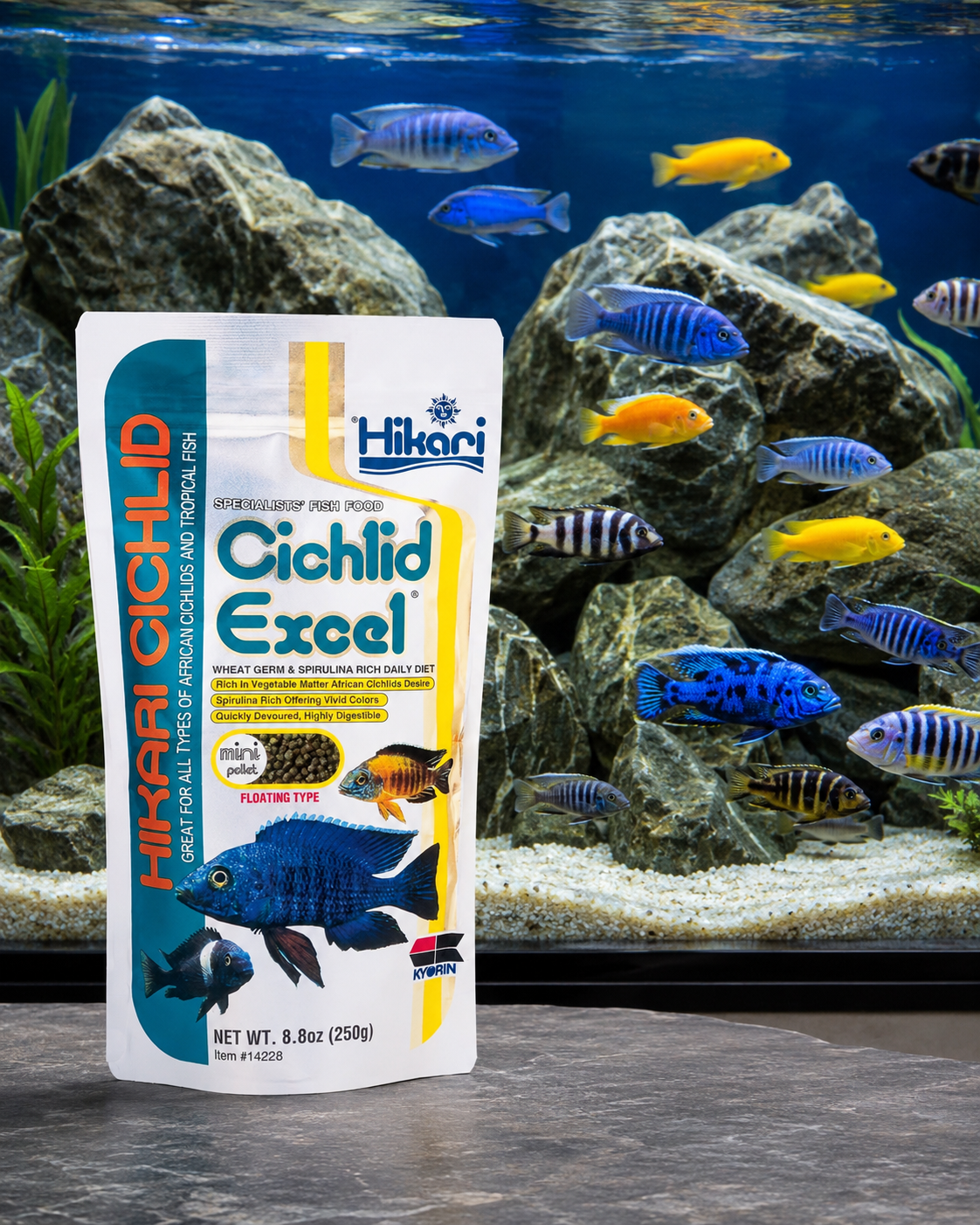
Hikari
Hikari Cichlid Excel Floating Pellets
Best for: Mbuna and omnivorous Malawi cichlids
As an Amazon Associate, we earn from qualifying purchases.
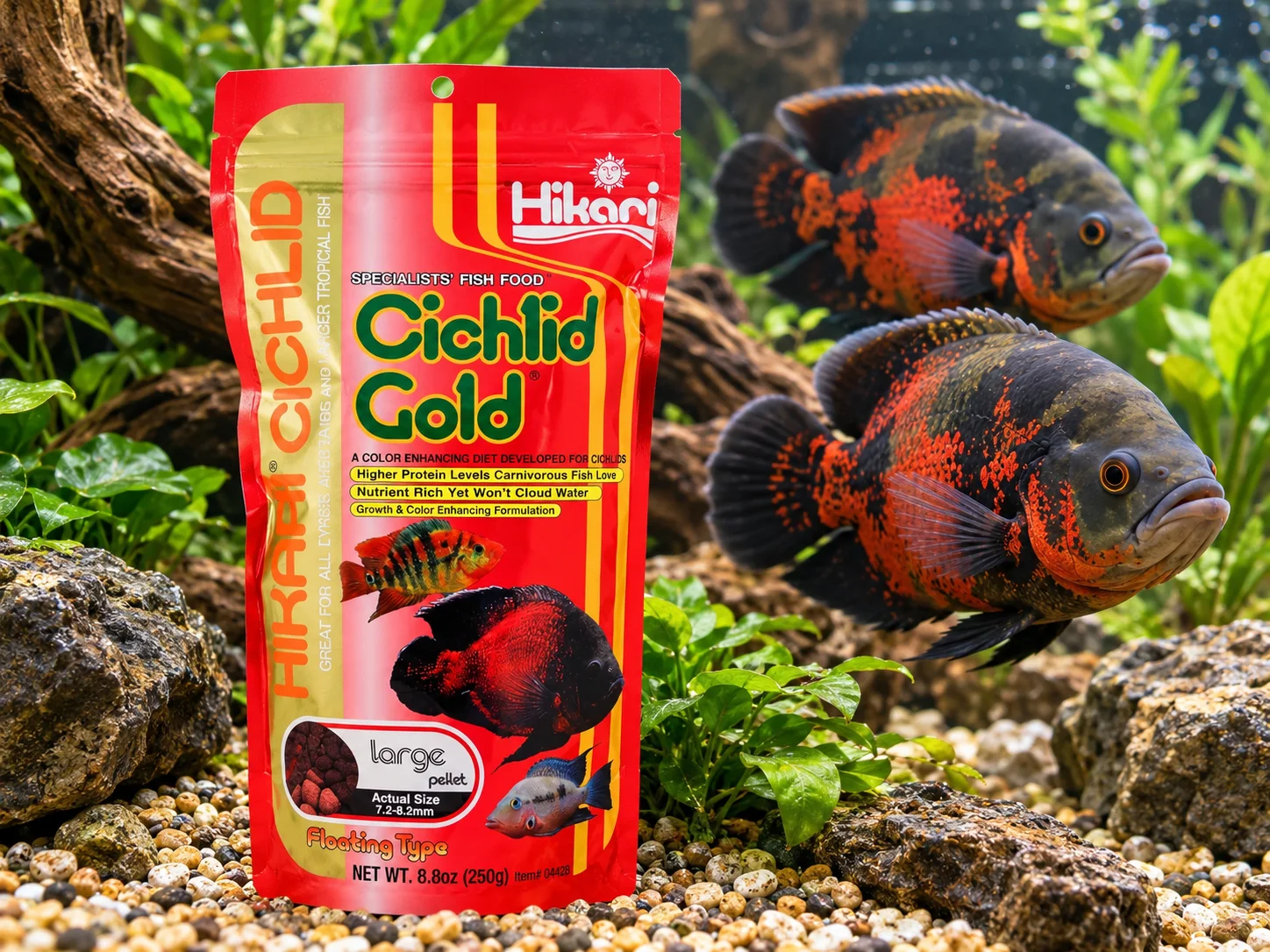
Hikari
Cichlid Gold Fish Food Large Pellet Floating Type 8.8 oz (250g)
Best for: Adult Oscars and other large carnivorous or omnivorous cichlids.
As an Amazon Associate, we earn from qualifying purchases.
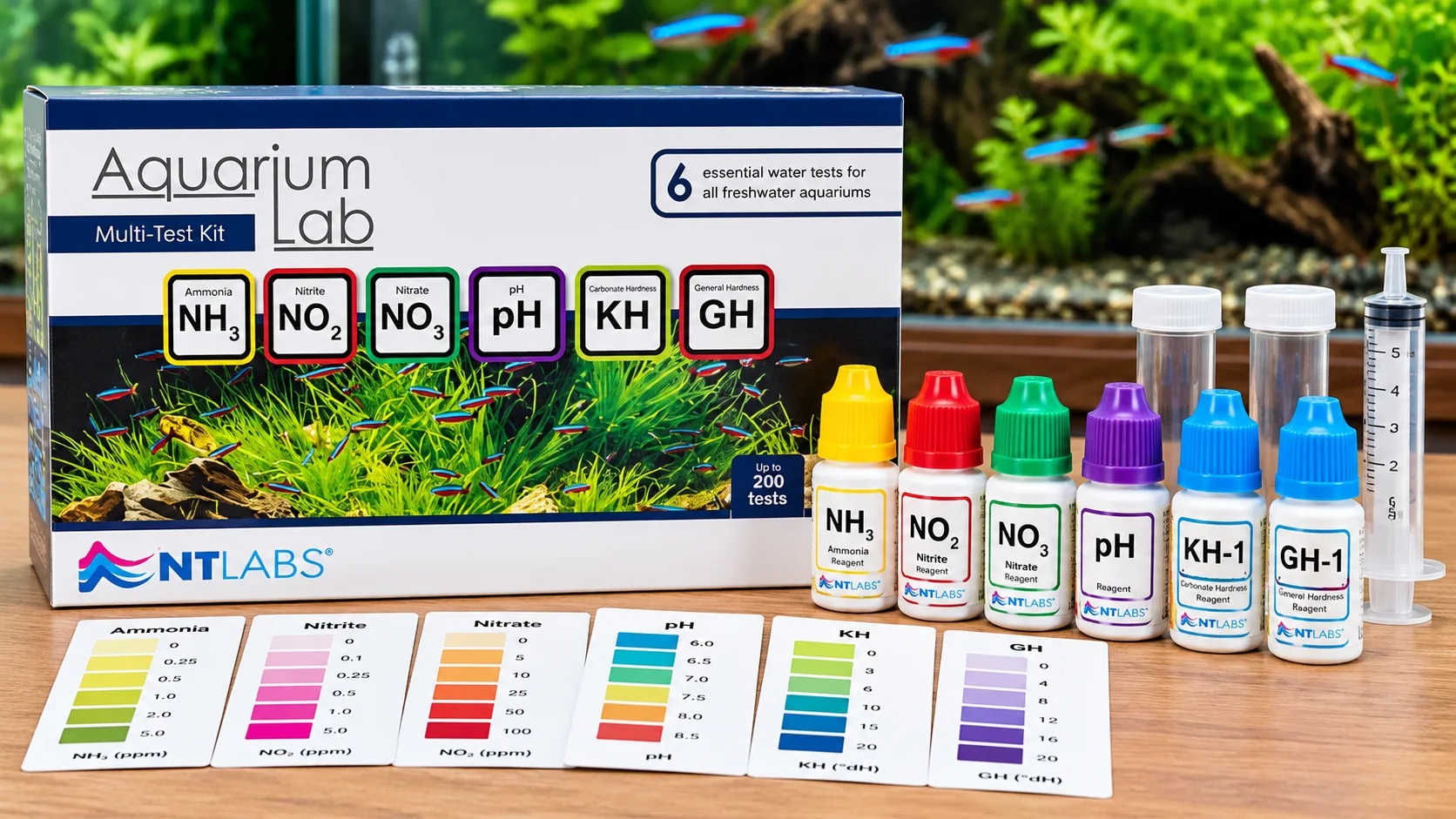
NT Labs
NT Labs Aquarium Lab Multi Test Kit
Best for: Cycling new freshwater aquariums and routine water quality monitoring.
As an Amazon Associate, we earn from qualifying purchases.