Mandarin Dragonet Care Guide: Stunning Reef Beauty
The Mandarin Dragonet is arguably the most beautiful fish in the marine hobby, boasting psychadelic patterns and vibrant colors that seem almost artificial. While they are a crown jewel for any reef tank, keeping them successfully requires specialized knowledge and a mature ecosystem to ensure they remain healthy and well-fed.
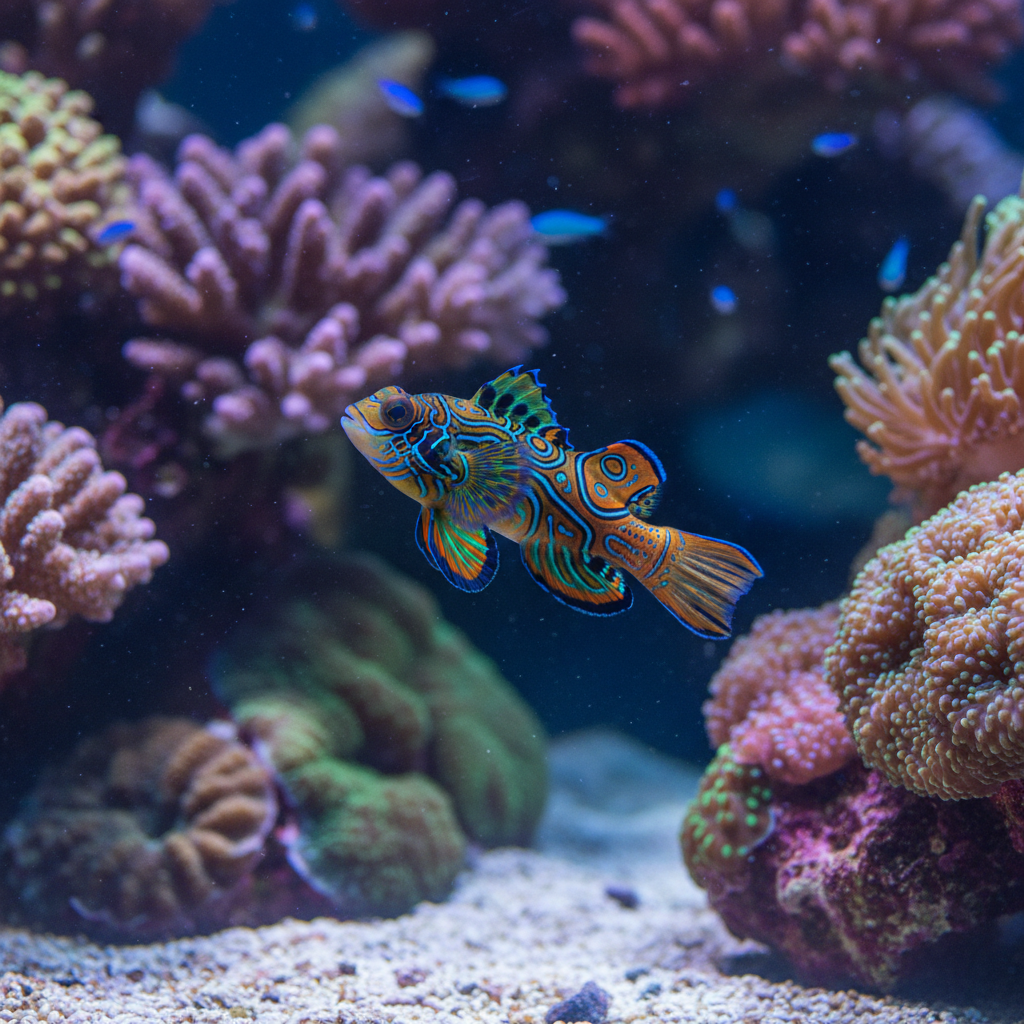
Introduction to the Mandarin Dragonet
The Mandarin Dragonet (Synchiropus splendidus), also frequently called the Mandarin Goby, is a small, brightly colored member of the dragonet family. Native to the Pacific Ocean, ranging approximately from the Ryukyu Islands south to Australia, these fish are famous for their intricate patterns that resemble the robes of an Imperial Chinese mandarin.
Unlike many other marine species, the Mandarin Dragonet does not have scales. Instead, it is protected by a thick layer of foul-smelling and bitter-tasting mucus. This biological defense mechanism not only protects them from parasites and skin infections but also makes them unpalatable to many potential predators.
Physical Characteristics
The most striking feature of the Mandarin Dragonet is its color. They possess a base of blue, orange, or green with wavy lines of contrasting colors. Interestingly, the blue coloration in the Mandarin Dragonet is the result of cellular pigment (cyanophores) containing blue light-reflecting crystals, which is rare in the animal kingdom.
They have a unique, almost 'hovering' swimming style, powered by rapid movements of their pectoral fins. Their eyes are large and bulbous, moving independently to scan for tiny prey among the rockwork. Males can be distinguished from females by their significantly elongated first dorsal spine, which they flare during territorial displays or courtship.
Behavior and Temperament
In the home aquarium, the Mandarin Dragonet is a peaceful, slow-moving inhabitant. They spend almost all of their daylight hours 'hopping' across the substrate and live rock, constantly hunting for food. They are not aggressive toward other fish species, but males are notoriously territorial toward other male dragonets. Unless you have a very large tank (over 500 liters), it is best to keep only one Mandarin Dragonet or a mated pair.
Because they are slow and deliberate, they can easily be outcompeted for food by faster, more aggressive feeders like Wrasses or Anthias. This is the primary challenge when learning how to keep Mandarin Dragonets successfully over the long term.
Why They Are Considered Expert-Only
While they are disease-resistant and peaceful, the Mandarin Dragonet has a very high mortality rate in captivity due to starvation. They are 'obligate micro-carnivores,' meaning they almost exclusively eat tiny crustaceans called copepods. A single Mandarin can consume thousands of copepods a day. Without a massive, self-sustaining population of these pods, the fish will slowly waste away. This guide will detail exactly how to prevent this and ensure your dragonet thrives.
🌍 Natural Habitat
In the wild, Mandarin Dragonets inhabit shallow, protected lagoons and inshore reefs. They are often found among the branches of dead corals or hiding in rubble beds where their prey is most abundant.
To replicate this in the aquarium, you must provide a 'forest' of high-quality live rock. This rock serves as the hunting ground and the breeding site for the copepods they depend on. A refugium is highly recommended; this is a separate, protected area of the tank (often in the sump) where copepods can breed without being hunted, providing a constant 'drip' of food into the main display.
Water Parameters:
- Temperature: 24°C to 26°C (75°F to 79°F)
- pH: 8.1 to 8.4
- Specific Gravity: 1.023 to 1.025
- Carbonate Hardness (dKH): 8 to 12
- Ammonia/Nitrite: 0 ppm
- Nitrate: < 10 ppm
Stability is key. While the fish themselves are hardy, their food source (copepods) can be sensitive to fluctuations in water quality.
🏠 Care Requirements
Tank Size
A minimum of 115 liters (30 gallons) is often cited, but for a beginner, 200 liters (55 gallons) is much safer. The larger the volume and the more live rock you have (at least 20-30kg), the more likely you are to maintain a stable food population.
Filtration and Flow
Standard reef filtration (protein skimmer and mechanical filtration) is perfect. Flow should be moderate; you want enough movement to keep the water oxygenated, but not so much that the slow-swimming Mandarin is blown around the tank.
Substrate
A sandy substrate is preferred over coarse crushed coral. Mandarins will often sift through the very top layer of sand or rest on it during the night.
Lighting
Standard reef lighting is fine. The fish do not have specific light requirements, but your live rock and potential corals will. Ensure there are plenty of shaded caves and overhangs where the Mandarin can retreat if it feels stressed.
Maintenance Schedule
- Daily: Observe the fish’s belly. It should be slightly rounded. A pinched-in belly is a sign of starvation.
- Weekly: Test water parameters and replenish copepod populations if they seem low.
- Bi-Weekly: 10-15% water change to maintain mineral balance and low nitrates.
🐟 Compatible Tank Mates
Choosing the right tank mates is critical for the Mandarin Dragonet care guide. You must avoid 'food competitors' and 'predators.'
Compatible Species:
- Clownfish: Generally ignore Mandarins as they occupy different niches.
- Royal Grammas: Peaceful and stay near their rock crevices.
- Blenny species: Most are herbivorous and won't compete for copepods.
- Pipefish: If the tank is large enough, though they also eat pods.
- Coral: They are 100% reef safe and will not bother sessile invertebrates.
Incompatible Species:
- Six-Line Wrasse: These are the biggest rivals. They hunt the same copepods and are much faster and more aggressive.
- Large Angels/Groupers: May see the small Mandarin as a snack despite the mucus coat.
- Anemones: Large, stinging anemones (like Carpet Nems) can accidentally capture and eat a slow-moving Mandarin.
- Other Male Dragonets: They will fight to the death over territory.
🍽️ Diet & Feeding
Feeding is the most important aspect of how to keep Mandarin Dragonets.
- Copepods: This should be 90% of their diet. You should ideally seed your tank with live copepods (Tigriopus or Tisbe species) months before adding the fish.
- Refugium: A dedicated refugium with Chaetomorpha algae provides a safe haven for pods to multiply.
- Training to Frozen: Some Mandarins can be 'trained' to eat frozen mysis or brine shrimp using a 'Mandarin Diner' (a small glass jar placed on the sand bed with food inside). However, you should never rely on this as the sole food source.
- Nutritional Supplements: If the fish takes frozen food, soak it in vitamin boosters like Selcon to increase the caloric density.
- Frequency: They are constant grazers. They do not eat 'meals' once or twice a day; they eat one tiny organism every few seconds throughout the day.
💕 Breeding Guide
Breeding Mandarin Dragonets is possible in the home aquarium but remains a challenge for the average hobbyist.
The Spawning Dance: Courtship usually occurs at dusk. The male and female will align belly-to-belly and rise slowly into the water column, releasing eggs and sperm simultaneously at the peak of their ascent.
Fry Care: The eggs are pelagic (floating). In a standard reef tank, they are usually consumed by filters or other fish. To raise them, the eggs must be moved to a dedicated larval tank. The larvae are incredibly small and require specialized 'S-strain' rotifers as their first food. Success requires a dedicated plankton station and significant time commitment.
✨ Fun Facts
["The Mandarin Dragonet is one of only two animal species known to have blue coloring because of cellular pigment rather than structural color.","They do not have scales; instead, they produce a toxic, smelly mucus to deter predators.","Their name comes from their resemblance to the colorful silk robes of Chinese Mandarins.","Mandarins are very resistant to Marine Ich (Cryptocaryon irritans) because of their thick slime coat.","In the wild, they perform a beautiful 'ascending' mating dance every evening at sunset.","They have tiny, tube-like mouths that act like a vacuum to suck up individual copepods."]
Products We've Mentioned & Recommend
Below you'll find a selection of products we've mentioned in this article, along with a few others we think you might find useful. We've included Amazon links to make them easy to find.
A quick word about affiliate links...
Some of these links are affiliate links, which means we may earn a small commission from qualifying purchases, at no extra cost to you.
Unfortunately, the commission doesn't quite stretch to cocktails on a yacht or a garage full of sports cars. In reality, it helps cover the running costs of this website and, with a bit of luck, might eventually buy me a new pair of waders that don't leak!
We only recommend products we genuinely believe are worth considering, and your support helps us keep sharing free advice from our years of working with aquariums and ponds.
Thanks for supporting Aquatic Specialist!
As an Amazon Associate I earn from qualifying purchases.
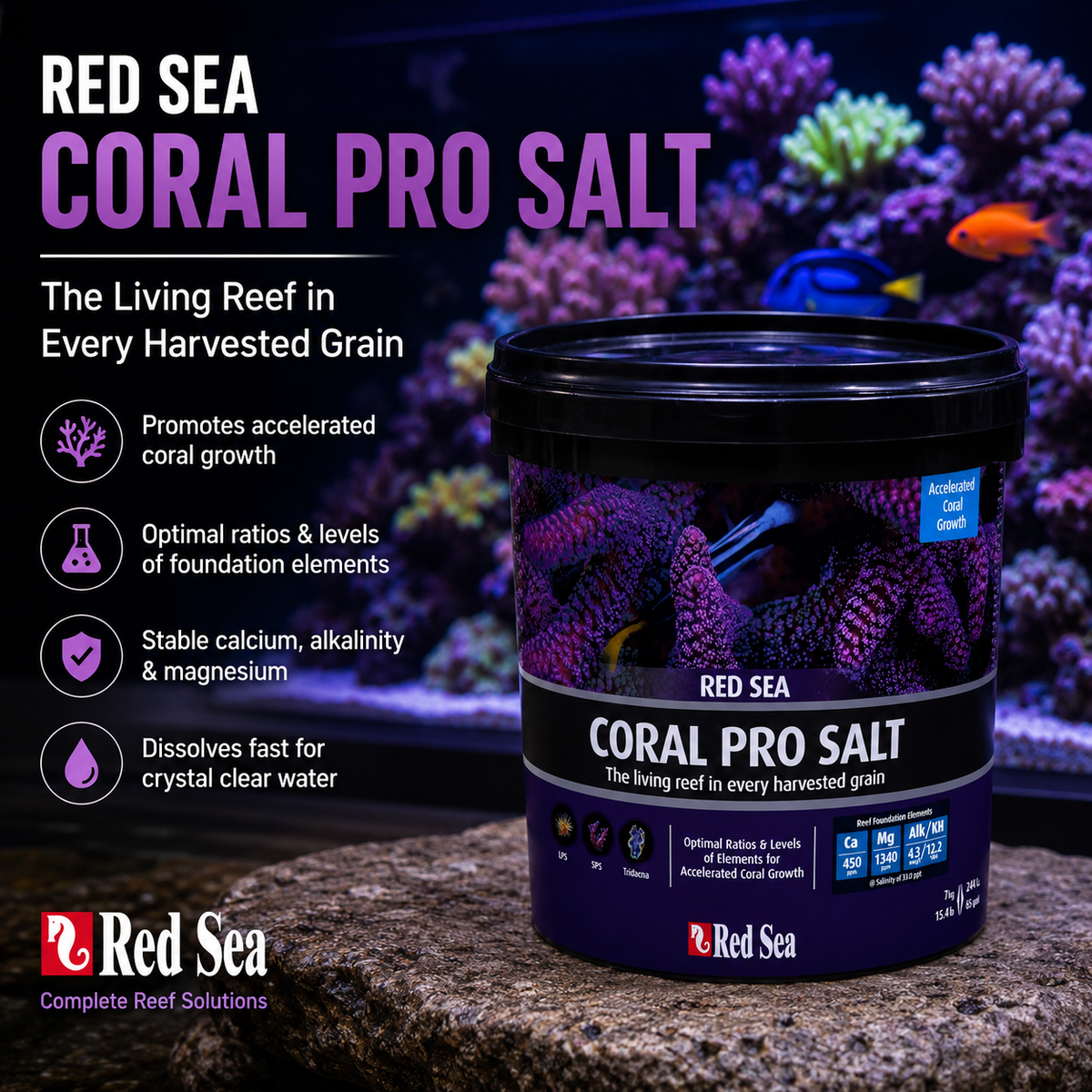
Red Sea Coral Pro Salt
Premium reef salt mix with elevated levels of calcium, magnesium, and alkalinity for coral growth.
Search on Amazon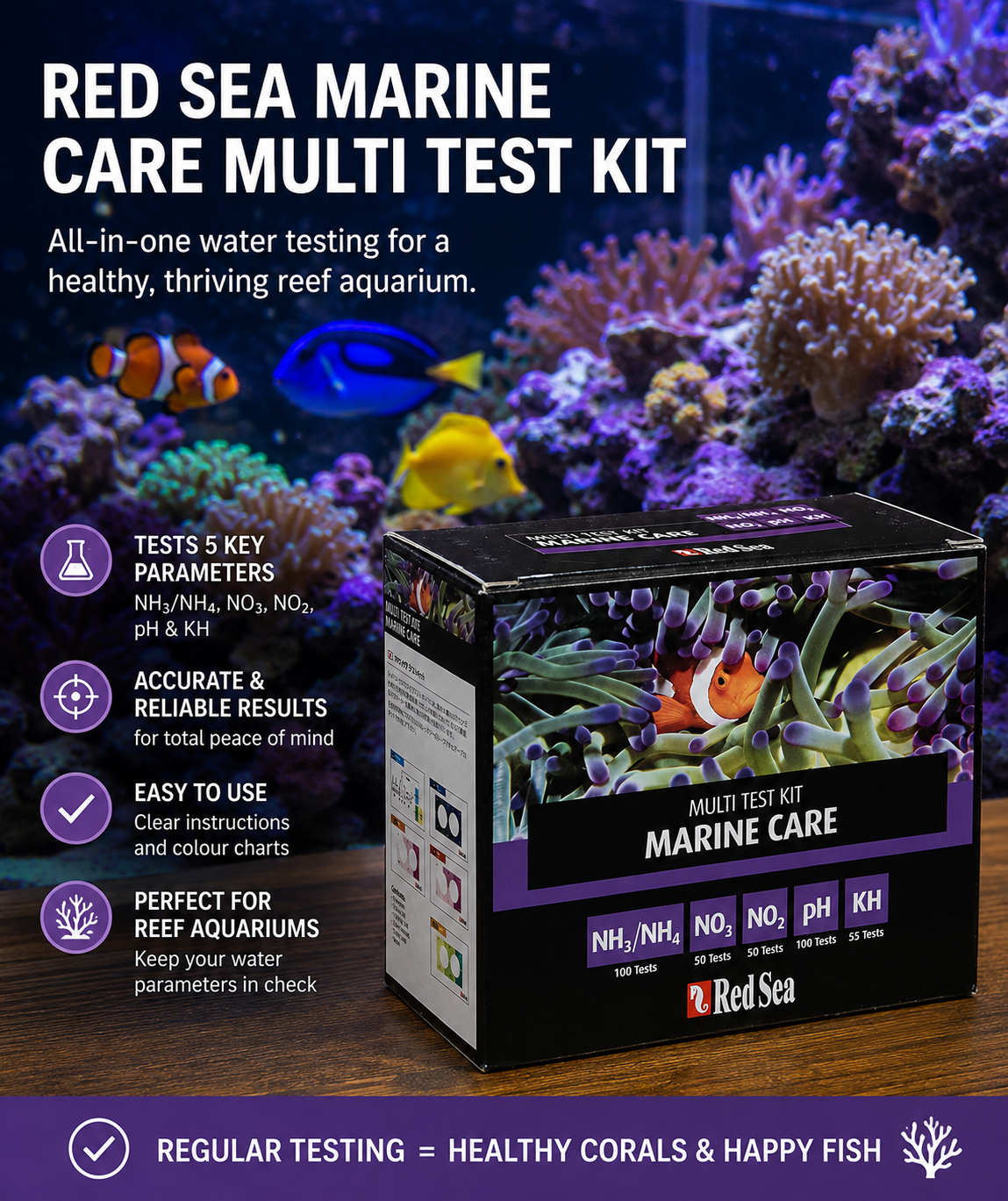
Red Sea Marine Care Test Kit
Professional marine test kit covering pH, ammonia, nitrite, and nitrate. Essential for maintaining a healthy reef environment.
Search on AmazonAffiliate Disclosure: As an Amazon Associate, we earn commission from qualifying purchases made through these links at no extra cost to you.
Related Topics:
Need Help With Your Mandarin Dragonet?
Our expert team can help you create the perfect environment for your aquatic pets, with professional aquarium maintenance across Bournemouth, Poole and Dorset.
GET IN TOUCH