Goldfish Care Guide: How to Keep Carassius auratus
The Goldfish (Carassius auratus) remains the world's most iconic aquarium fish, offering a blend of vibrant colour, personality, and impressive longevity. Whether you are a beginner or an expert, mastering Goldfish care ensures these intelligent companions thrive for decades in your home.
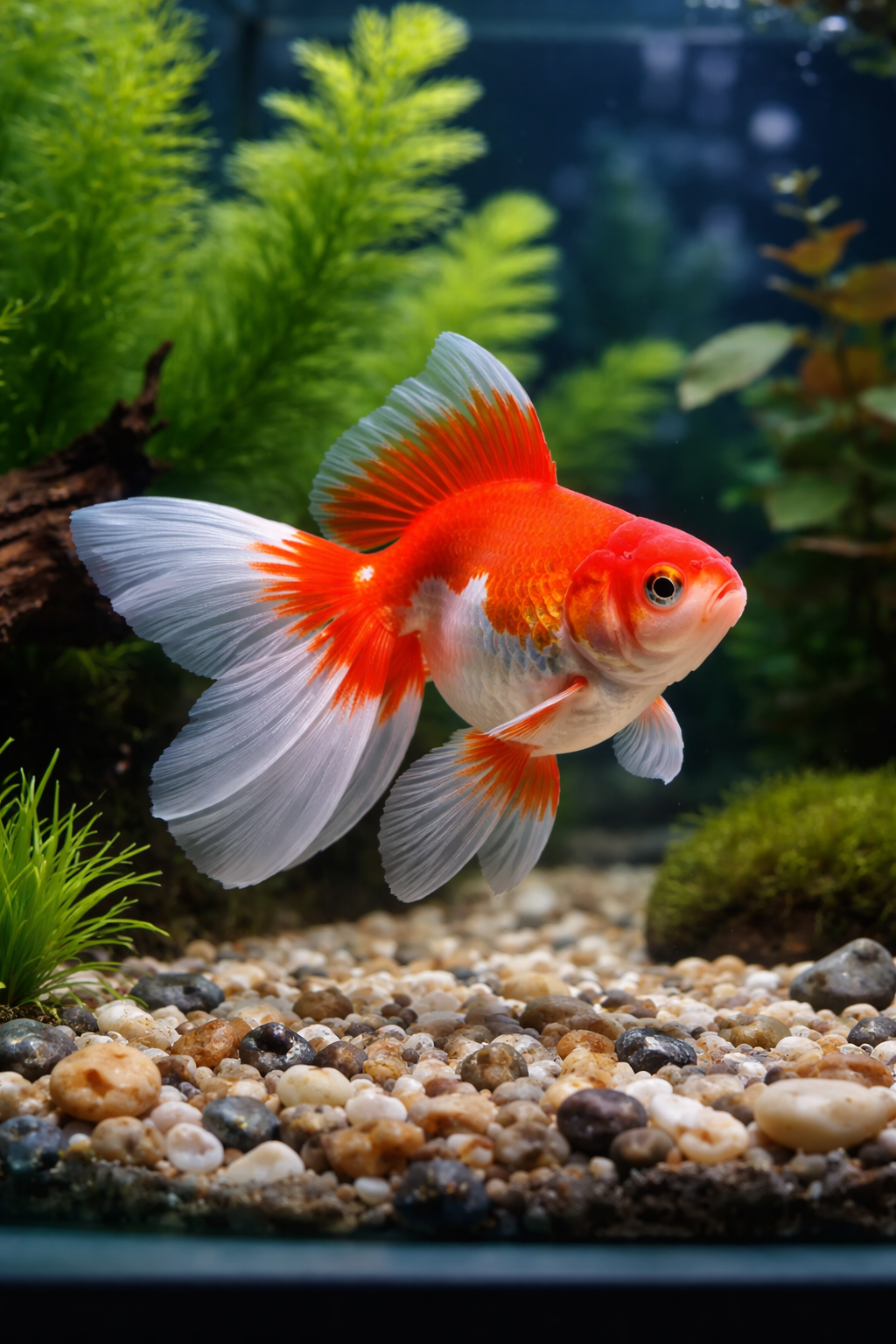
Introduction to the Goldfish (Carassius auratus)
The Goldfish, scientifically known as Carassius auratus, is perhaps the most misunderstood species in the aquarium hobby. Often relegated to small bowls in popular culture, the Goldfish is actually a hardy, long-lived member of the carp family that requires specific environmental conditions to truly flourish. At Aquatic Specialist UK, we believe that providing the right Goldfish care transforms these fish from simple pets into majestic aquatic centerpieces.
Originally domesticated in ancient China over a thousand years ago, the Goldfish has been selectively bred into dozens of distinct varieties. From the streamlined Common and Comet Goldfish to the ornate 'Fancy' varieties like Orandas and Ranchus, there is a Goldfish for every dedicated hobbyist.
Physical Characteristics and Varieties
When we discuss how to keep Goldfish, we must first distinguish between the two primary body types, as their care requirements differ significantly:
- Single-Tail Goldfish: These include the Common, Comet, and Shubunkin. They are streamlined, fast swimmers that can grow up to 12 inches (30cm) or more. They are best suited for very large tanks or outdoor ponds.
- Fancy Goldfish: These include the Oranda, Fantail, Black Moor, and Ryukin. They possess egg-shaped bodies and double tail fins. They are slower swimmers and are more sensitive to water quality and temperature fluctuations.
Regardless of the variety, Goldfish lack a true stomach. Instead, they have a long intestinal tract, which dictates their constant foraging behaviour and high waste production.
Goldfish Behaviour and Social Needs
Goldfish are highly social animals. They do not have a strict schooling instinct like Tetras, but they are gregarious and thrive in the company of their own kind. They are known for their 'puppy-like' behaviour, often recognising their owners and swimming to the front of the glass during feeding times.
They spend the majority of their day scavenging the substrate for food. Because of this, their environment should encourage natural foraging while remaining safe for their delicate fins and scales.
🌍 Natural Habitat
Natural Habitat and Aquarium Replication
While the modern Goldfish is a domesticated species, its ancestor, the Prussian Carp, inhabits slow-moving or stagnant freshwater bodies like ponds, lakes, and rivers throughout East Asia. They are incredibly adaptable but prefer cool, well-oxygenated water with plenty of vegetation.
To replicate this in your home aquarium, you must focus on high oxygen exchange and stable water parameters. Unlike tropical fish, Goldfish are 'temperate' species.
Ideal Water Parameters:
- Temperature: 18°C to 23°C (65°F - 74°F) for Fancy varieties; 4°C to 22°C for Single-tail varieties.
- pH Level: 7.0 – 8.4 (They prefer slightly alkaline water).
- Water Hardness: 8–15 dGH.
- Ammonia/Nitrite: 0 ppm (Goldfish are highly sensitive to these).
- Nitrate: <20 ppm.
🏠 Care Requirements
Complete Goldfish Care Guide
Proper Goldfish tank requirements are the most frequent area where new keepers struggle. Because Goldfish produce a high amount of ammonia, 'the bowl' is never an appropriate home.
Tank Size
- Fancy Goldfish: Minimum 75–100 litres for the first fish, with an additional 40 litres for every subsequent fish.
- Single-Tail Goldfish: Minimum 200–300 litres, though they eventually require a pond as they reach maturity.
Filtration
Goldfish are 'heavy bioload' fish. You should aim for a filter that is rated for double your tank size. External canister filters are highly recommended for Goldfish tanks to handle the mechanical and biological waste effectively.
Substrate and Plants
Use smooth, large-grade gravel or fine sand. Avoid small pebbles that can get lodged in a Goldfish's mouth during foraging. For plants, choose hardy species like Anubias, Java Fern, or Hornwort, as Goldfish are notorious for eating soft-leaved plants.
Maintenance Schedule
- Weekly: 25-50% water change using a high-quality dechlorinator.
- Monthly: Clean filter media in old tank water (never tap water) and vacuum the substrate.
🐟 Compatible Tank Mates
Choosing Compatible Tank Mates
The best tank mate for a Goldfish is another Goldfish of the same variety. We do not recommend mixing Single-tail and Fancy varieties, as the faster Single-tails will outcompete the Fancies for food.
Compatible Species:
- Rosy Barb: Hardy and can handle cooler temperatures.
- Weather Loach: Excellent bottom dwellers that share similar temperature needs.
- White Cloud Mountain Minnows: Suitable for larger tanks with Single-tail Goldfish.
- Apple Snails: Great for algae control, provided the Goldfish aren't large enough to nip at them.
Incompatible Species:
- Tropical Fish (Guppies, Neons): Require much warmer water.
- Plecos: Often suck on the slime coat of Goldfish, causing infections.
- Aggressive Cichlids: Will nip at the flowing fins of Fancy Goldfish.
🍽️ Diet & Feeding
Goldfish Diet and Nutritional Requirements
Goldfish are omnivores with a massive appetite. A common mistake is overfeeding, which leads to fatty liver disease and poor water quality.
What to Feed:
- High-Quality Pellets: Sinking pellets are preferred over flakes to prevent the fish from gulping air at the surface, which can cause swim bladder issues.
- Vegetables: Blanched peas (deshelled), spinach, and broccoli provide essential fibre.
- Live/Frozen Foods: Bloodworms, daphnia, and brine shrimp are excellent protein boosts but should only be fed 1-2 times per week.
Feeding Frequency: Feed 1-2 times daily, only giving what they can consume within two minutes. Fasting your Goldfish for one day a week can help clear their digestive tracts.
💕 Breeding Guide
Breeding Goldfish in Captivity
Breeding Carassius auratus requires patience and a 'chilling period' to simulate the transition from winter to spring.
- Conditioning: Feed high-protein live foods and slightly raise the temperature to 20-22°C.
- Spawning Behaviour: Males will develop small white bumps (breeding tubercles) on their gill covers and pectoral fins. They will chase the female vigorously, nudging her abdomen to release eggs.
- Egg Care: Goldfish are egg-scatterers and will eat their own eggs. Use a spawning mop or dense plants (like Java Moss) and remove the parents immediately after spawning.
- Fry Care: Eggs hatch in 48-72 hours. Once the fry are free-swimming, feed them infusoria or newly hatched brine shrimp until they are large enough for crushed flakes.
✨ Fun Facts
["Goldfish have a memory span of at least three months, debunking the 'three-second' myth.","They do not have stomachs; their food is processed entirely in their intestines.","The oldest recorded goldfish, Tish, lived to be 43 years old.","Goldfish can see more colours than humans, including ultraviolet and infrared light.","A group of goldfish is collectively known as a 'troubling'.","In the wild, their natural colour is a dull olive-green or grey."]
Products We've Mentioned & Recommend
Below you'll find a selection of products we've mentioned in this article, along with a few others we think you might find useful. We've included Amazon links to make them easy to find.
A quick word about affiliate links...
Some of these links are affiliate links, which means we may earn a small commission from qualifying purchases, at no extra cost to you.
Unfortunately, the commission doesn't quite stretch to cocktails on a yacht or a garage full of sports cars. In reality, it helps cover the running costs of this website and, with a bit of luck, might eventually buy me a new pair of waders that don't leak!
We only recommend products we genuinely believe are worth considering, and your support helps us keep sharing free advice from our years of working with aquariums and ponds.
Thanks for supporting Aquatic Specialist!
As an Amazon Associate I earn from qualifying purchases.
NT Labs Pond Lab Multi-Test Kit
Comprehensive pond water testing kit. Tests all essential parameters including ammonia, nitrite, nitrate, pH, and KH.
Search on AmazonAffiliate Disclosure: As an Amazon Associate, we earn commission from qualifying purchases made through these links at no extra cost to you.
Related Topics:
Need Help With Your Goldfish?
Our expert team can help you create the perfect environment for your aquatic pets, with professional aquarium maintenance across Bournemouth, Poole and Dorset.
GET IN TOUCH