Clown Knifefish (Chitala ornata): The Beautiful Aquarium Fish That Becomes a Giant
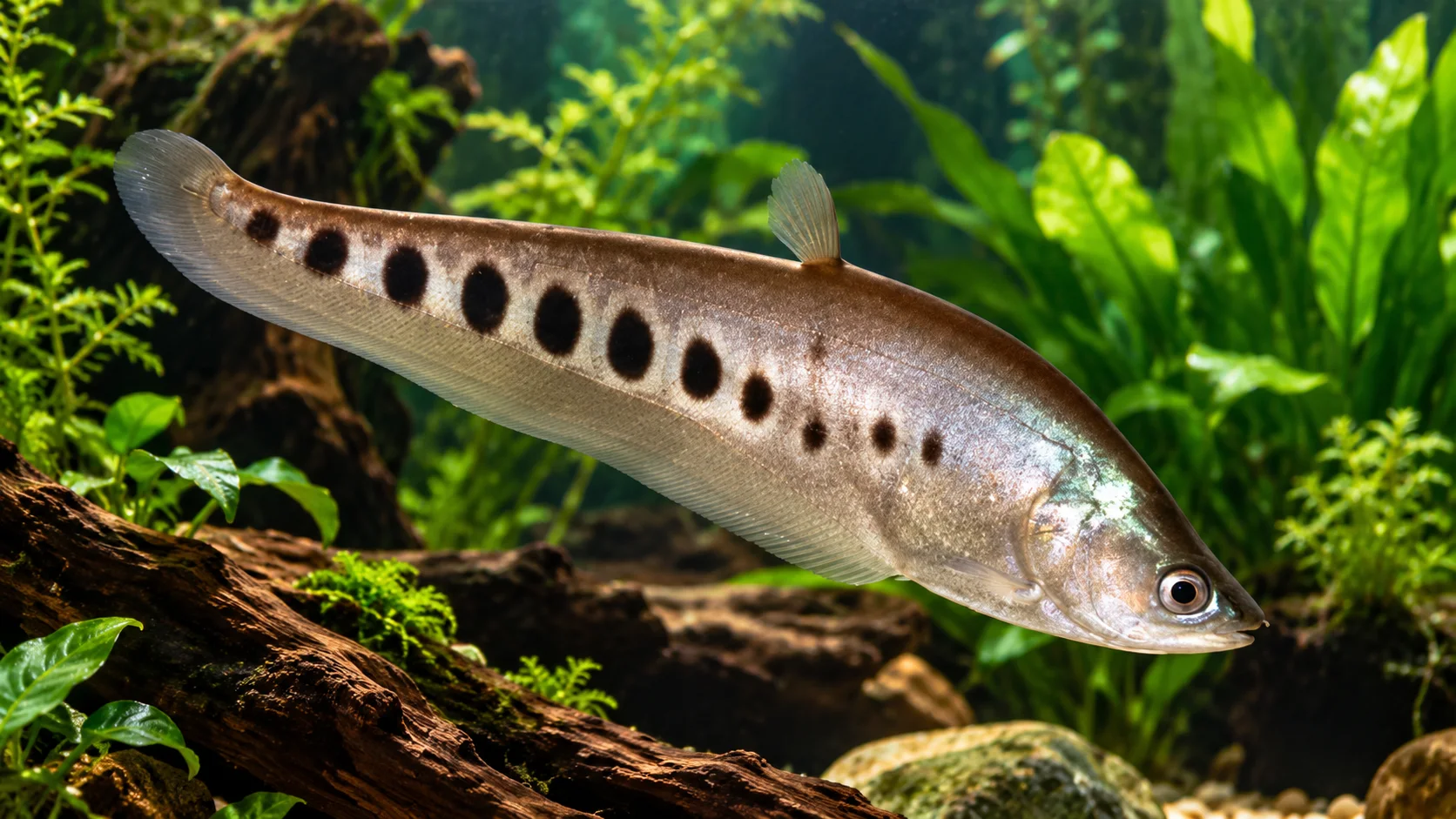
The Clown Knifefish (Chitala ornata) is a fascinating freshwater predator, often sold as an attractive juvenile measuring just a few inches. However, these unusual fish can grow to an incredible one metre in length, making them unsuitable for most home aquariums. Discover their adult size, feeding habits, aquarium requirements and why this beautiful species deserves its reputation as a genuine tank buster.
The Clown Knifefish (Chitala ornata) is undoubtedly one of the more unusual freshwater fish available in the aquarium trade. With its distinctive knife-shaped body, beautiful spotted markings and graceful swimming movements, it is easy to understand why these fish attract so much attention in aquatic shops.
Unfortunately, the Clown Knifefish is also another example of a species regularly sold as a small juvenile, despite eventually growing far too large for most home aquariums.
It is not unusual to see young Clown Knifefish measuring just 7–10 cm (3–4 inches) offered for sale. At this size, they appear relatively manageable, and their unusual appearance makes them an attractive addition to an aquarium.
However, these small fish have the potential to reach approximately one metre in length, making them genuine aquarium tank busters.
Before purchasing one, it is essential to understand just how large these fish become and the considerable commitment involved in keeping them properly.
What Is a Clown Knifefish?
The Clown Knifefish belongs to the family Notopteridae, a group commonly known as the featherbacks or knifefishes. Native to Southeast Asia, Chitala ornata occurs naturally in major river systems, including the Mekong, Chao Phraya and Mae Klong basins.
These fish inhabit large rivers, slower-flowing sections, deep pools and seasonally flooded areas, where they hunt smaller fish, crustaceans and other aquatic animals.
Their appearance is particularly distinctive. The body is laterally compressed, giving it a thin, blade-like profile, while a long fin running along the underside creates an elegant rippling movement.
Unlike most aquarium fish, Clown Knifefish can move forwards and backwards using this undulating fin. Their silver-grey bodies are decorated with a row of dark, eye-like spots, often surrounded by lighter markings. These distinctive spots become more pronounced as the fish matures, although the exact pattern varies between individuals.
They are sometimes confused with the closely related Chitala chitala, another large Asian knifefish.
How Big Do Clown Knifefish Grow?
This is undoubtedly the most important consideration when deciding whether a Clown Knifefish is suitable for an aquarium.
Although commonly sold at just a few inches long, Chitala ornata can reach approximately 80–100 cm (31–39 inches), with a documented maximum length of around one metre. They are not particularly slow-growing fish either.
When provided with suitable conditions and plenty of food, juveniles can grow surprisingly quickly. An aquarium that initially appears spacious can become inadequate much sooner than expected.
A young Clown Knifefish might look perfectly comfortable in a 200-litre aquarium, but that same fish could eventually grow longer than the entire aquarium. This is where many owners encounter problems.
Purchasing a juvenile with the intention of upgrading its aquarium later is risky, particularly when the eventual upgrade involves a tank holding thousands of litres.
Unfortunately, many large predatory fish are rehomed once their owners discover that suitable accommodation is beyond their available space or budget.
A Clown Knifefish should always be purchased based on its expected adult size, not the size at which it is being sold.
What Size Aquarium Does a Clown Knifefish Need?
A fully grown Clown Knifefish requires an exceptionally large aquarium. For long-term adult accommodation, a specialist aquarium approximately 250–300 cm long, with substantial front-to-back depth of around a metre or more, is a more realistic starting point than a conventional home aquarium.
Depending on the dimensions, this could mean an aquarium holding 1,500–2,500 litres or considerably more. Even these dimensions need to be considered in relation to the individual fish's eventual size. An adult must have sufficient space to turn comfortably, swim naturally and move without constantly encountering the aquarium walls.
The width of the aquarium is especially important. A long but narrow tank is not necessarily suitable for a fish approaching one metre in length.
Large Clown Knifefish also produce considerable waste, making powerful biological filtration and regular maintenance essential.
Aquariums of this size are expensive to purchase, install, heat and maintain. Their considerable weight may also require specialist flooring or structural assessment. For most hobbyists, providing appropriate lifelong accommodation simply isn't practical.
Aquarium Conditions and Water Parameters
Despite their considerable size, Clown Knifefish are not especially demanding when it comes to water chemistry. They generally do well in stable tropical freshwater conditions, with temperatures around 24–28°C and a pH between approximately 6.0 and 8.0.
Consistent water quality is far more important than attempting to achieve one exact pH value. Ammonia and nitrite should remain at zero, while nitrate accumulation should be controlled through appropriate filtration and regular partial water changes.
As predominantly nocturnal fish, Clown Knifefish appreciate subdued lighting and shaded areas. Large pieces of smooth driftwood, robust artificial caves and other substantial structures can provide shelter. However, these decorations must be carefully positioned so that they do not restrict swimming space or create narrow gaps in which a growing fish could become trapped.
Sharp decorations should be avoided, as their bodies can be injured when moving around confined spaces.
An important feature of Clown Knifefish biology is their ability to breathe atmospheric air. They must therefore have unobstructed access to the water surface.
A secure, well-fitting aquarium cover is also essential, as these powerful fish can jump when frightened.
What Do Clown Knifefish Eat?
Clown Knifefish are predatory carnivores. In the wild, their diet consists largely of smaller fish, crustaceans and aquatic invertebrates.
Young specimens may initially accept frozen bloodworms, small pieces of prawn and other suitably sized meaty foods. As they grow, their diet needs to change accordingly.
Larger specimens can be offered foods such as prawns, mussels, earthworms from safe sources and appropriate quality pellets formulated for carnivorous fish.
Some individuals can be reluctant to accept prepared foods initially, particularly if they have previously been fed live prey.
However, relying on live feeder fish is generally best avoided. Feeder fish can introduce parasites and disease, while an unbalanced diet may lead to nutritional problems. A varied diet is preferable to feeding one food exclusively.
Clown Knifefish often become more active during the evening, and feeding around this period may encourage natural behaviour.
It is also worth remembering that feeding a large predatory fish can become expensive. A fully grown specimen consumes substantially more food than the small juvenile originally purchased.
Are Clown Knifefish Aggressive?
Clown Knifefish are sometimes described as relatively peaceful towards other large fish, but this description can be misleading. They are extremely capable predators with surprisingly large mouths.
Any fish small enough to be swallowed should be considered potential food. Small tetras, barbs, livebearers and many other common community fish are entirely unsuitable tankmates. Even fish that initially appear too large to eat may become vulnerable as the Knifefish grows.
They can also become territorial, particularly towards other knifefish or similarly shaped species. Although experienced aquarists sometimes maintain Clown Knifefish alongside other large, robust fish, compatibility is never guaranteed.
Keeping one as a solitary specimen is often the most straightforward approach, provided the aquarium is sufficiently large. Their impressive size and predatory behaviour make them completely unsuitable for conventional community aquariums.
How Long Do Clown Knifefish Live?
With appropriate care, Clown Knifefish can live for well over ten years, with lifespans of approximately 10–15 years or longer reported in captivity. This makes purchasing one a significant long-term responsibility.
An owner must be prepared to provide suitable accommodation, feeding and maintenance throughout the animal's life.
The challenge is not simply keeping a juvenile healthy for its first year. It is ensuring that the same fish can be properly accommodated once it reaches 60, 80 or even 100 cm in length. For such a large species, that commitment should never be underestimated.
Why Are Clown Knifefish Sold So Small?
One of the more frustrating aspects of the ornamental fish trade is the continued availability of species that will eventually outgrow almost every normal household aquarium. Clown Knifefish are a good example.
At just 7–10 cm, they are attractive, unusual and relatively inexpensive compared with the cost of maintaining a fully grown specimen. Their appearance can encourage impulse purchases, particularly among fishkeepers looking for something different.
Unfortunately, a customer who is unfamiliar with the species may not appreciate that the small fish in the dealer's aquarium could eventually grow to nearly a metre long.
There is nothing inherently wrong with keeping Clown Knifefish when appropriate facilities are available. They are fascinating animals that can make impressive inhabitants of specialist aquariums.
The problem arises when these fish are purchased without a realistic understanding of their adult size.
Responsible retailers should clearly explain the potential growth and long-term accommodation requirements before selling them.
Similarly, prospective owners should research adult dimensions, feeding requirements and compatibility rather than relying on the fish's current appearance.
What Happens When a Clown Knifefish Outgrows Its Aquarium?
Unfortunately, rehoming large predatory fish is often much harder than expected. Most aquarium shops are unable to accommodate an adult Clown Knifefish indefinitely, while relatively few private fishkeepers have tanks large enough to accept one.
Public aquariums are sometimes suggested as potential homes, but many facilities already have their own collections and cannot accept unwanted fish. This can leave owners facing a difficult situation.
Keeping an oversized fish in an unsuitable aquarium can compromise its welfare, particularly if it cannot swim or turn properly.
Restricted conditions may also contribute to stress, injuries and deteriorating water quality.
Releasing unwanted aquarium fish into rivers, lakes or ponds is never an acceptable solution. Apart from the animal welfare concerns, introducing non-native species can create serious environmental problems.
The best approach is prevention: only purchase a species when suitable lifelong accommodation is realistically available.
Are Clown Knifefish Suitable for Home Aquariums?
For the overwhelming majority of fishkeepers, the answer is no. Although Clown Knifefish are beautiful, intelligent-looking and fascinating to observe, their eventual size makes them impractical for most domestic aquariums.
They require enormous amounts of space, substantial filtration, a specialised diet and a long-term commitment that can extend beyond a decade.
Even experienced aquarists with large aquariums should carefully consider whether they can comfortably accommodate a fully grown specimen.
There are many smaller and more manageable freshwater species that offer interesting behaviour and unusual appearances without requiring an aquarium several metres long.
Final Thoughts
The Clown Knifefish is an extraordinary freshwater fish, but it is also a perfect example of why understanding a species' adult size is so important.
That attractive little fish swimming around a dealer's aquarium may eventually become a powerful predator approaching one metre in length.
For dedicated enthusiasts with purpose-built facilities, Chitala ornata can be a remarkable species to maintain. For the average home aquarium, however, it is simply too large.
At Aquatic Specialist, we believe that choosing the right fish means considering its entire life, not just how attractive it looks when young.
Clown Knifefish deserve appropriate accommodation throughout their lives, and the best decision for most fishkeepers is to admire these remarkable animals without taking one home.
Products We've Mentioned & Recommend
Below you'll find a selection of products we've mentioned in this article, along with a few others we think you might find useful. We've included Amazon links to make them easy to find.
A quick word about affiliate links...
Some of these links are affiliate links, which means we may earn a small commission from qualifying purchases, at no extra cost to you.
Unfortunately, the commission doesn't quite stretch to cocktails on a yacht or a garage full of sports cars. In reality, it helps cover the running costs of this website and, with a bit of luck, might eventually buy me a new pair of waders that don't leak!
We only recommend products we genuinely believe are worth considering, and your support helps us keep sharing free advice from our years of working with aquariums and ponds.
Thanks for supporting Aquatic Specialist!
As an Amazon Associate I earn from qualifying purchases.
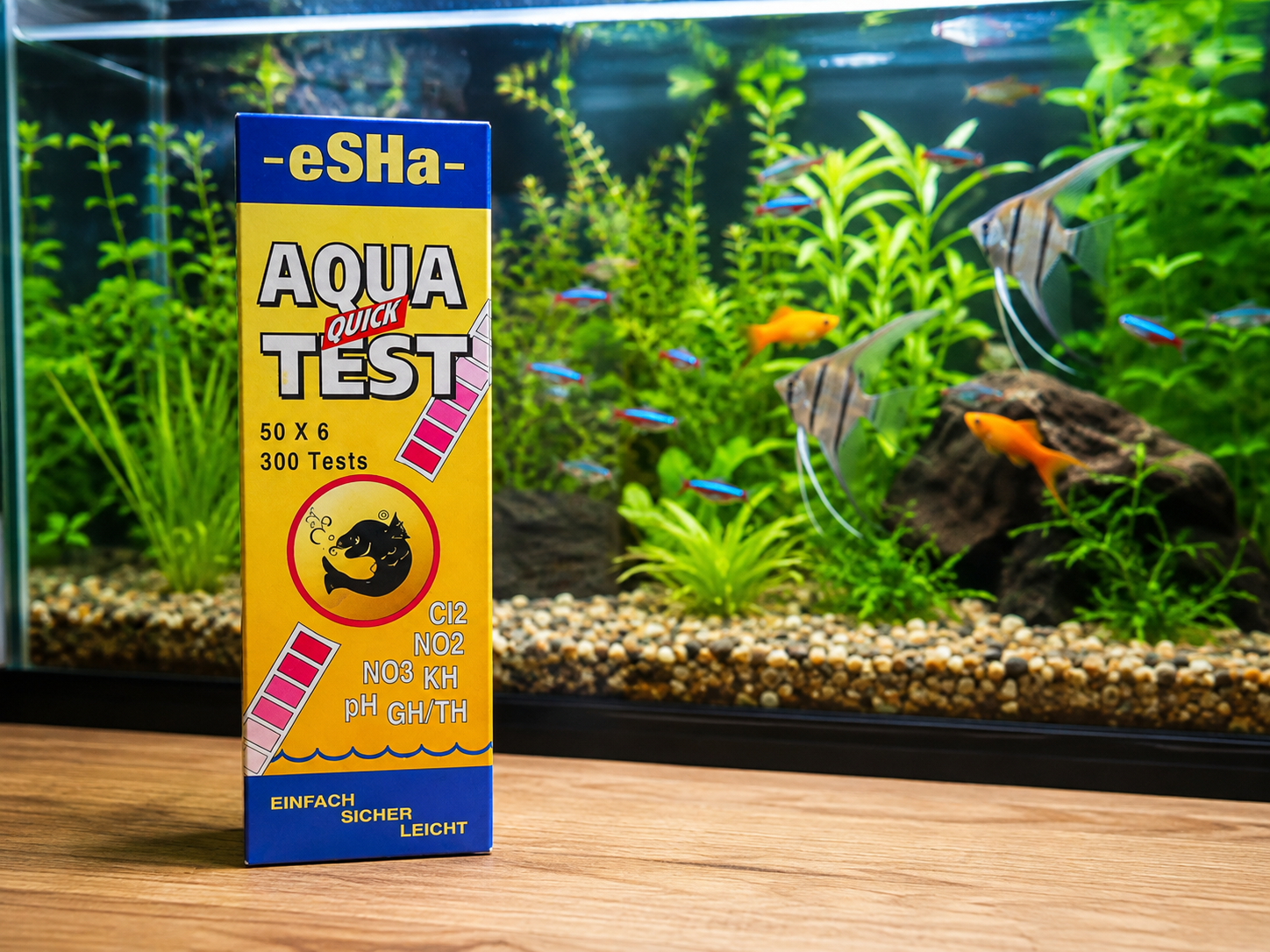
Esha
ESHA Aqua Quicktest
Best for: Fast routine water-quality checks in freshwater aquariums.
As an Amazon Associate, we earn from qualifying purchases.

Fluval
Fluval Water Care Value Pack with Fluval Cycle & Aqua Plus, 500ml
Best for: New aquarium setups and routine water changes
As an Amazon Associate, we earn from qualifying purchases.
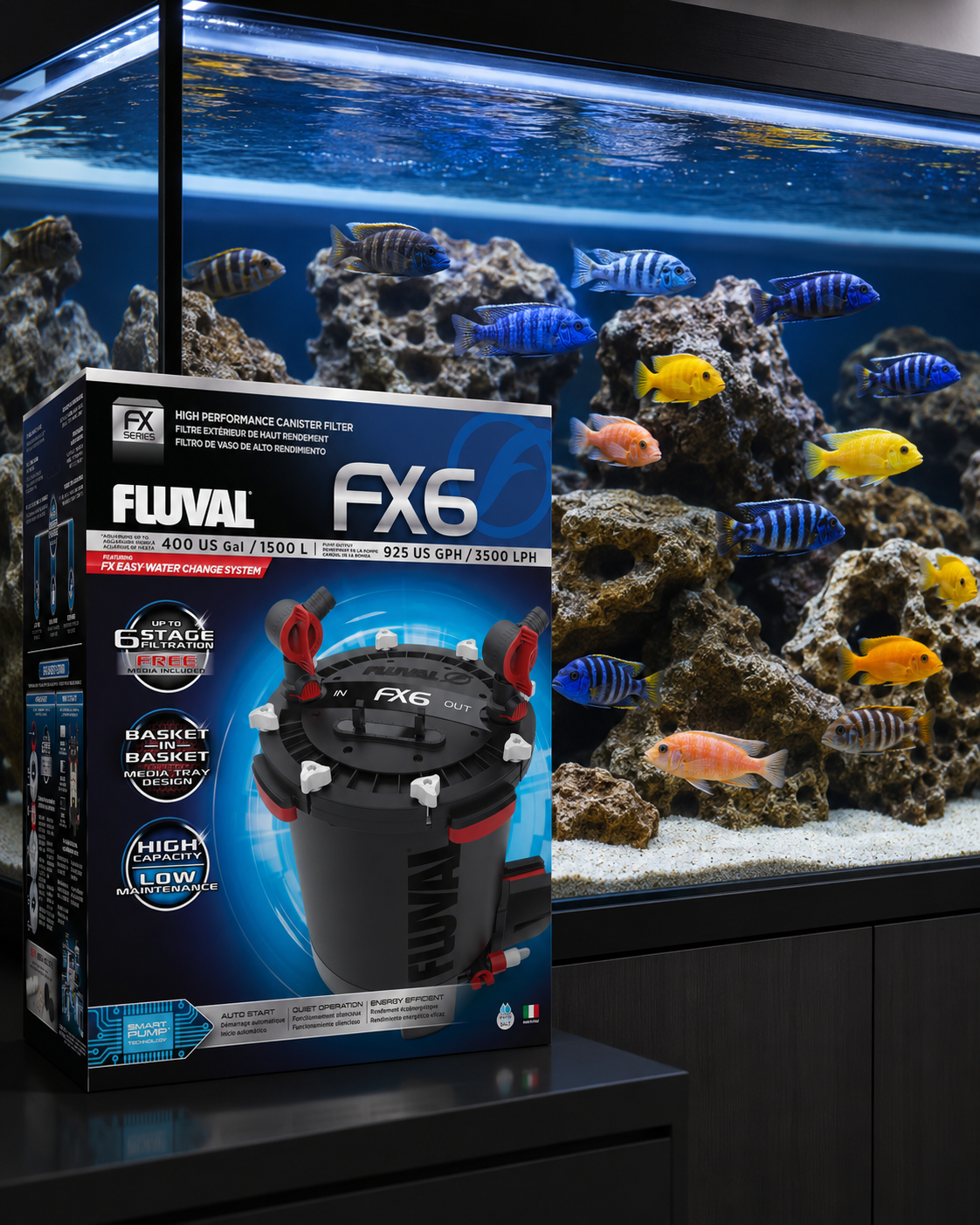
Fluval
Fluval Fx 6 High Proformance Aquarium Canister Filter
Best for: Large, heavily stocked Malawi cichlid aquariums
As an Amazon Associate, we earn from qualifying purchases.