Aquarium plant propagation methods for common and exotic species
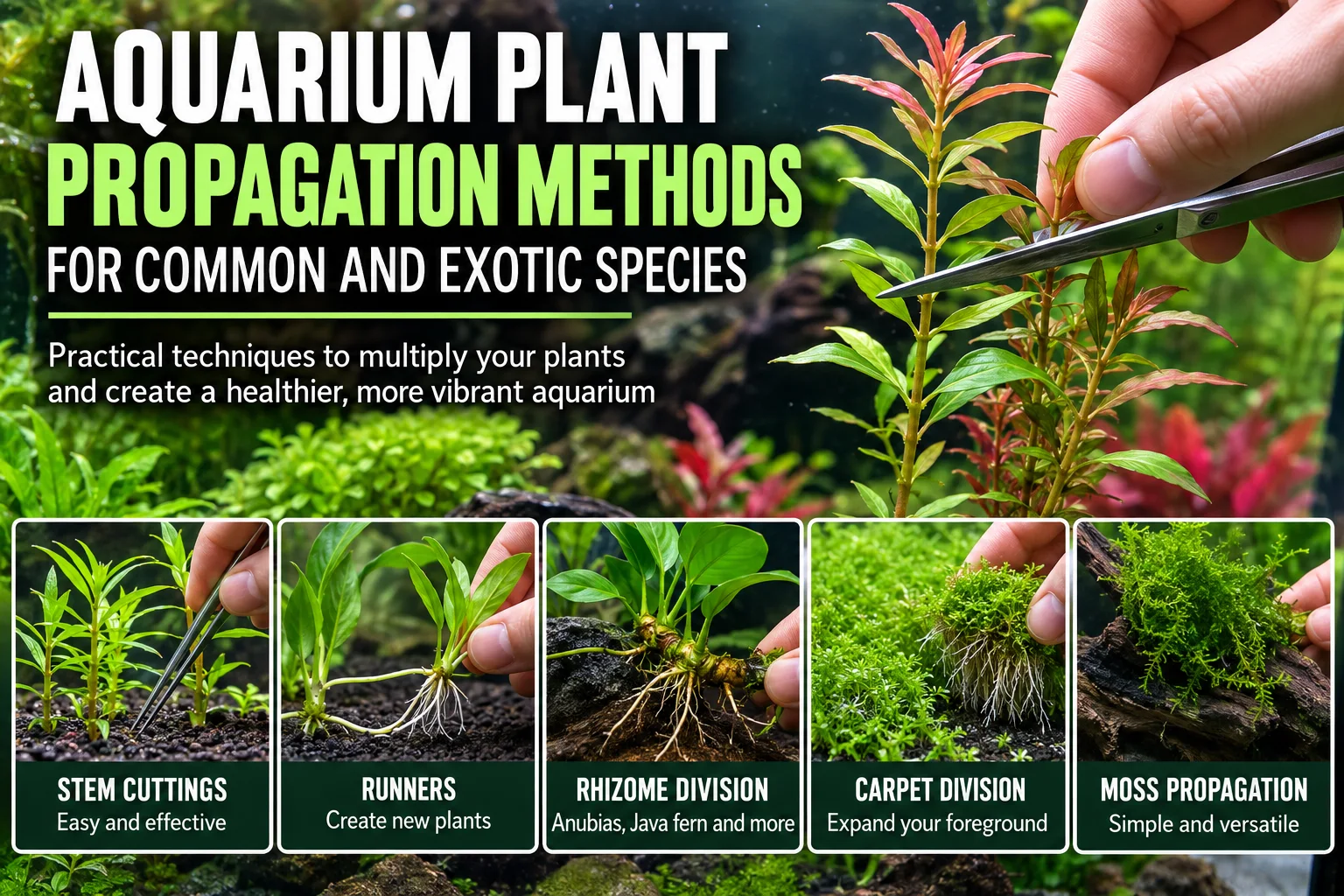
Discover the main methods used to propagate aquarium plants, from simple stem cuttings and runners to rhizome division, carpeting plants and more unusual species.
Aquarium plants can be surprisingly easy to propagate once you understand how each type naturally grows. Some species spread almost without any help at all, while others need to be cut, divided or encouraged to produce new shoots.
For aquarists who enjoy planted tanks, propagation is one of the most useful skills to learn. It allows you to fill out an aquascape, replace older growth, create new planting areas and produce healthy plants without constantly buying replacements.
We regularly work with planted aquariums, and one of the biggest differences between a newly planted tank and a mature display is simply time. Plants that are given stable conditions and allowed to establish will often start producing enough new growth to be divided or replanted.
The important part is knowing which method suits the species you are growing.
Stem plant propagation
Stem plants are among the easiest aquarium plants to propagate.
Species such as:
- Rotala
- Ludwigia
- Hygrophila
- Bacopa
- Limnophila
- Alternanthera
- Cabomba
all grow upwards from a central stem.
Once the plant becomes tall enough, simply cut the upper section using sharp aquascaping scissors. The cutting can then be pushed back into the substrate where it will normally develop roots.
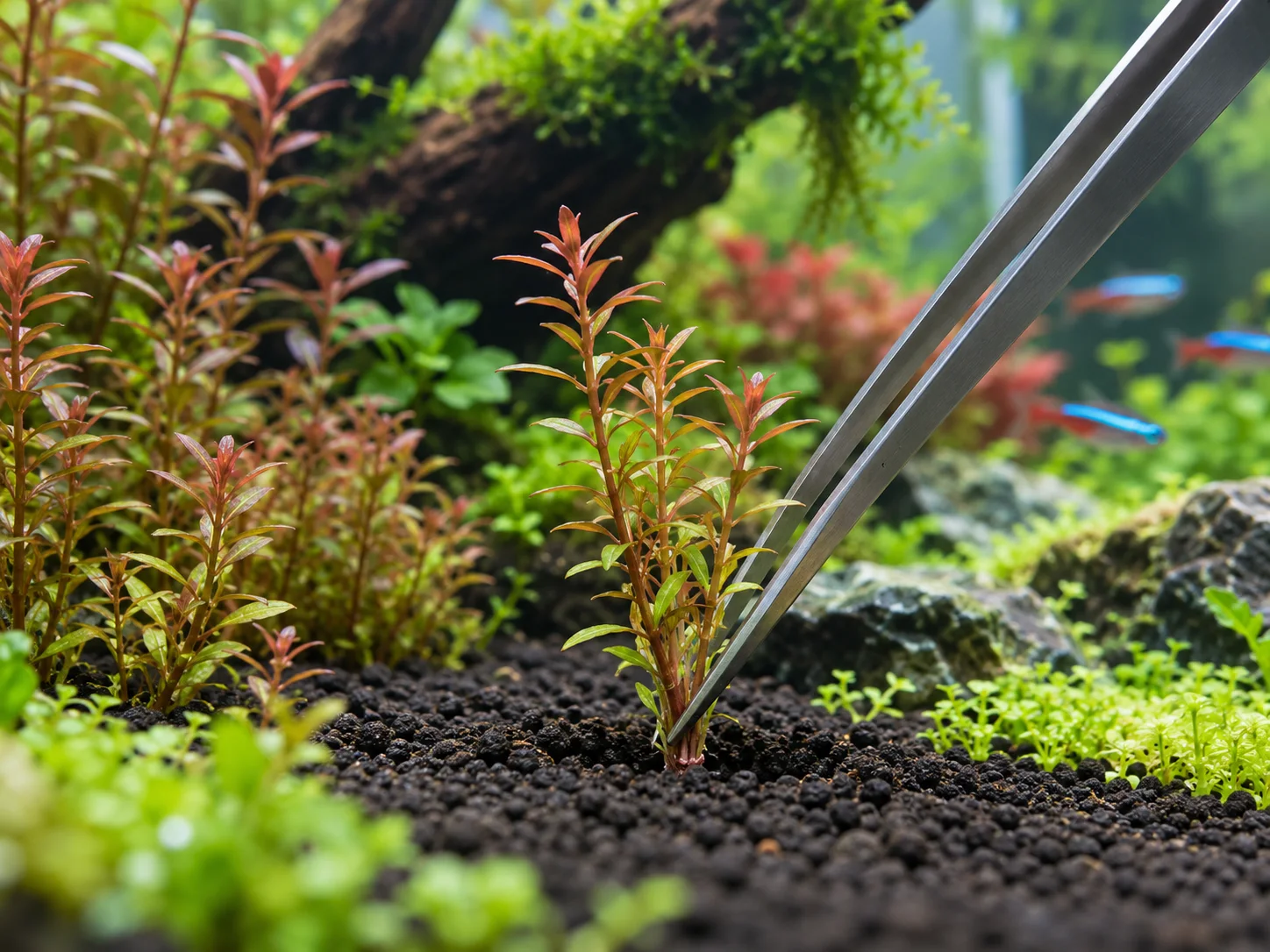
The remaining lower section will often produce two or more side shoots from nodes below the cut. This means regular trimming can actually make stem plants grow denser. For heavily planted displays, this is one of the best ways of turning a few individual stems into a large group.
Try to take cuttings that are roughly 8–15cm long where possible. Very small cuttings can survive, but larger sections usually establish more reliably. Remove any leaves that would otherwise become buried in the substrate before replanting.
Rosette plants and runners
Many popular aquarium plants reproduce by sending out runners.
Typical examples include:
- Vallisneria
- Sagittaria
- Cryptocoryne
- Dwarf chain sword
- Helanthium species
A new plant appears at the end of a horizontal runner emerging from the parent plant. Once the young plant has produced several leaves and its own root system, the connecting runner can be cut. The new plant can then be moved somewhere else in the aquarium.
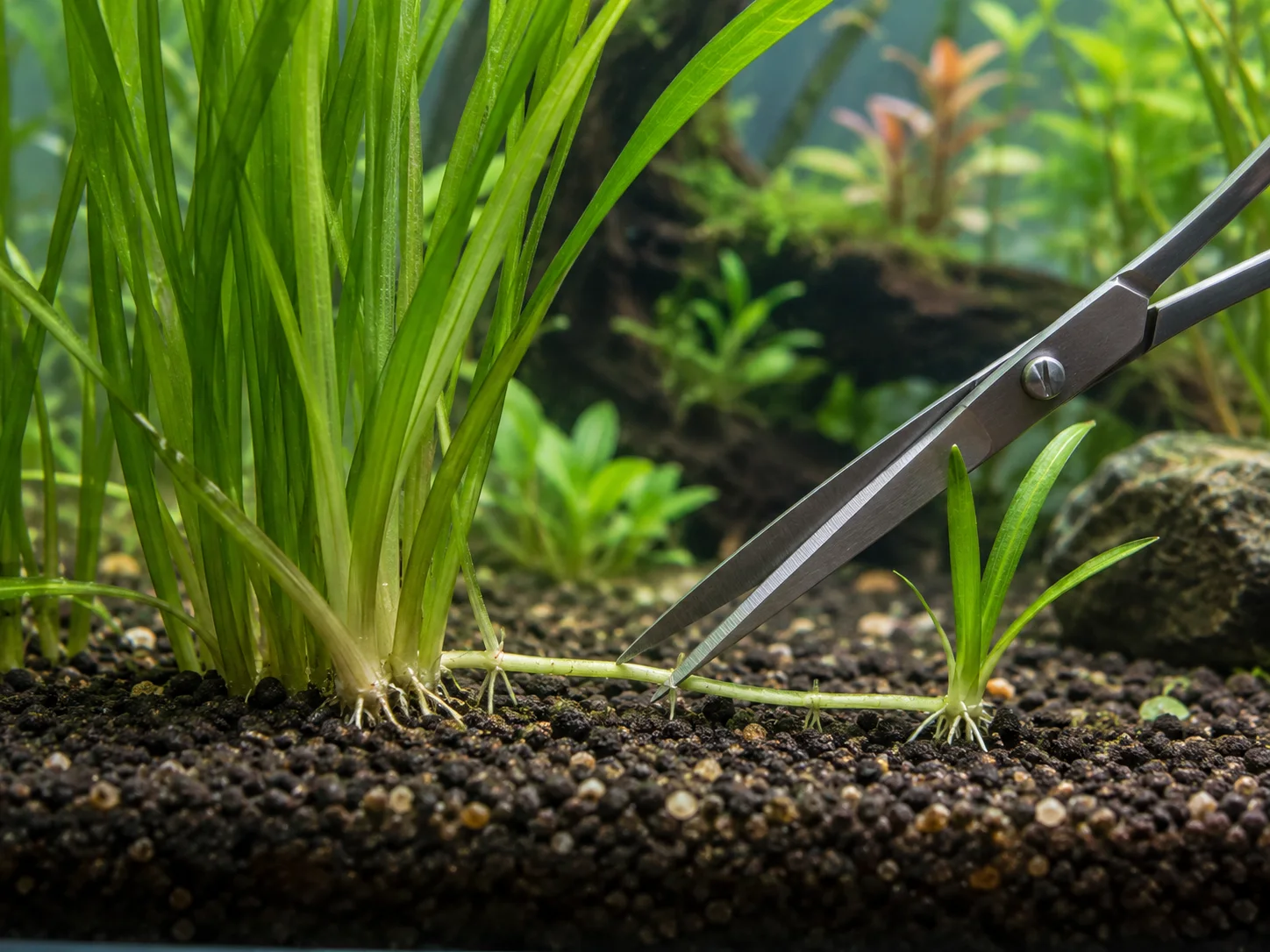
Vallisneria is particularly good at this and can spread rapidly under good conditions. In established aquariums it is sometimes necessary to remove excess runners to stop it taking over an entire section of the tank.
Cryptocoryne species usually spread more slowly but can gradually form impressive groups.
It is normally better to allow young runner plants to establish before separating them rather than cutting the runner as soon as the new shoot appears.
Rhizome division
Plants such as Anubias, Java fern and Bucephalandra grow from a horizontal structure called a rhizome. The rhizome should remain above the substrate. If it is buried completely, it can rot.
To propagate these plants, simply divide the rhizome using a clean, sharp blade or pair of scissors. Each section should ideally contain several healthy leaves and some roots.
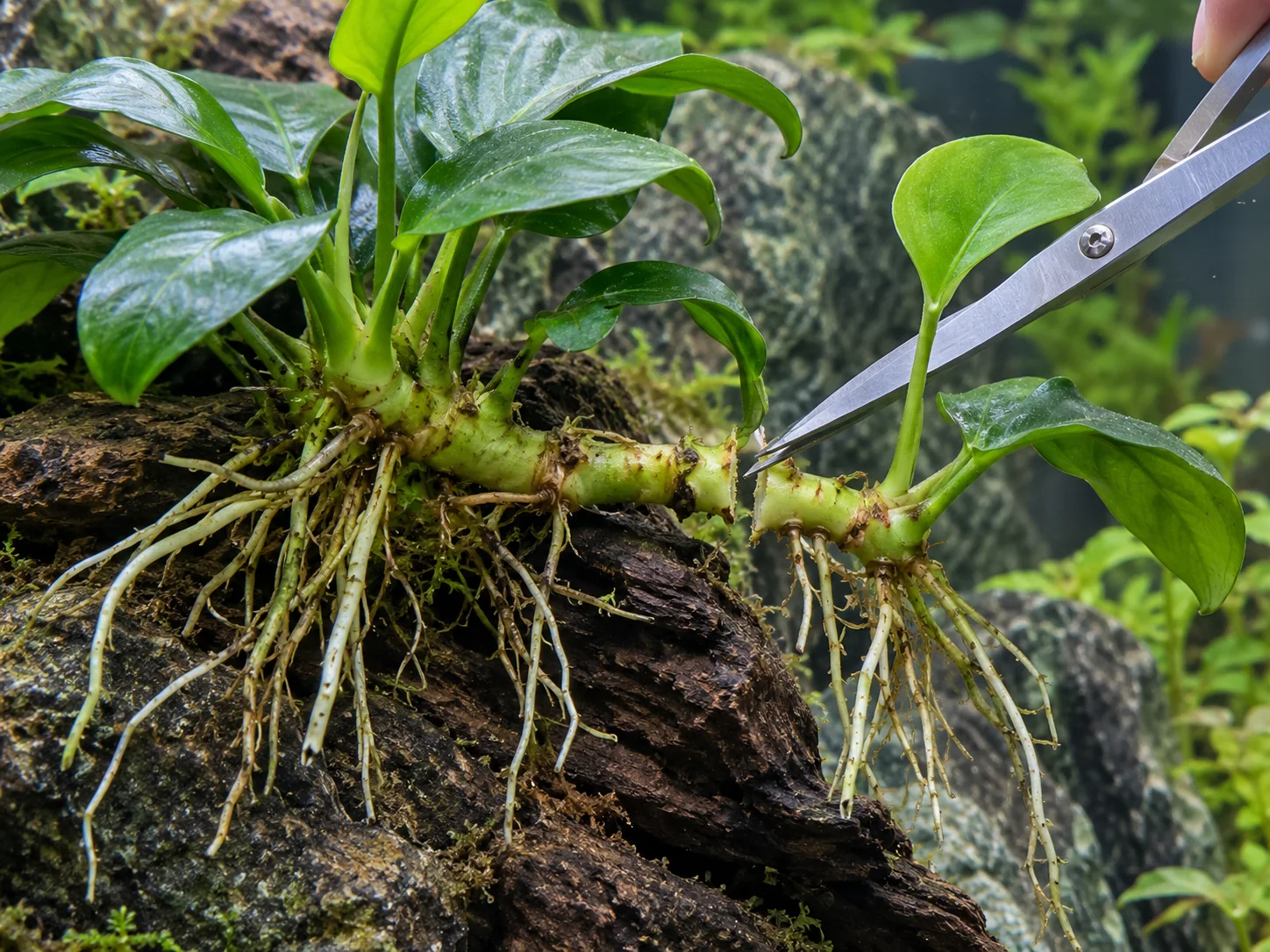
The divided sections can then be attached to:
- Wood
- Rocks
- Aquarium decoration
They can be secured temporarily using aquarium-safe glue, cotton or fishing line until the roots attach naturally. Anubias is particularly forgiving and even fairly small rhizome sections can eventually develop into new plants.
Bucephalandra can be propagated in exactly the same way, although it generally grows much more slowly. Because many Bucephalandra varieties are relatively expensive, rhizome division is a useful way of gradually increasing your collection.
Java fern plantlets
Java fern deserves a separate mention because it can propagate in more than one way. Like Anubias, the rhizome can be divided.
However, Java fern also frequently produces small plantlets directly from older leaves. Tiny leaves and roots appear on the surface or edges of the parent leaf. Eventually the plantlet becomes large enough to detach naturally.
Alternatively, it can be gently removed once it has developed several leaves and a reasonable root system. The new plantlet can then be attached to wood or rock.
It can look slightly strange when a Java fern leaf suddenly starts producing miniature plants, but this is completely normal.
Carpet plants
Carpet plants are usually propagated by division.
Examples include:
- Monte Carlo
- Dwarf hairgrass
- Glossostigma
- Micranthemum
- Lilaeopsis
Once a carpet becomes established, sections can be carefully lifted and divided into smaller portions. These portions can then be replanted elsewhere.
For new aquariums, dividing purchased pots into numerous small portions is often better than planting the entire pot in one clump.
Small groups planted several centimetres apart will gradually spread towards each other.This usually creates a more natural carpet.
Dwarf hairgrass spreads through underground runners, while Monte Carlo produces creeping stems that root as they travel across the substrate. Regular trimming encourages compact growth and can help prevent the lower layers of a thick carpet from becoming shaded.
Moss propagation
Aquarium mosses are extremely easy to propagate.
Species such as:
- Java moss
- Christmas moss
- Weeping moss
- Flame moss
- Taiwan moss
can simply be divided into smaller sections. The pieces can then be attached to wood, rocks or mesh.
Over time the moss continues to branch and expand. One of the most common mistakes is attaching too much moss in one place. Thick clumps can trap debris and the growth underneath may eventually deteriorate.
A thin layer usually establishes better and produces more attractive growth. Regular trimming also encourages branching.
Cryptocoryne division
Although Cryptocoryne often spreads through runners, mature plants can sometimes be carefully divided. Remove the plant from the substrate and gently separate individual crowns, making sure each section retains some roots.
Replant the divisions separately. Crypts do not always appreciate being disturbed and some may temporarily lose leaves after being moved. This is commonly known as "Crypt melt".The plant is not necessarily dead. If the root system remains healthy, new leaves will normally appear.
For that reason, I generally prefer allowing Cryptocoryne to spread naturally rather than constantly lifting and dividing established groups.
Amazon swords and larger Echinodorus
Amazon swords and related Echinodorus species often produce flower stalks. Small plantlets can develop along these stems. Allow the plantlets to remain attached until they have developed several leaves and visible roots.
They can then be separated and planted into the substrate. Some aquarists gently push the flower stem down towards the substrate so that developing plantlets can root before being separated.
Large Echinodorus plants require considerable nutrition, so good root fertilisation is particularly useful when encouraging new growth.
Aponogeton species
Some of the more unusual aquarium plants require slightly different techniques. Aponogeton species normally grow from bulbs or tubers. Healthy plants may produce flower spikes which can occasionally produce seeds.
Seed propagation is possible, although it requires considerably more patience than simply dividing stem plants or runners. Some Aponogeton species also experience natural dormant periods.
During dormancy the plant may lose most or all of its leaves before eventually regrowing. This should not automatically be mistaken for the plant dying.
Tiger lotus propagation
Red and green tiger lotus plants are popular feature plants in larger planted aquariums.They grow from bulbs and can sometimes produce daughter plants around the parent.
These can eventually be separated once they have developed their own root systems. Tiger lotus can also produce surface leaves and flowers if allowed to grow upwards.
Regularly trimming floating leaves encourages more compact underwater growth.
Bucephalandra
Bucephalandra has become increasingly popular with aquascapers. Like Anubias, it grows from a rhizome and is normally attached to rocks or wood. Propagation is performed by carefully cutting the rhizome into sections.
Because Bucephalandra grows slowly, it is worth waiting until the plant has developed a reasonably long rhizome before dividing it. Each new section should ideally retain several leaves.
Smaller pieces can survive, but larger divisions tend to establish more reliably. Good water quality and stability are particularly important with slower-growing plants.
Rare stem plants
More demanding stem plants such as certain Rotala, Ludwigia and Tonina species are propagated in exactly the same way as easier stem plants. The challenge is not normally the cutting itself.
The challenge is maintaining the conditions required for the cutting to continue growing.
Some specialist species need:
- Strong lighting
- Stable CO₂
- Very soft water
- Consistent fertilisation
- Good water circulation
A cutting taken from an unhealthy parent plant will rarely perform well. Always propagate from the healthiest growth you have available.
Tissue culture plants
Tissue culture has become increasingly common in the aquarium hobby. Plants are grown in sterile laboratory conditions inside sealed containers.
Although you cannot practically reproduce the tissue-culture process at home without specialist equipment, these plants are excellent starting material for propagation.
Once removed from their container, rinse away the growing medium thoroughly. The plants can then be divided into many small portions before planting.
Many carpeting plants sold as tissue cultures can be divided into surprisingly large numbers of individual plants.
Choosing healthy material for propagation
Regardless of the method being used, always propagate from healthy growth.
Avoid sections that show:
- Rotting stems
- Transparent leaves
- Severe algae growth
- Damaged growing tips
- Yellowing caused by nutrient deficiency
Healthy plant material establishes faster and is less likely to deteriorate after being moved. Clean tools also matter. Aquascaping scissors should be sharp enough to make clean cuts rather than crushing stems or rhizomes.
Allow plants time to establish. Propagation does not always produce immediate results.
Some stem plants may start growing again within days, while slow-growing Anubias or Bucephalandra divisions can take weeks before obvious new growth appears. Stability is often more important than constantly adjusting conditions.
Good lighting, suitable nutrition, consistent CO₂ where used and regular aquarium maintenance will normally produce better results than repeatedly changing fertilisers or lighting schedules.
Once a planted aquarium becomes established, propagation often becomes part of routine maintenance.
Instead of throwing away every healthy trimming, sections can be replanted to thicken existing groups, replace older growth or start completely new planting areas.
For many aquarists, this is one of the most satisfying parts of keeping a planted aquarium.
A handful of plants can gradually develop into a mature aquascape, and with the right propagation techniques, many species can continue growing in the same aquarium for years.
Products We've Mentioned & Recommend
Below you'll find a selection of products we've mentioned in this article, along with a few others we think you might find useful. We've included Amazon links to make them easy to find.
A quick word about affiliate links...
Some of these links are affiliate links, which means we may earn a small commission from qualifying purchases, at no extra cost to you.
Unfortunately, the commission doesn't quite stretch to cocktails on a yacht or a garage full of sports cars. In reality, it helps cover the running costs of this website and, with a bit of luck, might eventually buy me a new pair of waders that don't leak!
We only recommend products we genuinely believe are worth considering, and your support helps us keep sharing free advice from our years of working with aquariums and ponds.
Thanks for supporting Aquatic Specialist!
As an Amazon Associate I earn from qualifying purchases.
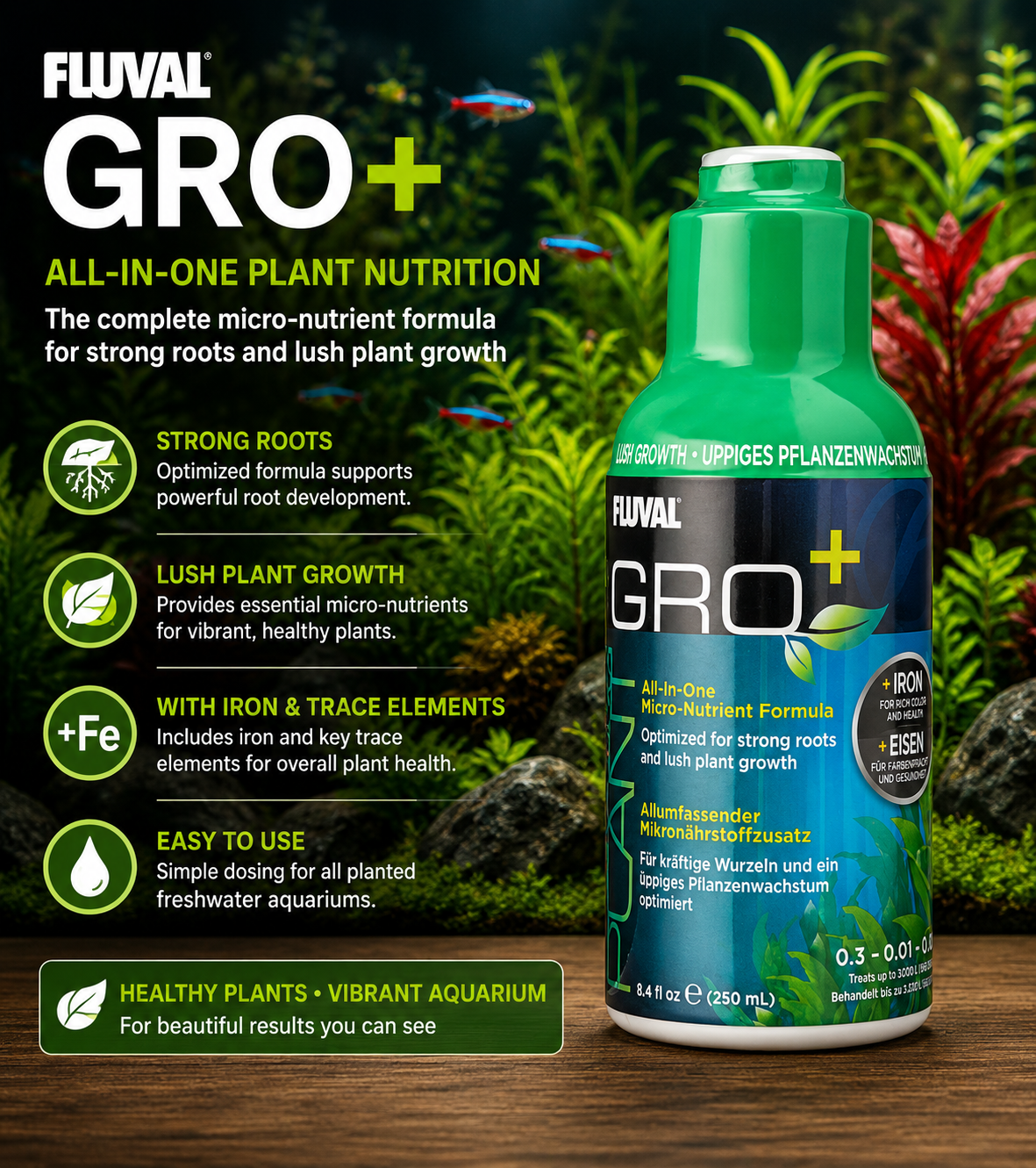
Fluval
Fluval Gro Plus Aquarium Plant Fertiliser
Best for: Low-tech and everyday planted freshwater aquariums
As an Amazon Associate, we earn from qualifying purchases.
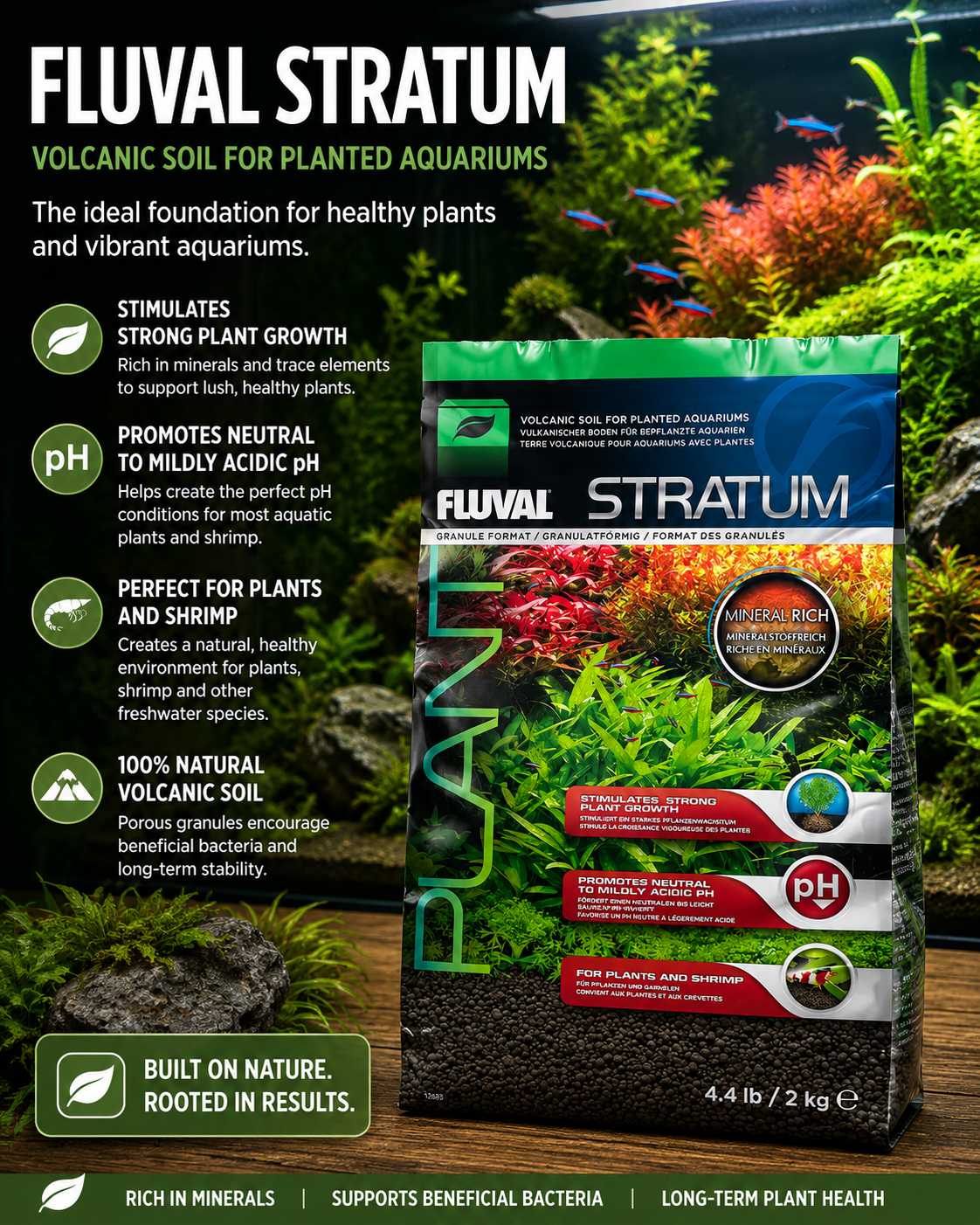
Fluval
Fluval Stratum Aquasoil 8kg
Best for: Planted aquariums, aquascapes and freshwater shrimp tanks
As an Amazon Associate, we earn from qualifying purchases.
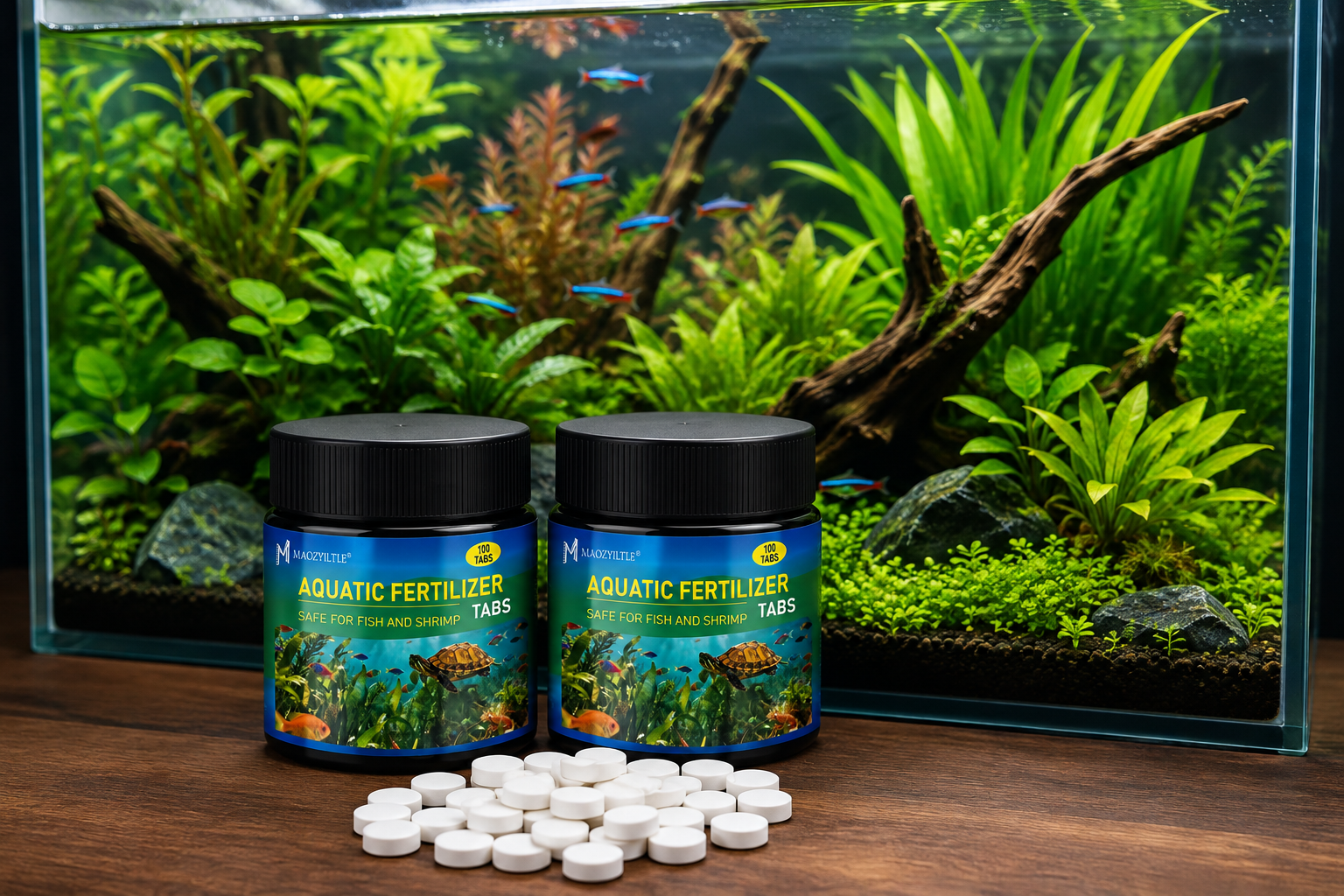
Newpie
Root Tabs for Live Aquarium Plants, Freshwater Plant Fertilizer - 100 x 2
Best for: Cryptocoryne, Amazon swords, Vallisneria and other heavy root-feeding aquarium plants
As an Amazon Associate, we earn from qualifying purchases.