5 Popular Clownfish Species You Can Keep in a Marine Aquarium
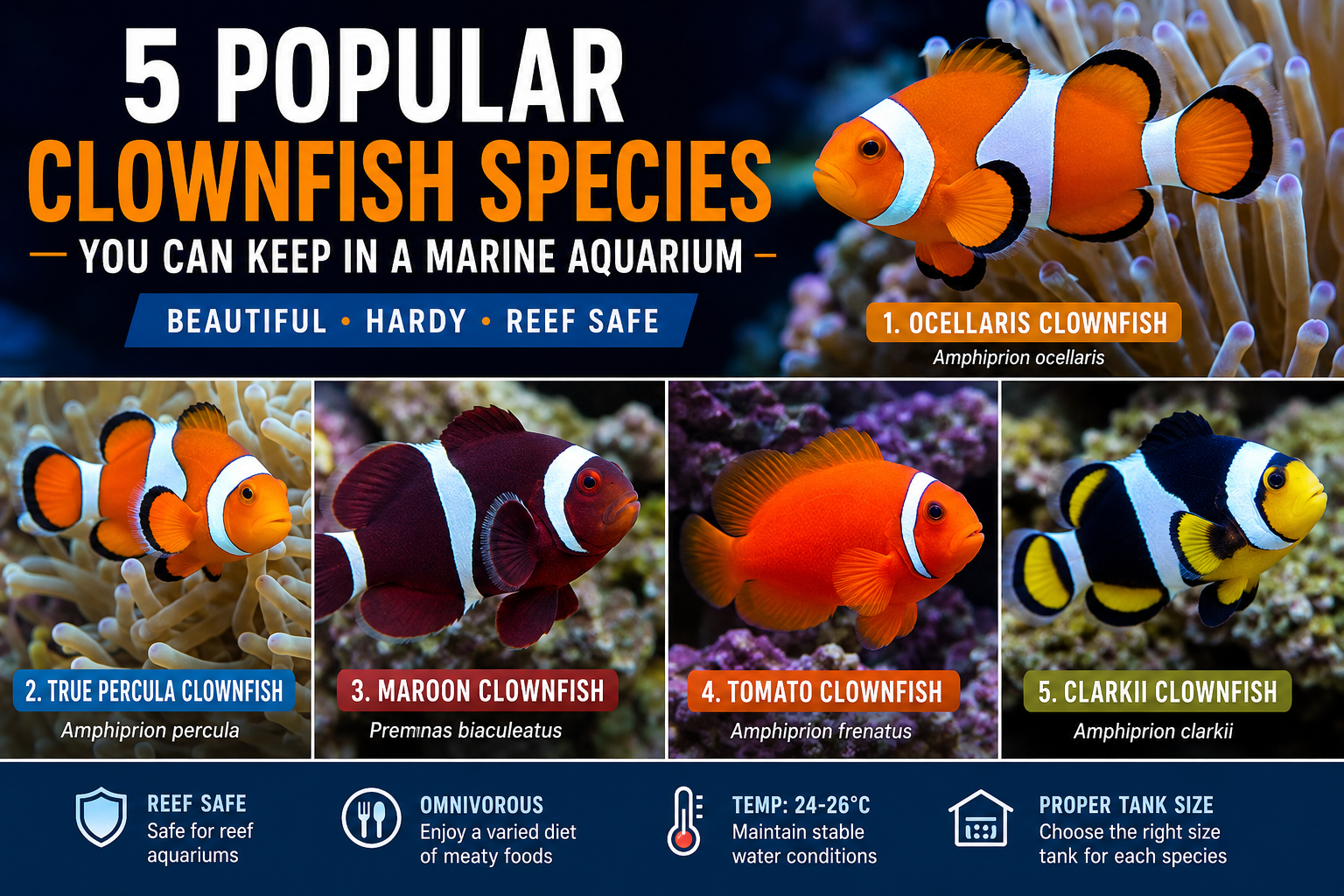
Discover five of the most popular clownfish species for reef aquariums. Learn the differences between Ocellaris, Percula, Maroon, Tomato and Clarkii clownfish, plus expert care tips.
Clownfish are among the most recognisable and rewarding marine fish to keep. Their bright colours, fascinating behaviour and relatively hardy nature make them an excellent choice for both beginners and experienced reef keepers.
Despite often being grouped together as simply "clownfish", there are nearly 30 recognised species, each with its own personality, size and care requirements. Some remain peaceful community fish, while others become highly territorial as they mature.
Here are five of the most popular clownfish species that are commonly available for home aquariums.
1. Ocellaris Clownfish (Amphiprion ocellaris)
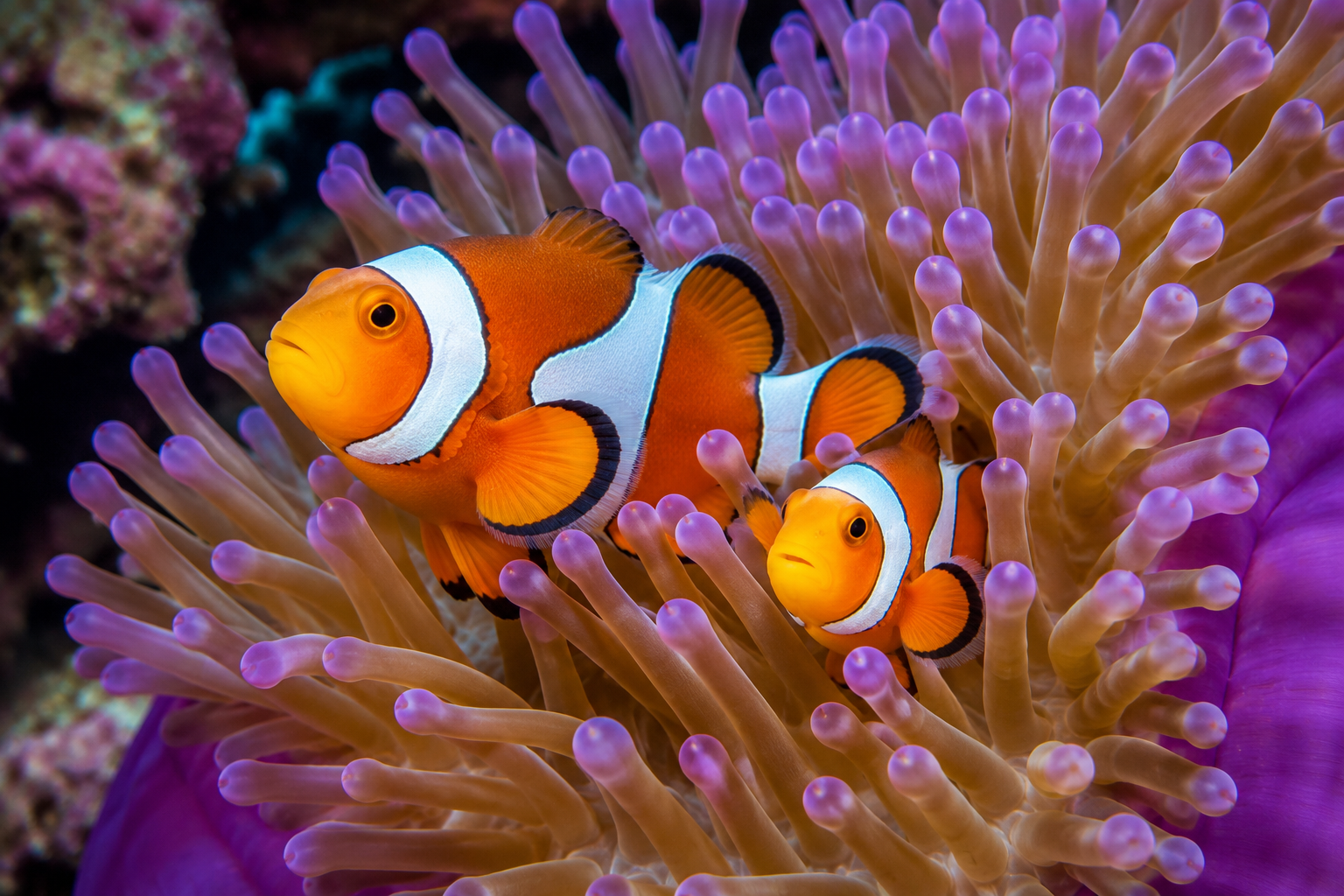
The Ocellaris Clownfish is by far the most popular species in the aquarium hobby. Often called the "False Percula", it became world-famous after Disney's Finding Nemo.
- Adult Size: 8–11 cm
- Temperament: Peaceful
- Difficulty: Beginner
- Minimum Aquarium Size: 75 litres
The Ocellaris is an ideal first marine fish. Captive-bred specimens adapt well to aquarium life, readily accept prepared foods and generally mix well with other peaceful reef fish. They naturally associate with several anemone species in the wild but do not require one to thrive in captivity.
Selective breeding has produced many stunning colour varieties, including Black Ocellaris, Snowflake, Wyoming White, Gladiator and Storm Clownfish.
2. True Percula Clownfish (Amphiprion percula)
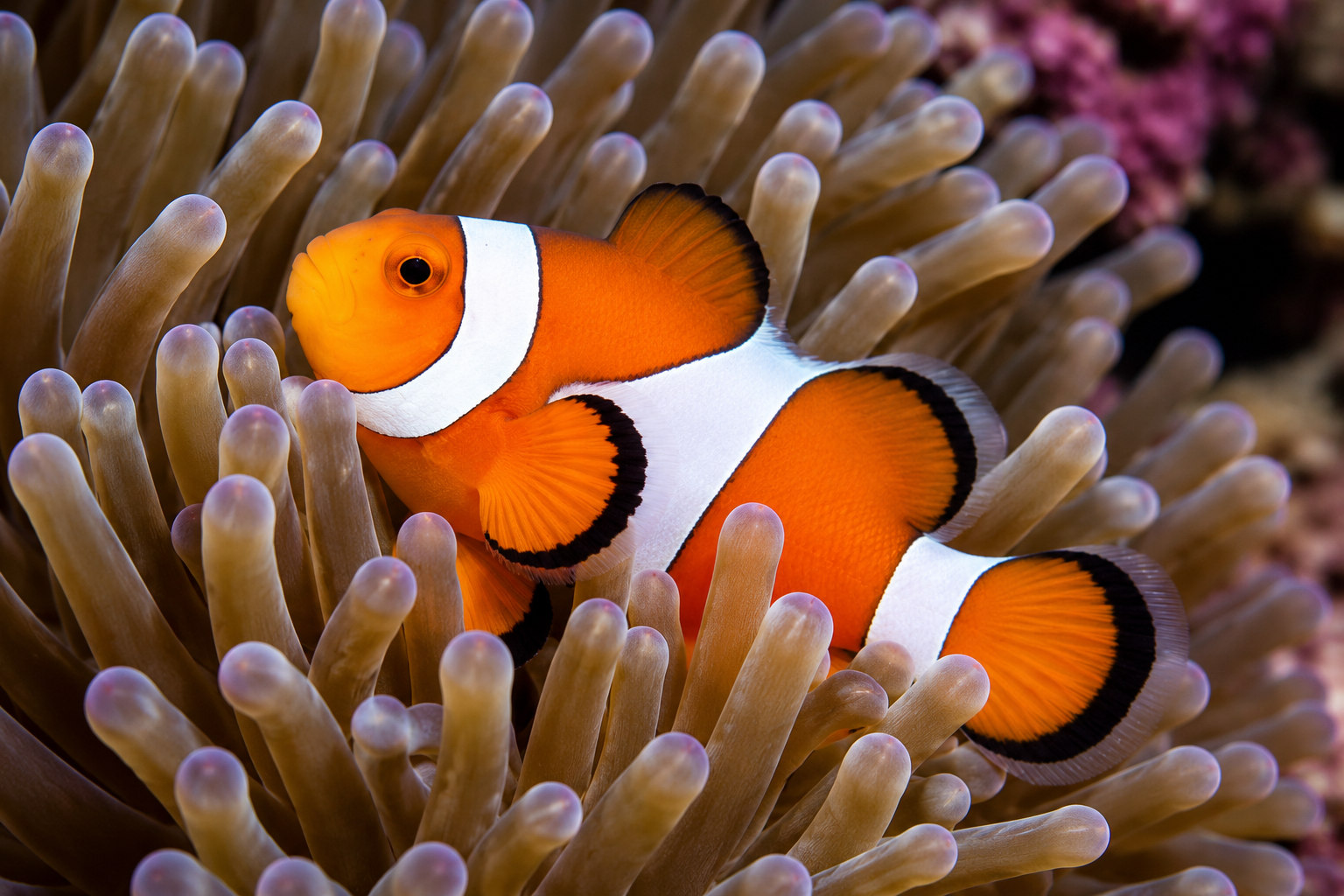
The True Percula Clownfish closely resembles the Ocellaris but has thicker black edging around its white bars and a slightly brighter orange colouration.
- Adult Size: 7–9 cm
- Temperament: Peaceful
- Difficulty: Easy
- Minimum Aquarium Size: 75 litres
Although slightly less common than Ocellaris Clownfish, True Perculas are highly sought after for their striking appearance. Captive-bred fish are hardy and adapt well to aquarium life, making them excellent additions to peaceful reef aquariums.
3. Maroon Clownfish (Premnas biaculeatus)
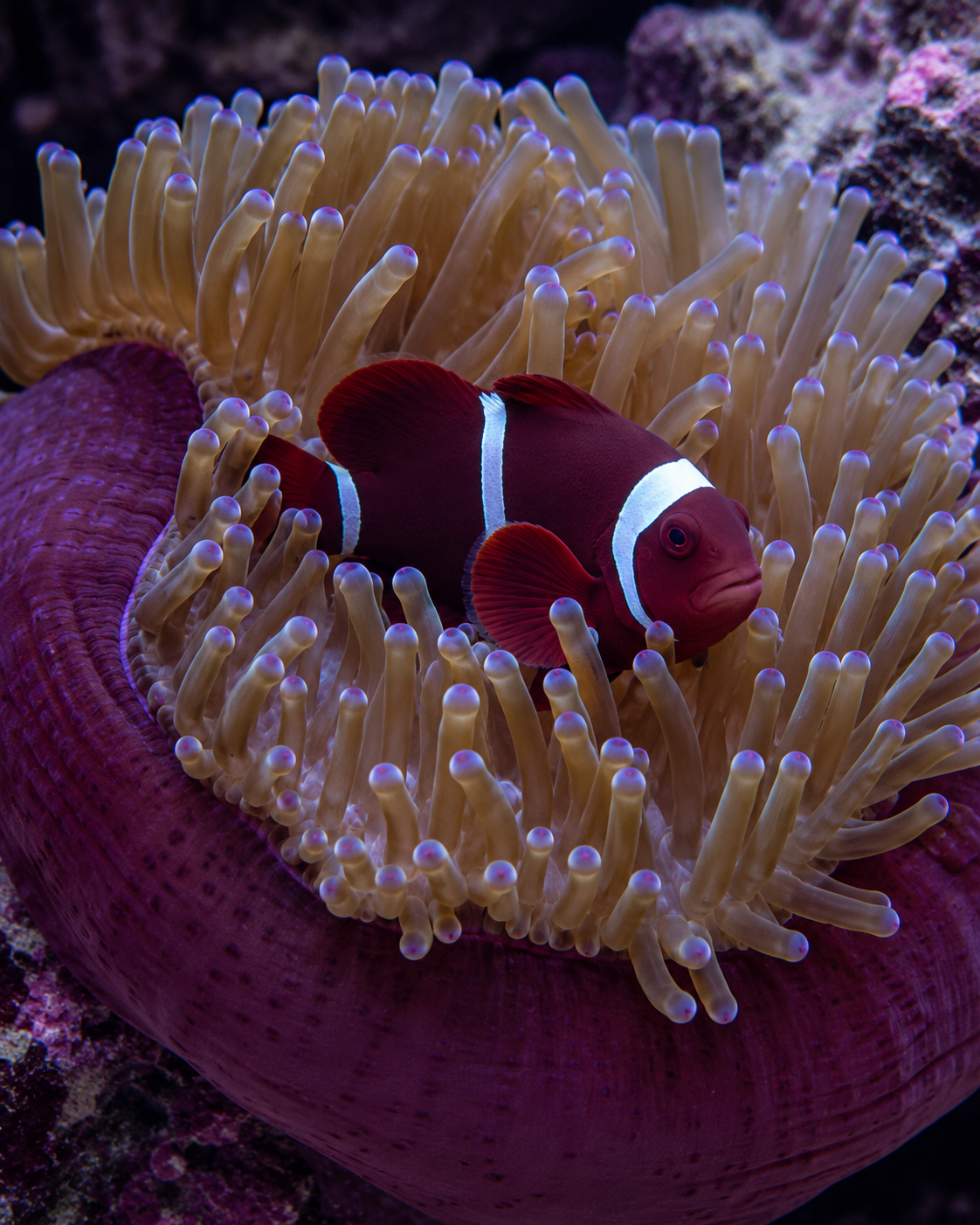
The Maroon Clownfish is the largest and most territorial clownfish commonly kept by marine aquarists.
- Adult Size: 15–17 cm
- Temperament: Aggressive
- Difficulty: Intermediate
- Minimum Aquarium Size: 180 litres
Maroon Clownfish are full of personality but should be chosen carefully. Mature females can become extremely aggressive and will fiercely defend their chosen territory, particularly if they have formed a pair or are hosting a sea anemone.
Popular varieties include the Gold Stripe Maroon, White Stripe Maroon and Lightning Maroon.
** 4. Tomato Clownfish (Amphiprion frenatus)
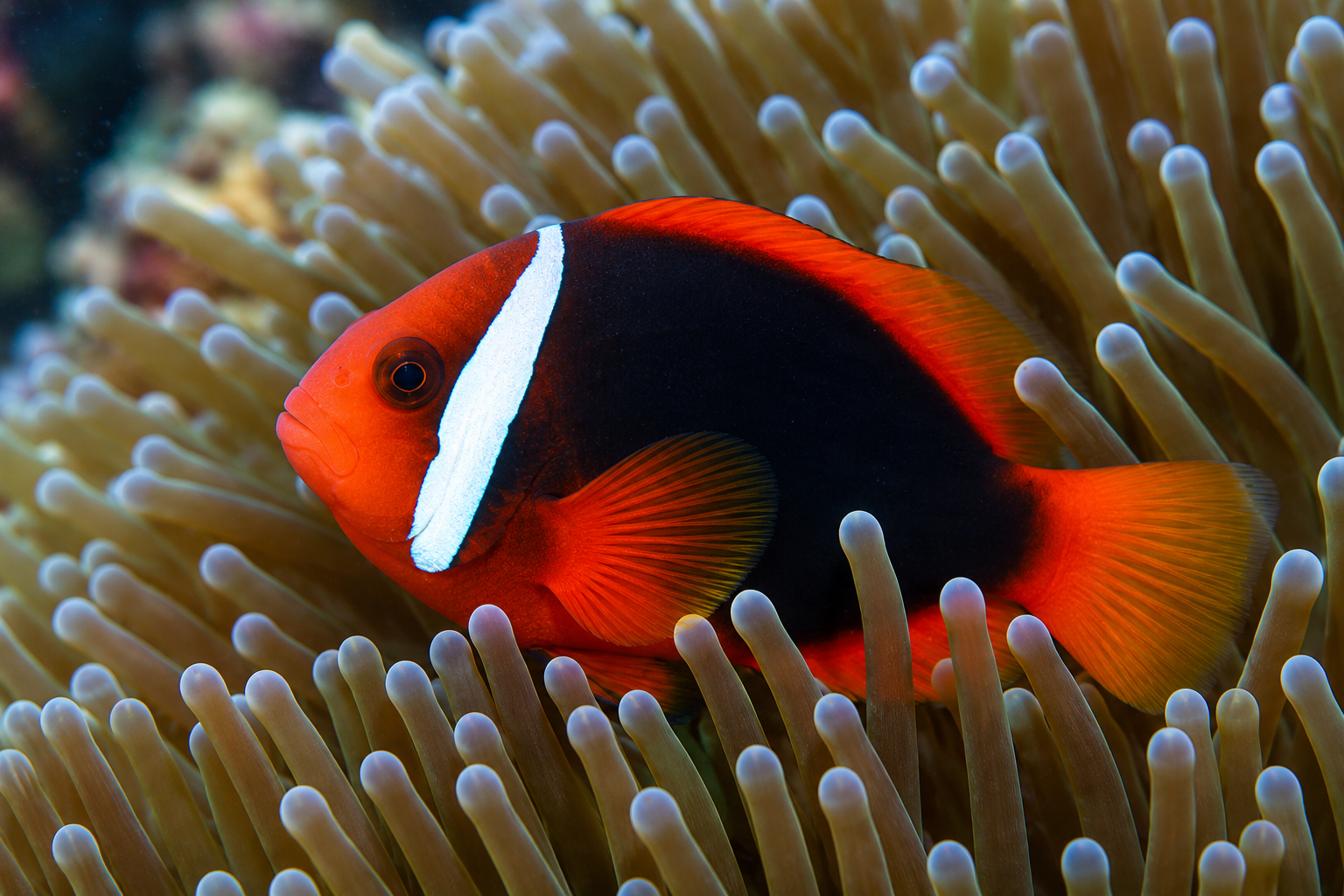
The Tomato Clownfish is recognised by its deep orange-red body and single white head bar.
- Adult Size: 12–14 cm
- Temperament: Semi-aggressive
- Difficulty: Beginner to Intermediate
- Minimum Aquarium Size: 120 litres
Tomato Clownfish are hardy, easy to feed and make excellent centrepiece fish. As they mature they become increasingly territorial, so careful planning of tank mates is important.
5. Clarkii Clownfish (Amphiprion clarkii)
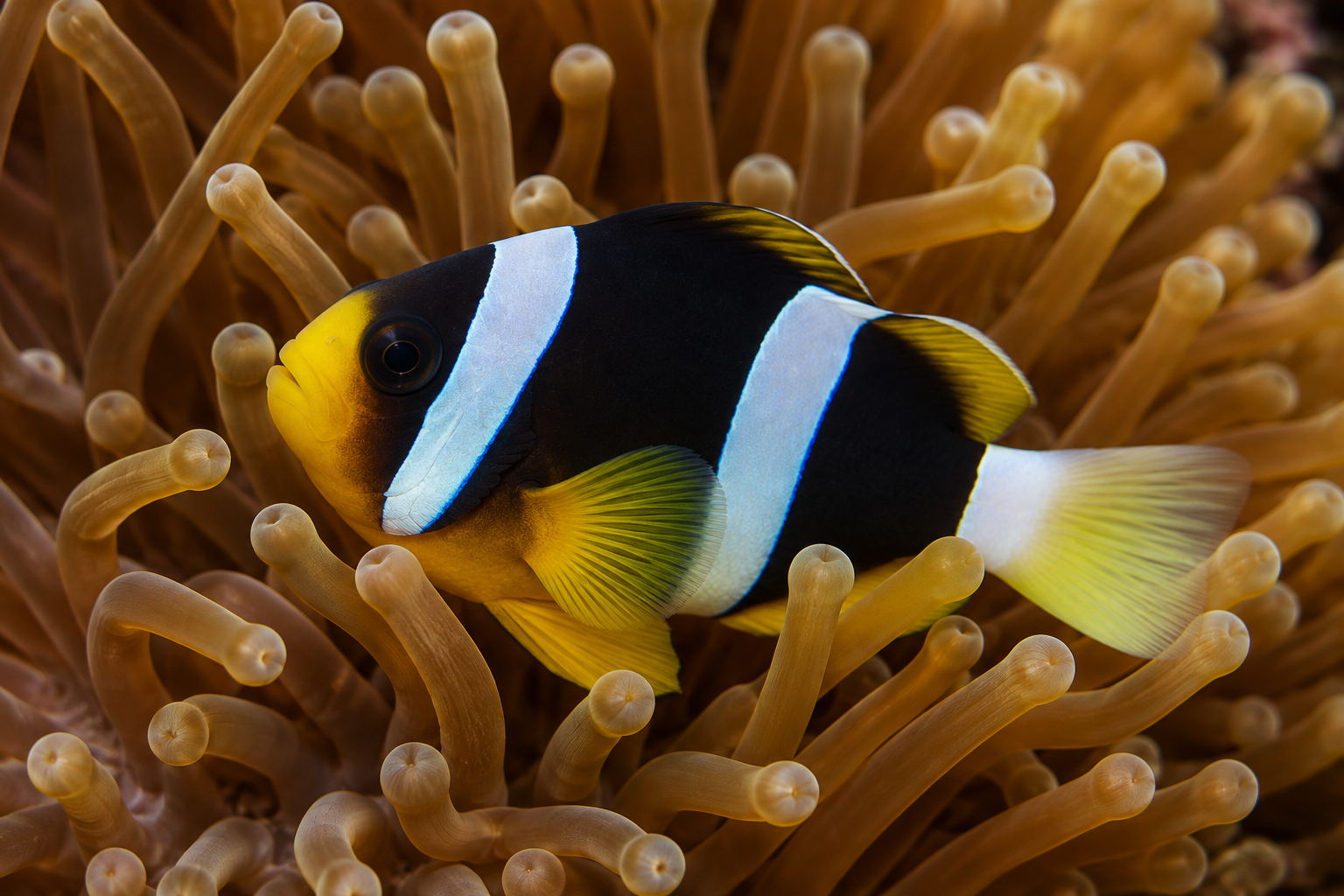
Clarkii Clownfish are one of the most adaptable clownfish species and are capable of naturally hosting more species of sea anemone than almost any other clownfish.
- Adult Size: 12–15 cm
- Temperament: Semi-aggressive
- Difficulty: Easy
- Minimum Aquarium Size: 120 litres
Clarkii Clownfish are active swimmers with attractive yellow, black and white markings. They are hardy, readily available and suitable for many mixed reef aquariums.
Do Clownfish Need a Sea Anemone?
One of the biggest misconceptions in marine fishkeeping is that clownfish require a sea anemone to survive. In reality, they can live long, healthy lives without one. Many captive-bred clownfish never encounter an anemone and instead choose to host leather corals, Euphyllia corals, toadstool corals, rockwork or even aquarium equipment.
If you plan to keep a sea anemone, it should only be introduced into a mature, stable marine aquarium that has been running successfully for at least six months.
Feeding Clownfish
Clownfish are omnivores and should be offered a varied diet to maintain excellent health and vibrant colours.
Suitable foods include:
- High-quality marine pellets
- Marine Flakes
- Frozen mysis shrimp
- Frozen brine shrimp
- Chopped seafood
- Other frozen marine foods
Feed small amounts once or twice each day, ensuring all food is consumed within a few minutes.
Ideal Water Parameters
Maintaining stable water quality is essential for healthy clownfish.
- Temperature: 24–26°C
- Specific Gravity: 1.024–1.026
- pH: 8.1–8.4
- Ammonia: 0 ppm
- Nitrite: 0 ppm
- Nitrate: Below 20 ppm
Consistency is far more important than constantly adjusting water chemistry. If you are new to reef keeping then a NT Labs Marine Lab Reef Multi-Test Kit is a good place to start but if you want accuracy the Red Sea Range is hard to beat however they come at a price.
Which Clownfish Is Best for Beginners?
For those starting their first marine aquarium, the Ocellaris Clownfish remains the best choice thanks to its peaceful nature, hardiness and ease of care.
True Percula and Clarkii Clownfish are also excellent options for beginners, while Maroon and Tomato Clownfish are better suited to aquarists with some experience due to their increasingly territorial behaviour.
Final Thoughts
Clownfish have earned their place as one of the world's favourite marine aquarium fish. Their colourful appearance, fascinating social behaviour and relative hardiness make them ideal additions to many reef aquariums.
Whether you choose the classic Ocellaris Clownfish, the beautifully marked True Percula or the bold Maroon Clownfish, providing excellent water quality, a varied diet and an appropriately sized aquarium will reward you with healthy fish that can live for well over a decade.
Where possible, choose captive-bred clownfish. They are generally hardier, adapt more readily to aquarium life and help reduce collection pressure on wild reef populations.
If you enjoyed this article then why not try My 5 Favourite Reef Safe Dwarf Angelfish.
Products We've Mentioned & Recommend
Below you'll find a selection of products we've mentioned in this article, along with a few others we think you might find useful. We've included Amazon links to make them easy to find.
A quick word about affiliate links...
Some of these links are affiliate links, which means we may earn a small commission from qualifying purchases, at no extra cost to you.
Unfortunately, the commission doesn't quite stretch to cocktails on a yacht or a garage full of sports cars. In reality, it helps cover the running costs of this website and, with a bit of luck, might eventually buy me a new pair of waders that don't leak!
We only recommend products we genuinely believe are worth considering, and your support helps us keep sharing free advice from our years of working with aquariums and ponds.
Thanks for supporting Aquatic Specialist!
As an Amazon Associate I earn from qualifying purchases.
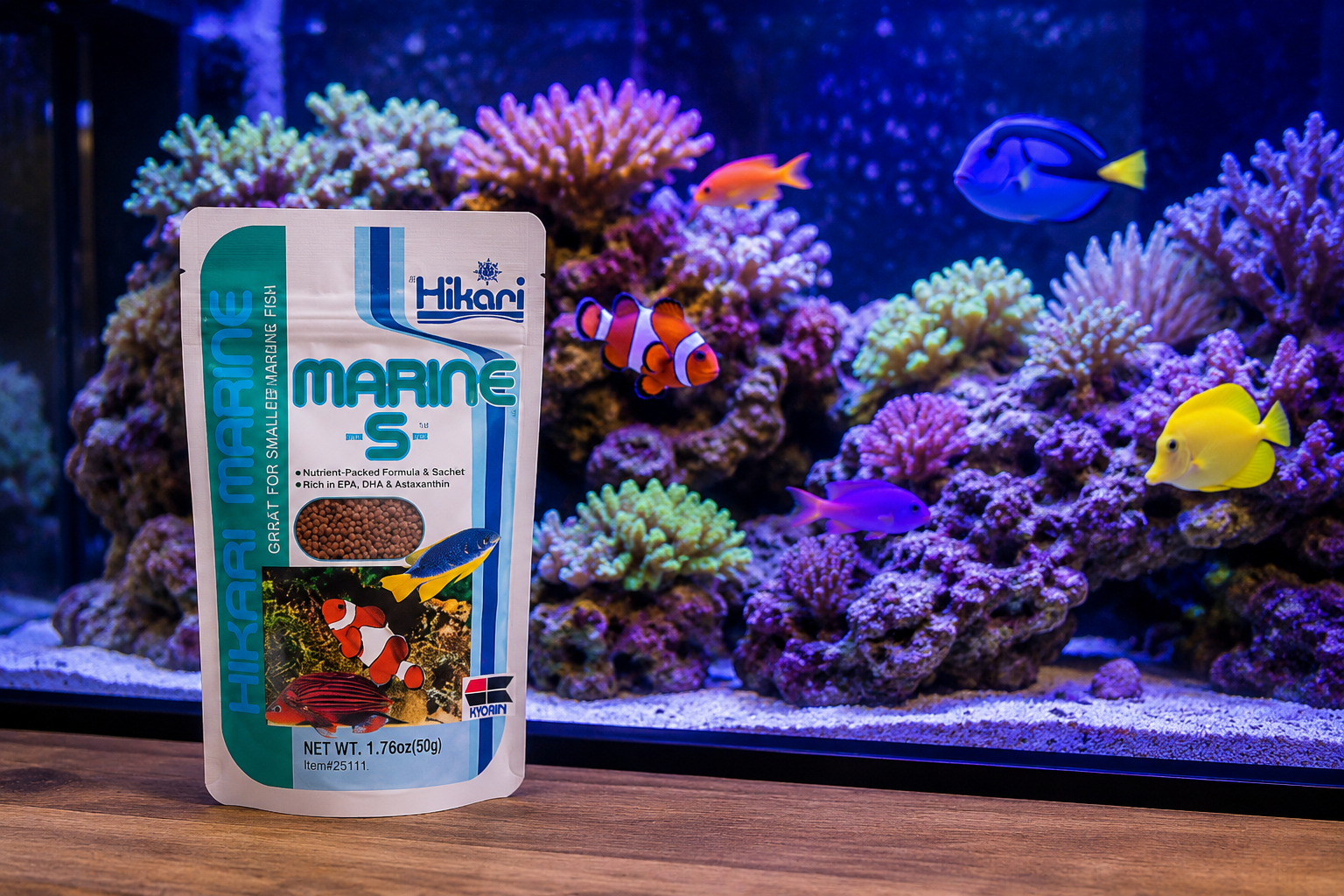
Hikari
Hikari Marine-S Pellets Fish Food for Smaller Marine Fish
Best for: Small marine fish in reef aquariums requiring a high-quality daily pellet food.
As an Amazon Associate, we earn from qualifying purchases.
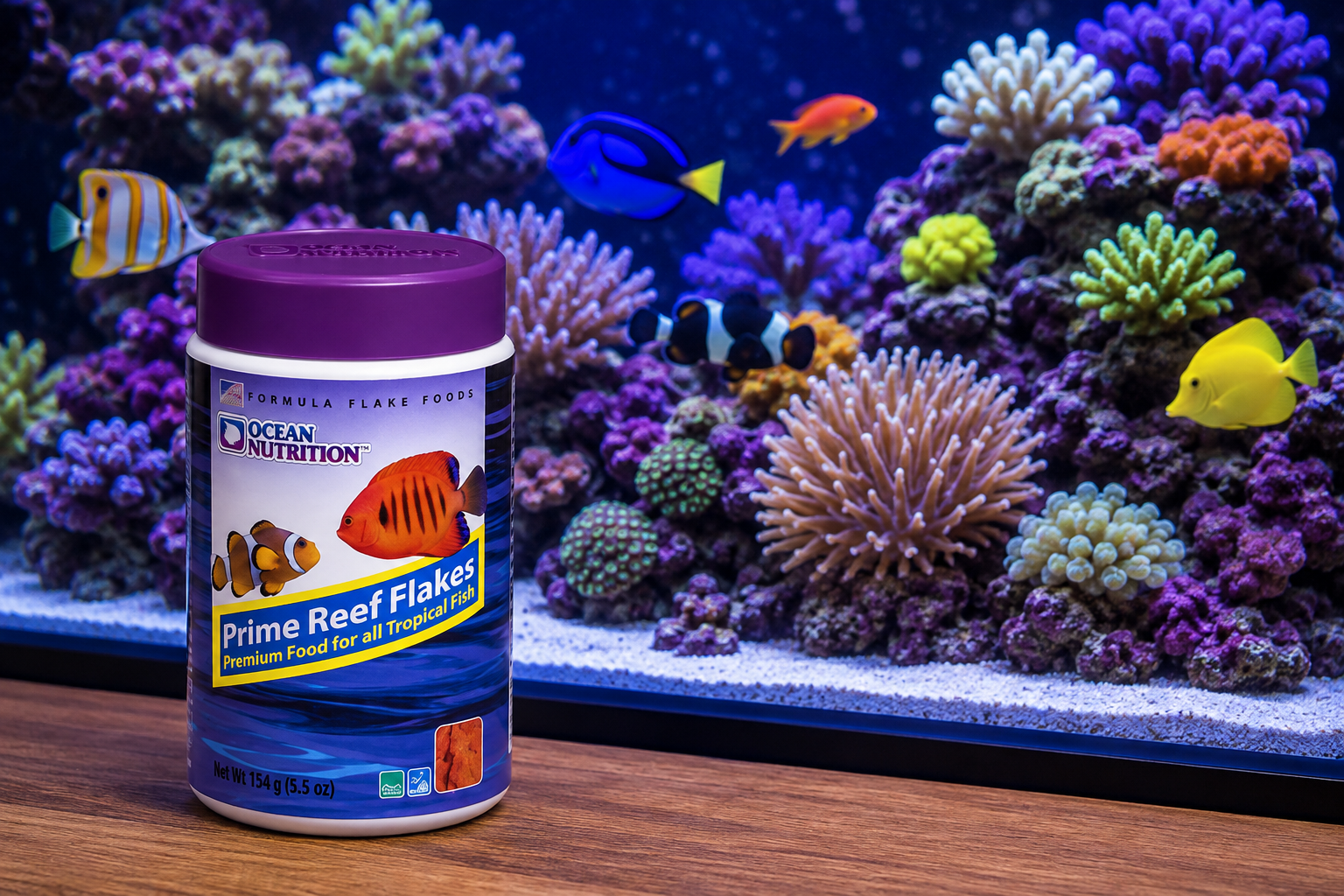
Ocean Nutrition
Ocean Nutrition Food Primereef Flake
Best for: Daily feeding of small to medium marine fish in reef and fish-only aquariums.
As an Amazon Associate, we earn from qualifying purchases.
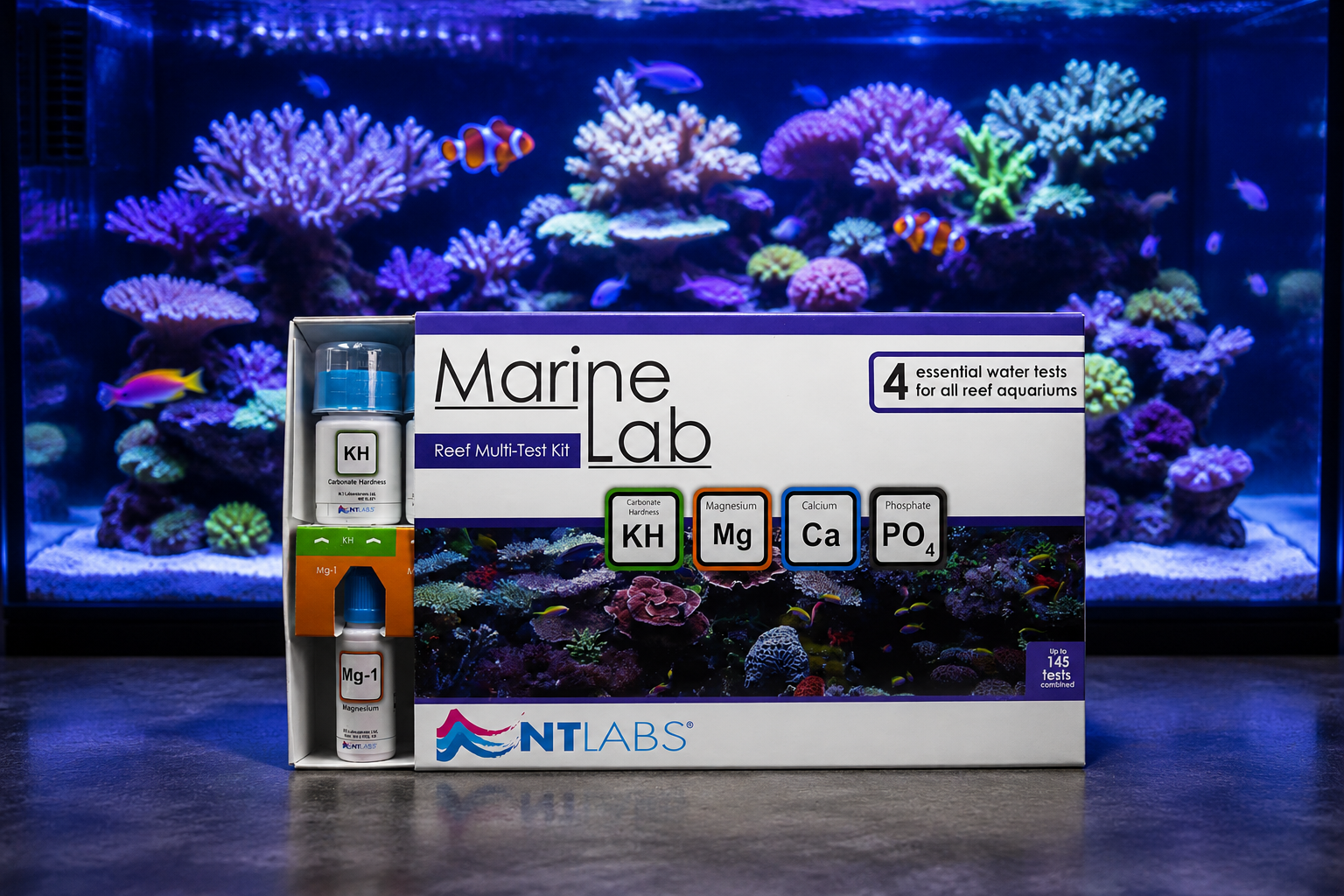
NT Labs
NT Labs Marine Lab Reef Multi-Test Kit
Best for: Reef aquariums requiring regular monitoring of KH, calcium, magnesium and phosphate.
As an Amazon Associate, we earn from qualifying purchases.