Axolotl Care Guide: Everything You Need to Know
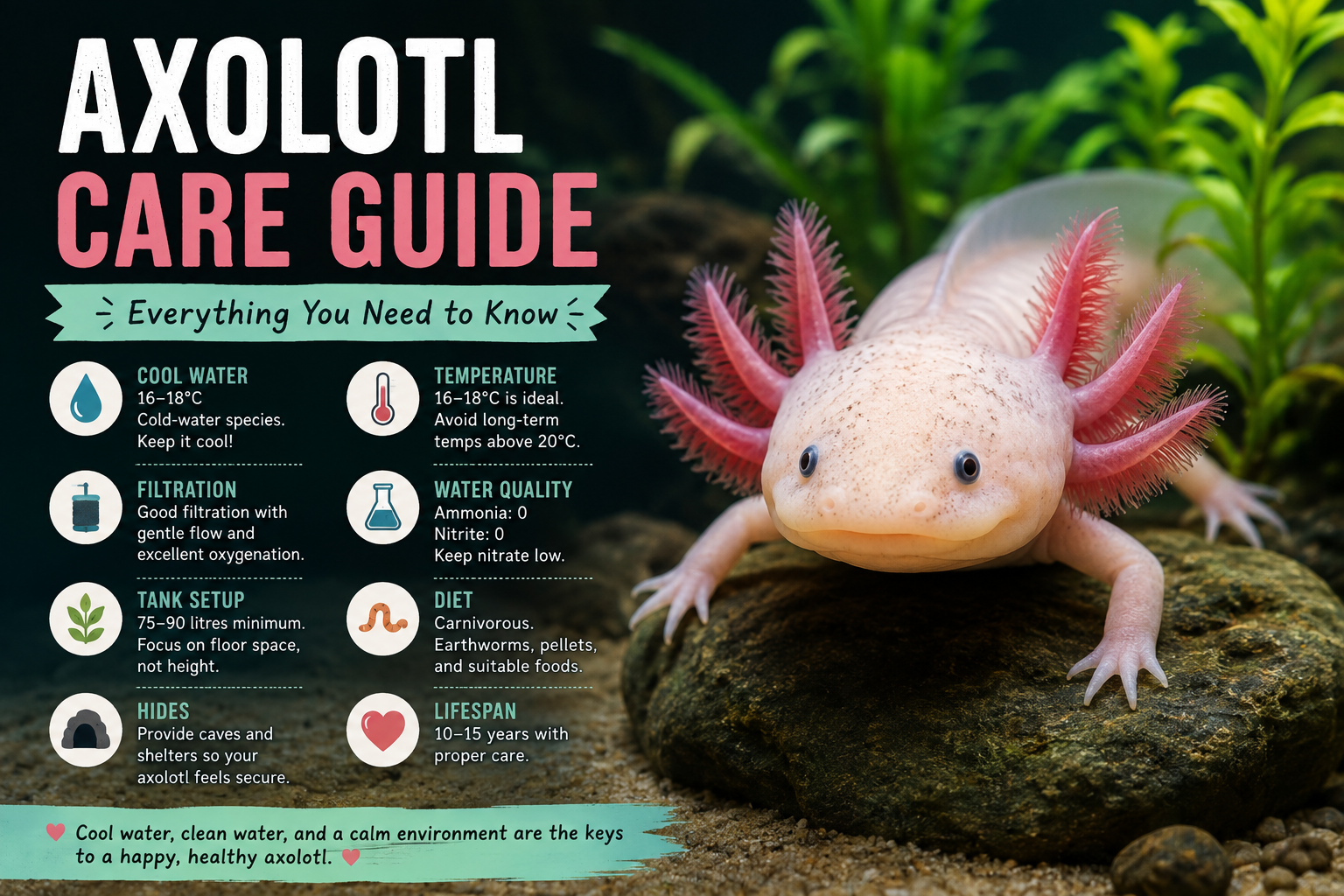
Learn how to care for an axolotl, including tank size, water temperature, feeding, filtration, substrate and essential aquarium maintenance.
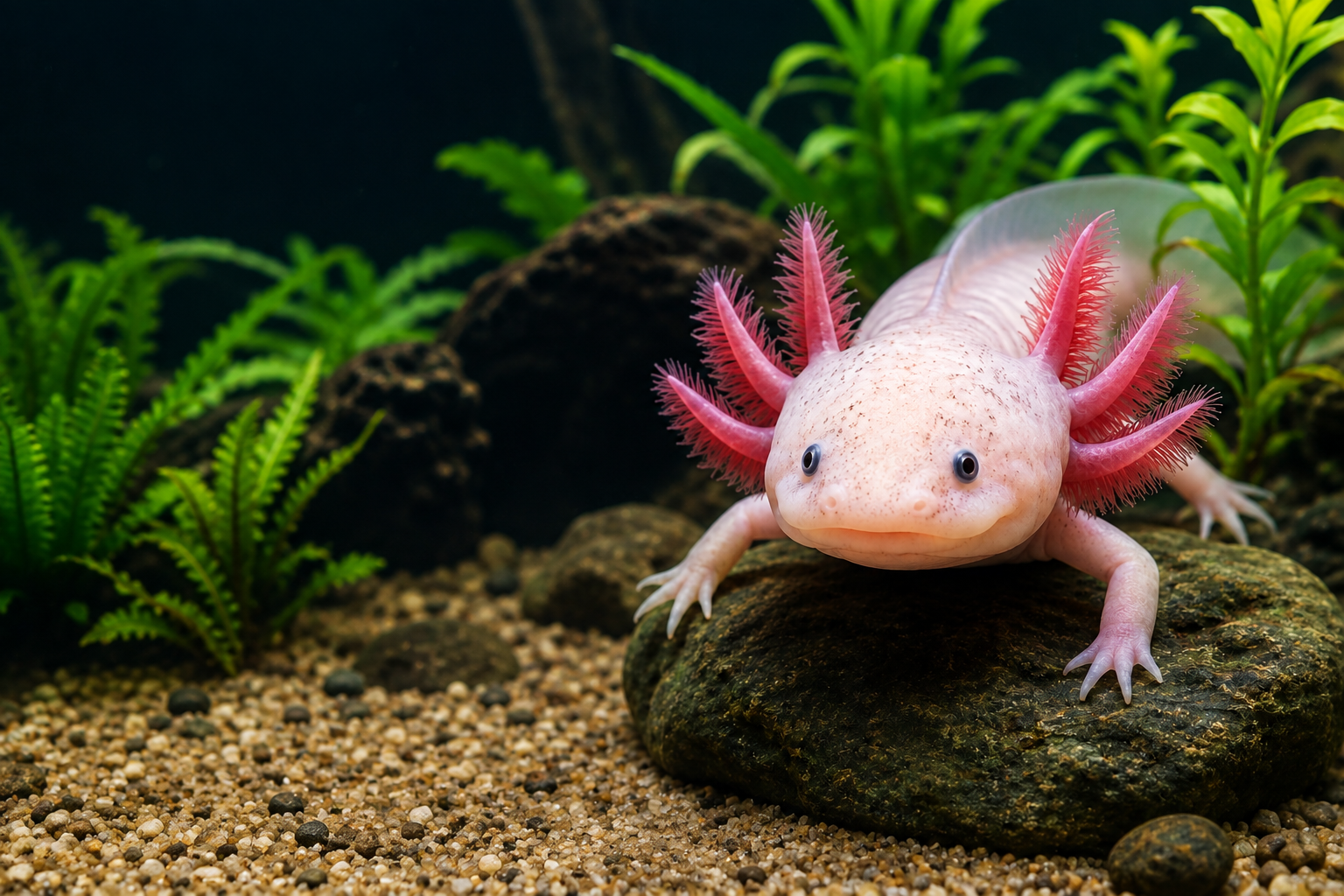
Axolotls (Ambystoma mexicanum) are one of the most unusual animals kept in home aquariums. With their feathery external gills, wide mouths and almost permanently youthful appearance, they look unlike almost anything else available to aquarists.
Despite their popularity, axolotls are not quite as easy to keep as their appearance might suggest. Their need for cool, clean, well-oxygenated water makes them very different from most tropical aquarium inhabitants.
Get those fundamentals right, however, and an axolotl can make a fascinating long-term aquarium resident.
Axolotl Quick Care Guide
Scientific name: Ambystoma mexicanum Adult size: Around 20–30 cm Lifespan: Commonly 10–15 years with good care Temperature: Ideally around 16–18°C pH: Approximately 6.5–8.0 Diet: Carnivorous Minimum aquarium: Around 75–90 litres for one adult, with floor space more important than height Temperament: Generally peaceful, but best kept alone or with carefully selected other axolotls Difficulty: Intermediate
What Is an Axolotl?
The axolotl is an aquatic salamander native to the waterways around Mexico City, particularly the remaining canal system of Xochimilco.
Unlike most salamanders, axolotls normally remain aquatic throughout their lives. They retain juvenile characteristics such as their distinctive external gills rather than undergoing the usual transformation into a terrestrial adult.
This phenomenon is known as neoteny.
Wild axolotls are critically endangered, although captive-bred animals are now widespread within the aquarium and exotic-pet hobby.
Choosing an Aquarium
One of the first mistakes new keepers make is choosing an aquarium based purely on water volume.
Axolotls spend most of their time on or close to the bottom, so floor space is particularly important. A long, relatively shallow aquarium is generally more useful than a tall aquarium containing the same volume of water.
For a single adult, I would look at an aquarium of approximately 75–90 litres or larger, preferably with a good footprint.
Larger aquariums also provide an important advantage: water conditions tend to be more stable.
Axolotls produce a considerable amount of waste, so additional water volume can make maintaining good water quality easier.
Temperature Is Critical
Temperature is one of the most important aspects of axolotl care.
These are cold-water animals, not tropical aquarium inhabitants.
Aim for approximately 16–18°C whenever possible.
Temperatures around 20°C and above should not become the normal long-term condition of the aquarium. Prolonged excessive temperatures can cause stress and may increase susceptibility to health problems.
This can make axolotls surprisingly challenging to keep during hot summers, particularly in warm rooms.
Depending on your home, temperature control might involve:
- Positioning the aquarium in a naturally cool room
- Keeping it away from direct sunlight
- Using aquarium cooling fans
- Improving ventilation around the aquarium
- Using an aquarium chiller where necessary
If your aquarium regularly becomes too warm during summer, it is worth solving the cooling problem before buying an axolotl.
Water Quality
Good water quality is essential.
An axolotl aquarium should be fully cycled before the animal is introduced.
The biological filter converts toxic ammonia produced by the animal into nitrite and eventually into the much less toxic nitrate.
Your targets should be:
Ammonia: 0 mg/L Nitrite: 0 mg/L Nitrate: Ideally kept low through regular maintenance
Regular water testing is particularly useful when setting up a new aquarium.
Never assume clear water is clean water. Ammonia and nitrite are invisible. Regularly test to water , we like the ESHA Aqua Quicktest they are quick and easy plus they are pretty accurate.
Filtration
Axolotls are relatively messy animals, so effective filtration is important.
At the same time, they generally prefer fairly gentle water movement.
This creates an interesting balance: you need enough filtration to maintain excellent water quality without turning the aquarium into a fast-flowing environment.
Suitable options can include:
- Large sponge filters
- Internal filters with controllable flow
- External canister filters with the outlet diffused or directed appropriately
A spray bar can be particularly useful with an external filter because it spreads the returning water over a wider area.
Watch your axolotl's behaviour. Excessive current can make it difficult for the animal to settle comfortably.
Choosing the Right Substrate
Substrate choice is extremely important because axolotls can accidentally swallow material while feeding.
Large pieces of aquarium gravel can become an impaction risk.
For this reason, two of the simplest options are:
Bare Bottom
A bare-bottom aquarium is extremely easy to clean and makes waste easy to spot.
Its appearance isn't for everyone, but from a maintenance perspective it is difficult to beat.
Fine Sand
Fine aquarium sand provides a much more natural-looking aquarium.
If using sand, choose very fine sand rather than gravel or coarse stones, particularly once the axolotl is large enough for an appropriate sand setup.
Whatever you choose, avoid loose pieces that could easily be swallowed but are too large to pass safely.
Decorating an Axolotl Aquarium
An axolotl aquarium doesn't have to be empty.
Providing hides gives the animal somewhere darker and more secure to rest.
Suitable decorations can include:
- Caves
- Smooth rocks that cannot be swallowed
- Large pieces of aquarium-safe wood
- Terracotta-style hides
- Live or artificial plants
Check every decoration carefully for sharp edges.
Axolotls have delicate skin and external gills, so rough aquarium ornaments that might be harmless to many fish aren't necessarily suitable.
Lighting
Axolotls do not require strong aquarium lighting.
In fact, bright lighting can make them uncomfortable, particularly if the aquarium doesn't contain enough shaded areas.
If you're growing live plants, choose plants capable of growing under relatively modest lighting.
Adding caves, floating plants and shaded areas allows your axolotl to move away from the light whenever it chooses.
Plants for an Axolotl Aquarium
Live plants can work very well in an axolotl aquarium, but they need to tolerate relatively cool water and often fairly subdued lighting.
Good plants to consider include:
Anubias Nana – Tough, slow-growing and happy under low lighting.
Java Fern – Another robust plant that can be attached to wood or rock.
Java Moss – Useful for adding natural-looking greenery.
Water Hornwort – A hardy plant capable of growing without being planted into the substrate.
Elodea/Egeria-type plants – Can work well in cooler aquariums. (in the UK Elodea is no longer available).
Expect some plants to be disturbed occasionally. Axolotls aren't aquascaping critics and may happily walk through your carefully arranged planting.
Feeding an Axolotl
Axolotls are carnivores.
A good diet should be based around nutritious foods appropriate for aquatic salamanders.
One of the best staple foods for adult axolotls is earthworms. They offer excellent nutrition and are readily accepted by many individuals.
Other foods can include:
- Quality sinking Axolotl or carnivore pellets
- Appropriate worms
- Occasional suitable frozen foods
Juveniles generally need smaller foods and more frequent feeding than adults.
Adult axolotls don't necessarily need feeding every day. Feeding frequency should be adjusted according to the animal's age, condition and the size of the meals being offered.
Remove uneaten food rather than allowing it to decay in the aquarium.
Can Axolotls Live With Fish?
Generally, I wouldn't recommend keeping ordinary aquarium fish with axolotls.
There are several problems.
Small fish may become food.
Larger or inquisitive fish may nip the axolotl's delicate external gills.
Tropical species usually require temperatures that are too warm for an axolotl.
Fish can also introduce additional parasites and disease.
A dedicated axolotl aquarium is usually the safest and simplest option.
Can You Keep Axolotls Together?
Multiple axolotls can sometimes be kept together successfully, but this requires considerably more space.
Animals should be similar in size, and you need to monitor them for accidental biting or aggression, particularly around feeding.
Juvenile axolotls can be especially prone to nipping one another.
If keeping more than one, provide plenty of floor space, multiple hides and sufficient feeding opportunities.
You should also be prepared to separate individuals if problems develop.
Aquarium Maintenance
Good maintenance is one of the most effective ways to keep an axolotl healthy.
A typical routine should include regular partial water changes, cleaning visible waste from the substrate and maintaining the filter.
Avoid completely stripping down the aquarium or replacing all biological filter media at once.
The beneficial bacteria living inside mature filter media are an important part of the aquarium's biological stability.
When cleaning reusable biological media, gently rinsing it in removed aquarium water can help preserve the bacterial population.
Signs Something May Be Wrong
Getting familiar with your axolotl's normal appearance and behaviour makes changes easier to notice.
Potential warning signs include:
- Reduced appetite
- Unusual floating or difficulty staying down
- Persistent curled gills or tail
- Damaged or shrinking-looking gills
- Skin abnormalities
- Fungus-like growth
- Unusual lethargy
- Rapid changes in body condition
These signs don't automatically identify a particular illness.
Start by checking the basics: temperature, ammonia, nitrite, nitrate and recent changes to the aquarium.
If an axolotl appears seriously unwell, seek advice from a veterinarian experienced with amphibians or exotic animals rather than experimenting with aquarium fish medications. Some treatments intended for fish may be unsuitable for amphibians.
Common Axolotl Care Mistakes
Keeping Them Too Warm
This is probably one of the most important problems to avoid. Axolotls need consistently cool conditions.
Using Gravel
Swallowable gravel creates an unnecessary impaction risk.
Setting Up an Uncycled Aquarium
A new aquarium can experience dangerous ammonia and nitrite levels before its biological filter becomes established.
Creating Too Much Flow
Powerful filtration isn't necessarily better if the resulting current continually stresses the animal.
Keeping Them With Tropical Fish
The temperature requirements alone make many conventional tropical community fish unsuitable companions.
Overfeeding
Excess food contributes to poor water quality and unnecessary weight gain.
Buying Before Planning for Summer
An aquarium that sits comfortably at 17°C in February might become much warmer in July. Think about year-round temperatures before bringing an axolotl home.
Are Axolotls Good Pets for Beginners?
They can be excellent aquarium animals, but I wouldn't describe them as completely effortless beginner pets.
The biggest challenge is usually temperature.
If you can provide a suitably large, mature aquarium that remains cool throughout the year, their everyday care is relatively straightforward.
If your home regularly reaches high temperatures and you have no practical way of cooling the aquarium, another species may be a better choice.
Final Thoughts
Axolotls are extraordinary animals, but successful care comes down to getting a few fundamentals consistently right.
Provide cool water, excellent water quality, gentle filtration, safe substrate, appropriate food and plenty of floor space, and you've already addressed most of their essential requirements.
The key is to design the aquarium around the axolotl rather than trying to fit an axolotl into a conventional tropical fish setup.
With good planning and regular maintenance, a healthy axolotl can be a fascinating aquarium resident for well over a decade.
Products We've Mentioned & Recommend
Below you'll find a selection of products we've mentioned in this article, along with a few others we think you might find useful. We've included Amazon links to make them easy to find.
A quick word about affiliate links...
Some of these links are affiliate links, which means we may earn a small commission from qualifying purchases, at no extra cost to you.
Unfortunately, the commission doesn't quite stretch to cocktails on a yacht or a garage full of sports cars. In reality, it helps cover the running costs of this website and, with a bit of luck, might eventually buy me a new pair of waders that don't leak!
We only recommend products we genuinely believe are worth considering, and your support helps us keep sharing free advice from our years of working with aquariums and ponds.
Thanks for supporting Aquatic Specialist!
As an Amazon Associate I earn from qualifying purchases.
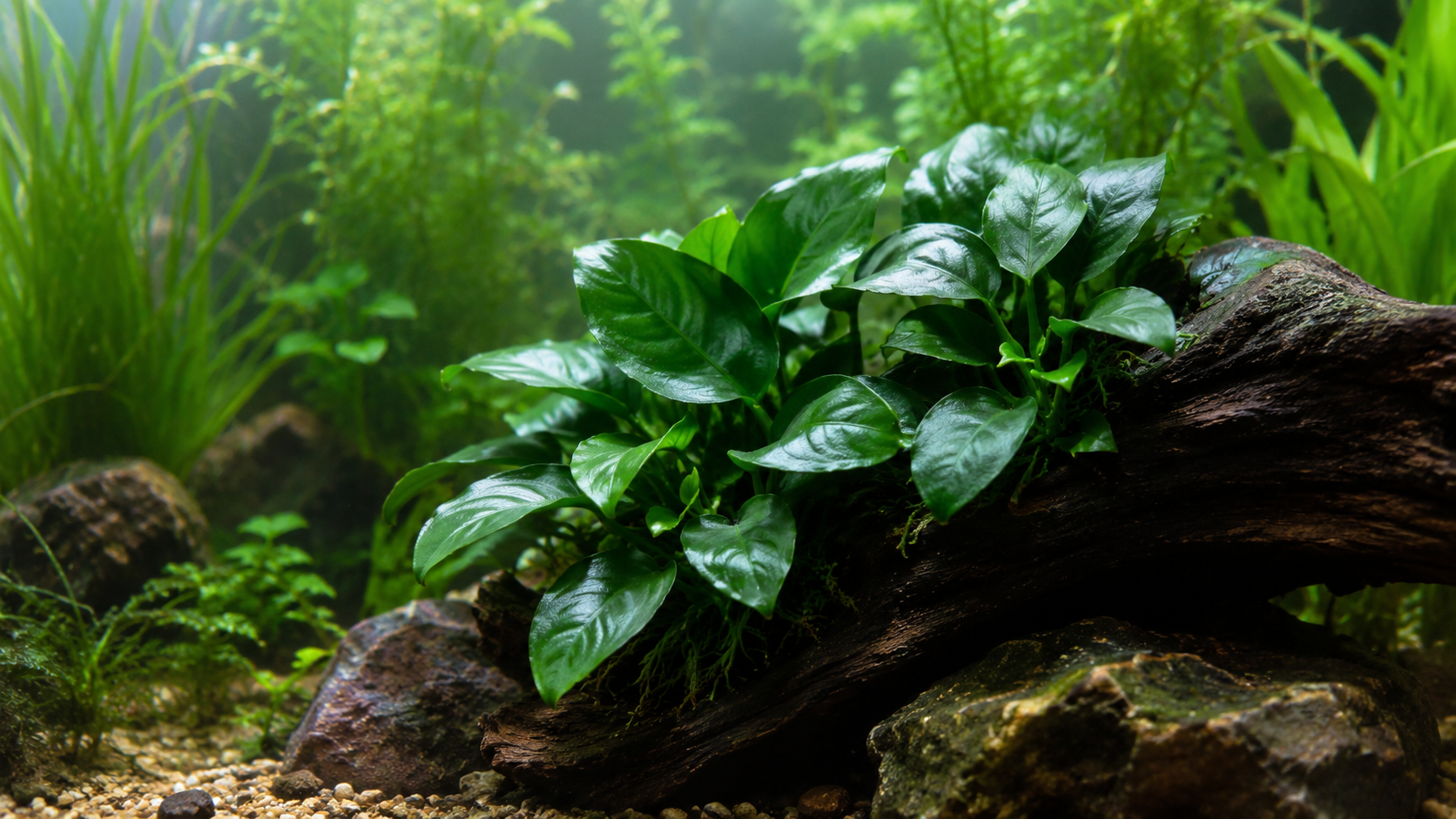
Anubias Nana
Best for: Beginners, low-light aquariums and low-tech planted tanks
As an Amazon Associate, we earn from qualifying purchases.
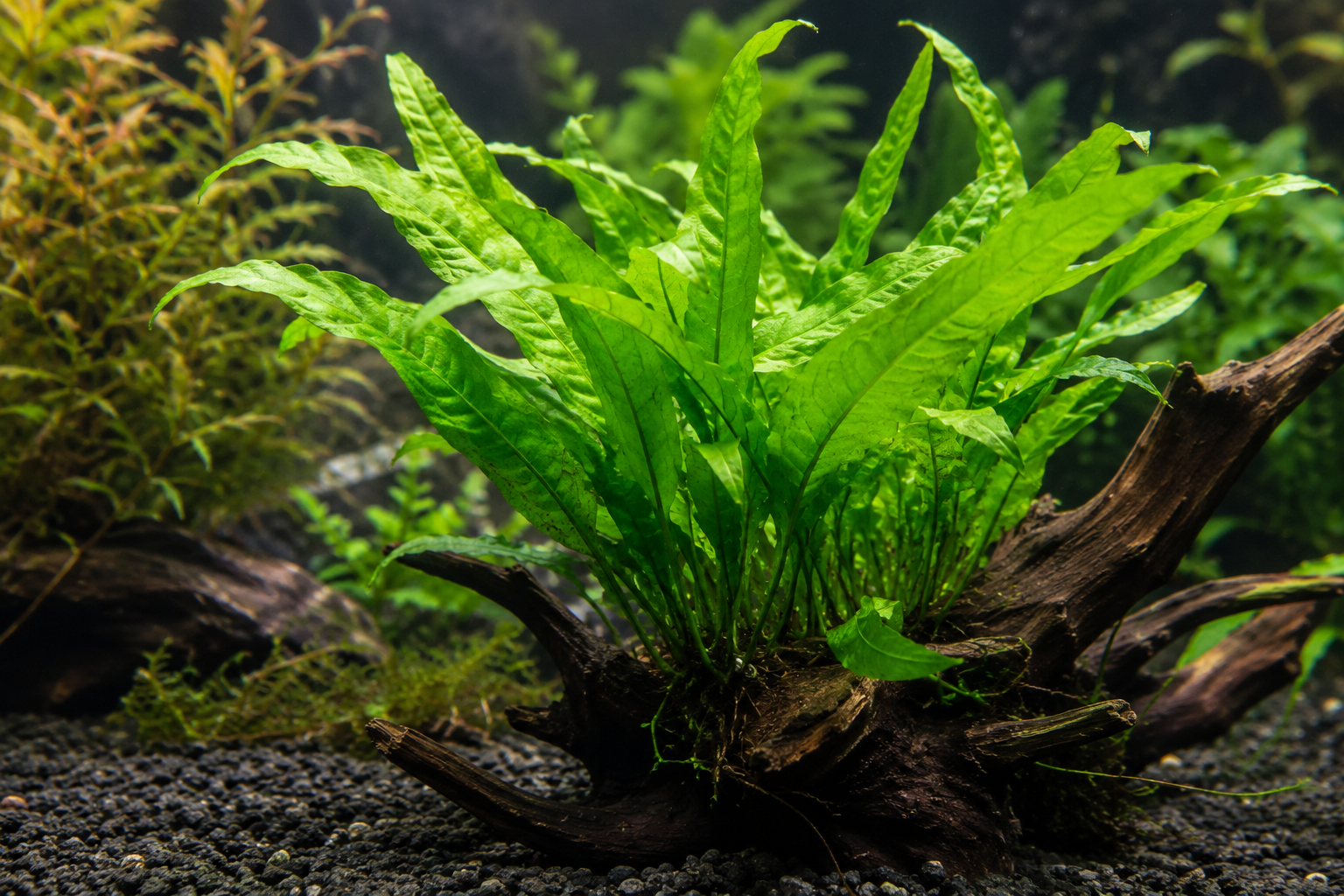
Java Fern
Best for: Beginners, low-tech aquariums and attaching to rocks or driftwood
As an Amazon Associate, we earn from qualifying purchases.
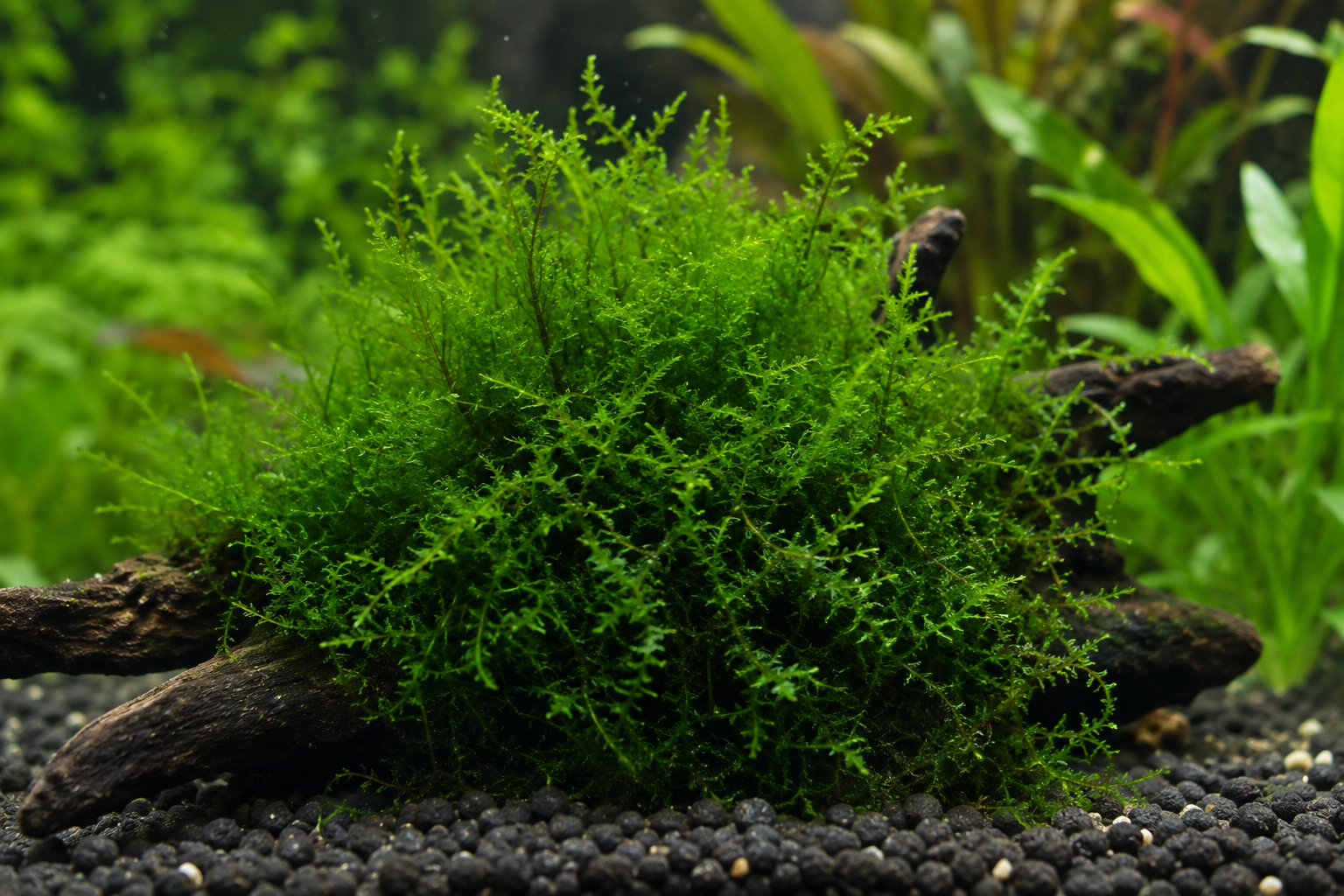
Java Moss
Best for: Beginners, shrimp tanks, breeding aquariums and natural aquascapes
As an Amazon Associate, we earn from qualifying purchases.
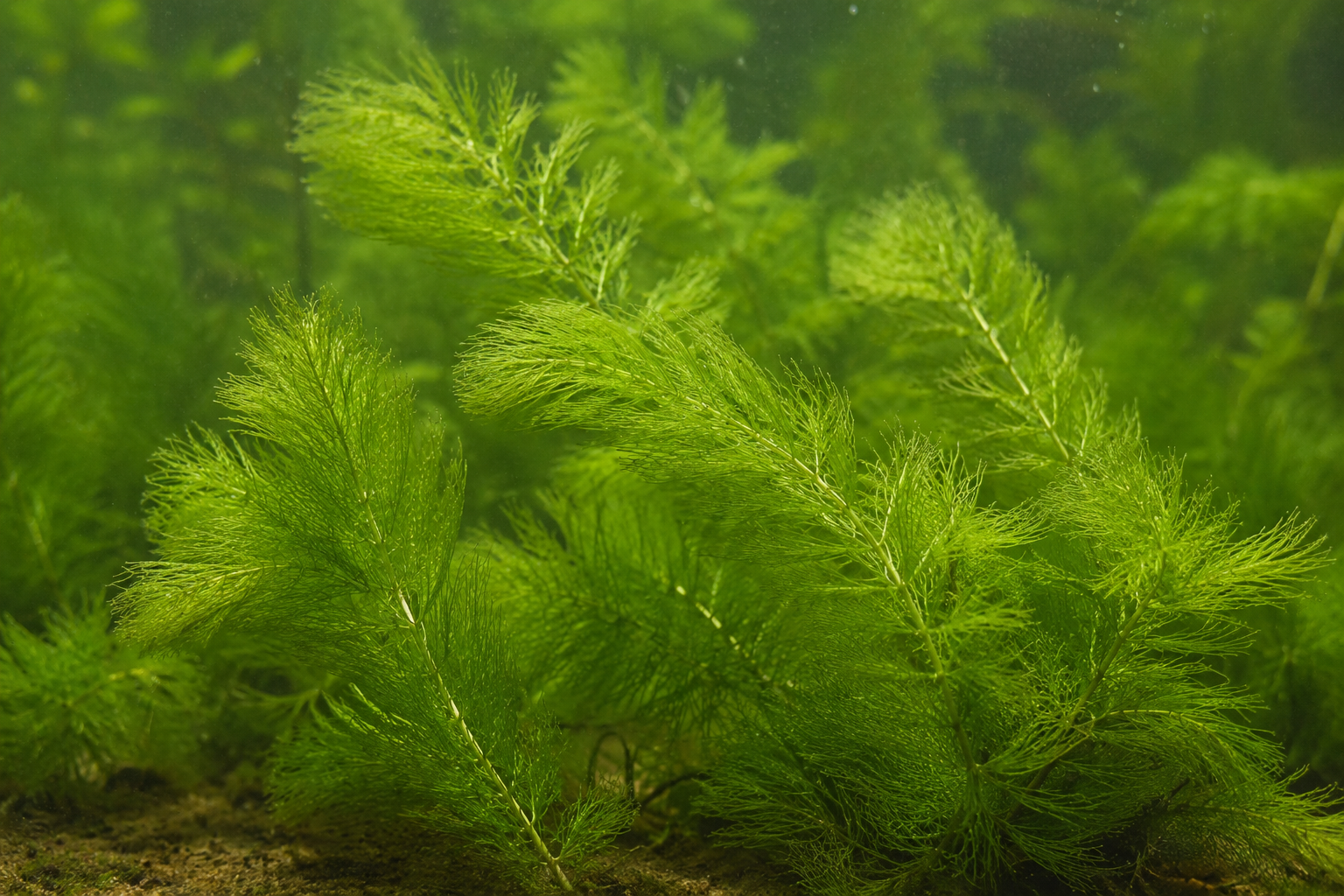
Water Hornwort
Best for: Wildlife ponds, natural ponds and improving underwater plant cover
As an Amazon Associate, we earn from qualifying purchases.
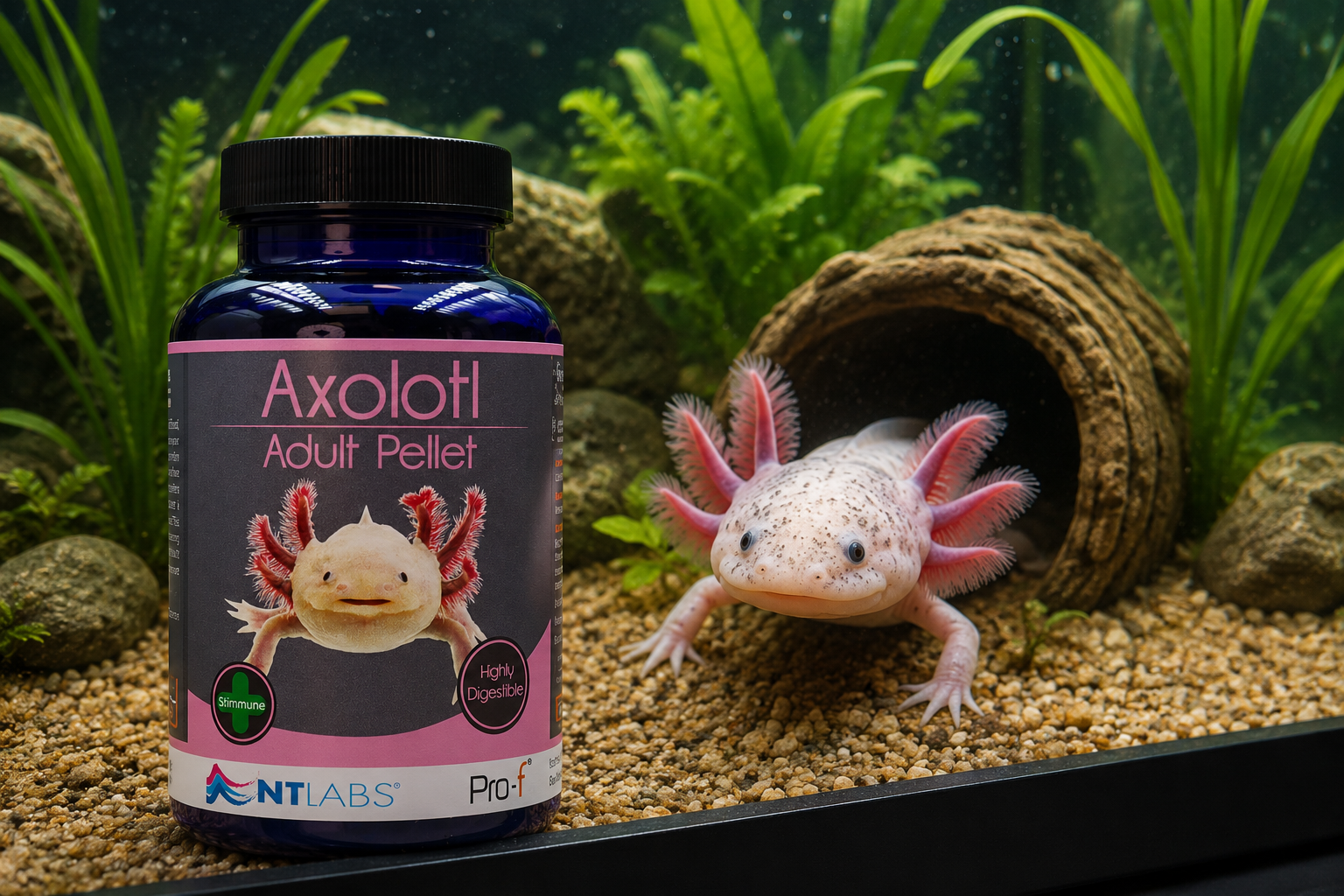
NT Labs
NT Labs Pro-f Axolotl Adult Fast Sinking Food Pellets
Best for: Everyday feeding of adult axolotls
As an Amazon Associate, we earn from qualifying purchases.
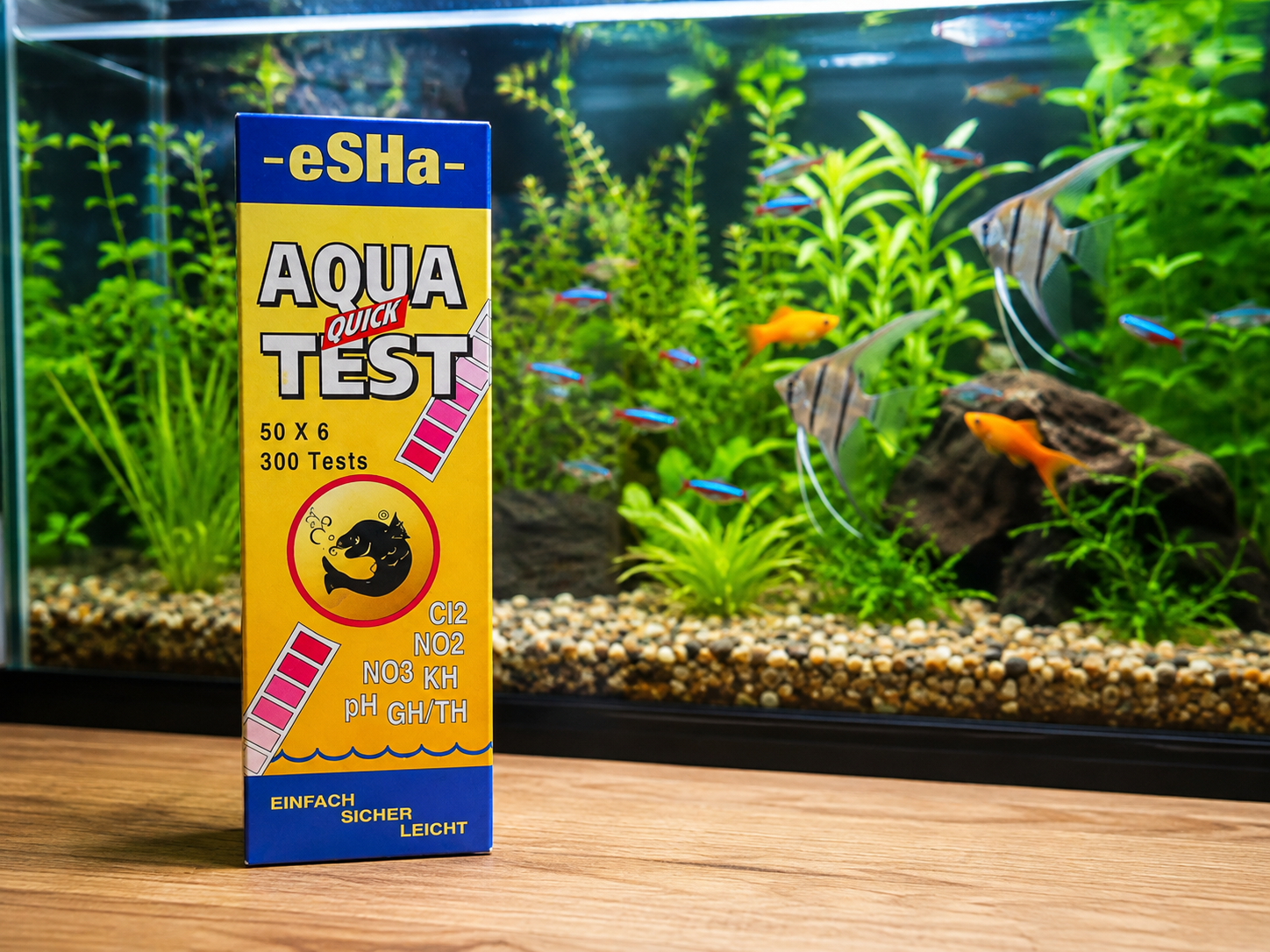
Esha
ESHA Aqua Quicktest
Best for: Fast routine water-quality checks in freshwater aquariums.
As an Amazon Associate, we earn from qualifying purchases.