Apistogramma macmasteri Care Guide: Keeping Macmaster’s Dwarf Cichlid
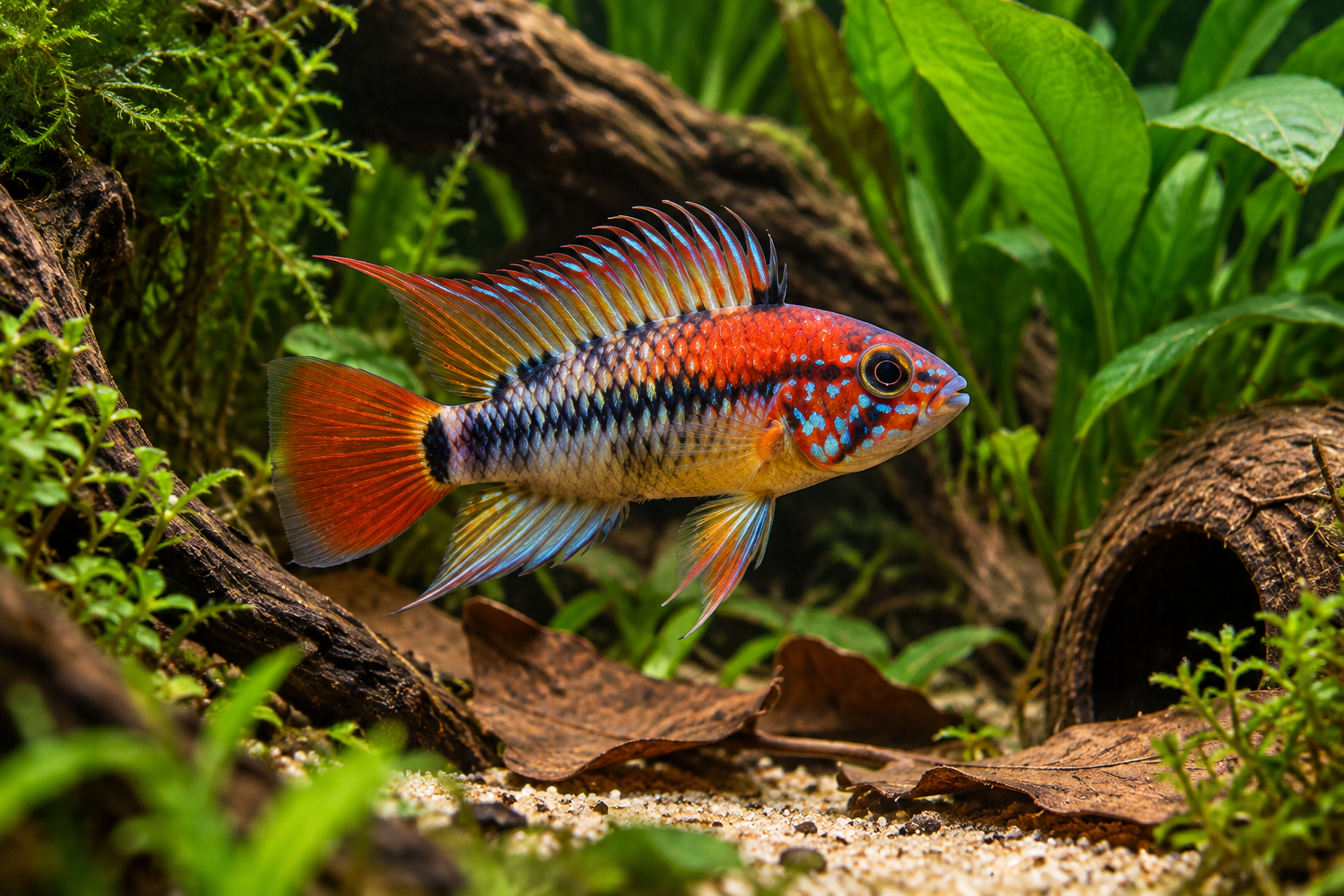
Apistogramma macmasteri is a colourful South American dwarf cichlid with plenty of character. Discover how to keep Macmaster’s dwarf cichlid, including aquarium setup, water conditions, feeding, tank mates and breeding.
Apistogramma macmasteri is one of those fish that can easily become the centrepiece of a South American aquarium without needing a particularly large tank. Males can develop impressive red, orange and yellow colouration, extended fins and the confident behaviour you would expect from a cichlid, all packed into a relatively small fish.
They're often described simply as dwarf cichlids, but that shouldn't be confused with being completely peaceful. Apistogramma macmasteri are territorial, particularly when breeding, and understanding that behaviour is an important part of keeping them successfully.
Given the right aquarium, however, they're fascinating fish and an excellent species for aquarists wanting to move beyond the usual community fish.
What Is Apistogramma macmasteri?
Apistogramma macmasteri, sometimes called Macmaster's dwarf cichlid, originates from Colombia in South America, particularly within the Orinoco drainage.
Like many Apistogramma, males and females can look quite different.
Adult males are larger and more colourful, potentially reaching around 7–8 cm. Depending on the individual and strain, males can display reds and oranges around the head and fins, often combined with blue or turquoise markings.
Females remain smaller and are generally less colourful under normal conditions. That changes dramatically when they're breeding, when females can develop a striking yellow body with strong black markings.
Many of the fish available in the aquarium trade are captive-bred colour forms, so their appearance can vary considerably.
What Size Aquarium Do They Need?
For a pair, I'd look at an aquarium of around 60 litres as a sensible starting point, although more space gives you greater flexibility.
Floor space and the way the aquarium is arranged are particularly important.
Apistogramma spend much of their time in the lower half of the aquarium and establish territories around caves, wood and other structures. A tall aquarium with relatively little bottom area isn't as useful as a longer tank containing plenty of structure.
If you want to keep multiple females or other dwarf cichlids, considerably more space is advisable.
Creating the Right Aquarium
A natural-looking aquarium suits Apistogramma macmasteri extremely well.
Fine sand is my preferred substrate. Apistogramma regularly pick at the substrate and sift through it looking for food, so sand allows them to behave naturally.
Driftwood can then be used to divide the aquarium into separate areas. This is more important than simply providing decoration. Breaking up lines of sight allows a fish to move away from an aggressive or territorial individual.
Plants provide additional cover, while dried leaves scattered across parts of the substrate can make the aquarium feel considerably more natural.
Most importantly, provide caves.
Small ceramic caves, coconut shells, wood formations or carefully positioned rocks can all work. Females use enclosed spaces as spawning sites, so I'd provide more than one potential cave rather than expecting the fish to use the location you've chosen for them.
Water Conditions
Apistogramma macmasteri generally prefer warm, relatively soft water.
A temperature of approximately 24–28°C works well for general maintenance.
Slightly acidic to neutral water is a sensible target, although captive-bred Macmasteri can often tolerate a wider range of conditions than wild fish.
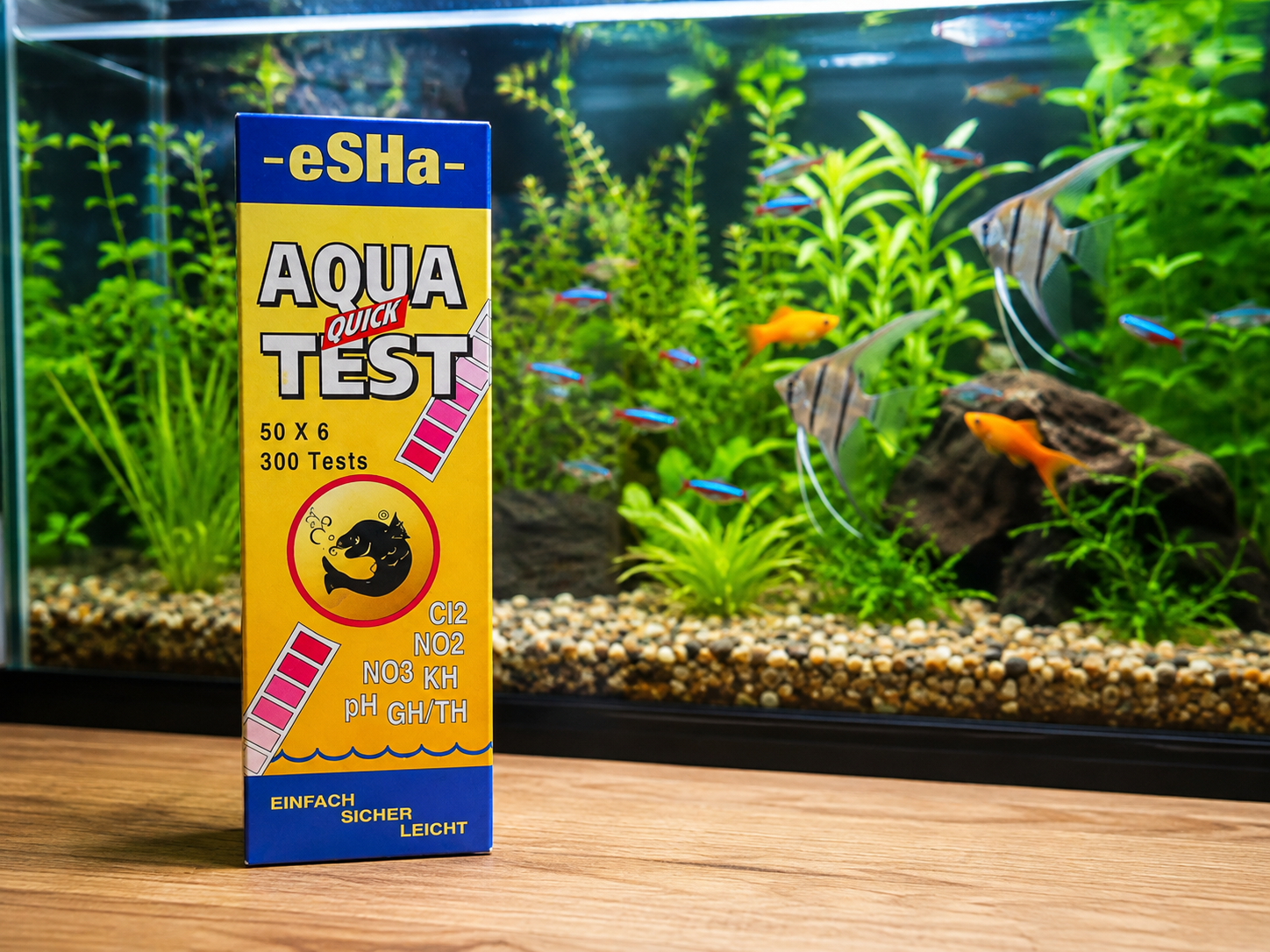
If you're buying locally bred fish, it's worth finding out what water they've been raised in. There's little benefit in constantly altering otherwise suitable tap water just to achieve a supposedly perfect number. So check your water, we use ESHA Quicktest for a quick and easy way of testing our clients aquarium water.
Breeding can be different. Softer, more acidic conditions may improve breeding results, particularly with some Apistogramma species and strains.
Whatever your water chemistry, ammonia and nitrite should remain at zero and nitrate should be controlled with good maintenance.
Filtration and Water Quality
Apistogramma appreciate clean water but don't require an aquarium that resembles a fast-flowing river.
A mature filter providing good biological filtration with relatively gentle water movement is ideal.
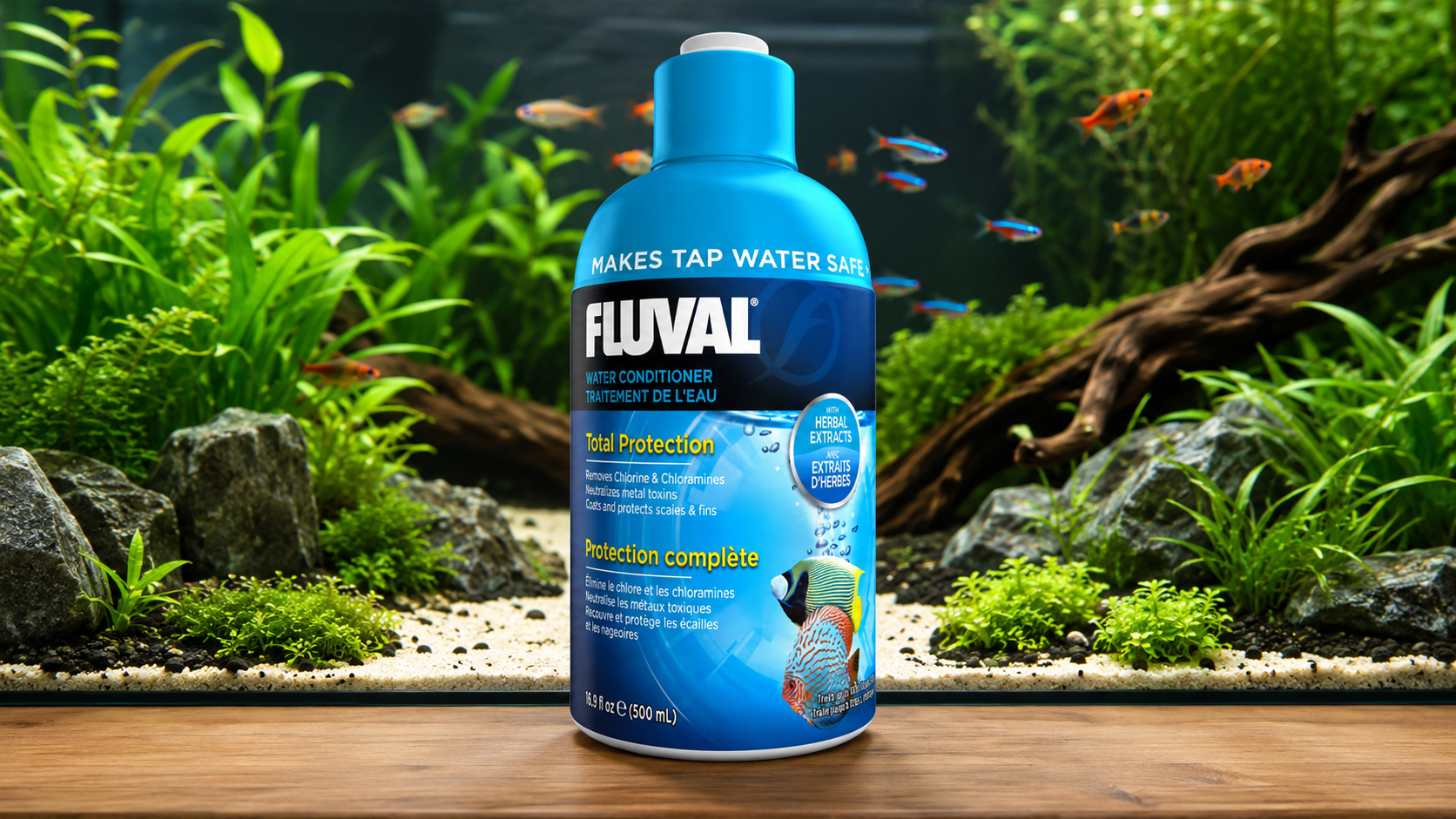
Regular partial water changes are important. I'd rather maintain stable, consistently good water conditions than carry out huge water changes because maintenance has been neglected. Remember to condition your tap water to make it safe and to ensure it matches what your fish are used to.
Leaf litter and tannins can give the aquarium an attractive amber colour, but a blackwater appearance shouldn't be confused with dirty water. You still need good filtration and regular maintenance.
Feeding Apistogramma macmasteri
These fish aren't difficult to feed, but they'll benefit from something more interesting than a lifetime of basic flakes.
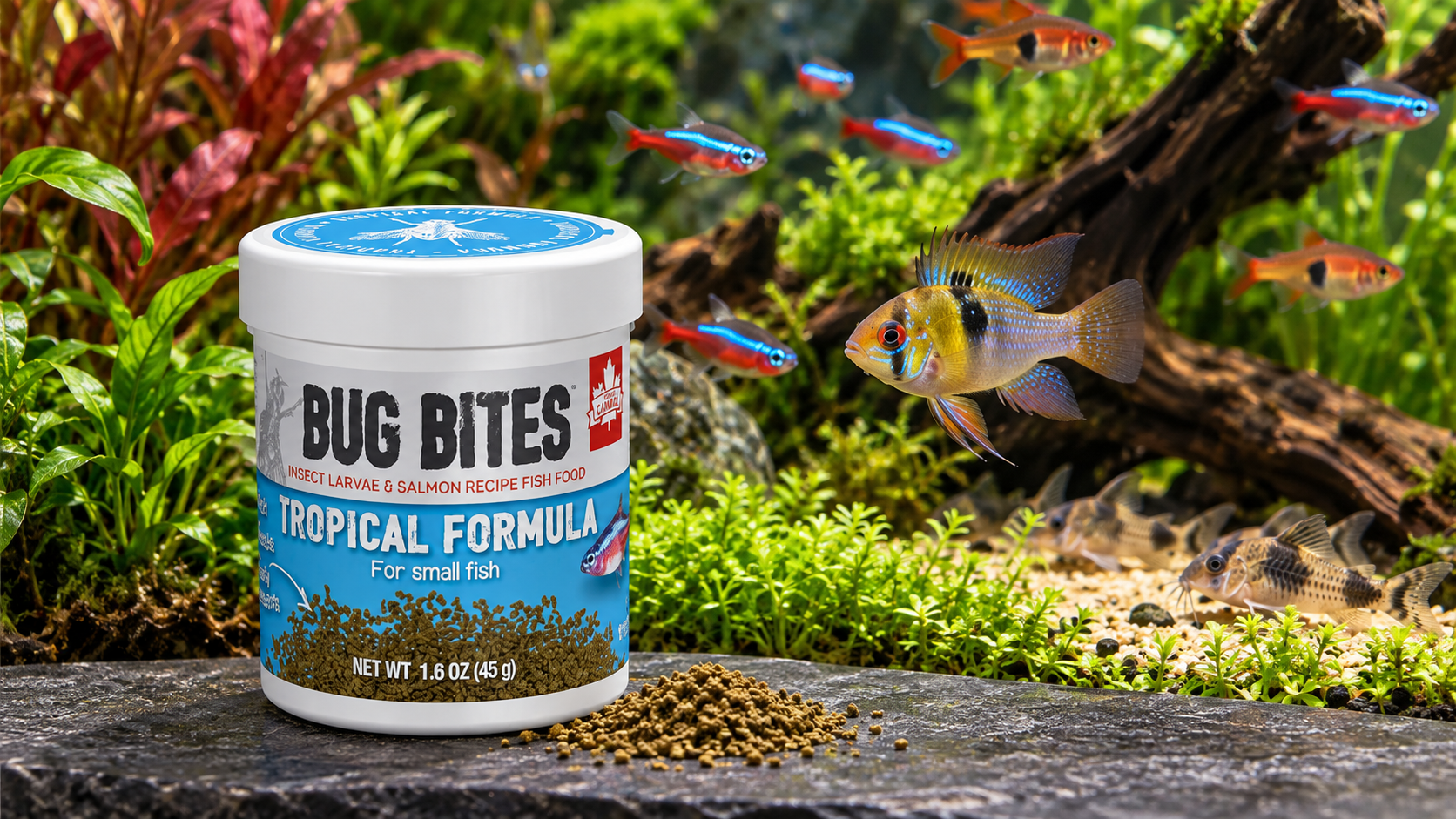
A good-quality small cichlid pellet or granules can provide the everyday diet, supplemented with frozen and live foods.
Bloodworm, brine shrimp, daphnia and similar foods are usually readily accepted.
Live and frozen foods are particularly useful when conditioning fish for breeding.
I prefer offering several smaller feeds rather than putting a large quantity of food into the aquarium at once. Apistogramma spend plenty of time investigating the lower areas of the tank, so food that sinks slowly or reaches the substrate works well.
Are Apistogramma macmasteri Aggressive?
They're dwarf cichlids, and they behave like cichlids.
Most of the time they're relatively peaceful towards unrelated community fish, but they can be territorial towards their own species and other fish occupying the same areas.
Breeding females are particularly interesting.
Once a female has eggs or fry to protect, her behaviour can change dramatically. She may aggressively defend the area surrounding her cave, including against the male.
This is why aquarium layout matters so much.
Wood, plants, caves and other visual barriers give fish somewhere to retreat and can prevent constant confrontation.
Suitable Tank Mates
Small peaceful tetras can make excellent companions. Pencilfish and other peaceful South American species can also work well.
Fish occupying the middle and upper levels of the aquarium generally create less territorial conflict than adding numerous bottom-dwelling species.
Corydoras require a little more thought.
Although Apistogramma and Corydoras are frequently kept together, Corys don't necessarily understand territorial boundaries. A breeding female may repeatedly attack a Corydoras that innocently wanders into her territory.
In a spacious community aquarium this can work, but I'd be cautious about combining them in a small breeding setup.
Avoid large aggressive cichlids, persistent fin-nippers and anything capable of eating the Apistogramma.
Keeping a Pair or a Group?
A male and female can work well, provided the aquarium contains enough cover and escape routes.
Keeping one male with multiple females is also possible, but this shouldn't simply be attempted in a small aquarium because you've read that Apistogramma form harems.
Each female needs sufficient territory and suitable spawning sites.
If space is limited, a carefully chosen pair is often the simpler option.
Breeding Apistogramma macmasteri
Breeding is one of the most interesting reasons to keep this species.
Apistogramma macmasteri are cave spawners. A female selects a sheltered location and lays her eggs inside, typically attaching them to a surface within the cave.
She then guards the eggs.
Once the fry hatch and eventually become free-swimming, the female leads them around the aquarium while defending them remarkably aggressively for such a small fish.
At this point the male may need plenty of space to escape her attention. In smaller breeding aquariums, you may even need to remove him if she's continually attacking him.
The fry can be raised on appropriately small foods, with newly hatched brine shrimp being particularly useful once they're able to take it.
Watching a brightly coloured yellow female shepherd a group of tiny fry around the aquarium is one of the highlights of keeping Apistogramma.
Are They Suitable for Beginners?
I wouldn't describe Apistogramma macmasteri as difficult, but they're probably better suited to someone who already understands basic aquarium maintenance.
Their requirements aren't particularly complicated. The bigger challenge is understanding their behaviour.
You need to recognise territorial aggression, provide suitable hiding places and react if one fish is being continually bullied.
Someone who already keeps a successful tropical community aquarium should find the step up to Apistogramma relatively straightforward.
Final Thoughts
Apistogramma macmasteri combines much of what makes larger cichlids interesting with a size that makes them practical for far more aquariums.
They're colourful, territorial, intelligent and fascinating to breed.
I'd build their aquarium around fine sand, driftwood, plants, leaf litter and several caves, rather than placing a pair into a sparsely decorated community tank and hoping for the best.
Give them clean warm water, a varied diet and enough structure to establish territories, and Macmaster's dwarf cichlid can become one of the most interesting fish in a South American aquarium.
Products We've Mentioned & Recommend
Below you'll find a selection of products we've mentioned in this article, along with a few others we think you might find useful. We've included Amazon links to make them easy to find.
A quick word about affiliate links...
Some of these links are affiliate links, which means we may earn a small commission from qualifying purchases, at no extra cost to you.
Unfortunately, the commission doesn't quite stretch to cocktails on a yacht or a garage full of sports cars. In reality, it helps cover the running costs of this website and, with a bit of luck, might eventually buy me a new pair of waders that don't leak!
We only recommend products we genuinely believe are worth considering, and your support helps us keep sharing free advice from our years of working with aquariums and ponds.
Thanks for supporting Aquatic Specialist!
As an Amazon Associate I earn from qualifying purchases.
Fluval
Fluval Aqua Plus 500ml aquarium water conditioner
Best for: Routine water changes in freshwater and tropical aquariums
As an Amazon Associate, we earn from qualifying purchases.
Fluval
Fluval Bug Bites Tropical Formula for small fish
Best for: Small tropical fish and dwarf cichlids
As an Amazon Associate, we earn from qualifying purchases.
Esha
ESHA Aqua Quicktest
Best for: Fast routine water-quality checks in freshwater aquariums.
As an Amazon Associate, we earn from qualifying purchases.
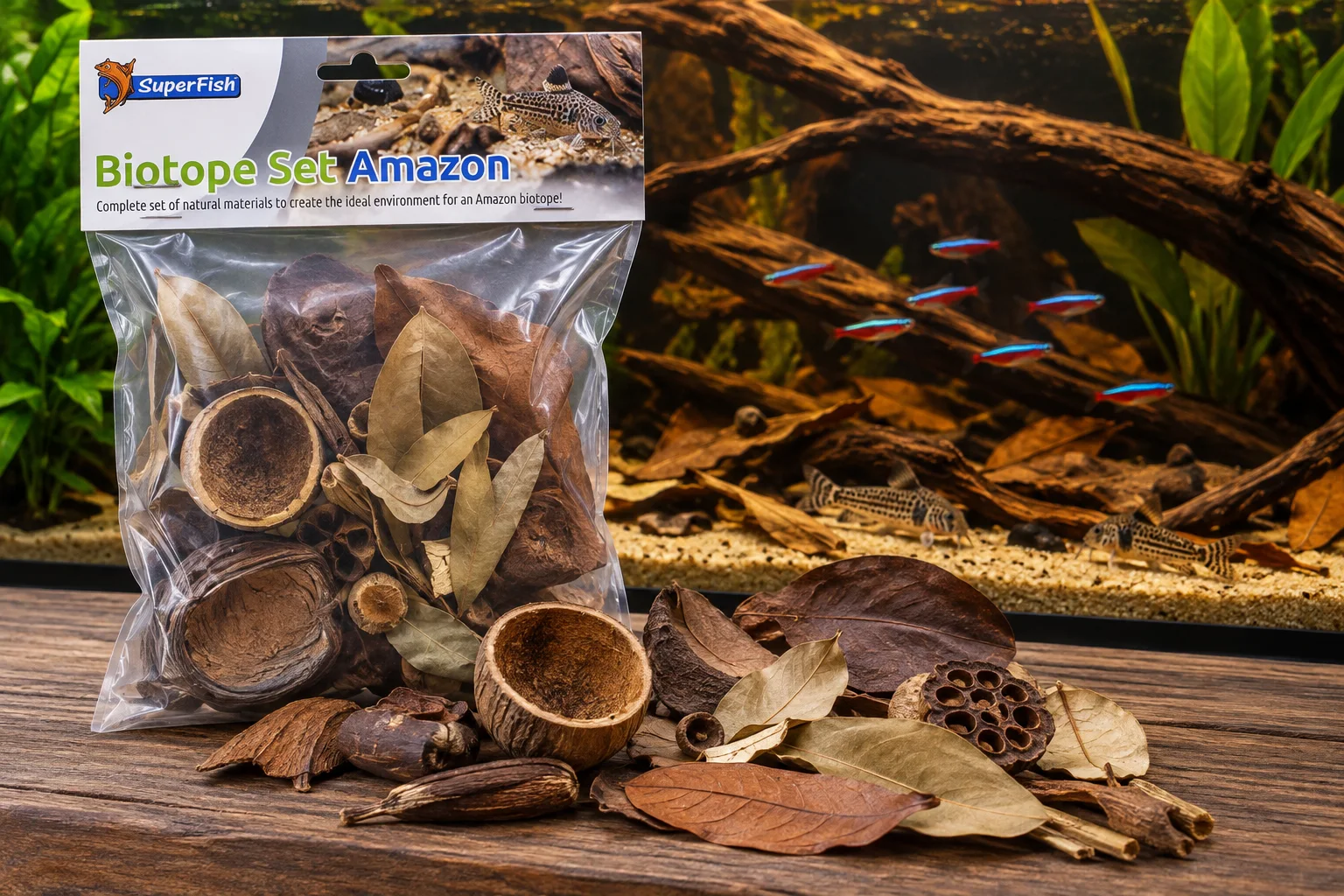
SuperFish
SuperFish Biotope Set - Amazon
Best for: Amazon biotopes, blackwater aquariums and natural South American setups
As an Amazon Associate, we earn from qualifying purchases.